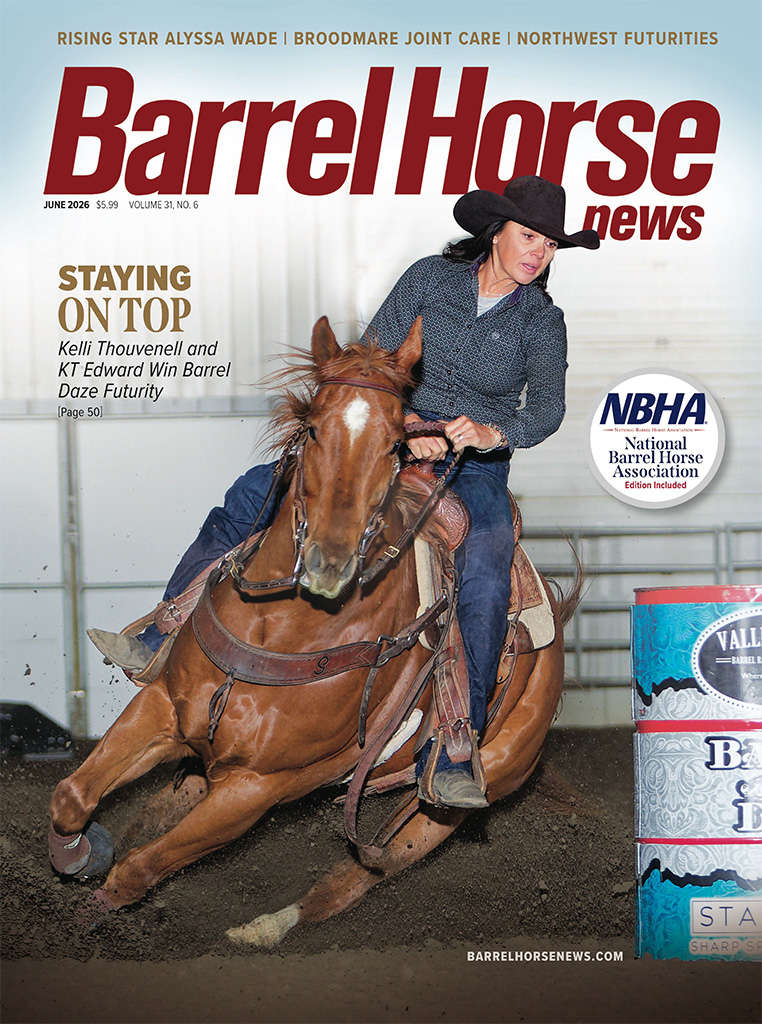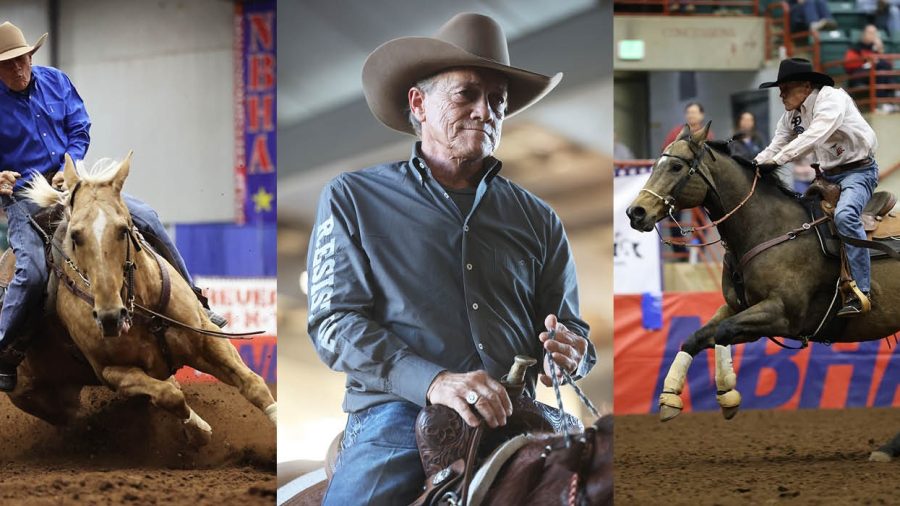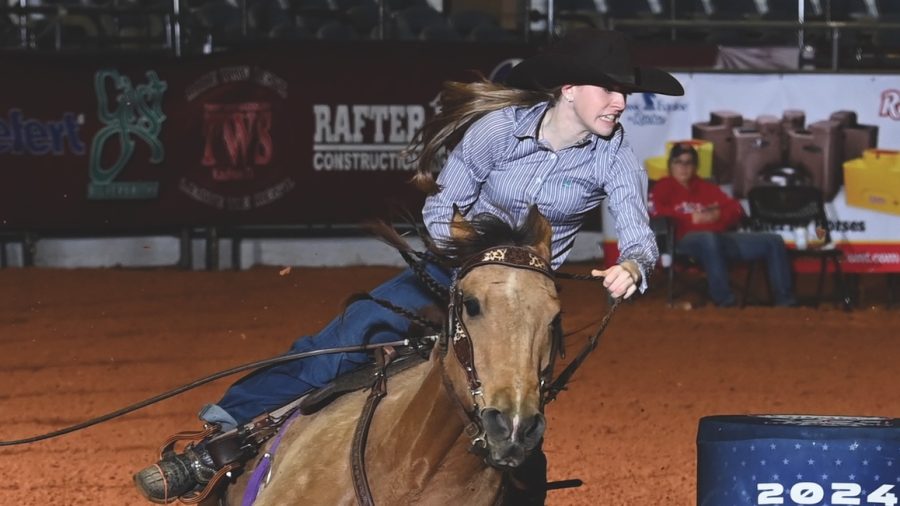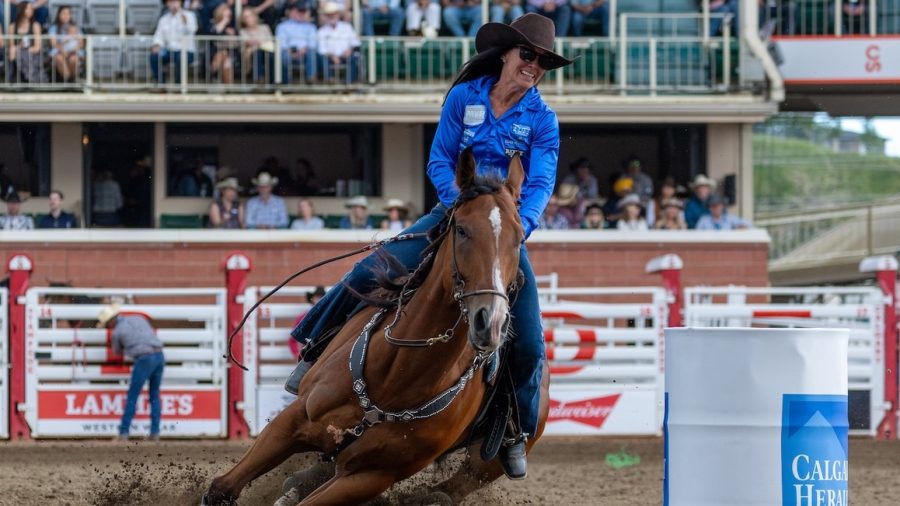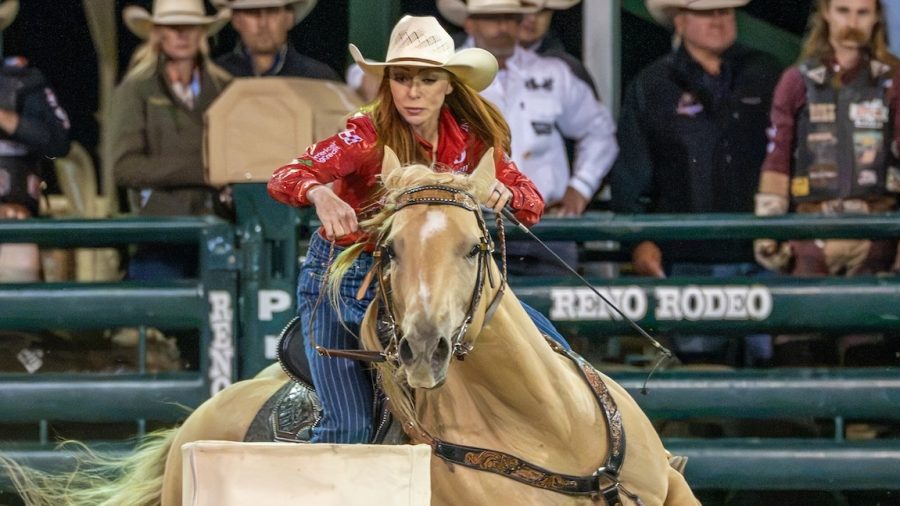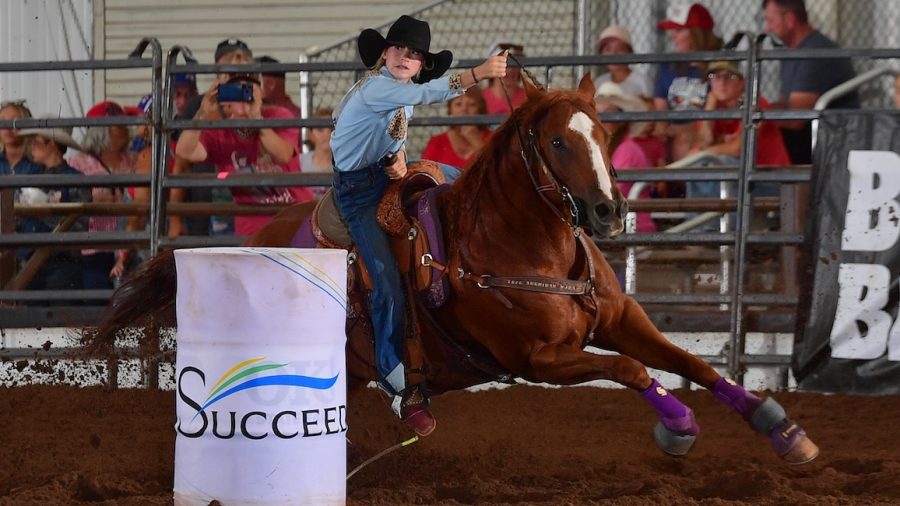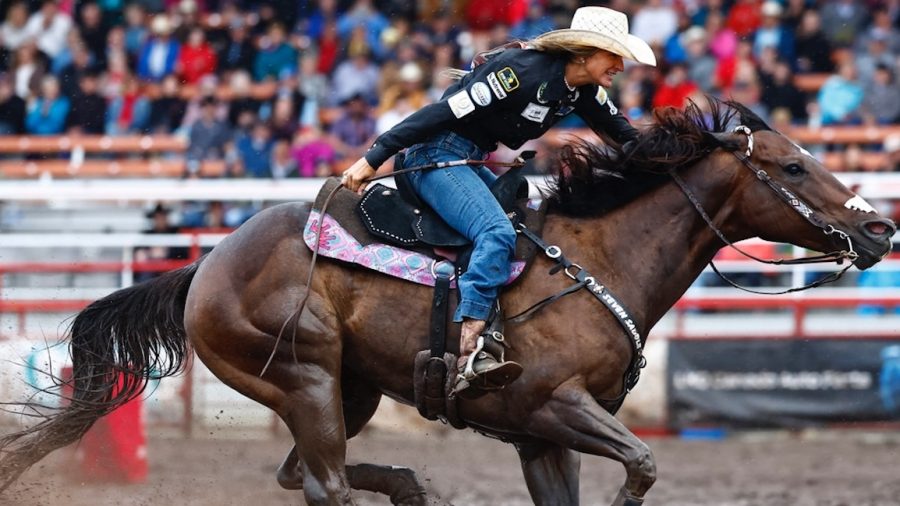

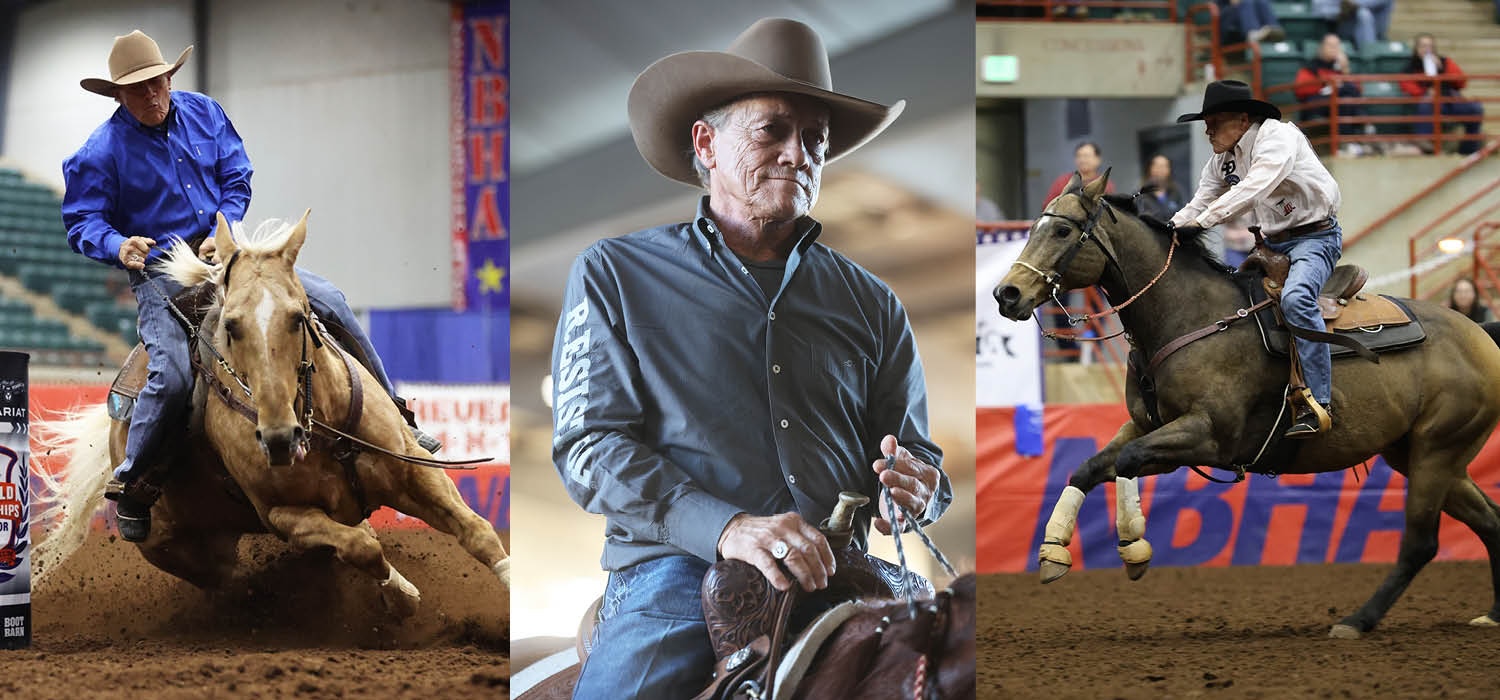
Talmadge Green discusses creating opportunities for everyday riders, the evolution of the industry and what excites him about the future.
Legendary barrel horse rider and trainer Talmadge Green III got hooked on barrel racing as a youth. As a young rider, he competed in 4-H and open events, was part of the youth team at the All-American Quarter Horse Congress as a teen, and in 1972 won the South Carolina State Barrel Racing championship.
After high school, he worked construction jobs for a short time, running barrels on weekends, but he knew his dream was to ride horses for a living. In 1984, he headed West to the Champion of Champions Futurity in Grand Prairie, Texas. A year later, he finished as one of the top 10 futurity riders of the year.
Fast forward to 1991, and Rick Skyes asked Green about running a big barrel race in Augusta, Georgia, a similar to The Augusta Futurity, an annual cutting horse futurity co-founded by Morris Communications chairman and CEO William S, (“Billy”) Morris III. Green envisioned the potential for more than a futurity — a national association. In 1992 Green, Sykes, Pete May, and Paul Simon sought the help of newspaper, publishing and media leader Billy Morris. Green says it wouldn’t have been possible without the input of that group of co-founders and former National Barrel Horse Association executive director Sherry Fulmer. The NBHA still remains under the Morris Communications parentage and has celebrated nearly 35 years of success.
Today, barrel racers countrywide know Green as a multiple-time NBHA Open and Senior World Champion, a $1 million barrel racing futurity rider and co-found of the NBHA.
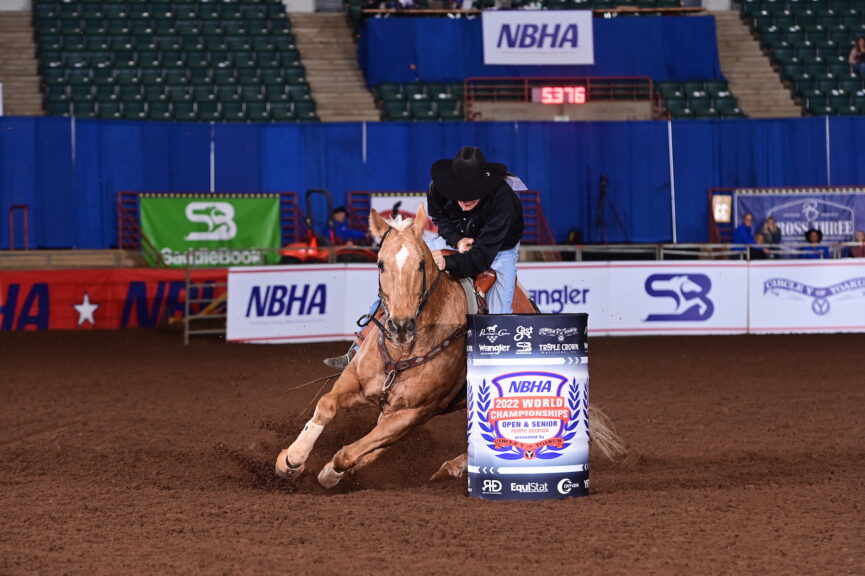
Here, Green shares where he found inspiration, his perspective on how the industry has evolved and what excites him about the future.
Barrel Horse News: You were instrumental in bringing NBHA to life. Take us back to the beginning and how it started.
Talmadge Green: “When we started NBHA, I had golf on my mind. Augusta, Georgia, is one of the places where golf really took root, and I was always fascinated by how many people love to play golf but could never compete on the same level as Tiger Woods, Phil Mickelson and all the greats. We almost started a golf program structured like the NBHA 5D barrel races. The vision was that everyday players could go out and play in a tournament with big names and hold their own, because they’d be spotted strokes. I still think to this day that would’ve been huge.
“What I always liked about the NBHA and the barrel racing format is that the clock decides who wins. There’s no judging, no politics. You either run the winning time or you don’t.”
BHN: How do you think the level of horsemanship has evolved over the last 30 years?
Green: “I think horsemen and -women are learning more and are willing to do things differently. Ray Hunt was a big influence on me. He came to my brother Mike’s (Green) place nine or 10 years in a row. I only got to see him the last three or four times, but I still think he’s one of the best horsemen I’ve ever known.
“One time, I asked his advice, and he told me, ‘When you’re stumped and you can’t figure it out, stop and say, OK, switch. You become the horse and let the horse become the rider. How would you do it differently?’
“The more I thought about it, the more I saw it as realistic. I got thinking that if I work long enough, calmly building trust with a horse, I can get him to where I could lead him into my house, and he’d sit down and watch ESPN with me. More people are training that way now and getting a horse to like his job instead of forcing a 1,200- to 1,300-pound animal to do something. When a horse genuinely likes what he’s doing, he’s going to do it longer.
“I also think people are finally realizing that horses, just like people, have good days and bad days. A bad day doesn’t always mean you need to run and spend a bunch of money because something is wrong. He just had a bad day.”
BHN: Looking ahead, what excites you most about where the industry is going?
Green: “I’m excited about how much better the breeding has gotten and how smart people are getting about crosses. When you hit the right cross, you get something special.
“I always go back to my brother’s mare, Sissys Little Coin. I’ve never seen another like her. We counted one day and figured she had 27 or 28 babies before she passed. Having five or six good ones is impressive. But 20-something?
“The truly good horses back then would still be good now. The difference is that there are a lot more of them. Where we might have had 20 top 1D horses years ago, now you’ve got 70 or 80. People are learning to better care for their horses and train with more feel. That’s a big part of what I try to pass on to kids and adults alike.
“I also think going to 5-year-old futurities has helped a lot of horses. I know some people will disagree with me, but I think the extra time gives them more time to mature mentally and physically. The main things you have to have for a horse to be good are for them to be physically stronger and better minded.”
BHN: Many riders have benefited from your mentoring. Why is it important to you to provide mentorship?
Green: “I’ve always felt like there are a lot of young people with potential who never had anyone to guide them. Outside of horses, I coached my son in travel baseball. No matter what sport it is, people underestimate how much good coaching and mentorship matters.
“I think about all the little kids and teenagers I’ve helped win world championships, state championships, and regionals — kids who likely never would have had a shot in a traditional format. The expressions on their faces when they realize they’ve won are incredible. The greatest reward in mentoring is what you see on a kid’s face when they do something they never believed they could do. You can’t buy that with money.”
BHN: You’ve talked a lot about mindset. What do you want young riders to understand about handling mistakes and setbacks?
Green: “My biggest message to my kids is: Don’t let a bad run eat you like cancer. Don’t let it destroy you. The quicker you get ride of it, the quicker you’ll heal and the faster you’ll get back to winning or making good, solid runs.
“You don’t have to win to be a champion. What you want is to make a good, respectable run. Nobody wins every time. Look at some of the greats. They go through slumps, too, and begin to question everything or if you’ll ever win again.
“I’ve been there myself. One time, I hit two $100,000 barrels in a row on Java Buzz. I told the committee I’d buy that second barrel just so I could run over it with my big truck. I paid $250 for it and feel like I got my money’s worth.”
BHN: What horses do you have in your barn that excite you?
Green: “I was riding a registered red roan Appaloosa, the first App I’ve ever ridden, for Brad Shirey, that I’ve had to back off of because I hurt my back. That horse can flat run.
“What keeps me going is my grandkids. Now, instead of looking for horses for myself, I’m looking for horses for my grandkids. That’s as much fun. I’ve already got my eye on a pony, and I told the owner, ‘When y’all are through with that pony, I’d like the first shot at buying him.’”