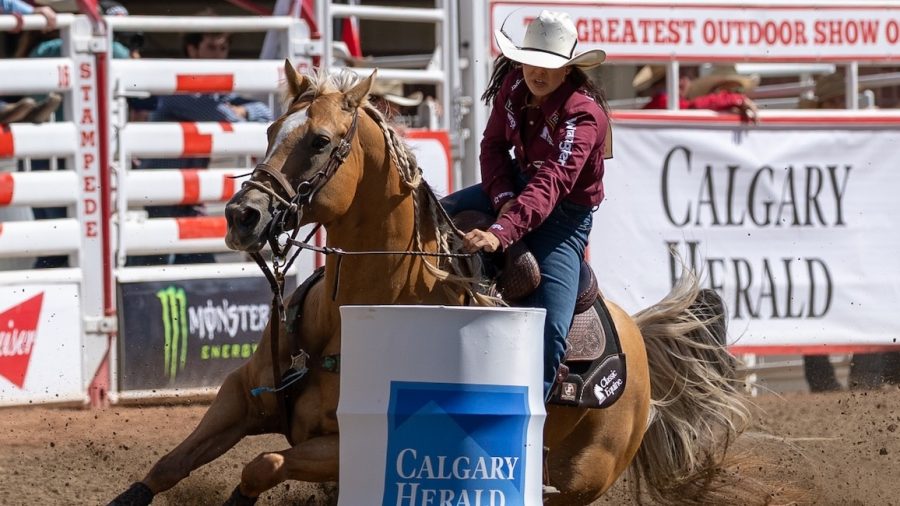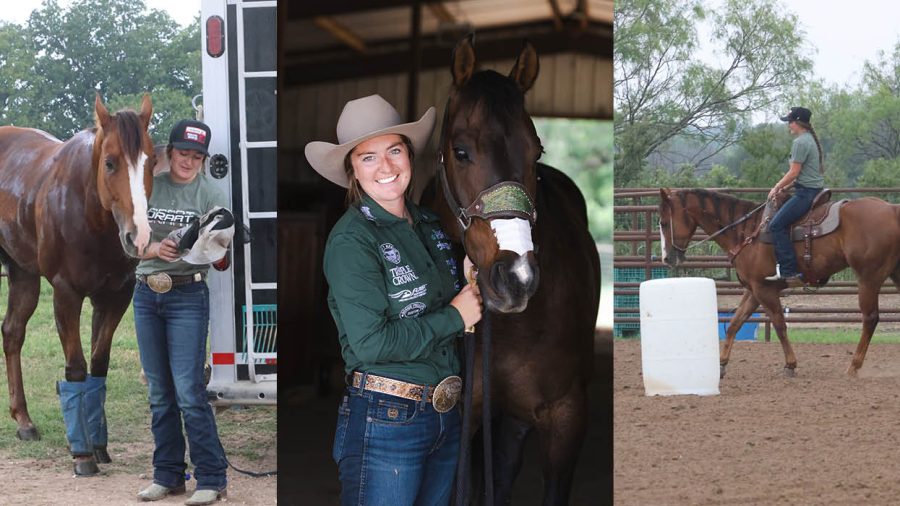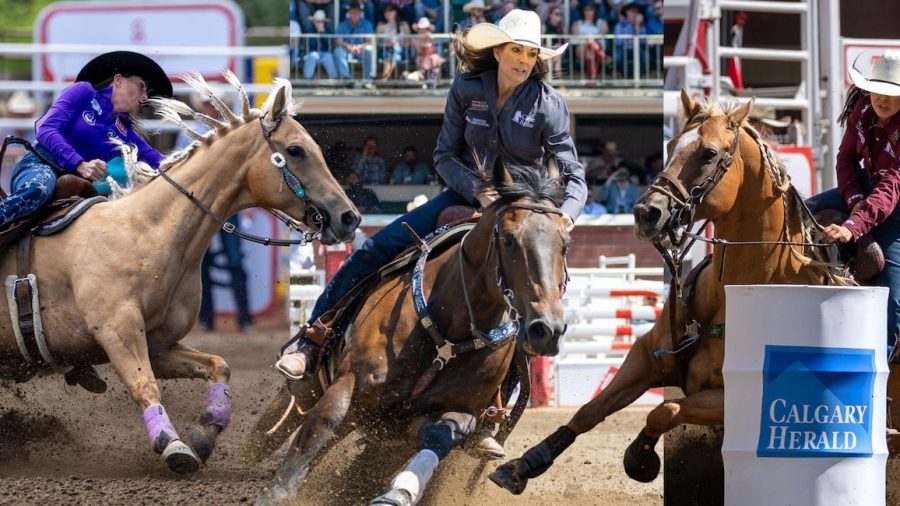

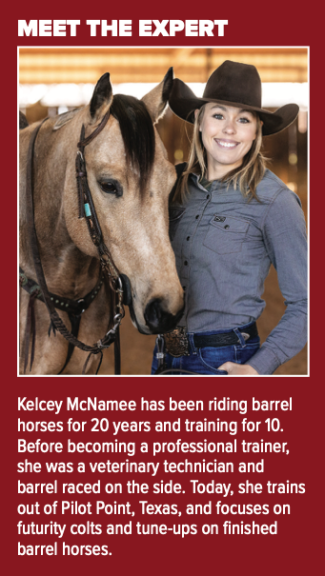
Strengthen your horse’s core and hind end with this drill from trainer Kelcey McNamee.
Some horses lose collection in their hind end on the backside of the turn. This two-part drill will help keep your horse round and strong. It’s a strengthening exercise for their core and hind end, and it also helps them learn rate.
It’s important for your horse to stay balanced through their turns, which helps make sure they make that turn and stay strong throughout.
The Goal
As I’m doing this drill, I’m looking for my horse to be backing up just off my seat pressure. With my hands, I am looking for the horse to stay square all the way around the turn, keeping just a little curvature, staying really soft and supple. I’ll do it at a walk, and then I’ll come back and do it at a trot — trotting up to my rate point, and then bringing them down to a stopbefore asking for the backup.
You want them to stay gathered up underneath you as you are sitting to get that rate, and you want them to stay collected up underneath you.
Preparing for the Drill
I do this drill in whatever bit I’m normally using on that horse. There’s a lot of backing up work, so I would choose a bridle that will keep your horse soft and supple. I personally have really liked using a banana gag with a smooth mouthpiece in the middle.
I do this drill as needed on horses that are weak in the hind end, or if I feel they’re getting strung out. I’ll do it every day, depending on what I’m working on with my horses. I do it in my warmup on the horses that I feel need a bit more rate or need to be softer coming into their turns.
Before starting the drill, I’ll trot my horse in circles about five minutes each direction to make sure the horse is warmed up. I will then go into the backup drill.
The Drill
You want to make sure you’re staying square in your body throughout the drill. You do not want to be learning to the inside or the outside.
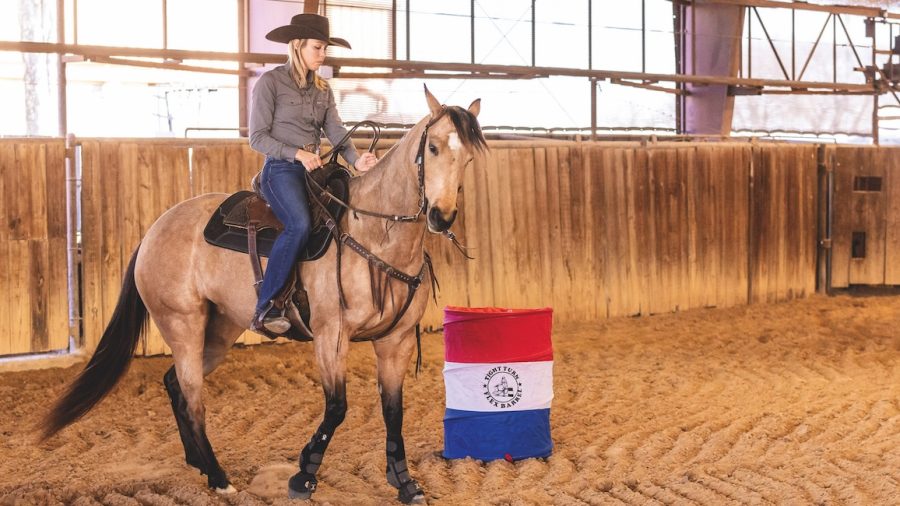
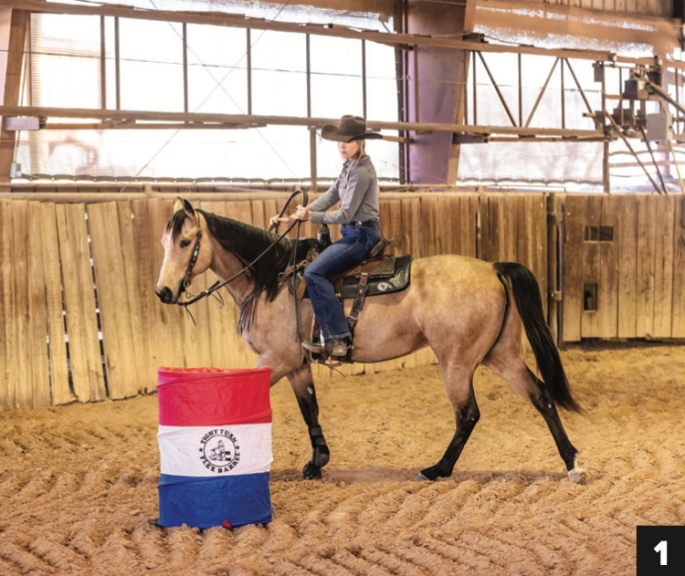
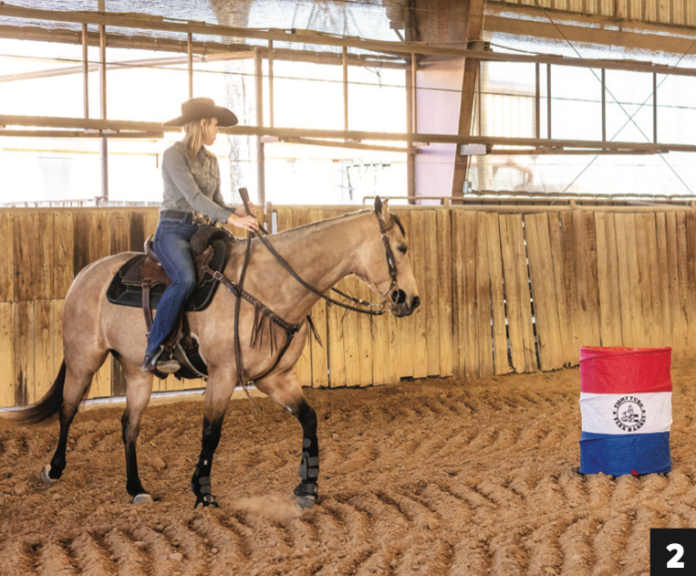
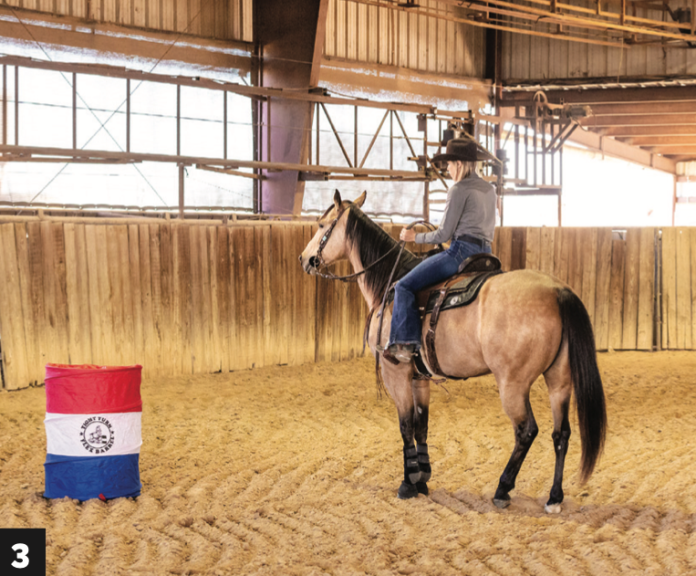
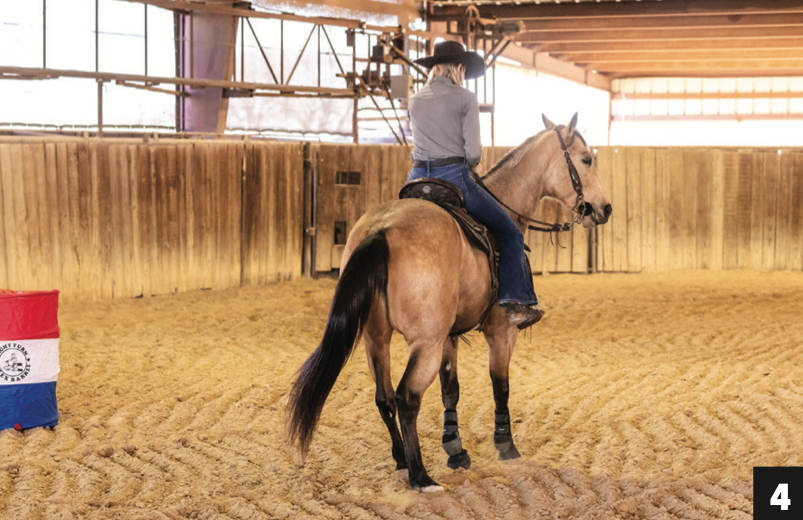
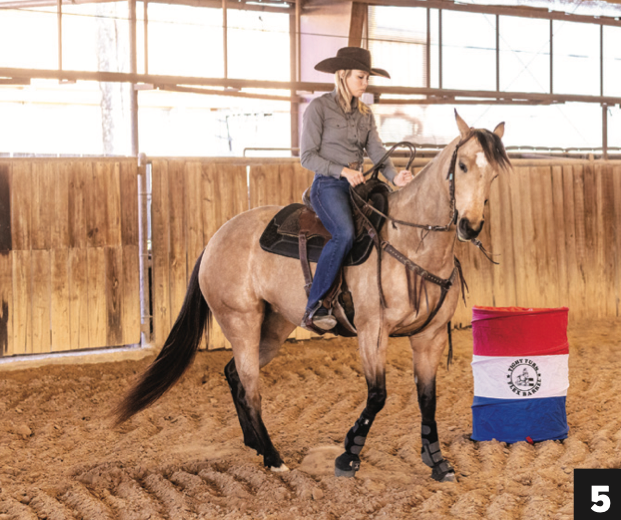
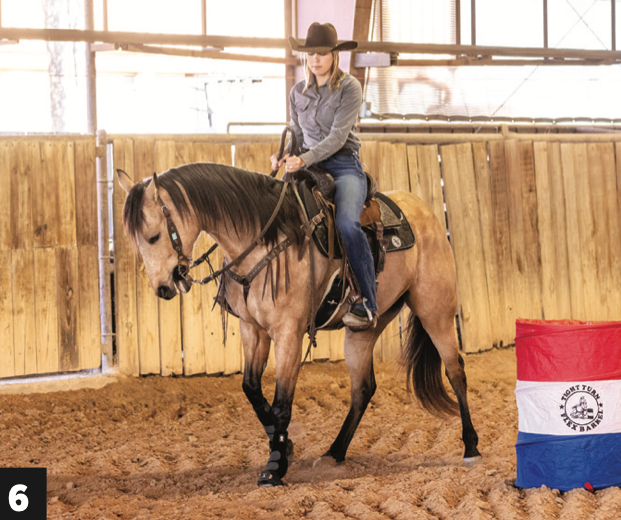
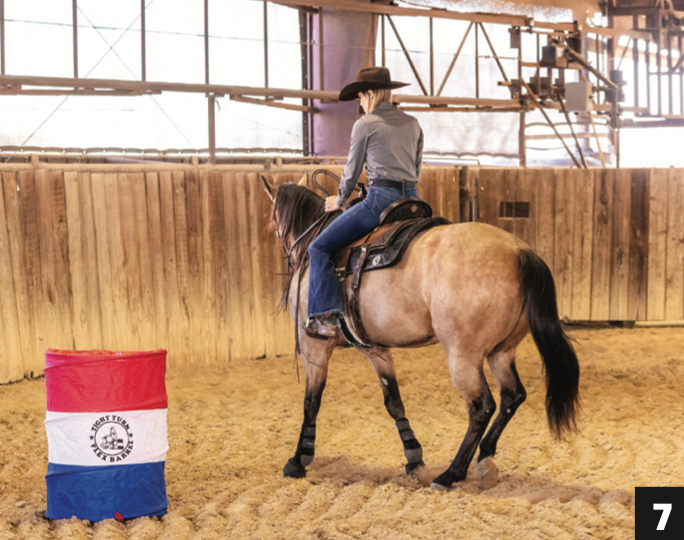
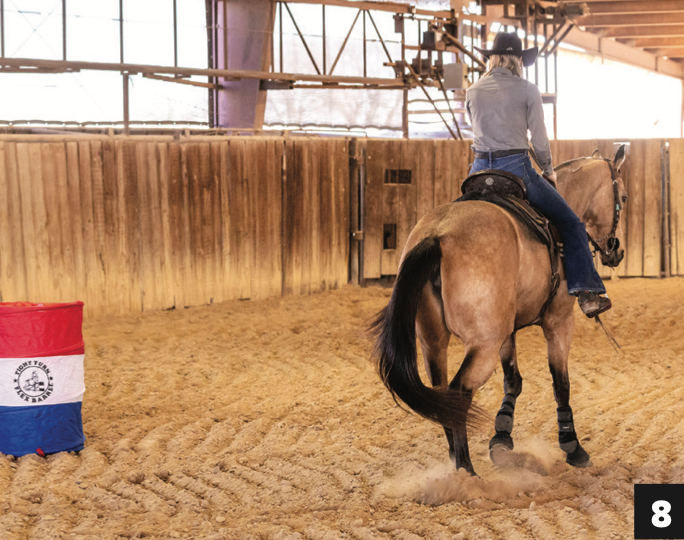
I’ll start by backing my horse up in a square. To ask the horse to back up, I’ll sit deep, as if I were rating them down into a turn, and I’ll keep their nose just a little bit tipped to the inside of my square. I just want to see the outside corner of their eye when I am bringing them back. I’ll lightly put pressure on the inside and outside rein, just enough to back them up allthe way around the turn. If they are not staying straight, and fading one direction or another, add leg pressure and bring more pressure with the rein on the side they are fading toward.For instance, if the horse is fading left, I will add more pressure with my left leg and draw them back with more left rein.
I will backup a straight line, bring their front end across 90 degrees, and backup again, creating a square as I’m looking for them to get soft to my cues and engage their hind end. I willdo it both directions a couple times until they’re really gathered up and paying attention.
Alternative
If they’re resistant to back into the square, I will use fence work to build their understanding of my cues. I’ll start on a fence. I will walk parallel to the fence about three feet away. I’llstop the horse, bring their front end away from the fence 15 degrees and back up along the fence, 10 or so steps, then bring the front end across to be facing the opposite direction.Walk your horse forward a few steps on a loose rein, gather them up, stop and repeat these steps the opposite direction. Continue this exercise until your horse is responsive and nolonger resistant.
These steps will help the horse soften up.
On the Barrel Drill
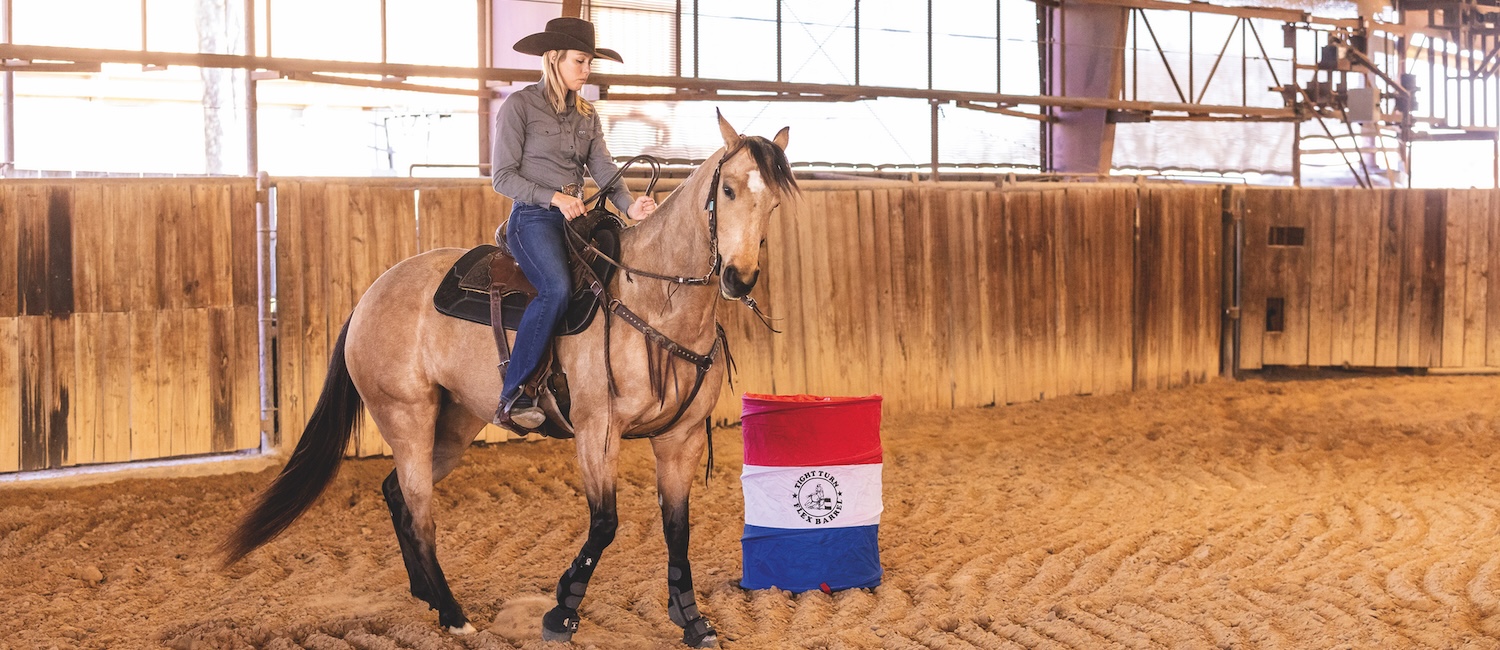
Next, I will work the horse on the pattern at the trot, or I will use a single barrel. If I feel like the horse is getting strung out in its hind end anywhere on the turn in the pattern, I will stopand back him up in a full square around the barrel.
Once the horse is soft from backing, I’ll ask him again to turn the barrel. As I bring him around the backside of the barrel, I’ll trot a big circle around the barrel, all the way around, and I’ll stop at the beginning point of the turn and back all the way around in a square near the barrel until I am back to my starting point.
Then, I’ll turn the opposite direction and do it again. You can do this around just one barrel or at each barrel in the pattern.
I do this drill until I feel like the horse is really responding to my seat cues and drawing backwards with ease. I like them to feel soft like butter through the entire drill. If I feel like they’re resisting, I’ll return to backing the square or the fence work for one or two passes. But usually, I’ll end this drill as soon as I can take them through the pattern and lope them all the way through with them being soft and coming back to me as soon as I sit down to rate for the turn, while staying square with their hind end engaged.
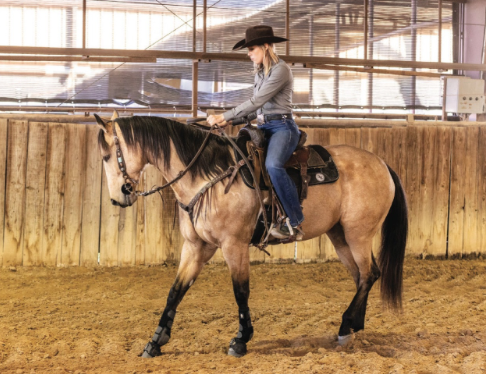
square.
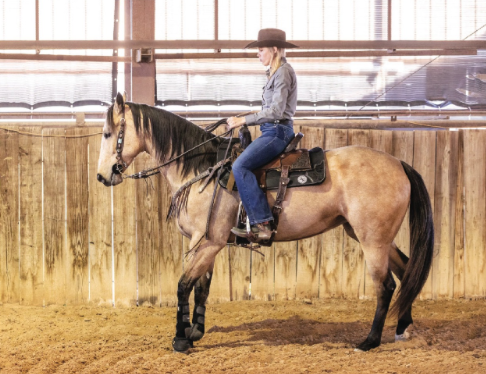
backing the other direction, around 10 steps each way.
Cautions
If your horse is being really resistant to backing, I wouldn’t do this drill on the pattern yet. Some horses take a lot of fence work and backing in the square before they’re able to come around and bend around the square.
Also, make sure you have the right headgear — that your horse isn’t angry about the bit or popping up in the front end, and you’re not getting them frazzled. You want to keep them soft and relaxed, learning to get their body collected underneath them. Don’t pick a fight with your horse. If one part of the drill isn’t working, go back to the other fundamental steps to get them stronger.
Especially on a horse that is pretty weak in the hind end, they’re not going to want to do a whole lot of backing up. That’s where I would start with just one barrel, and do the drill until they’re nice and soft. When you reach a stopping point, quit there, and you can increase that work incrementally the next day.
This article was originally published in the March 2024 issue of Barrel Horse News.