
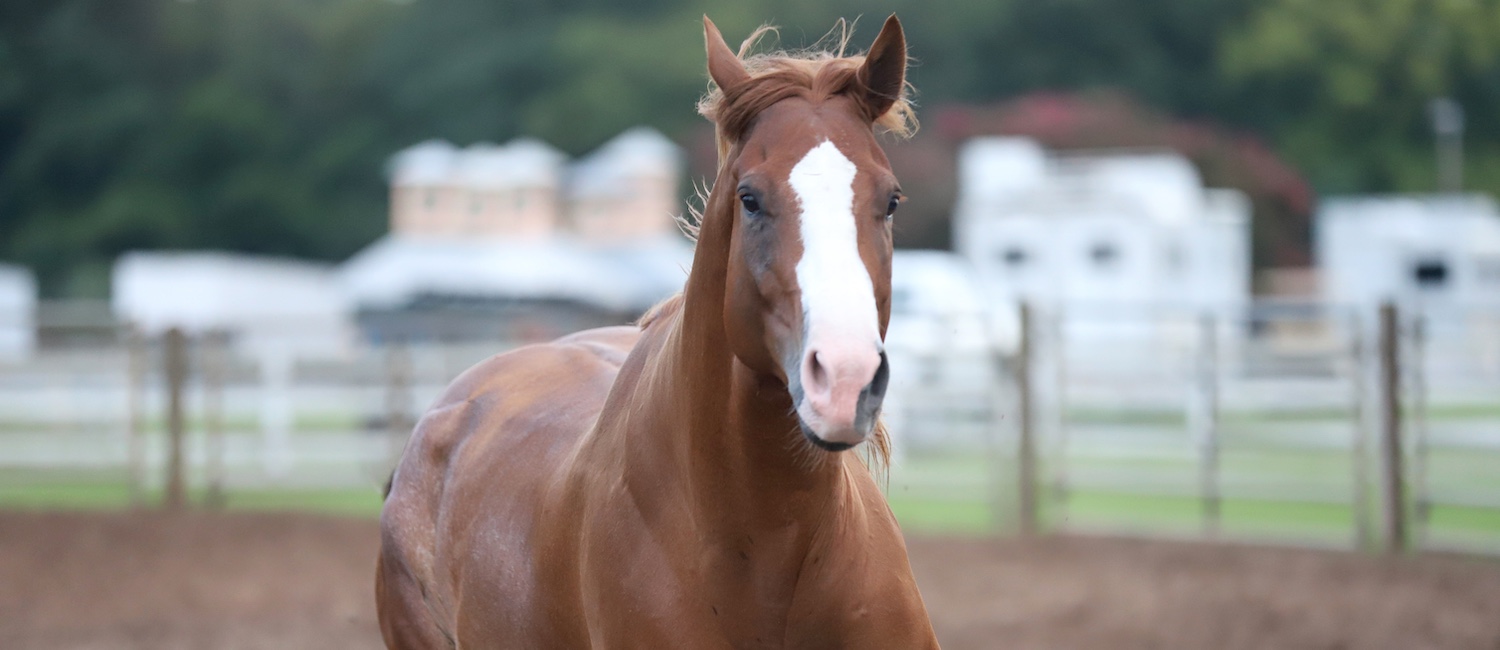
Kay Blandford explains how clear signals and consistent cues can help your horse transition from project to winner.
A big part of the challenge of training barrel horses is keeping them calm and focused. Twelve-time National Finals Rodeo qualifier Kay Blandford has it down so well that she can get on someone else’s typically crazy mount and it’ll drop its head and walk for her.
How does she do it? It’s all about unintentional cues — getting rid of them, that is.
Alley Ailments
From the very beginning, a horse learns to go forward when he’s kicked. So it makes sense that when a horse feels your legs, his first instinct is to go faster.
Out behind the arena, people have a tendency to squeeze without realizing it even before their name is called, Blandford says. Much of the reason horses get fidgety before a run is because they’re being miscued to blast off before they’re even at the front of the alley.
“When you get ready to take off, you end up pressing on your stirrups, which adds pressure from your thighs and amps a horse up,” Blandford says. “To keep a horse calm, leave your weight on your seat until it’s time to take off.”
Keep your toes out and your heels down, advises Blandford, who only wears spurs in competition. And be very consistent with your reins.
“At home, I use two hands to gather up my reins before a run,” she says. “So later at an event, when I take up that outside rein, it means we’re going to start down the alley. My horses know when I’m riding around one-handed with no leg pressure that they can drop their head.”
Blandford’s seen people gathering up those reins when they’re nowhere near the alley, which cues a horse to go when he cannot. Another tip she has for keeping a horse from thinking “take off” is to ask him to go one direction, stop and think, then ask for something else.
“The other thing is, really look to where you want to go,” Blandford says. “I always say follow your eyes. Follow your eyes. A horse will go where you look.”
“I had a horse I could make do it. But you can’t win on them. And it’s all about winning.” — Kay Blandford
The other key is simply relaxing.
“If you’re not a little nervous, you won’t be competitive,” she says. “But you want your horse relaxed and calm. Even though my heart is beating 100 mph, I take deep breaths and try to keep my body relaxed. And I visualize the best run I ever made, which is usually right here at home. You know? Come to my pen and outrun me. Focus on that.”
But the biggest reason Blandford’s horses are calm and confident is that they simply know their job and know what to expect. For example, Blandford never rides them in their running bridle.
“That bridle means business,” she says. “And they know the difference.”
Blandford holds a teaching degree from Southeastern Oklahoma State University and, although she’s working on 4- and 5-year-old colts instead of sixth-graders now, she’s just as meticulous. She knows where a horse’s body is supposed to be on every stride, and she doesn’t allow any part of it to be a few inches off.
Nor will she even exhibition a horse if he doesn’t know his job like the back of his hand.
Exhibitioning Explained
Blandford, for the most part, doesn’t exhibition unless it’s high-speed. She trains all the basics into a horse at home, and she gets a beautiful hard run on her own stomping grounds before ever loading one in the trailer.
“If you don’t have that run at home, how will you know what to expect at a race?” she asks. “Home is their most comfortable place. If you can’t get it here, you’re not going to get it elsewhere.”
She has two or three colts, though, who worked terrible at home and clocked at other places. So if she sees the ability, she’ll keep hauling them. On the other hand, if she’s exhibitioned one in several different arenas and he just isn’t clocking, she’ll let the owner know not to waste any more of his money and her time.
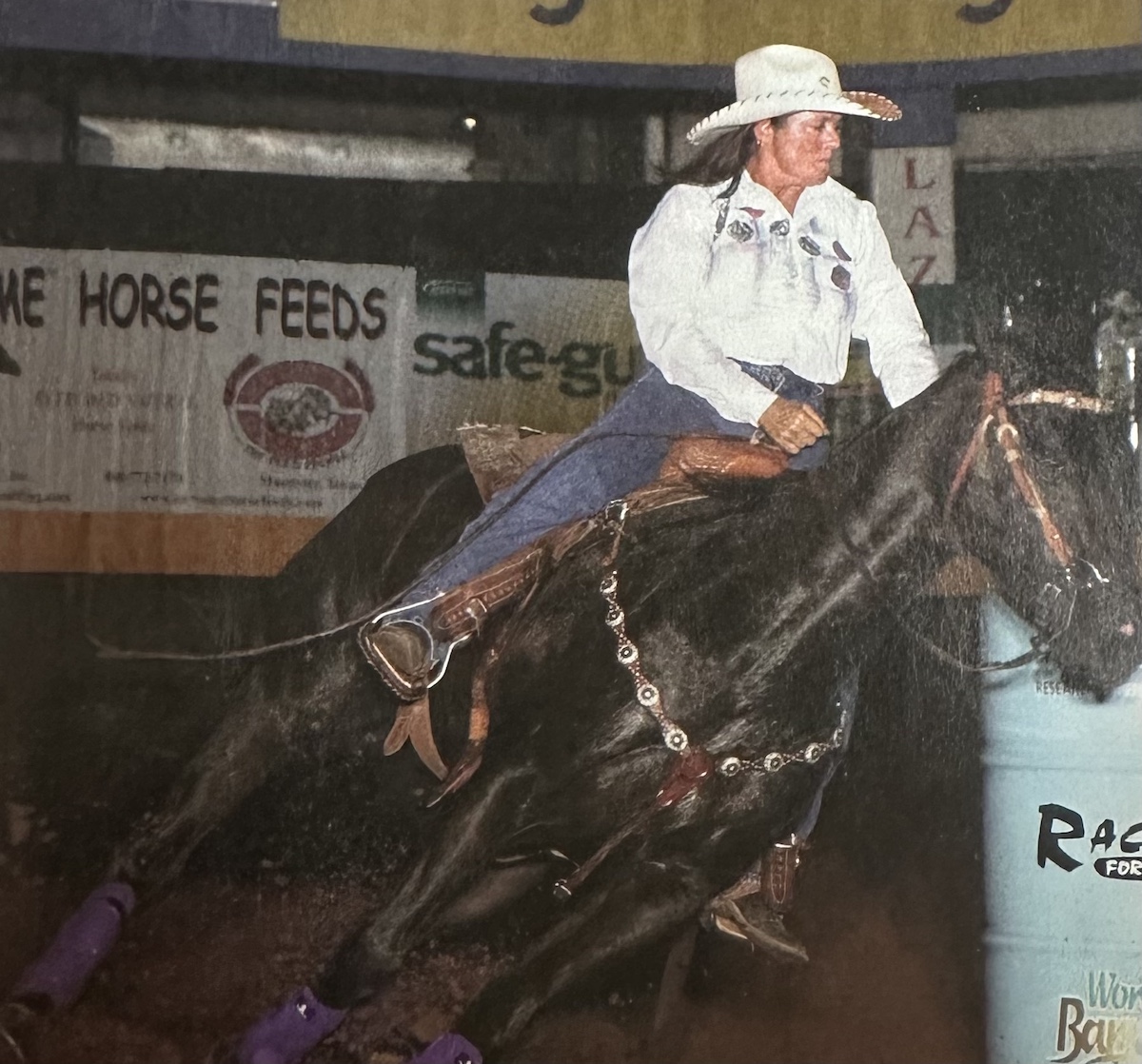
To Blandford, the only reason to exhibition is to see how a horse is clocking and to see what she needs to come home and work on.
“When I go to a barrel race it’s to race,” she says. “If I go in there and train at the barrel race, how do I know what I need to work on? I send them when I get in there. It’s too expensive to train a horse at a barrel race anyway.”
The whole reason Blandford wants her horses to know she means business at a barrel race is to give them confidence. She never rides in the arena and lets them look around beforehand, because she doesn’t want them running in there looking for a “booger” later.
“All these colts know is barrels,” she says. “If you ride in that pen, they better be hunting barrels, because that’s what they’re trained to do.”
She also cautions about over-exhibitioning.
“I had a friend and she had a really nice horse, one that was tough to outrun,” Blandford said. “But I knew if she exhibitioned that horse, I could outrun her in that race. If you take a horse in there and he works, but then you take him back in that pen and do it again, he’ll think ‘What did I do wrong? Why are you taking me back in this pen?'”
It’s crucial to keep a horse liking his job, which is why it might take Blandford three months to put the basics in a colt.
“I don’t look for three perfect barrels,” she said. “If a horse did something right, I quit him. I might ride one 10 or 15 minutes. I don’t camp on my horses.”
Turn Techniques
Blandford is not a big-circle kind of trainer; she approaches a barrel at the same place every time. If a horse fades toward a can, she won’t turn him into the fade, choosing instead to stop him and bring him back, looking to where she wants him to go with her eyes. Bad habits are to be broken right there in practice, because a horse will do it worse at a race, she says.
“I visualize the best run I ever made, which is usually at home. Come to my pen and try to outrun me.” — Kay Blandford, on preparing for a run
On the approach, Blandford stays four feet from the barrel and stops to back a horse up with its inside hind leg underneath.
“I back up straight,” she said. “I will not allow a horse to waller around backing up. If he steps in, I’ll reverse-arc him back around. If he steps out, I’ll just back him up to the inside.”
Whether at a walk or run, Blandford always turns a barrel or circles her horse one-handed, pushing on the horn with her outside hand.
“Never teach a horse to turn using two hands around a barrel,” she says. “The only outside rein I use is for correction. I don’t balance on that outside rein because you can’t do it in a run. I sit in the middle of my saddle and push down.”
The other thing she doesn’t do in a turn is use any leg pressure.
“People tell you when you get to the barrel to get your leg in one,” she says. “Well, I don’t even ride good enough to do that. Everything is so forward in a run, you can’t really do it. So why practice it? Horses learn from repetition. Use your leg to go faster.”
The only time Blandford uses her foot is for correction, such as to keep a horse finishing a turn.
“If you try to pull to make a horse finish a barrel, he’ll keep stepping out,” she says. “A horse is taught to move away if you pull. I use an outside foot and if that doesn’t work, then I stop. You’ve got to break that cycle. Stop a horse and show him what he did wrong.”
Approaching the barrel, Blandford rolls her hips back and down and sits, keeping her inside hand low and coming straight back to the horn with the inside rein.
“But I don’t pull on a horse; I help him,” she says. “Then, coming off the barrel, I drop my hand and squeeze, and they take off.”
They take off so hard, in fact, that unsuspecting clients have been blown off the back end when it’s their turn.
“I teach a horse to pull me out of the saddle,” says Blandford, who also rolls her hips forward to encourage speed. “The horn’s there for a reason. Horses are stronger than you are.”
Blandford also utilizes Clinton Anderson’s drill of circling into the fence and rolling back off it to reinforce how hard she wants her horse to leave a barrel.
In the end, there’s one trait that Blandford values in a horse way more than how fast he can run or how pretty he can turn. How much does he love his job and want to help you win?
“I had a horse I could make do it,” she says. “But you can’t win on them. And it’s all about winning.”
This article was originally published in the April 2008 issue of Barrel Horse News.