
By Heidi Nyland
You’ve ridden and owned horses your entire life — entering every barrel race you could aboard many memorable mounts. Now, you have the chance to promote the best horse of your lifetime, a stallion proven to produce barrel racing athletes and performance horses like no others. This is that special horse that can add something to the barrel racing sport — if only more people knew about him.
What’s the best way to let others — barrel racers with strong, eager-to-run mares — know about your stallion? You need a well-planned marketing scheme. But what does that mean? And who can help? While you’ll probably want to work with professional advertising designers known for their work in the equine industry, it’s best to first plan a budget and do a little research for yourself. When you have all your facts and data collected, you’ll be a smart shopper as you look for photographers and ad designers and as you talk to advertising representatives at various equine publications.
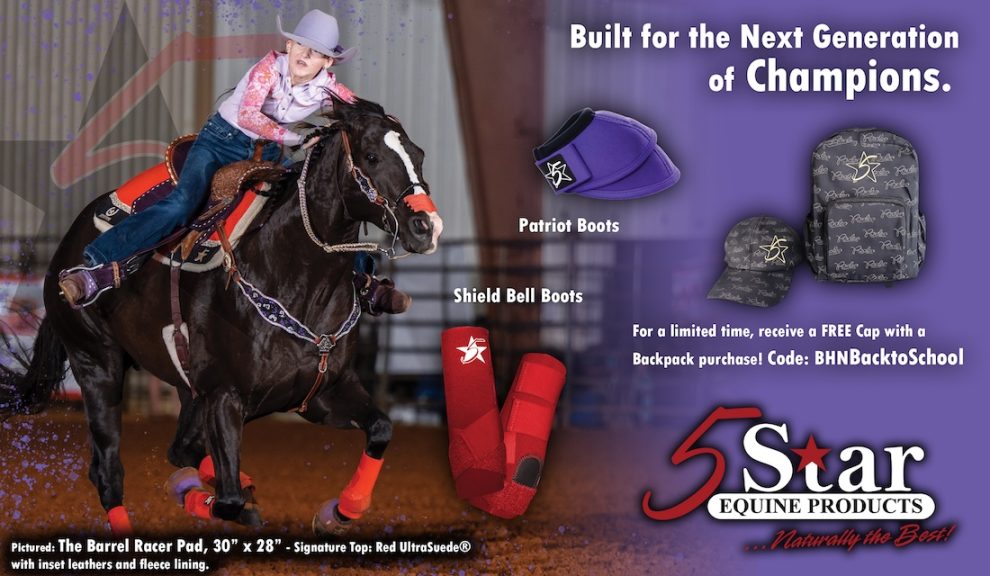
We sat down with photographers and graphic designers Larry Larson (www.larrylarsonphotogra-phy.com) and Theresa Chavarria (www.equi-adver-tising.com and www.quarterhorsestallions.com) to find out how they help their stallion-owning customers create eye-catching ads that attract serious business. The promo pros discussed the importance of studying your market, planning a budget, organizing facts and information about your stallion, planning ahead for great photographs, working with your designer to achieve your desired look, and finally, placing your ad for optimum results. They also provided samples of their work, which are scattered through the article, to illustrate their points and get your creative juices flowing.
Working with professionals who know the market will ensure your advertising plan is well-conceived and full of the details horse owners demand.  A professional ad can showcase your stallion’s best attributes.
Know your horse
Before you search online for a photographer and designer specializing in equines, take a moment to think about your horse and your target-advertising recipient. Begin by gathering your stallion’s registration papers, lineage charts, speed indexes and career earning numbers. Designers will want all these details for an ad. Scan important papers or make copies and place them in a folder. You’ll eventually send this folder to your designer.
After looking at all the data, consider your horse’s lineage and his siring potential. Is he strictly a barrel horse? Or might his offspring also do well in other show arenas? Your answer will help you know how and where to advertise and will help you know your target audience. If your horse and his ancestors have all done well rounding barrels, you’ll want to focus your advertising in barrel-specific publications. If your horse may sire great reiners and all-around horses, you may also want to feature him in regional or national breed association publications.
“All stallion owners are searching for a targeted market,” Larson explained. “To find your marketing niche, you’ll need as many details about your horse as possible. If it’s a speed-bred stallion, I always try to direct customers to publications such as Barrel Horse News. I have a good idea where the industry goes to find the bloodlines the customer’s stallion has. I also make sure breeders don’t just run ads in national publications. You have to let the locals know what great stallions are in their area. Some advertising dollars need to be spent in your region.
”Once you know your horse’s full past, make a list of the magazines where you’d ideally like to place ads. For a long list of possible publications, visit www.americanhorsepubs.org. The site lists all publications that are members of the American Horse Publications association. You’ll find a list of more than 150 member publications and contact information for each.
Budget your goal
Once you have a good idea of which magazines to advertise in, you’ll need to know how much those ads cost. You’ll also need to decide how much money you’ll budget for all of your stallion’s advertising.
Keep in mind budget doesn’t mean cheap or limited freedom. Having a budget means you’re serious about your future goals and know what it will take to achieve all. In a recent CNN Money article, a young financial whiz said ““We’re not bound by [our budget], but use it to guide and track our goals.” Map out your current spending and analyze how much you have to spend.
With an overall number in mind, contact advertising representatives at the magazines and Web sites you’d most like to target. Ask if there’s a special stallion advertising issue? Are the prices lowered for that issue? Also ask for regular, full-page, full-color pricing. If that number seems high, make sure to check on display ad opportunities. Most publications will promptly send you a PDF file listing all advertising rates and specials. Collecting these sheets will allow you to browse and compare prices as you decide which space to purchase. Tip: Many publications also post their ad rates online.
“You don’t have to spend thousands of dollars on advertising,” Larson advises. “Set a budget and decide where your targeted market will see your product. Set a budget and stick to it.”
Keep in mind you’ll have photo and design expenses beyond the costs for publications’ ad space. Photographers often charge a flat day rate and travel rate. Consider asking your neighbors if they also need horses photographed. You’ll save money and have your neighbor handy to help with photo shoot details.
Most designers charge by the hour — often ranging from $35 to $100. If you want a detailed ad with customized logos and a layered look, expect to pay for some extra time. You’ll also want to talk to your designer about creating a Web site with the same look as your printed ad. For Web sites, expect to pay by the hour for design work and by the year for domain registration (usually about $10 a year) and server space ($75 to $300 a year depending on the service company and the amount of space you need).
“A Web site is almost a given anymore,” Larson said. “You want to direct the public to your site and have all the details there for them to research. Don’t try to cram everything onto an 8.5-by-11-inch ad.”
Chavarria seconds the need to budget for a Web site. “Web sites offer year round exposure and the opportunity to show off your stallion’s offspring,” she said. “You want to start out your advertising really saying something that brings attention for viewers to remember your stallion while going through a magazine. That ad should them drive them to the Web where they can learn even more— and start communicating with you.”
Decide on a look
As you’re shopping for publications, make sure to analyze the ads you see. Do some draw your attention more than others? Tear our your favorites and store them in your stallion’s folder. When it’s time to talk with your designer, you’ll be able to describe what you like—and don’t like. Also consider what colors or themes you’d like to share in your ad. If your horse has a fun name, you might choose images that will match.
Chavarria says she likes customers to allow her free rein when it comes to creative design. Of course, she’s also willing to hear ideas and brainstorm with clients. “I often wait to see the photos that customers send,” she said. “I like to see what colors are in the photos and design around that to bring out an overall color scheme. The color of the horse, the clothes the rider is wearing, the background, the color of the leaves on the trees or flowers, etc. A creative designer will automatically come up with something different with every ad.”
Larson says he always asks if customers have ideas they would like to incorporate into advertising. “I like customers to have a basic idea of what they want,” Larson said. “If it’s something they already envision, they will be thrilled with the final product. Others give me the go ahead to make them an ad; some don’t even care to see a proof. My true passion, though, is doing the ranch calls—taking the photos I’ll use in the ads. That way I can have more control over the outcome and start to get the basics for the national ads and Web site development.
Photo collection
Chavarria and Larson agree that photos can make or break your ad. Both professional photographers, they know the details that will help show off your stallion’s best features. While some snap shots can work for ads, it’s best to plan for a professional photographer to visit your ranch or a key event to make sure you have great, clear photos.
Larson says he became an equine photographer because of the poor quality photos he often saw. “I showed for years and had very few quality photos of the horses I had shown,” he said. “My thought was, ‘What could your market be if you actually produced a quality product?’ I attended an equine photography clinic in 1992 and have been going strong ever since.”
To get the best photos of your stallion, call to schedule a photo session well in advance. Be careful not to wait until the end of summer—when many horse owners are panicked and rush to book appointments at once. “Book a day early in the year,” Larson advised. ”I like to take photos in the spring when horses have shed out and have their best haircoats. Most stallions look pretty tough in the fall after running in the pasture all summer with the mare bands. At times it takes me longer to find the perfect place to do the photos than it does to complete the job. Once you get the photos you can do many things with them, but the main objective is getting the best images possible and worry about the promotional detail later.”
Working with designers
With photos ready, it’s time to shop for a designer. Remember your stack of ads pulled from the magazines where you’d like to place your ad? Scan through the stack looking for designer names. Many designers place their name or logo in a small font at the bottom or side of the page. You may also see designers/photographers’ names across the bottom of some photos. Search online for the names you see. Or, do an online search for “equine advertise designer.”
Plan to contact several designers to compare rates and to see more from their portfolios. You’ll want to contact a designer at least two months before you’d like your ad to run in a regional magazine, or up to five months before a national magazine issue date.
Be sure to contact the magazine to reserve your spot before asking your designer to work on the ad. Most regional magazines must have ads placed by the 15th of the month before publication. National magazines work two and three months ahead of the publication date. Allow your designer time to create and yourself time to edit.
Larson says your completed ad will be well worth the investment.
“It’s money well spent,” he said. “An ad shows potential customers that you’re serious about your business and makes them want to do business with you. I feel money for good photography and advertising are the best dollars spent if you actually want to breed mares for the public.”
Tips from the Pros
Photographers and graphic designers Larry Larson (www.larrylarsonphotography.com) and Theresa Chavarria (www.equi-advertising.com and www.quarterhorsestallions.com) share their tips and pet peeves to help you place successful ads:
• Keep it simple. Readers will stop and appreciate your clean, well-designed ad. Resist the urge to cram too much onto a page.
• Plan ahead. Most designers do their best work when you plan at least two months ahead. Your work is important, but many designers have lots of clients and get busy close to deadline time. You’ll get the best, creative work if you give your designers time to be artists.
• Prioritize photos. Make sure you have professional quality photos. If you’re paying for a full-page ad, it will look tons better with great action shots. Schedule a photo shoot during a sunny season, and make sure your horse is in top shape. Have your horse cleaned and ready for morning’s golden light.
• Be organized. Designers and photographers may charge by the hour. If you have all necessary information collected and ready, designers won’t have to call looking for missing info — charging you more for each edit. Keep in mind you’ll pay for every edit you make. Share your ideas with the designer before work starts to reduce the amount of costly last-minute changes.