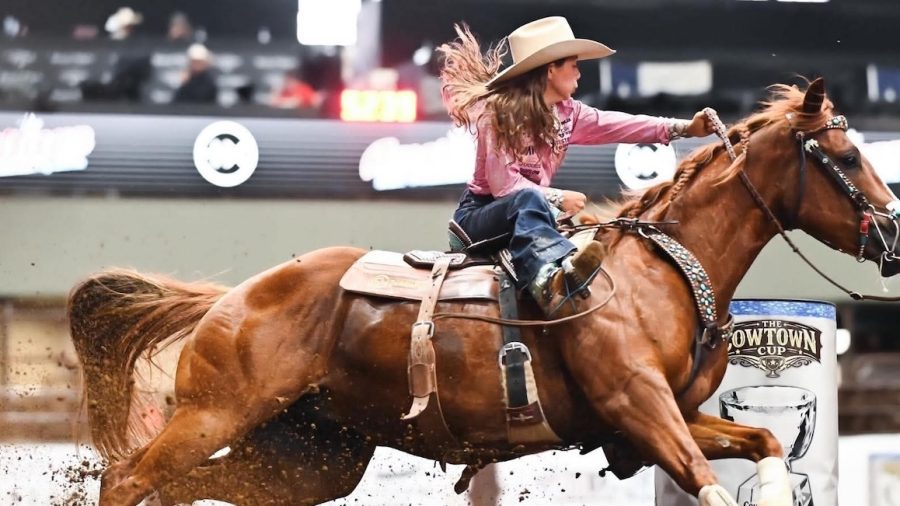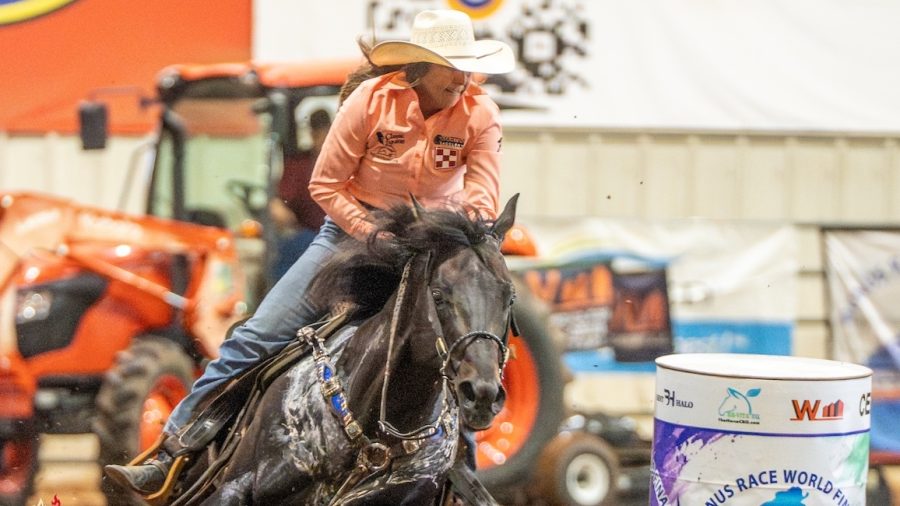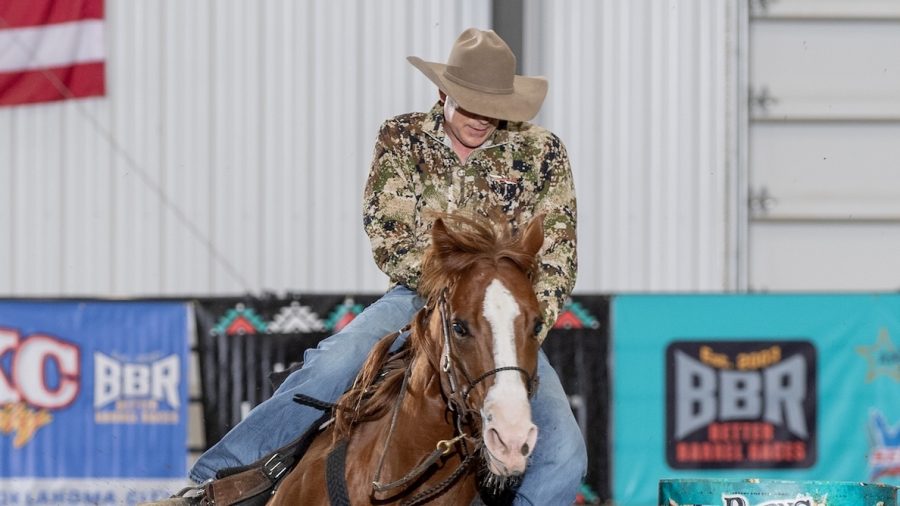


Performance horse veterinarians detail the most common questions they are asked and the information of which they want their clients to be aware.
Article by Savanna Escobar
Photos courtesy Garrett Metcalf and Marty Tanner
We have all been guilty of asking our friends, trainers, or the good ‘ol internet for advice on our horse’s health instead of reaching out to a qualified, experienced veterinarian. Many times, with the best of intentions, we can take steps in the wrong direction, spinning our wheels trying the latest miracle supplement or changing our routine to what works for someone else. Taking the time to work with a knowledgeable veterinarian can save you time and money in the long run — and avoid the frustration of wasted effort.
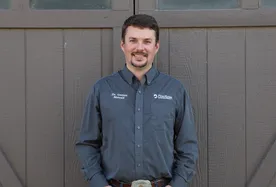
Dr. Marty Tanner, DVM, is the owner of Tanner Equine Sports Medicine and Rehabilitation in Millsap, Texas. He has cultivated a reputation as one of the best performance horse vets in the business and for more than 10 years has been traveling to the National Finals Rodeo to serve his clients. The graduate of Mississippi State University has been the veterinarian for more than 50 qualifiers, six world champions, an arena record, a single-season earnings record and five Professional Rodeo Cowboys Association Horse of The Year recipients.
Tanner shared that the most common question he gets is regarding exercise-induced pulmonary hemorrhage (EIPH), or “bleeding” as it is commonly known.
“Can my horse be bleeding if I don’t see any outward blood in the nose?”
Yes.
“I get asked that a lot [during the summer], because it’s on everybody’s mind with the weather,” Tanner said. “People can put it out of their mind because they don’t hear a cough or see bleeding, or maybe the horse already runs on Lasix (furosemide). But with barrel horses, the majority of horses that bleed don’t bleed out. The reason that happens is so many horses have an underlying issue that’s contributing to it. They’re not true primary bleeders, but they have lower airway disease or allergies, something like that, that is complicating it. I always tell clients ‘Picture your horse breathing through 10 drinking straws, and he’s fine. Then you obstruct four of them. He still needs the same amount of air to compete, but now you have to go without that 40%.'”
Tanner also shared that bleeding is also what he feels is the most misunderstood issue currently facing barrel racers.
“It has always been on my radar, but it’s more prevalent now,” Tanner said. “Because it’s more prevalent, it’s discussed more. The more people who are affected, the more a topic of conversation it’s going to be. I will always do a lameness first. But if I don’t see anything in the lameness to account for it (gate refusal, poor performance, etc.) then that really puts bleeding on my radar.”
Tanner’s preferred diagnostic method is bronchoalveolar lavage, or BAL. BAL is a technique in which a flexible tube is passed down the horse’s trachea until it reaches the lung. Sterile saline is injected into the lung, and then aspirated back out into the syringe to obtain a sample of cells from the bronchioles and alveoli. Cytology is then performed on the sample to evaluate what types of cells were recovered and aid in diagnosing respiratory diseases. Tanner acknowledges that, because of the prevalence of EIPH, many competitors will administer Lasix preventively to their horses for competition runs without performing diagnostics. When used properly, there are few side effects, and Tanner does not have an issue with its precautionary use.
“How long does it take my horse to recover from an injury?
Tanner divulged that the one thing he would like more people to understand is in regards to injuries — specifically, the time it can take horses to recover from them.
“We tend to want to get in a hurry. We’re an instant gratification society, and we have a lot of time and money invested [in the horse]. But if you don’t give the horse the correct amount of time, you can either re-injure them or make it a chronic problem. It can end up costing you more time in the end trying to shortcut, and part of my job is to relay that,” Tanner shared. “I understand time crunches, and there are some things you can push the envelope on, but sometimes you can end up ruining a horse or costing yourself more time or money. A management tip I learned from a non-vet is, ‘Put a horse in a stall for however long it takes for it to stop limping, and then double that amount of time in turnout.’ I was told that 25 years ago, and it still holds true today.”
“Once you start joint injections for a horse, do you always have to keep doing them?”
Dr. Garrett Metcalf, DVM, DACVS-LA is a board-certified surgeon who practices at Pine Ridge Equine Hospital in Glenpool, Oklahoma. He is a graduate of Oklahoma State University, and completed his surgical residency at Iowa State University before joining the team at Pine Ridge. Metcalf specializes in sports medicine/lameness, orthopedic, soft tissue, respiratory and arthroscopic surgery.
Metcalf said the most common question he fields is about joint injections.
His short answer is no, but he advises making decisions based on each individual horse’s needs.
“You’re doing it because it helps the horse, not because they have to have them. If it’s better for the horse, then I’ll do it,” Metcalf said. “If I can do [any treatment] without causing more problems and I can help the horse, then that’s what I do.”
Metcalf notes that equine protozoal myeloencephalopathy (EPM) and kissing spines also get brought up frequently. But recently, it is bleeders that have been the most inquired about and most misunderstood issue among clients.
“Does my horse have to run on Lasix forever if he bleeds?”
“It’s kind of a misconception; ‘If they bleed once they’ll bleed again, and have to be on Lasix forever.’ That is definitely not true; some horses can bleed once and not need Lasix for every event. But of course no one wants to see them bleed, so it’s used more as a preventative,” Metcalf shared. “Everyone asks when to scope after a run, and it is ideally within 12 hours after a run. But just because you don’t see blood on the camera doesn’t mean they didn’t bleed. It can be not enough to be visible in the trachea, and that’s when BAL becomes important. BAL can pick it up pretty late sometimes, but checking within 4-5 days post-run would be ideal.”
Metcalf concedes that medications such as Lasix are just part of the game.
“Bleeding is probably the most misunderstood. People just don’t know how to manage it, and some are over the top,” Metcalf said. “You can kind of put that in the same category as EPM. It gets hyped up and everybody starts trying to fit their symptoms together, thinkingm ‘Oh, my horse has to have that.’ You’ve got to have a bit of critical thinking ability and not get sucked in to those scenarios.”
“How can I prevent soft tissue injuries?”
As with Tanner, injury and recovery is a challenging topic for Metcalf’s practice.
“The most frustrating thing for clients (and doctors) would be soft tissue injuries,” Metcalf said. “They are still the slowest to heal, and most difficult to image and manage. They can have long recoveries and high expenses, and take a lot of patience. That goes for any kind of soft tissue problem — collateral ligaments, tendons, suspensory injuries.”
In line with injury recovery, Metcalf shared some tips on prevention as well.
“Preventing injuries mostly comes down to fitness. You can hurt your own horse by having them under-conditioned. Riding them in the pasture does not get them ready to run nine-oh for 15 seconds. There is a lot of stress, lot of turning. Just because it’s a short duration doesn’t mean they don’t need to be fit,” Metcalf advised. “Just like any athlete, they have to be in shape to handle that. Be comfortable with your horse, and make sure the horse is comfortable. And fit — maybe beyond what you expect it to encounter. Bad ground gets blamed a lot, but if the horse can’t handle the change in conditions, it’s likely not prepared for it, either. It’s just human nature to want to do the least amount of work necessary to achieve what we want. It ain’t easy to work, and that’s where we get into trouble. There are always conformational factors and genetics at play too, but those are typically last in the grand scheme of injuries.”
Barrel racing and the rigors of the road can be tough enough without health issues plaguing your equine partner. Don’t hesitate to reach out to your veterinarian for their help and expertise.