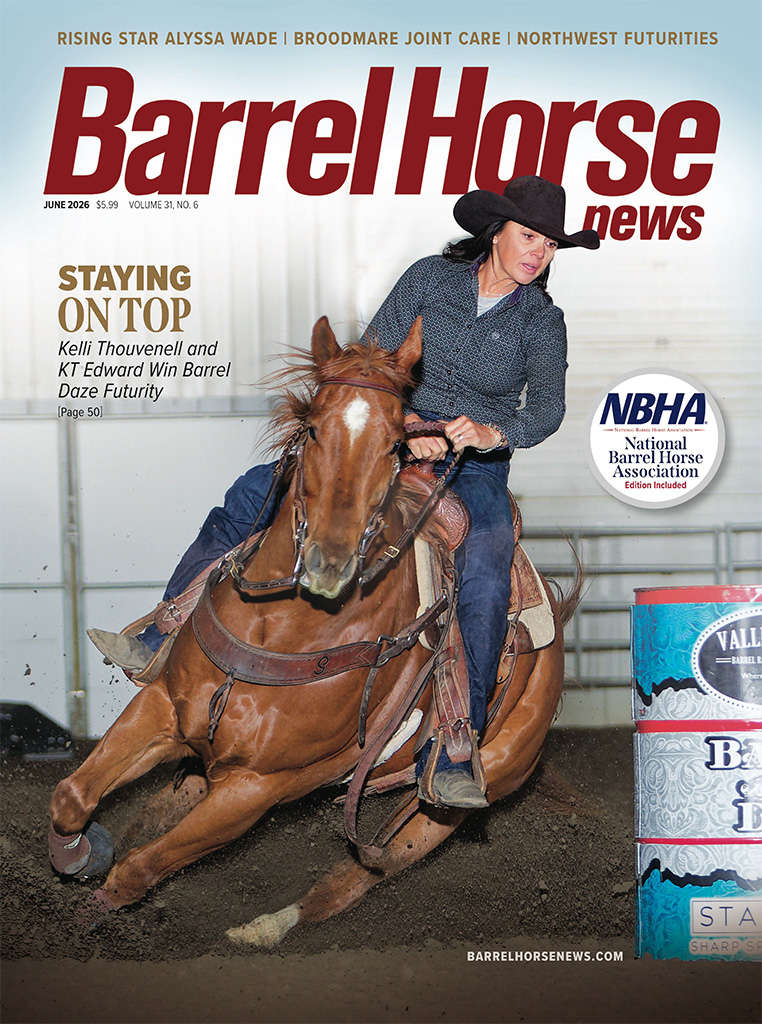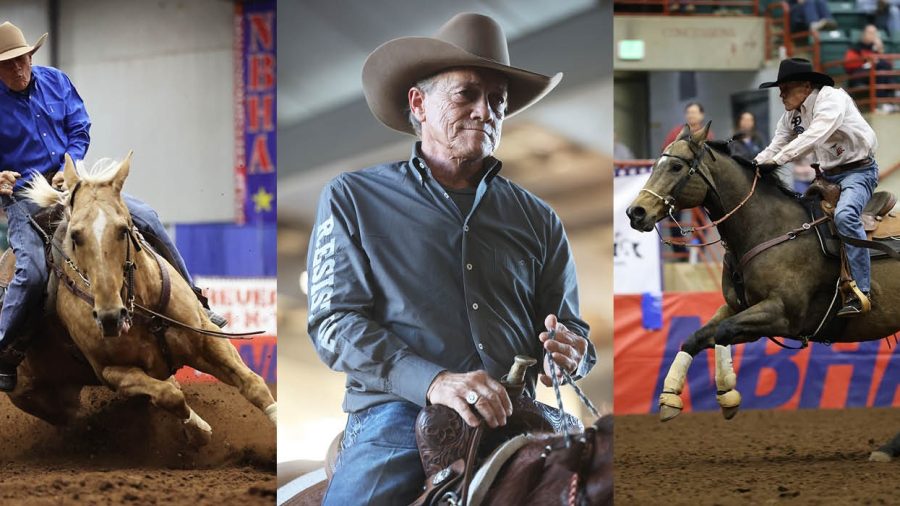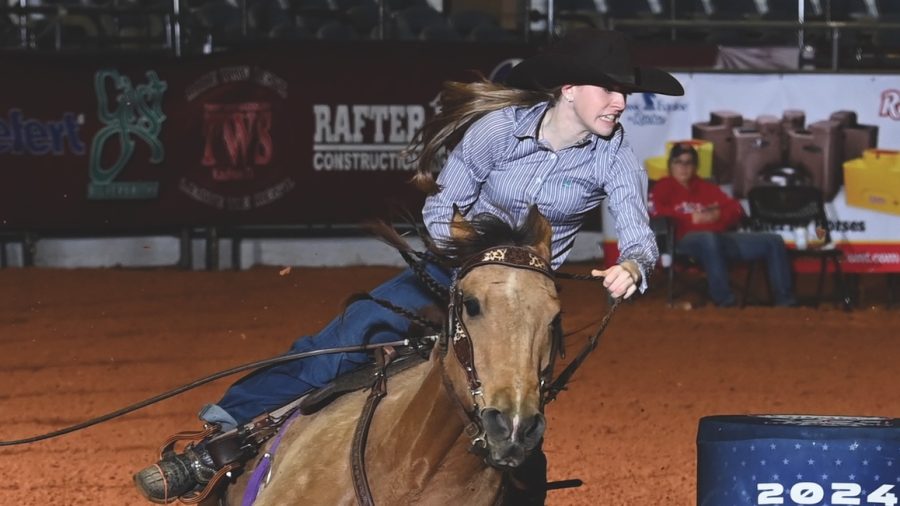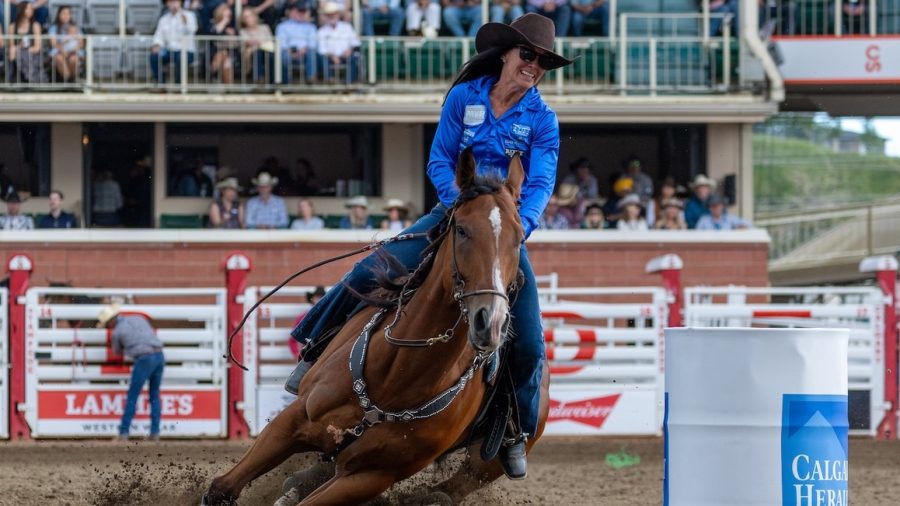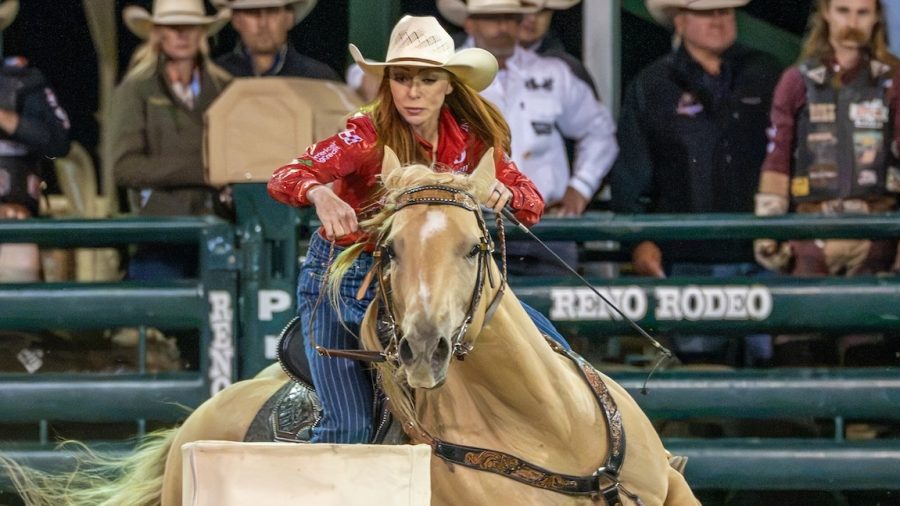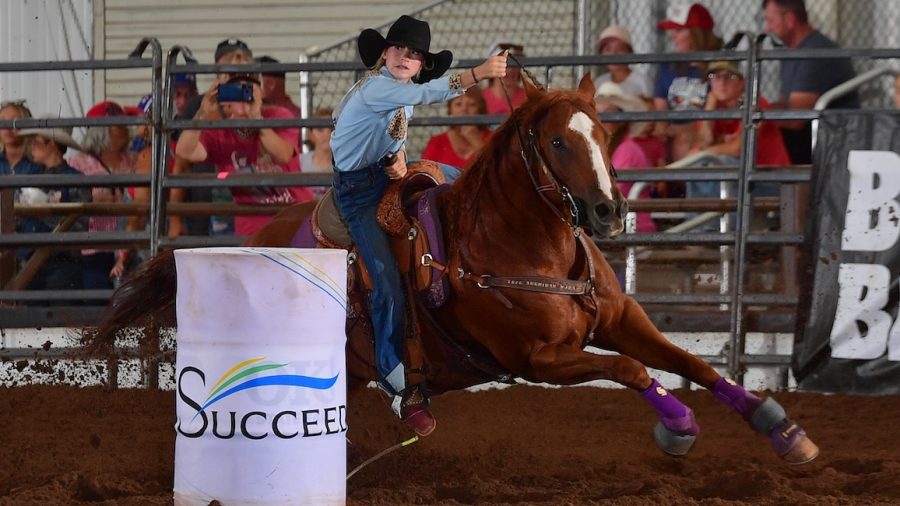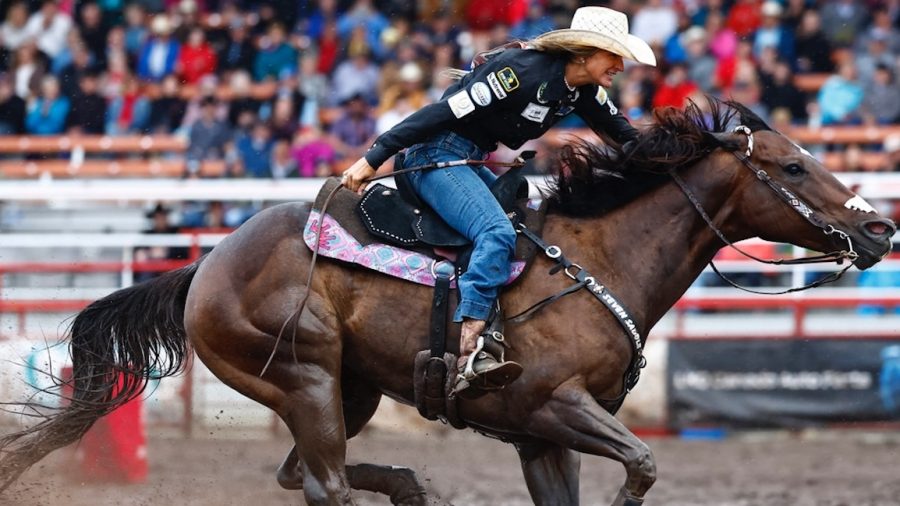

Charmayne James discusses helping your horse adjust to competition arenas of varying sizes.
Horses trained on barrels in small or large arenas, and run races in arenas of similar size, become accustom to the timing of running in an arena that size. If you go out and start running in arenas of a different size — let’s say larger arenas, when you’ve trained in smaller ones — a horse not used to running in a pen that size may struggle. It’s not usually about conditioning, they’re just not used to running that far and then having to rate, collect and prepare. But there are some things you can do with your horse to help it prepare for arenas of different sizes.
Breezing
When you’ll be moving into a larger arena for competition, a lot of barrel racers will work on breezing their horses — letting the horse move out and into a full-speed run. Many experienced barrel racers are able to keep control while breezing their horses safely, whether it’s down the side of the arena or on a racetrack. I think this allows those horses to open up and stretch out.
I know a lot of training programs with young horses incorporate breezing, along with riding in the arena and getting the horses broke in circles, stopping, backing up and teaching basic fundamentals. They also have a breezing program in there once or twice a week to teach them to run.
Breezing also seems to help those horses focus if they have any kind of adrenaline built up. However, it can also have the opposite effect of making a horse hotter. You have to know your horse and know what they can take. A horse that tends to want to be short and not run, I would say you’ll probably get more out of them by breezing them.
However, breezing a horse should be done with safety at top of mind. You need to make sure you’re breezing in a safe place with good footing. It should only be done when you know you can control your horse and stop them. if you have a horse that is out of control and you know you can’t stop, or you’re out in a pasture with a wire fence at the end, that is not a good situation to breeze. If the ground is damp or there’s any possibility of them stepping in a hole, you also want to avoid breezing.
Adjusting To a Larger Arena
A large arena may have a much bigger distance between the first and second barrel. I think you really have to be a rider, whether you’re a one-handed rider or a two-handed rider, to guide into both sides of that horse’s mouth to go straighter for longer.
If you go across the arena and you’re picking up one rein, the horse may face in a lot more. With a longer run, the horses are having to set and prepare more. You don’t want to use just your inside rein to move them away from the barrel, because that doesn’t really frame them up for the turns. It’s a really good idea to put pressure on both reins, guiding the horse across to the second barrel. When your leg crosses the barrel, the horse’s body should not be angled in. It should be framed up. It’s just harder with a longer run, because the harder your horse is running, the harder it is to gather and frame up. It just takes more energy and more strength, and you need to prepare for it.
With a longer run between barrels, horses’ muscles can fatigue, which makes it a bit harder to prepare for the turns. A bigger pattern and longer run is harder on a horse physically.
Shifting To a Smaller Arena
The biggest difference when moving to a smaller arena is everything happens a lot quicker. Some people think some horses are not going to do well in a little arena, but that’s not always true. If you have a horse you’re running in a little arena, and they start turning early, most people think they’re dropping their shoulder. However, those horses are starting to turn too early. It’s the angle when your leg crosses the barrel — if they’re going in at that angle, you’re always going to be too short. If you’re lifting off the barrel and slowing them down, holding them off the turn, and they’re going in at the wrong angle, you could be doing some things that are mechanically wrong that makes you think your horse won’t work well in a little arena.
The main thing you can do to address this issue is to keep working on not lifting your inside rein and trying to hold them off of the barrel. When you’re working the horse slow, and you side pass them away from the barrel, that same technique actually makes you get closer to the barrel at high speeds because that is pressure on the inside rein, which tells the horse to get closer to the barrel. When the horse doesn’t have at least three feet away from the barrel most of the way around, they’re too close.
In your practice work, you may need to work on riding two-handed to the barrel, and when you go to one hand, make sure that your horse is maintaining at least 3-4 feet away from the barrel as you go around the turn.
Changing Your Mindset
With my two world champion horses, Cruiser and Scamper, I didn’t let it get in my head worrying about if it was a big arena or a little arena. I just focused on riding around the barrels and maintaining three feet away from the barrel with those horses. I would maintain that distance whether I was in a big arena or a little arena. If I was in a big arena and needed to sit down early, I had the feeling and timing to sit down and help them, versus in a little arena where I needed to rider longer into the turn. If you already say to yourself, “My horse just works in little arenas,” there’s a pretty good chance he’s not going to work well in a big arena with that mindset.
You also need to take into account the condition of the arena footing. If you have horses in Texas that can run hard and fast on ground that holds them, they may not be able to prepare for the turns as well if you go out West to big outdoor arenas with harder ground. Your horse may not lock in as well and stride two or three strides past the barrels. That may lead you to think your horse doesn’t work well in those big outdoor pens.
I would say you need a little bit more time running in those pens and working on your timing of preparing and sitting down to find out how much speed you can gain and still win. Back off a bit for a few runs to gain more control and build your horse’s confidence so it can lock in and get used to those conditions.
Rolling With the Punches
For a rodeo pro with really good horses that know their job, your main thing is to set them up and place them, because you’re probably going to have one arena that is wider than another one. You may have another arena where the alleyway is a little bit offset. You’ll have another where the first barrel sits way down the arena. You’ll have the National Finals Rodeo where the first barrel is right inside the alleyway, and you can’t even see it until you’re basically in the arena.
You’re going to have a lot of different approaches, and your really good horses that have been trained to just go around those barrels and hunt the barrels are going to be your biggest asset. They know their job. You have to think and adjust for each pattern.
Make sure you don’t lock your eyes on the barrel. You don’t drive your car down the road with your eyes locked on a fixed point. Like drivers learn in a race car school, train your eyes to move through the road ahead.
Consider Your Horse’s Strengths
I do feel all horses can run anywhere, big or little arena, if you have the intent to make them good at what they do. Certain horses are better suited to larger or smaller arenas. It’s not always the size of the horse.
I’ve noticed cutting-bred horses are very quick on the turns, and they may be good on one of those 12-, 13-, 14-second setups, whereas you put them on the standard pattern and they get outrun by half a second by a horse with a little more speed breeding in them. If you were to put those two horses side-by-side in a Quarter Horse race, the race-bred horse is going to outrun the cow-bred horse.
That’s where the race-bred horse gets the advantage in a bigger pattern. Of course, that is not always true, but it’s the more predictable outcome.