
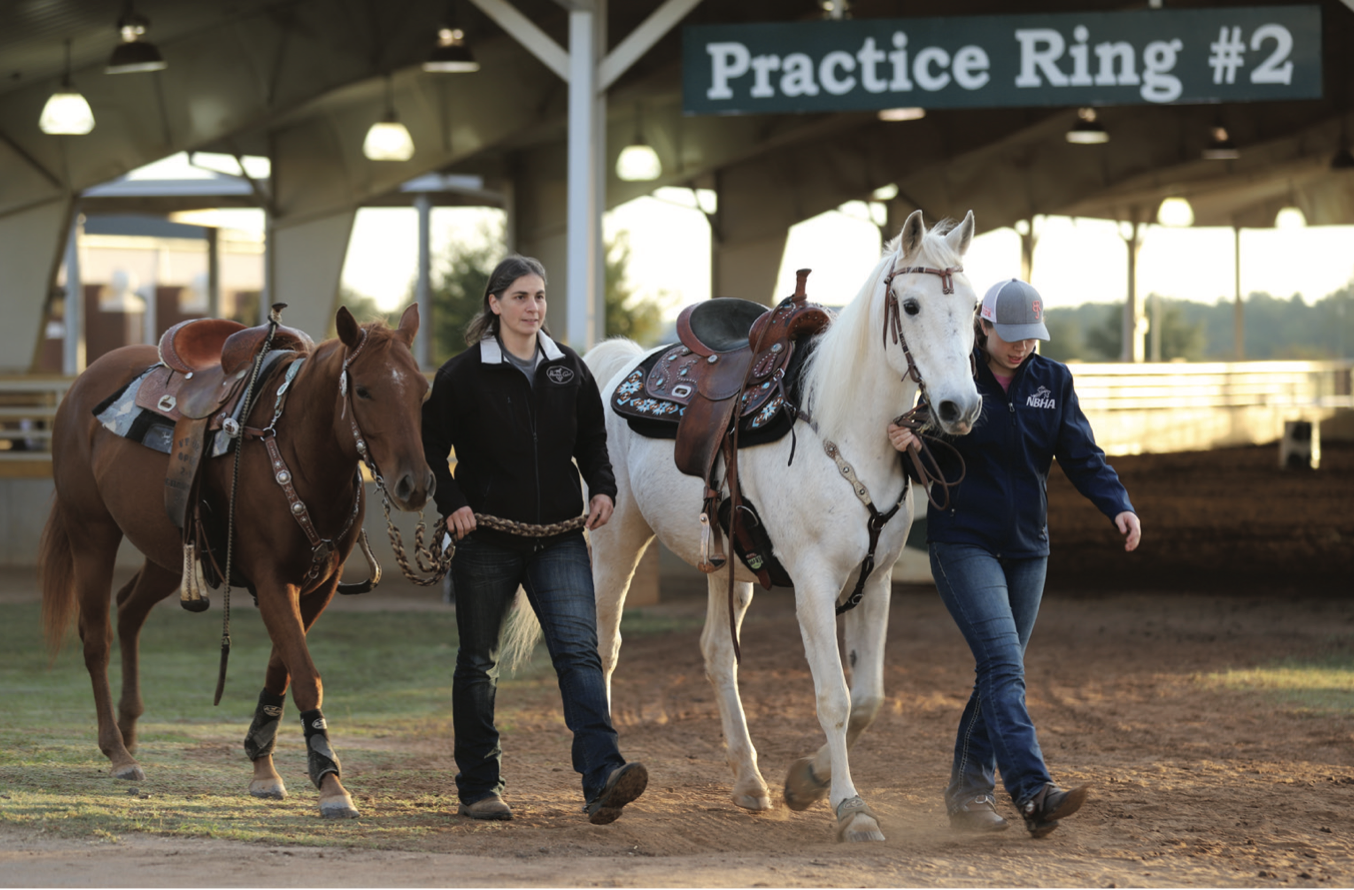
Brush up on everyday safety habits to avoid dangerous situations with horses.
There’s an element of danger to everything we do involving horse. Especially if you’re new to horses, keeping safety at the forefront when handling and riding is crucial. Two seasoned pros, National Finals Rodeo qualifiers Dona Kay Rule and Sherry Cervi, share some good safety practices and give a few examples of common hazardous mistakes and how to avoid them.
Tie to Avoid Wrecks
Dona Kay Rule knows all too well the immense danger of tying horses to anything that can move. At the Springfield, Missouri, pro rodeo in 2017, a horse tied to a panel in the warmup pen set back and began dragging the panel through the small, crowded area with horses and riders locked inside.
“Four horses got away from people, and behind those horses, there was a horse tied to a gate. I tried to send [my horse A Juicy Adventure] down and away, but the gate I was near was locked,” Rule told Kate Byars for the July 2018 issue of BHN. “I couldn’t get out, but I tried to get him away. About the time I turned him loose, horses hit him from behind, he was pushed into me, then jumped over me and landed in the bleachers. All four horses ran over him and me. It was a wreck. No one could get out.”
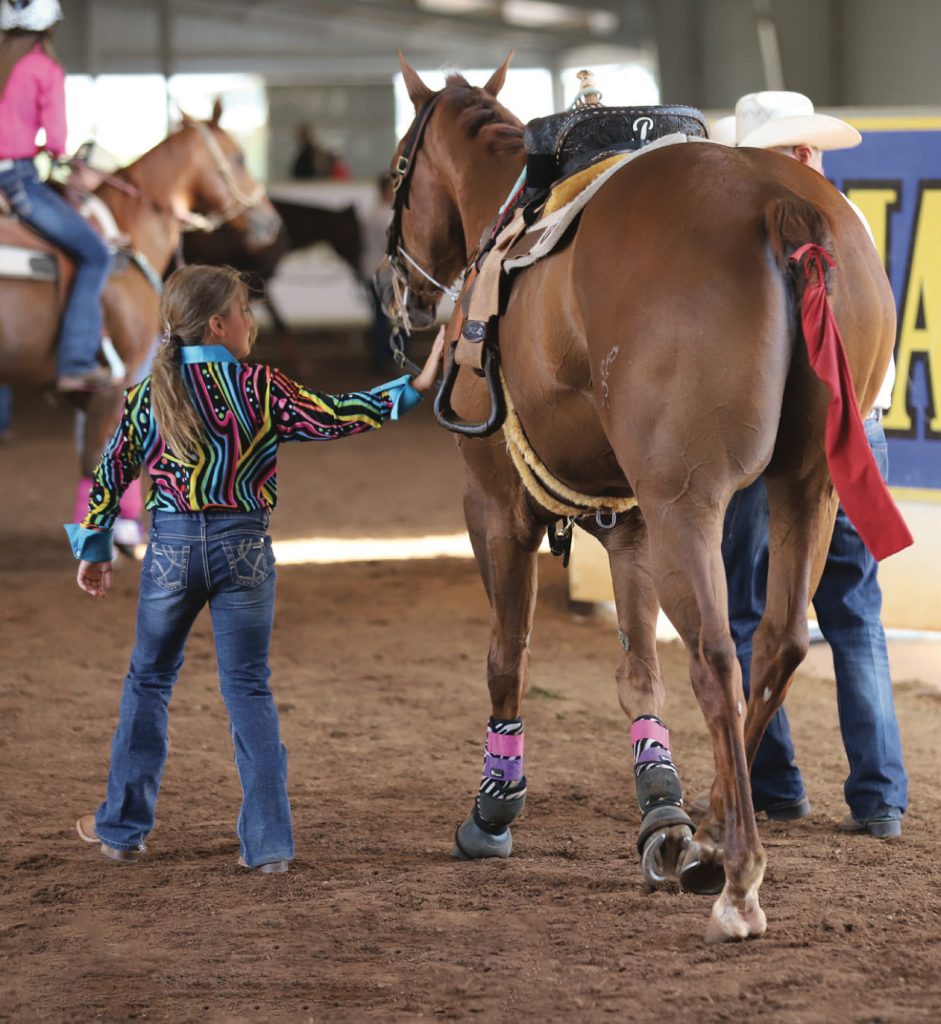
Rule says to look at whatever you’re about to tie your horse to and decide if 1,000 pounds of pressure could move it. With panels, for example, if you can pick them up and move them, your horse should never be tied to them.
“Do not tie to anything that is not secure, such as a loose panel, such as a panel that is even pinned to another panel but not securely sunk into the ground or fixed to a wall,” Rule said. “Look at the ring you’re fixing to tie him to and decide if 1,000 pounds can pull it over. That’s a good rule of thumb.”
Always tie with a quick release knot so that you can untie quickly if the horse panics. Don’t tie with too much slack in the rope either—an arm’s length is a good general guideline. If you want to let your horse graze, untie it and hand-graze under supervision instead.
“I see simple things, like tying horses really long to the trailer where they can get a foot over the lead rope or tying horses too close together. They may be buddies, but you could get in the line of fire if they’re too close,” Cervi said. “Don’t forget how powerful a horse can be in a wreck. You want to avoid a situation before it’s going to happen and just use good judgment.”
Cervi also suggests not staking dogs near your horses either.
“I see people tie their dogs long where the leash can get wrapped around the horse’s legs,” Cervi said. “I’ve seen that wreck several times, where you take for granted that your dog is going to stay away from your horse. Just avoid it and don’t do that.”
Use Horse Sense When Handling
Even the pros can admit the times they let their guards down and got caught in a scary place around horses.
“I, even being raised around horses my whole life, take for granted how fast things can go wrong,” Cervi said. “I got reminded of this last year when I got hurt. It was something I would do all the time—lead several horses together.”
Because of this accident, Cervi won’t lead multiple horses at the same time anymore and uses precaution when catching a horse in a pasture with other horses that are loose.
“I had some 2-year-olds and was leading them with loose horses in the pasture, and those loose horses ran up behind those colts and scared them and they ran over me,” Cervi said. “I knew better, but I was being lazy and didn’t want to make trips, so I got ran over and cracked some ribs, punctured my lung and had a laceration on my head. I was very fortunate I didn’t get hurt worse and need to not take for granted common sense and how powerful they are.”
It’s also important to follow the ‘golden rule’ of closing gates behind you. Rule says this goes hand-in-hand with teaching your horse to stay out of your space so they don’t try to barge past you or step on you.
“You go in your stall to get your horse, you drag your halter in and leave the gate open. Instead of coming to you to put the halter on, your horse dashes out the gate,” Rule said. “Close the gate behind you, approach your horse so he can see you clearly, make sure you don’t leave the halter too low on his nose, and make sure he goes out the gate in a patient manner following behind you. He needs to let you go first, and then you ask him to come through.”
Hauling and Traveling
When trailering, both experts agree if you tie your horses in the trailer, be sure to reach through the trailer from the outside to untie before opening the gate and walking in to unload. Many horses anticipate unloading and will begin to back out quickly as soon as the gate opens, which can cause numerous types of accidents if the horse is still tied up.
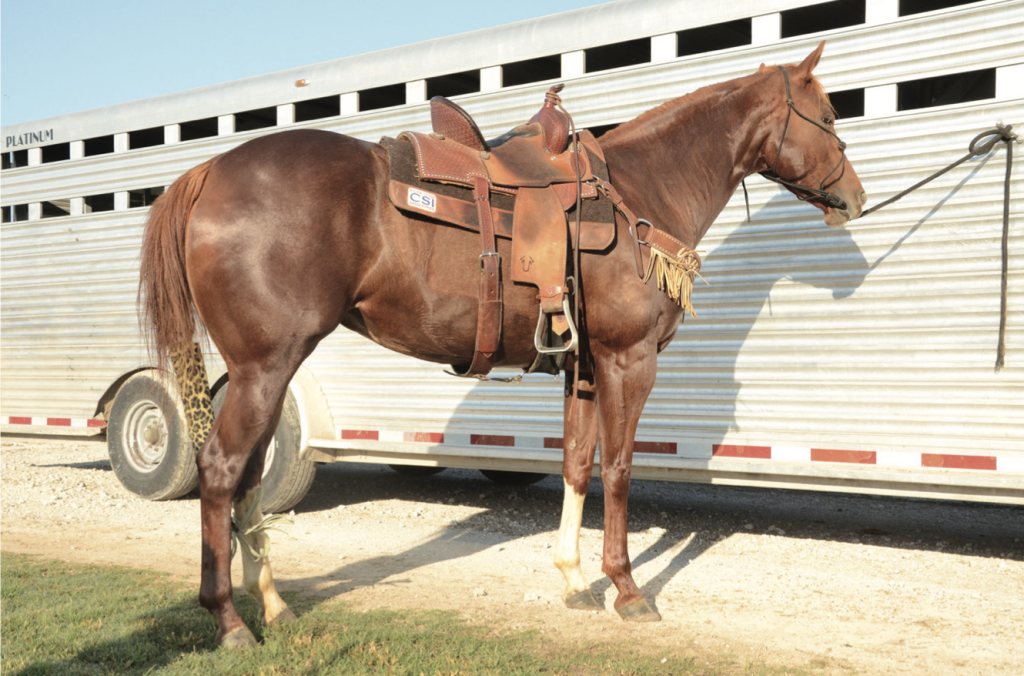
“I always tie my horses in the trailer, because I’ve had them get their head over the divider and bite and nip, and that turns into sores and fighting and kicking,” Cervi said. “I always untie my horse through the window. I never walk in with a tied horse. Even horses that are used to being tied up, when you walk in that’s looking for a wreck if something goes wrong and they get scared and decide to back out.”
Before you unload, be sure to park with adequate space between your own trailer and neighboring trailers so that your horses don’t injure each other.
“Even people who are not rookies still do that,” Cervi said with a laugh. “Even if horses have been hauled a million miles doesn’t mean they’re not going to kick. Be courteous of others’ space.”
Ride with Courtesy
The warmup pen can be especially dangerous at an event. Cervi and Rule say being courteous of the flow of traffic will keep you from injuring yourself, your horse and others around you. If you need to switch directions, either find a corner, head to the middle or wait for most of the other riders to change direction too. It’s important to be respectful of everyone’s warmup time by staying off your cell phone.
“Don’t cut across, and always look before you stop if people are behind you. Don’t be on your cell phone in the warmup. If you need to be on your cell phone, go stop in a corner. Everybody else is there and they’ve paid their fees, so be courteous of that,” Rule said. “If you’re in the barrel race and it’s time to team rope, stay out of those guys’ ways. That’s not fair—you wouldn’t want them in your way.”
Both professional barrel racers suggest practicing safe social distancing around other peoples’ horses at all times, whether you’re on the ground or in the saddle. Cervi says if your horse is fresh or throwing a fit, try to warm up away from the crowd to avoid putting other riders in danger. A crowded arena is also not the safest place to lunge or hand-walk.
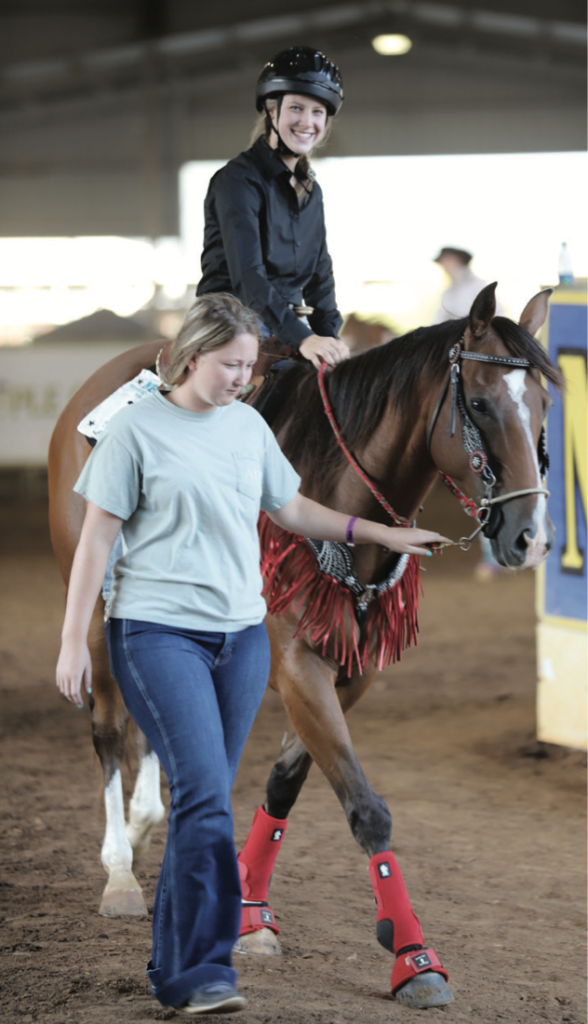
“Lungeing can be dangerous because your horse can buck and kick somebody. I’ve seen someone leading a horse that got to playing and kicked someone who was riding by and broke their leg,” Cervi said. “The gentlest horses can be playing and kick a horse or rider that’s going by. If I am somewhere I have to lead a horse, I try to go off by myself and be aware of what that horse is doing and not get in other peoples’ way. The warmup pen is a big issue.”
Another common safety scare Cervi notices at barrel races are people riding in halters around the grounds. She says it’s especially important for parents to insist that children always ride with a bridle, at home or at an event.
“I see kids playing and riding around in a halter, and it makes me cringe. I want so badly to go tell them ‘don’t,’ because you never know what could spook a horse,” Cervi said. “I still to this day cannot ride my horse in a halter—my dad put the fear of God in me about riding in a halter. The gentlest of horses can get scared, and you have no control. It doesn’t take any longer to put a bridle on than a halter.”
Using common sense to think through every situation involving horses will keep yourself, your family, your horses and those around you from getting seriously injured or worse.
This article was originally published in the September 2020 issue of Barrel Horse News.