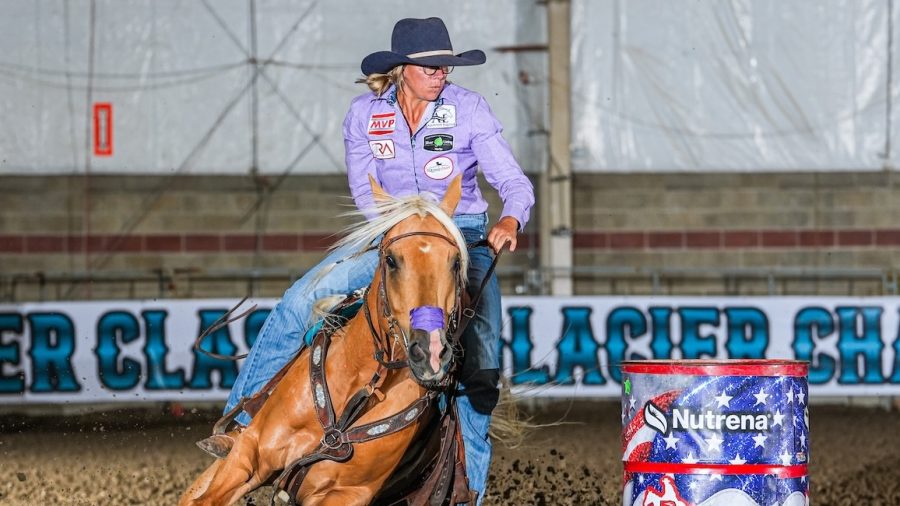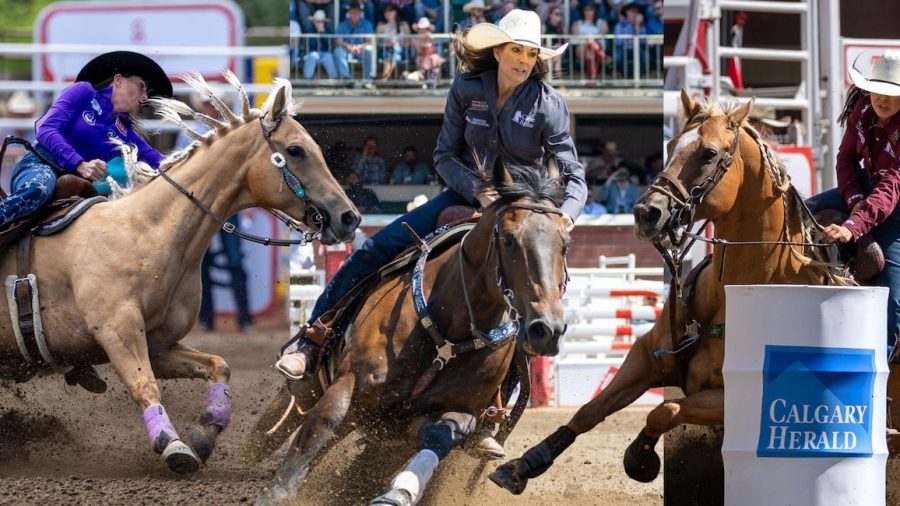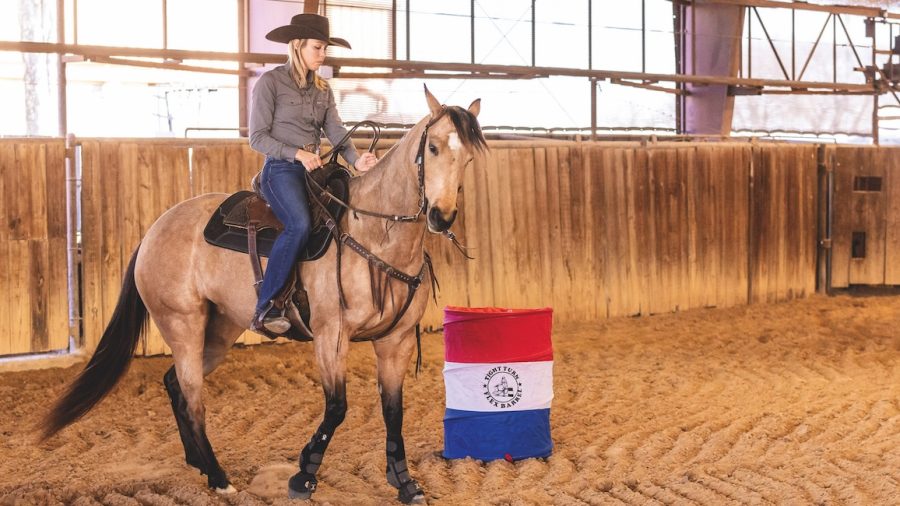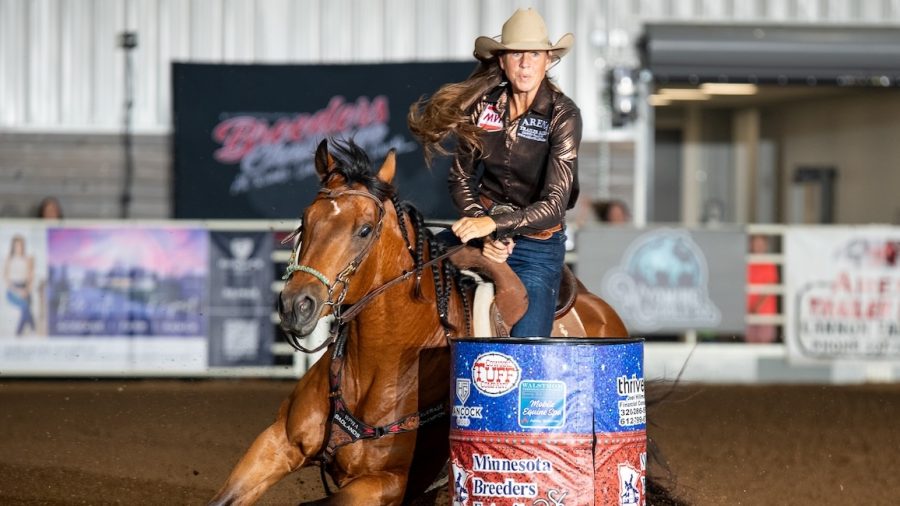

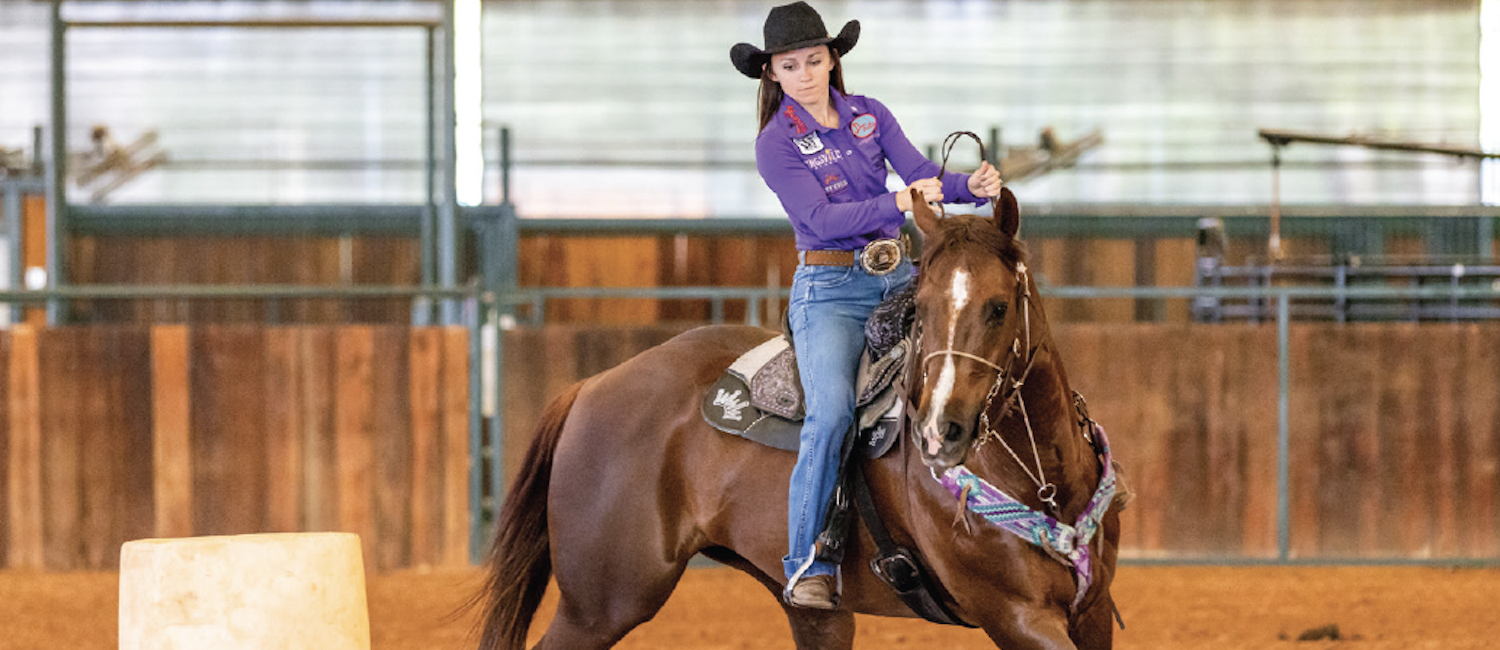
Using one barrel, Amanda Welsh addresses a number of challenges for barrel horses.
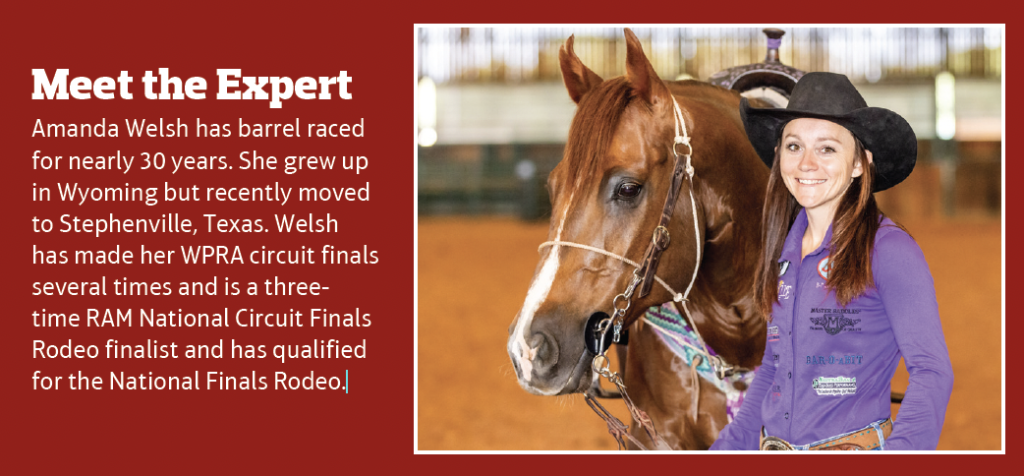
Barrel racing training exercises do not have to be complicated to be effective. Sometimes, all you need is an arena and one barrel to tune your horse. Women’s Professional Rodeo Association barrel racer Amanda Welsh and her dad, Bob Welsh, use this drill to address different situations, including a horse wanting to overrun a barrel, not using its hind end or dropping in to the turn too soon.
“We mainly use it if a horse doesn’t want to turn a barrel,” Amanda said. “That costs you time if they’re not turning. Making an efficient turn is always what you’re looking for in the run.”
Preparation
Welsh outfits her horse in its usual headgear for this drill, adding a crossway tiedown if her horse tends to put its head in the air. She warms her horse up a bit before starting the drill, making sure the horse is listening to her as she lopes some circles both directions.
“I do this drill just as needed — you don’t want to drill them too hard on it,” Welsh said. “I feel like, as with anything, they’ll get tired of it. It depends on their personality. With my good horse, I don’t do it with him very often. If you start to pick at him, he’ll get frustrated.”
You’ll want to place your barrel in the middle of the arena for the drill.
The Drill
How you begin the drill depends on what you want to accomplish with your horse, Welsh said.
“If the horse needs to slow down, I’ll start at a trot first instead of a lope,” Welsh said.
Trot several big circles around the arena, and then head toward the barrel.
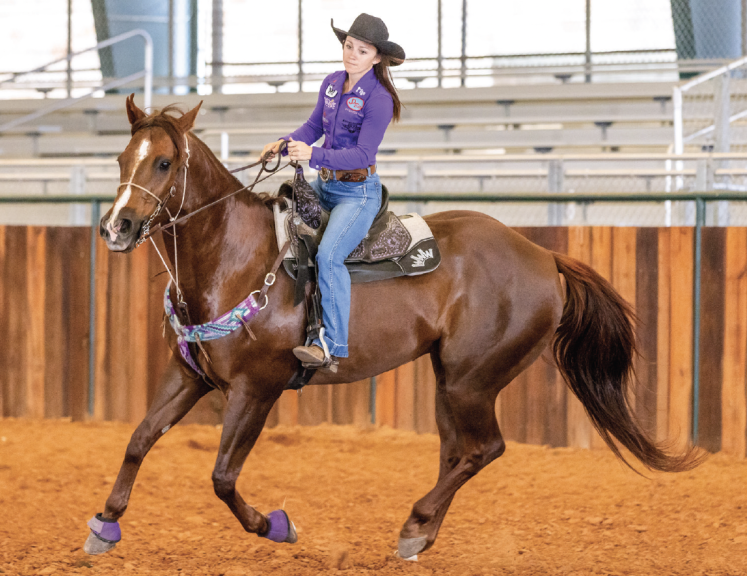
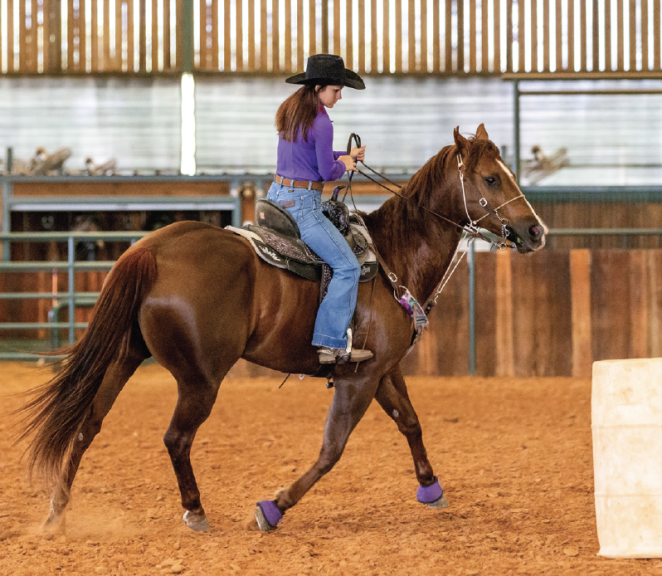
“I’ll line up the horse to go into the turn, and if the horse is wants to drop in too soon, I’ll put my inside foot on him and ask him to pick up his shoulder with my inside rein,” Welsh said.
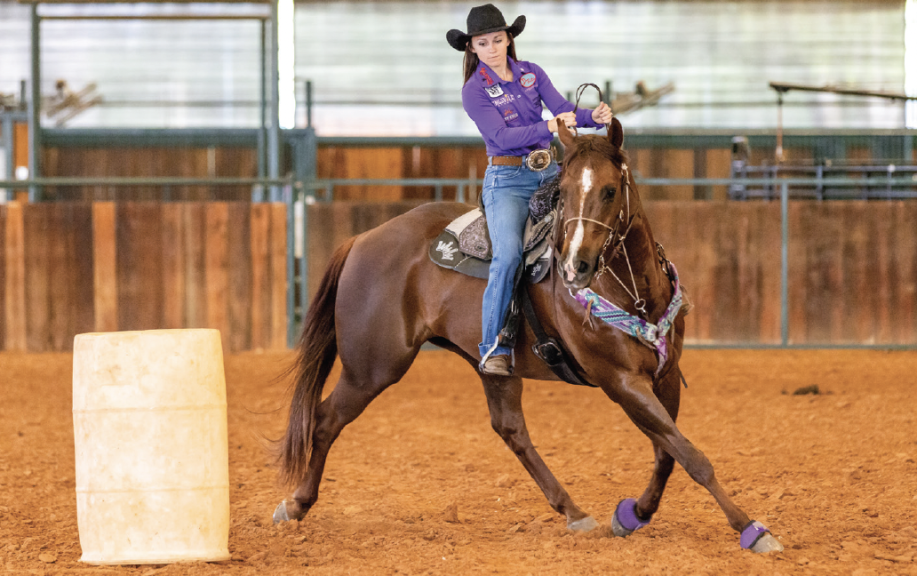
Welsh will pick up the shoulder at the point where she can feel it dropping, and she’ll keep the reins picked up until the horse is through the turn and past the barrel.
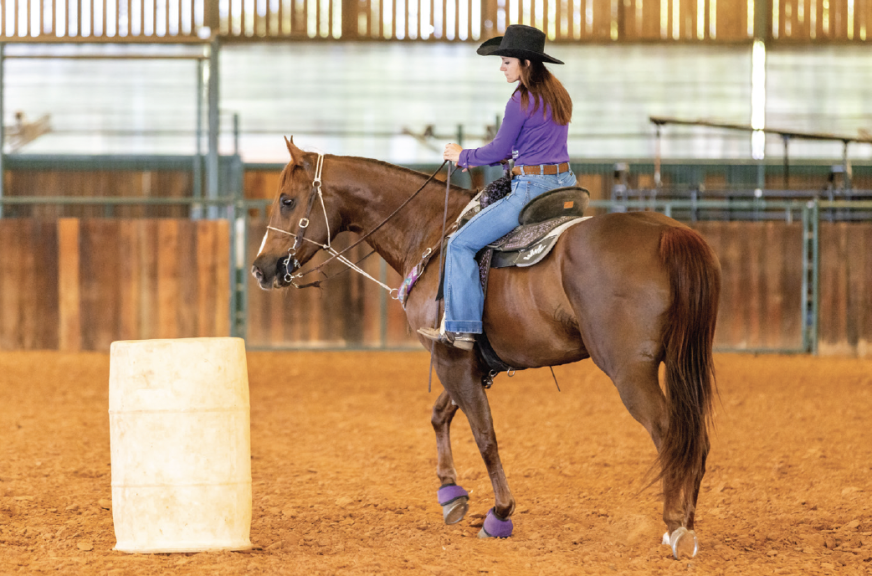
For a horse that doesn’t want to turn, Welsh will lope a couple of circles with the barrel in the center, then point her horse toward the barrel and break down to a trot or a walk before she begins the turn.
“If I’m loping, I’ll break him to a trot,” Welsh said. “If I’m trotting, I’ll break him down to a walk to get him thinking that he needs to get ready to turn.”
If you have a horse that is a little slow to speed up, this drill is great to get its feet going.
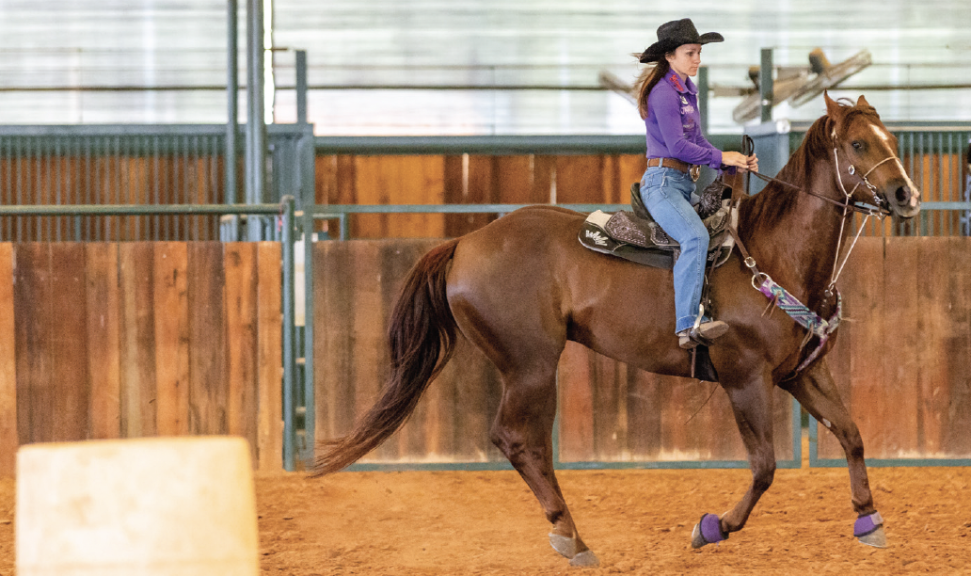
“If he’s wanting to be a bit lazy in his turn, I’ll do the drill faster,” Welsh said. “To pick up speed, I will give him more rein and smooch to him.”
Regardless of the problem you’re addressing, you’ll go from a circle—let’s say to the left, then cut a corner in the circle to go across the circle toward the barrel. You’ll make a full turn around the barrel as if it was the third barrel in a pattern, then leave the barrel back over your same path, and return to the circle in the same direction.
Welsh does the drill exactly the same going both directions.
“I turn this way because it’s teaching them how I want them to turn during a run, and going back out to the big circles allows them to relax,” Welsh said.
Troubleshooting
Welsh does this drill for around 10 to 15 minutes during a typical riding session.
“If I get my desired outcome sooner, then I’ll quit. I won’t keep hammering one,” Welsh said. “If a horse gets too frustrated, or the rider is too frustrated, it’s better to just walk away and do something else and then maybe come back to it. But I won’t ever do it more than 15 minutes.”
This article was originally published in the July 2023 issue of Barrel Horse News.