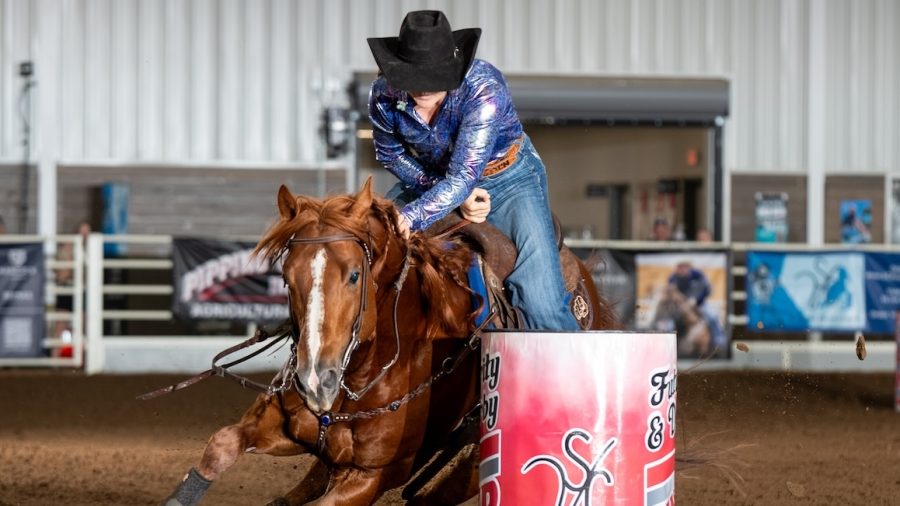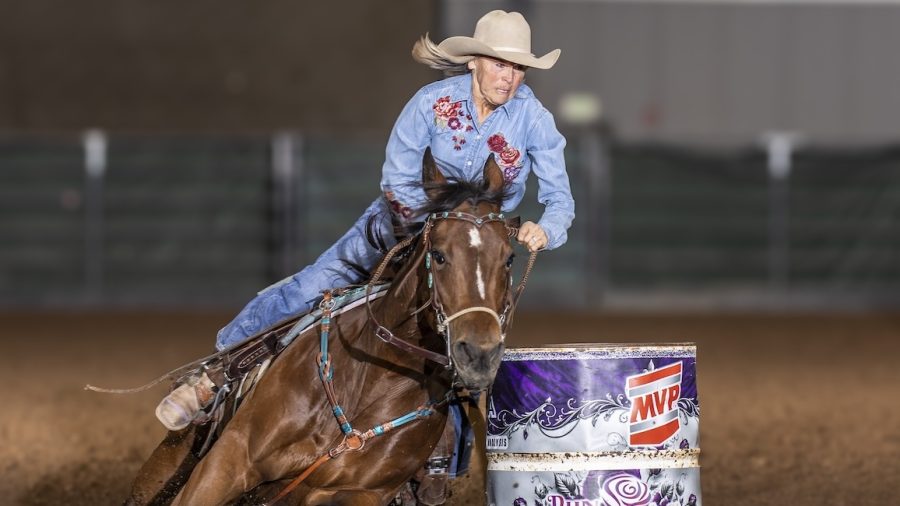

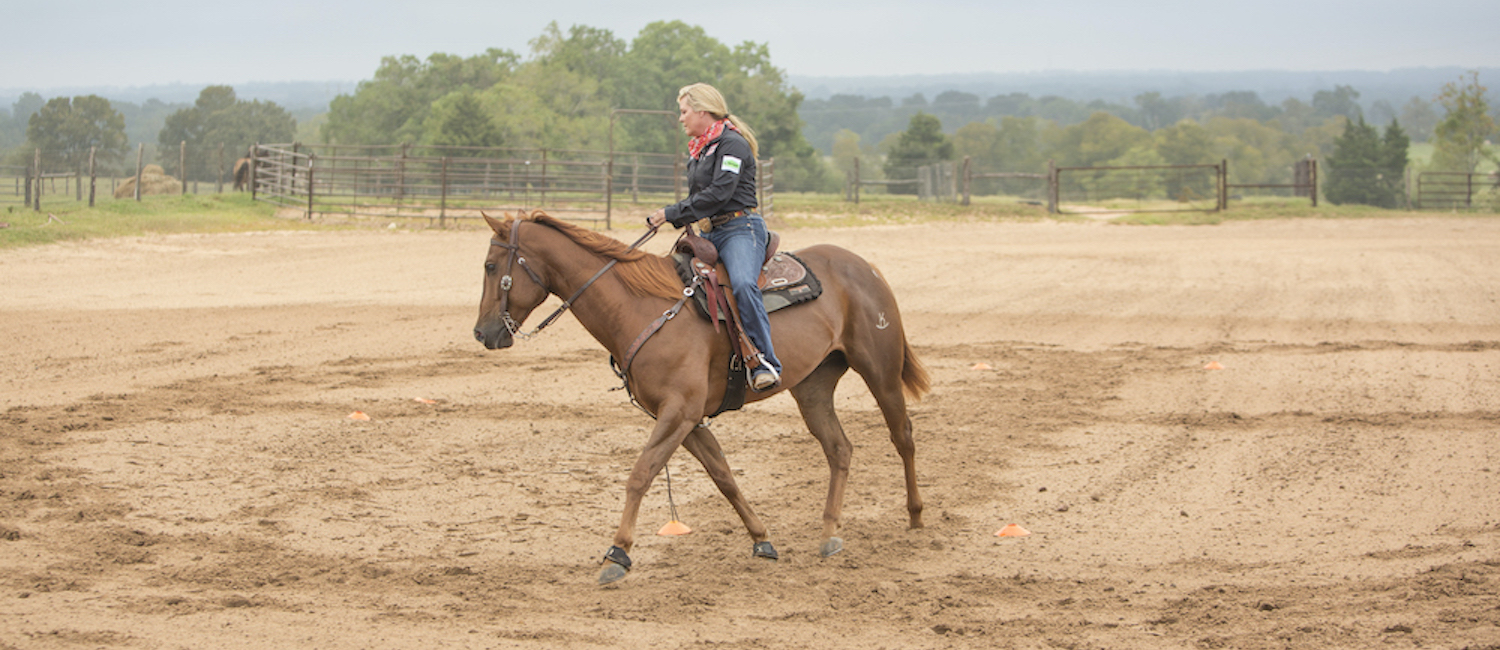
When Kelly Kaminski prepares a young horse to pattern the barrels she starts with her trusted gate exercise to build muscle memory.
Running hard and fast isn’t the only ingredient to a successful barrel horse. Mix in good balance and responsiveness to the rider with speed, and that recipe has the potential to win races. That is the goal Texas barrel racer and trainer Kelly Kaminski sets for her young horses, to build in responsiveness and muscle memory before taking a prospect to the barrels and adding speed.
To start patterning a young horse, Kaminski uses a favorite exercise she terms the gates to teach balance, body position and rating. The exercise has the added benefit of helping riders with their position, too.
“I want to practice perfect. This helps me practice my position and the horse’s action in a controlled manner that creates good habits,” she said. “It helps with positioning, building up hip muscles and works on the rider’s body position with the horse’s position, but you’re not constantly going around a barrel.”
Kaminski uses flat markers, often found in soccer fields, instead of standing cones. She sets up a cross pattern, with two markers at each end of the cross. Then she can ride straight lines up to each “gate,” or set of markers, then ride the horse between them with its shoulder up, back lifted and hindquarter engaged.
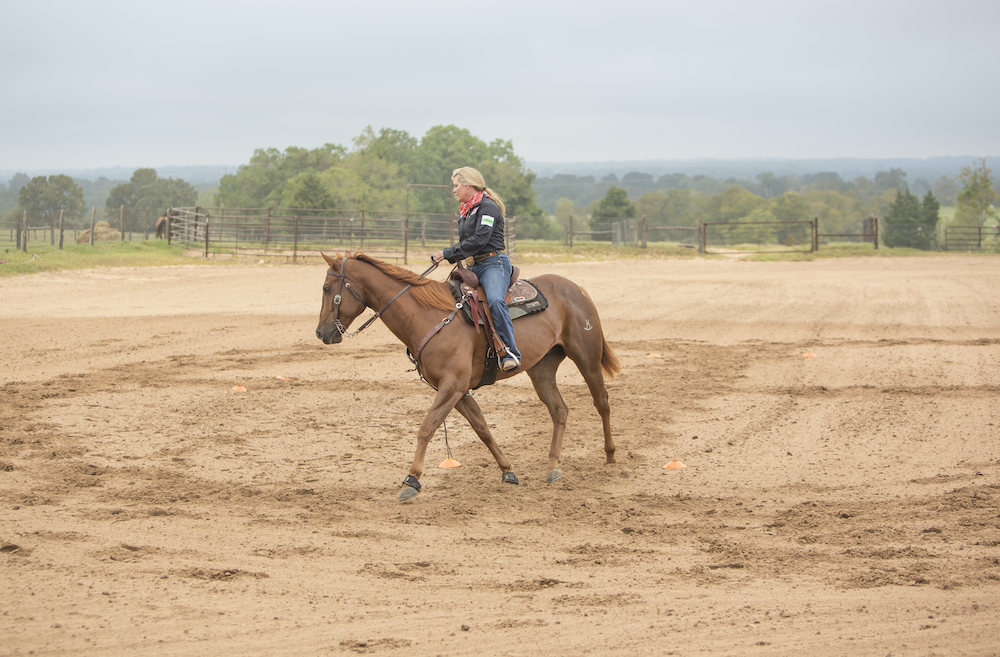
“What I observe when I teach clinics or attend a barrel race is that riders over-bend a horse,” explained Kaminski. “They want the horse so over-bent that the [outside] shoulder pushes out in a way that doesn’t allow the hindquarter to engage. For me, rodeoing as much as I did and do, we want that hindquarter engaged for better balance. That is what this exercise works on, getting the shoulder up without over-bending a horse and also teaching the horse to engage its hindquarter.”
She starts at a walk, but usually works the gates exercise at a trot. Before Kaminski ever heads to the barrels, the horse will have built up an understanding of rating, lifting its shoulder and engaging the hind end.
Rider Benefit
The exercise helps a horse to learn the proper balanced position, but Kaminski stresses that it also aids rider balance.
“I see a lot of folks over-kicking or leaning too far forward running, and that doesn’t help your horse balance,” she said. “This exercise helps you stay centered more and helping a horse to stay balanced. It creates muscle memory of taking out the slack, getting that slight bend and using your legs to get a horse ready for a turn.”
As Kaminski is riding a young horse through the gates, she also focuses on her own seat and hands. She approaches each set of markers as a barrel, sitting deep to rate the horse, or alert it to the coming turn.
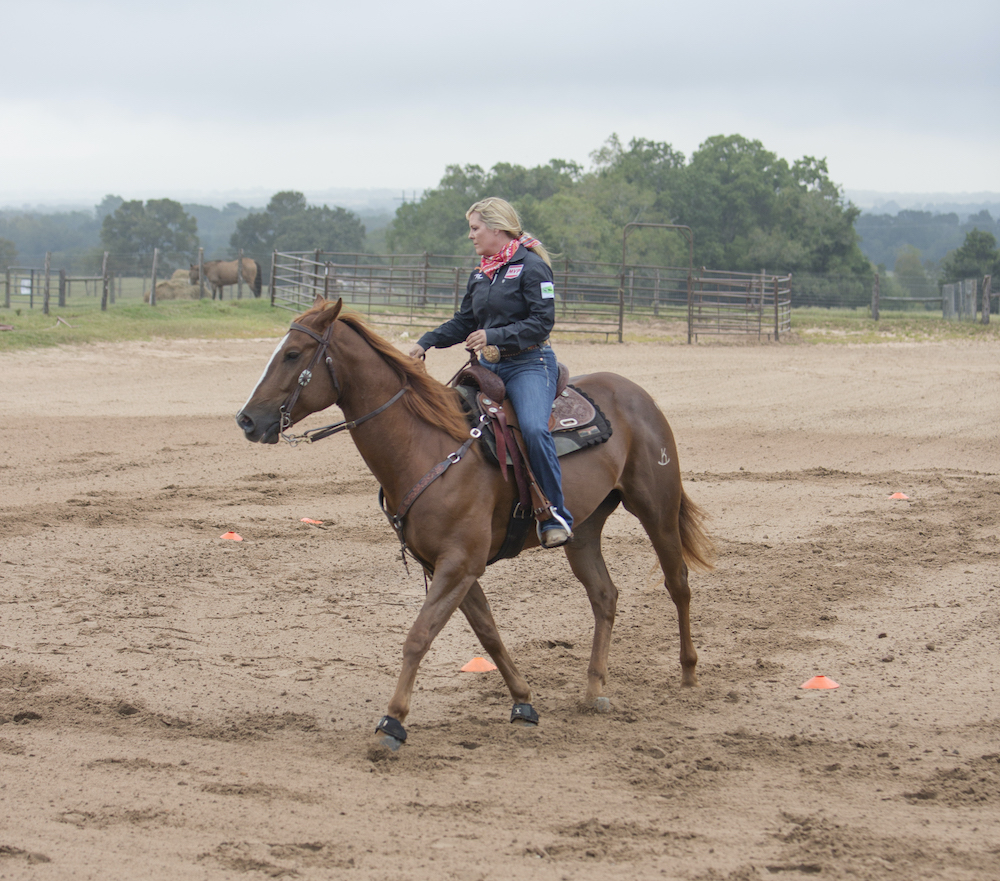
“Running barrels, you get ready to turn just like you would get ready in a car,” she explained. “I tell people to sit on their pockets or pretend there is a $100 bill under their butt and to use their legs and body, not just their hands. When you ride into a turn balanced, you can make subtle moves and it looks like you’re not doing anything, but you are working with the horse.”
She focuses on her position as much as how she positions the horse for the exercise.
Simple Set Up
After setting up the markers, Kaminski works it around the markers to warm up a horse to the point where it will pay attention but then uses the exercise as a means of working the horse. It is a training maneuver that doesn’t have to take a lot of time but has multiple benefits.
“It is not an exercise that draws out an argument from a horse, it just works to everyone’s benefit,” said Kaminski. “To me, I measure success by getting a new horse to get through the pattern without stepping on a marker because the horse swings its butt out. The goal is to create muscle memory, like a roper who sits there and swings the rope or a golfer who practices a swing in the house, no matter the weather.”
After the horse is ready to listen, Kaminski aims at a set of markers, riding in the middle between the two. As she approaches the marker, Kaminski sits deep in her saddle, takes the slack of out the inside rein and lifts her hand to tip the horse’s nose to the inside.
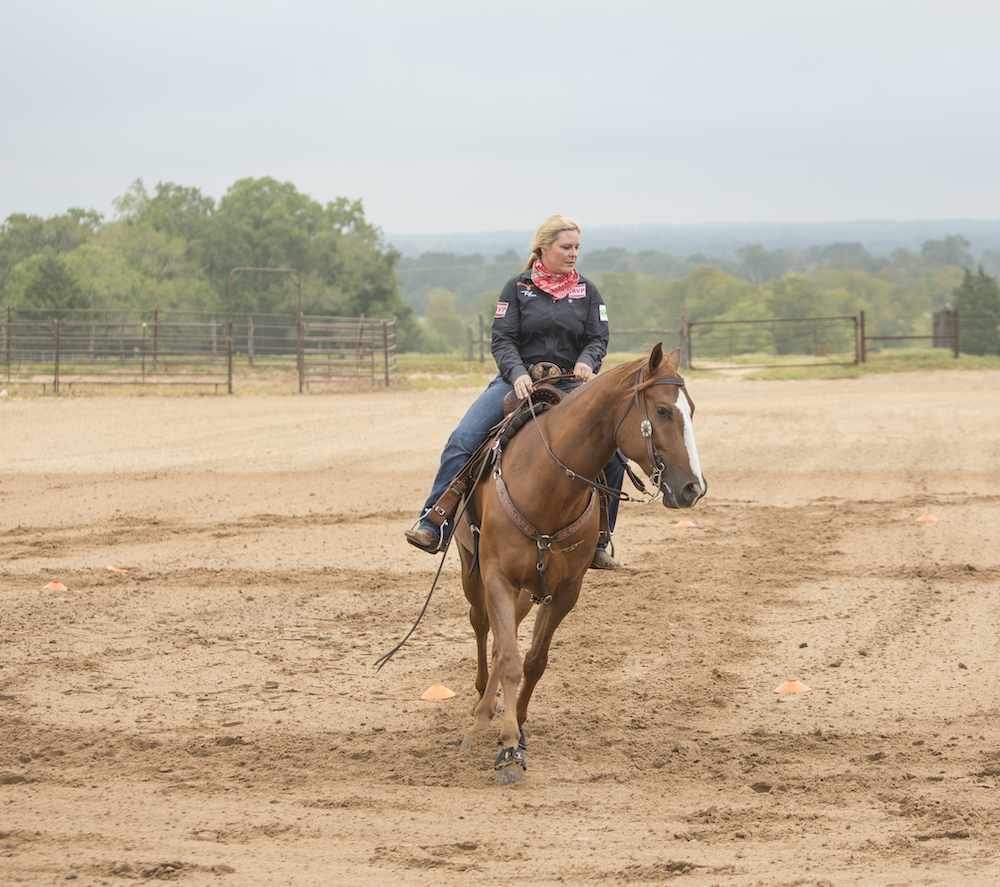
“I do not pull it or bend it to where I feel the ribcage push out or hindquarter disengage. I want that hind end underneath the horse,” she said.
It is vitally important to Kaminski to have a rodeo horse that can balance itself and this exercise helps teach it to do so.
“Horses that tend to be stumbly or feel like they will fall are [weighted] more on their front end,” Kaminski said. “A horse that is on its hind end is more level and will have better balance, especially I you get into sketchy ground that will be slick underneath. If you are [sitting] in the middle and your horse is better balanced, then you’ll be at an advantage.”
Kaminski works on turning all four gates in one direction once or twice through with the goal of having the horse begin to anticipate the rate change at each gate, and start to lift the shoulder while driving the hindquarter forward. Once that happens, she switches to working on the opposite side.
“When you and the horse get ready for each turn almost effortlessly, that is when we go to the barrels,” Kaminski said. “On the barrel, the horse will learn to come around smoothly and start to engage its hind end as it comes into a turn.”
Kaminski encourages barrel racers to use the exercise not only on young horses but seasoned horse that need work on position and balance. With more advanced horses, she can even expand the set up to work it at a lope. No matter what age the horse or level the rider good balance and proper position are always the perfect ingredients for a successful run.
Meet The Expert

Kelly Kaminski trains out of her family’s ranch near Sealy, Texas. A two-time Women’s Professional Rodeo Association World Champion, in 2004 and 2005, Kaminski rode Rockem Sockem Go to five National Finals Rodeo qualifications. She and her daughter, Kenna, work together to train horses geared to the rodeo arena. She teaches clinics across the U.S., and has taught overseas. Today, she focuses on coordinating the Junior World Finals and the KK Run for Vegas races through KK Productions. For more information, visit kellykaminski.com. Her NFR qualifying and world champion mount Rockem Sockem Go aka “Rocky” earned more than $298,006 as well as the coveted Horse with the Most Heart three times. In all likelihood Rocky and Kaminski probably earned more in total career earnings as Equi-Stat did not begin tracking professional rodeo earnings until 2010, after his two world championships in 2004 and 2005.
This article was originally published in the February 2021 issue of Barrel Horse News.