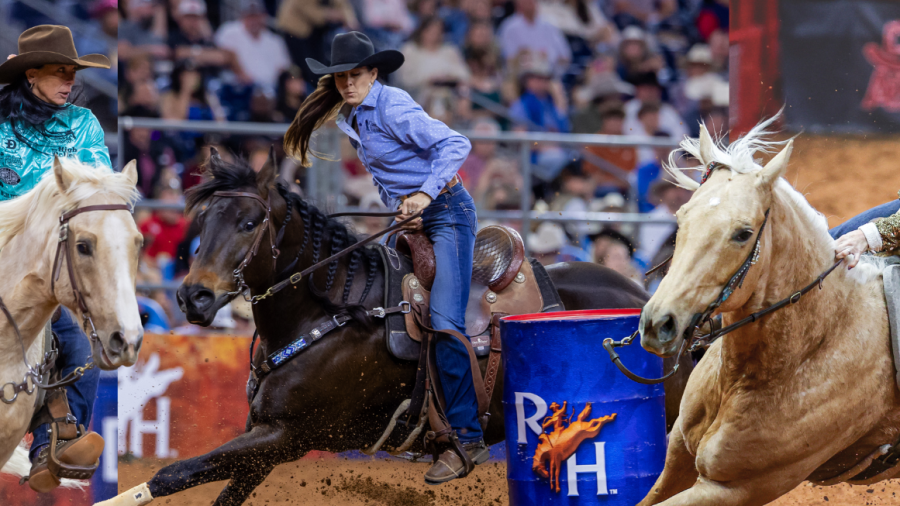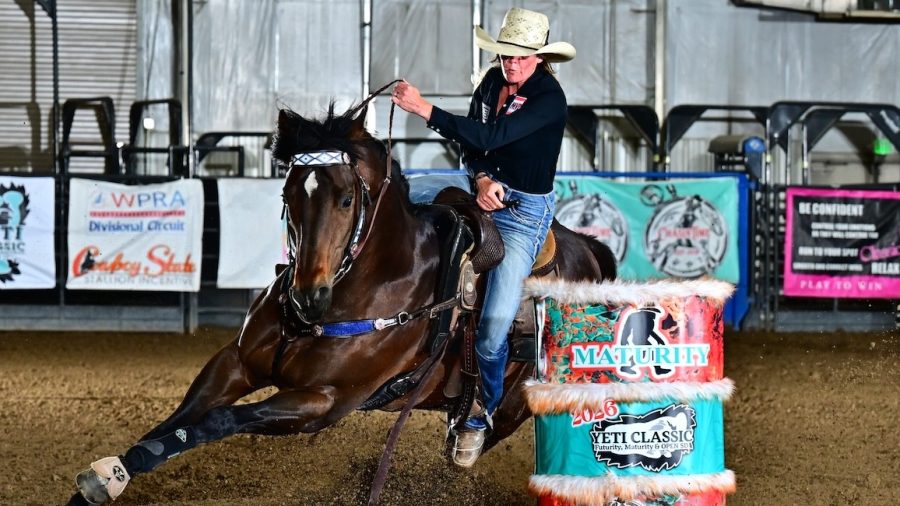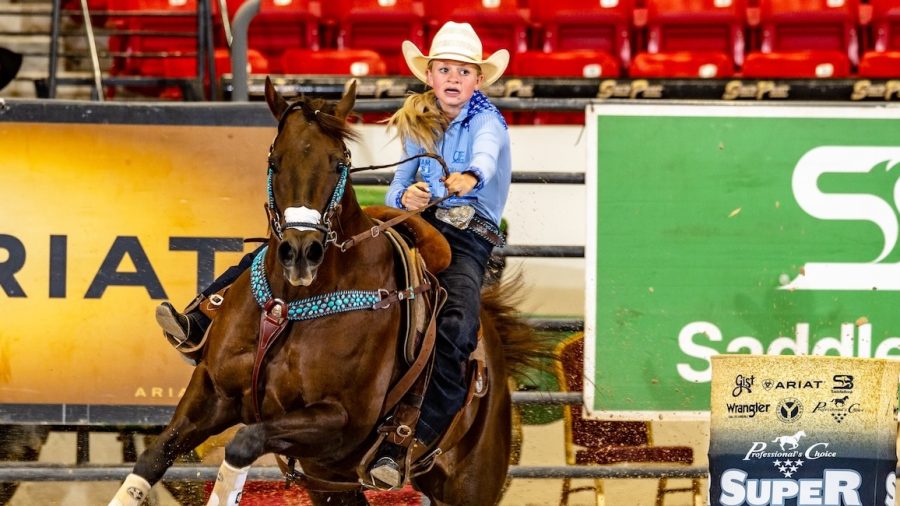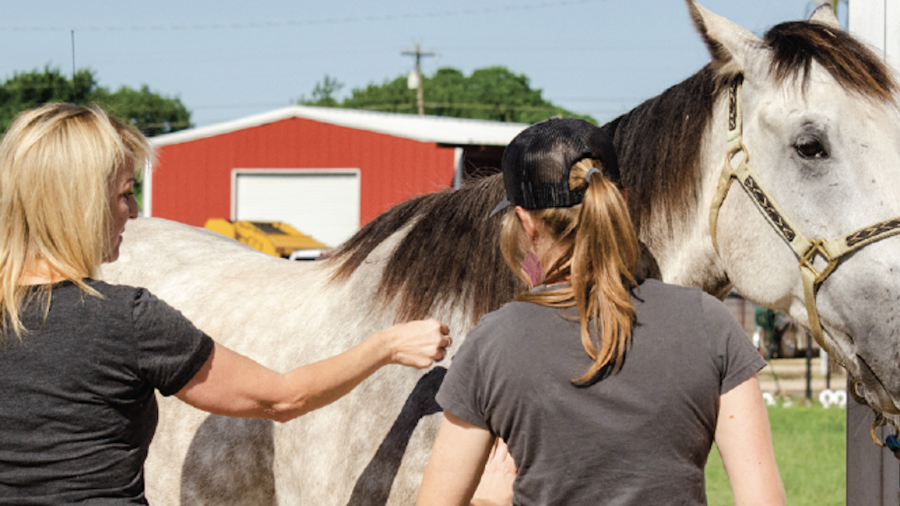

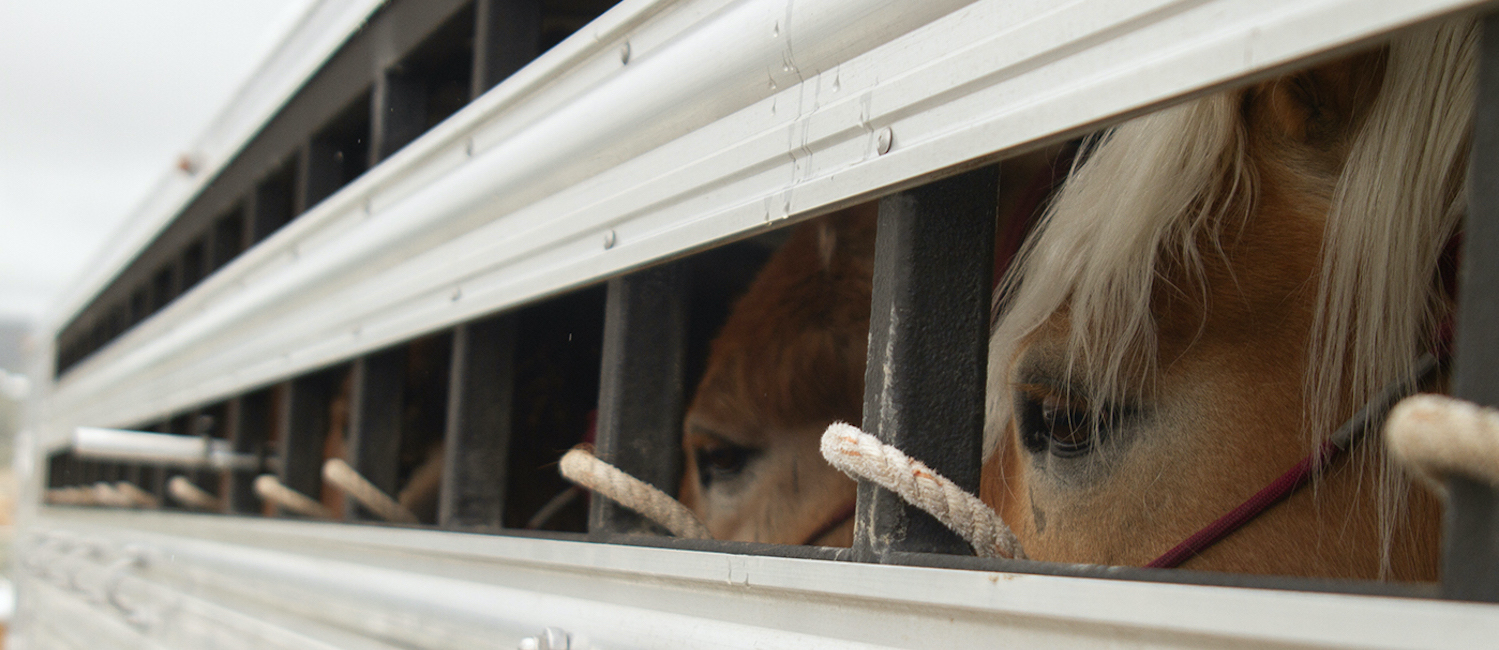
Here are five tips to keep horses healthy hauling in the winter.
When the days get shorter and the temperatures drop, most riders are focused on how to get riding time in before nightfall, and often haul to arenas with lights. The barrel racing season may seem to slow down in winter, but really, horses are still running up and down the highways to not only compete but be worked. Joe Pluhar, DVM, co-founder of Freedom Equine Performance, an exclusive ambulatory equine sports medicine practice based in the greater Houston, Texas, area, says that considerations should be made when hauling in colder weather.
“The first thing we all have to remember is that horses are cold weather creatures, people are tropical creatures,” said Dr. Pluhar. “Horses do much, much better in the cold than we give them credit for.”
Once a horse grows its winter coat, it can self-regulate temperatures well, says the Texas A&M University College of Veterinary Medicine graduate, but the time in between when hair is short, but temperatures drop requires more consideration. Here are six points all horse owners should consider to ensure horses stay healthy when winter hauling.
1. Keep Horses Hydrated
Water is the most important need for most mammals, including horses. No matter if it is hot or cold, a horse needs to drink water to stay healthy.
“We are always worried about if a horse drinks enough water and watching their water intake,” Dr. Pluhar said. “There are some ways we can help with that, like giving electrolytes or using a product like RepleniMash from Purina, which is a food but essentially an entire serving of water due to electrolytes being built in. That is a tricky way to get water into these horses.”
A lifetime spent around horses combined with his veterinary knowledge backs his estimation that horses need to be watered every 5 to 6 hours, or at most every 7 to 8 hours while on the road.
Additionally, a horse needs rest and recovery time after running that allows for time to drink before loading back up in the trailer.
“I wouldn’t run the horse super hard and then put them in the trailer without the opportunity to rest and recover after work, then give them the opportunity to drink water before we go,” he advised.
2. Feed Fuel
Bears aren’t the only animals that pack on calories in winter. Staying warm in cold weather means all of us shivering need additional fuel.
“When a horse is in really cold conditions, it is burning more calories and may need a higher caloric intake,” explained Dr. Pluhar. “This isn’t to say a horse needs an entire bale of alfalfa, but to go ahead and give more hay if the horse is working hard to stay warm. I do think that some of these horses can use a few more calories, 10 or 15 percent more, in times that are really cold. We are goof about giving more food when a horse is working hard, but staying warm is also one of those times.”
He reiterates that with the food needs to be the opportunity to drink, and not frigidly cold water. He says, the biggest key to health is water.
3. Don’t Overheat the Horse
Wrapping up in a warm blanket may be nice for us, but horses don’t have the ability to take their own warm blankets off. Horses need assistance setting up their environment to be comfortable. For example, Dr. Pluhar says to consider the type of trailer the horse is hauling in.
“If it’s a nice, new trailer that is all buttoned up, they get pretty toasty,” he said. “A horse in that trailer won’t need as much warmth as, say, a horse travelling in a stock trailer. Think about the way you’re hauling a horse.”
He cautions against closing the windows up or over-blanketing the horse.
“The first thing we have to guard against is over-heating the horses; a horse from Montana is more used to the cold than a horse from Houston, Texas,” he explained. “We don’t need to always grab the biggest, thickest blanket to haul a horse under if it is going to be 60 degrees. That is the first thing I tell people, that horses handle cold much better than we think.”
4. Comfortable Cover
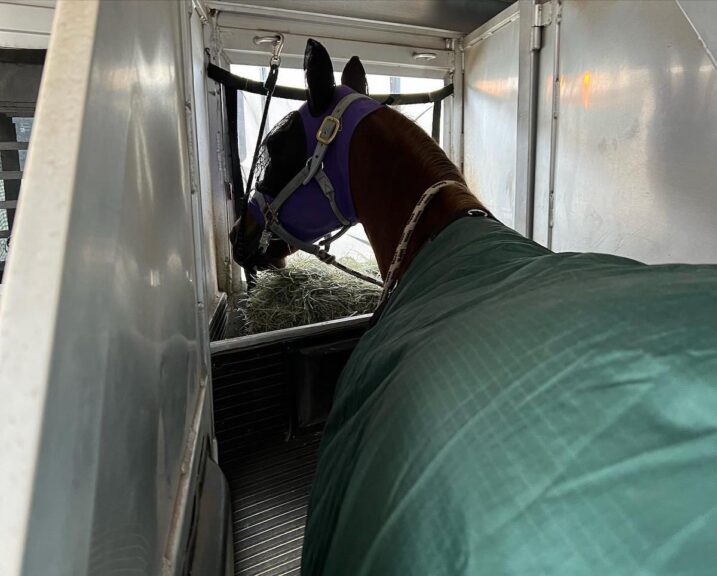
Many horses are kept with short hair during the winter, which requires a combination of light management and blanketing. Dr. Pluhar explained that horses will grow hair in shorter daylight hours and not always based on temperature.
“My general recommendation on blanketing is less is more,” he said. “I have walked into barns with slick horses, and it is 550 or 60 degrees outside, and the horses have a light sheet. That light sheen raises the horse’s body temperatures by one or two degrees and the horses are running at 102 degrees.”
He advised to always wait to blanket a horse until it is completely cooled off or dry from a workout.
“If you do put a sheet or blanket on the horse, be sure they are dry before you cover them,” said Dr. Pluhar. “The wetness will get cold, even when covered. It can then have the opposite and make the horse colder if it’s not dry.”
5. Consider Warm Up and Cool Down
No matter if it is warm or cool, take a lot of time warming these horses up and cooling them, advised Dr. Pluhar.
“A horse can have a propensity to get sore if it is hauled too soon after performing without time to recover and cool down,” he said. “Then, you’re having the horse stand in a trailer for a few hours, and that can be a problem.”
Again, during rest and recovery, provide the horse with water.
“With the recovery, make sure the horse is drinking more water,” he explained. “The only difference between when a horse is cold and when it is to is that the horse isn’t losing water sweating as much as they would be when it is hot. They still need the water for recovery.”
6. Watch the Wind
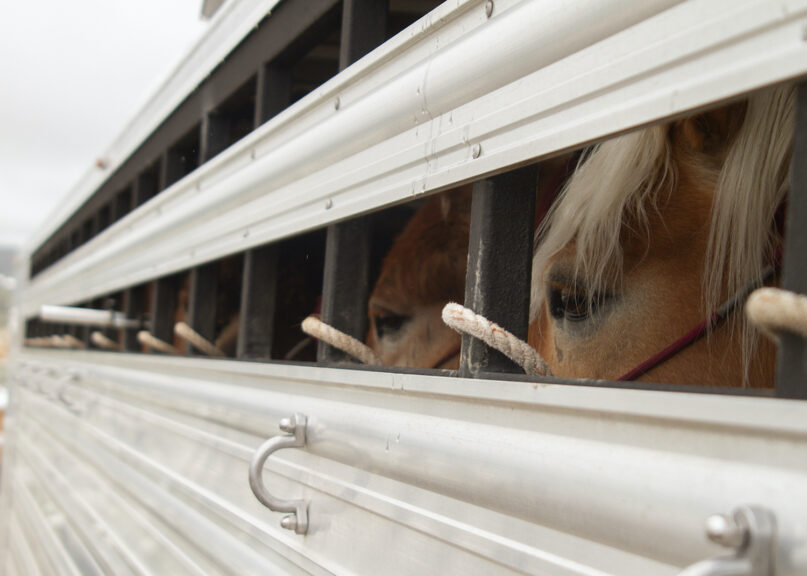
Airflow in a trailer isn’t only to regulate temperature but also to ensure that the horse gets fresh air. Even in winter, vents need to be open.
“It is incredibly important to have air flow in the trailer when hauling, no matter the temperature,” explained Dr. Pluhar.” Air flow is important to keep carbon dioxide from building up. But you also have the fumes from urine and defecation inside the trailer. It is nice to get fresh air in there, but we must balance that with not having cold air blow in horse’s faces.”
The caveat to maintaining air flow is to be sure not to push cold air at a horse’s face, potentially causing a health issue. Horses can catch cold, or even wors, frost bite.
“One area to be careful is the window open in front of the horse; I love the vents on top of the trailer,” he said. “A big, open window blasting cold air into a horse’s face can cause frost bite on their ears. The ears are the area that will see issues with, even if a horse has blankets or hoods, with ears exposed, they can still get cold and be more sensitive.”