

As winter nears, a drought-fueled hay shortage has owners in the heart of America’s horse country scrambling for solutions.
“I’ve been in this business 19 years now, and this is by far and away the driest, hottest summer I’ve ever experienced.”
These are the words of Danny Ray, the owner of Victory Farms, and the man who has been the barrel racing industry’s leading breeder for the last 10 years.
Victory Farms is located approximately 88 miles southeast of Oklahoma City in the town of Ada, and in the center of what was one of the most paralyzing, far reaching droughts since the dust-bowl era. Long stretches of 100-degree temperatures and little to no rain made the entire summer in America’s heartland feel more like a never-ending version of late August.
Wildfires, soaring electric bills and water shortages made the driving heat apparent to those living in the country and city alike, but it was, and is, livestock owners who are feeling the drought’s burn most acutely. That is because one of the most substantial casualties of the cruel temperatures and lack of moisture was this year’s hay crop.
Normally high-yielding hay states, such as Texas and Oklahoma — areas where horses and cattle are prominent — don’t have enough hay to get all of their own animals through winter, much less sell to anywhere else. A call to the majority of hay growers in these states will get one response — “I don’t have anything to sell.”
This kind of news was especially hard to hear for breeders such as Ray, who carefully lay out their winter feeding plans every year, but who have been powerless against the changing moods of Mother Nature.
“I have 50 acres of bottom land I plant with Bermuda, and that usually produces about 300 tons of hay for me in a year that I feed my horses,” Ray says. “This year, I got one cutting for about 60 tons, and I’m not going to get anymore.”
The shortage forced Ray to widen his hay search to include states such as Nebraska and Wyoming, and most disappointingly of all, to offer some of his high-caliber broodmares for sale.
“About three years ago, I made the prediction that, down the road, we would see a shortage of really nice, good, young barrel racing prospects because people were pulling back on breeding and discovering how hard it is to raise babies,” Ray said. “I thought if I could weather the storm, I could really benefit.
“Ironically, I stacked the deck preparing for that shortage for next year, so I now have 112 pregnant mares who will foal in 2012.”
Add those 112 mares to the rest of Victory Farms’ stock, and Ray says he has 350 head of horses to feed through the winter.
“The only thing I failed to calculate in my big plan was the drought,” he explains. “So, here I am with 112 pregnant broodmares, 350 head of horses. It’s a matter of economics. It’s a matter of survival.”
The Problem
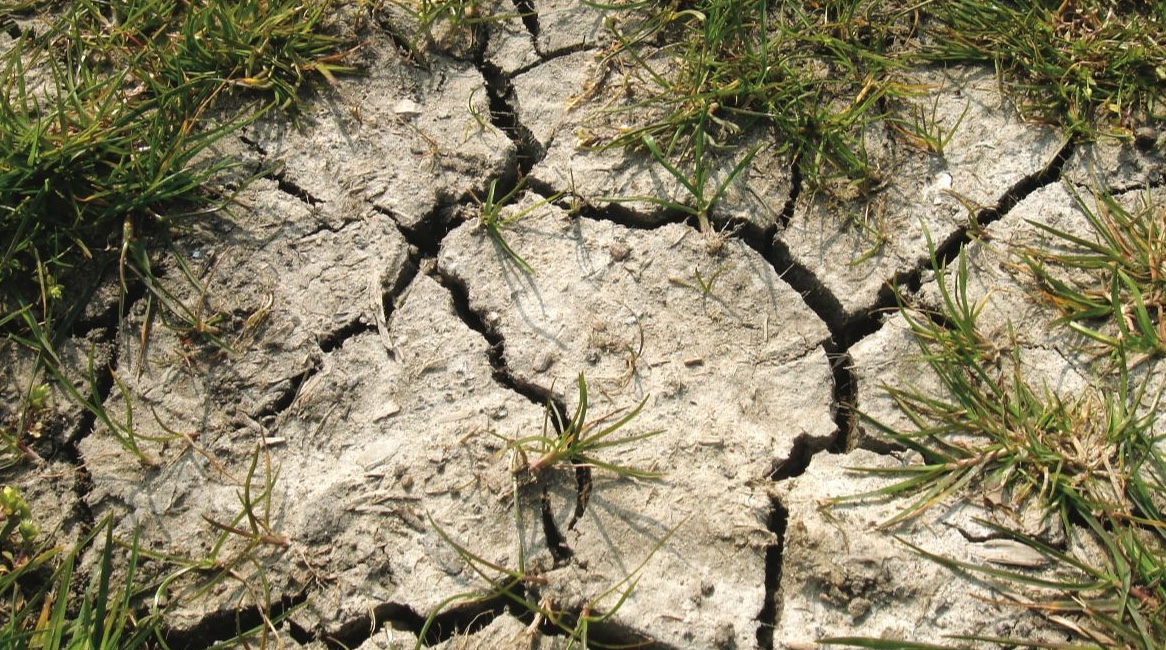
The dark red coloring on maps of the United States spreads from southern Kansas to the southernmost tip of Texas and from New Mexico to Louisiana. Lighter red splotches, which would be considered extreme designations in other years, lay over portions of Colorado and Arkansas and cover the entirety of Georgia.
Red is the hue the United States Department of Agriculture uses to categorize areas with extreme heat and minimal moisture — locations in severe drought. At the beginning of September, more than half of the U.S. was layered in some shade of red and badly in need of a fall break.
Texas and Oklahoma were the most severely affected by summer’s wrath. These two agriculturally strong states were listed in “exceptional drought,” the worst designation the USDA gives.
By August, Oklahoma had recorded more than 50 days of 100-degree plus temperatures, a record for the state, with no rain worth mentioning in most rural areas.
In Texas, which baked under nearly 70 days of 100-degree temperatures, the drought caused more than $5 billion in damages to the agricultural industry, including more than 3.5 million acres that burned in wildfires.
While charred grass and trees may not seem like as big a deal as losing houses and other buildings to fire, the lack of vegetation left behind by the infernos dealt a devastating blow to the horse and cattle industries.
The loss of hay crops in states such as Texas and Oklahoma has led to a 14 percent decrease in hay tonnage produced since 2010, according to the USDA. This has resulted in the lowest supply of hay available in the United States since 1988.
Of course, the same factors that kept hay from growing have also kept pasture grass from maturing, compounding the horse industry’s delicate situation. Livestock owners who were used to not feeding hay to their pasture animals until fall were rolling out the round bales by mid-summer, increasing the demand on an already limited hay supply.
“We have been haying since July 1,” Ray says. “That’s never happened to me before.”
The obvious situation to the lack of hay in the central United States was to haul it in from other areas, such as the Dakotas and the Northwest, where it has been a productive year for vegetation. But even this solution had costly implications.
Hard Hits
In what was a perfect storm of bad luck, 2011 was one of the highest years ever for gas and diesel prices, making shipping and hauling hay from different states even more expensive than usual.
Hay production has also been negatively affected by other issues in areas of the country where lack of rain was not a problem.
Melissa Stooksbury, whose family buys hay throughout the year for their six horses, reports that her home state of Tennessee wasn’t in a drought, but actually lost some of its cuttings to excessive moisture and a swing in temperatures.
“The hay market is not near as bad as it was the year we had the drought [in Tennessee],” she says, “but we did have a lot of rain during the first cutting. A lot of hay in this area was lost to wet weather or left in the field so long that the nutritional value was lost.”
Then, when it was time for Tennessee’s second cuttings to be put up, temperatures grew so hot that some of those crops were lost, as well.
“It makes me wonder if there won’t be a shortage later on into the season,” Stooksbury says, “or if we will have a hard time finding quality hay.”
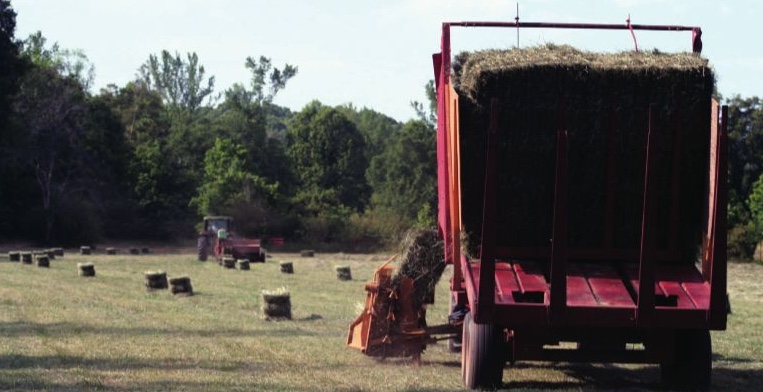
The threat for a lack of hay is also very real among those in the Southeastern U.S. Barrel horse trainer Leslie Willis, of South Carolina, feeds 30 to 40 horses during the winter with hay she and her husband, Jason, grew themselves. But this year, as was the case last year, the rising cost of fertilizer and a worm infestation crippled their Bermuda pastures.
“We have been dry this year, but not as dry as out west,” Willis says. “We have worms that eat our hay fields, and they have been bad two years in a row. The price of hay per bale is not an issue with us, since we raise our own. The problem we have is the fertilizer has gone up drastically.
“I’m afraid we may not have enough round bales to feed our pasture horses.”
Indeed it doesn’t seem to matter whether families are feeding their own hay or purchasing alfalfa from another state, the simple fact is, the green stuff has gotten pricey.
Expensive hay is a new concept for those in some parts of the country to grasp, but it’s nothing new to some owners, such as barrel racer Danyelle Campbell, who will feed about 20 horses through the winter at her California ranch. She says that although California’s weather is steady, higher hay pries are the norm, even if you’re buying from the surrounding states of Utah and Nevada.
“California grows a lot of hay, but the cost is the same as hay shipped from out of state,” Campbell says, “and I prefer out-of-state hay.
“I pay $320 for a ton of high-quality alfalfa. Prices were this high a couple of years ago, then went down to about $250 a ton, but have raised again.”
Campbell attributes the price fluctuation in her part of the country to gas prices, not the weather.
“When diesel goes down,” she explains, “so does hay.”
Breeder Deb Myers, of South Dakota, doesn’t have to worry about having hay shipped in from other states to feed her more than 100 head of horses. Her state had a good production year all the way around — but that doesn’t mean they haven’t seen their prices fluctuate due to the problems the rest of the country is experiencing.
“We had a good supply of hay,” Myers says, “but the prices have gone up higher than expected because of the demand from the southern drought states.”
The problem of no supply and great demand, driven primarily in 2011 by the drought through key agricultural states, is a worry in many areas of the United States. The thought in the back of everyone’s minds is, “Is there enough to go around?”
“I’ve heard about people in Texas paying four times the [normal] price for hay,” Willis says. “I wish we could help them, but we don’t have any extras. We may not have enough for ourselves.”
Pray and Prey
Eavesdrop on a group of horse owners, and you’ll hear some fantastic stories about the dark side of the hay shortage: truck drivers being threatened at gas stations when they won’t sell the hay on their trailers to someone who approaches them; neighbor holding a grudge against neighbor for not sharing part of the hay they’ve found; bales disappearing from pastures when gates aren’t locked.
But perhaps the most shocking result of the hay shortage is the greed that has been displayed by some sellers. Rumors of hay suppliers ditching their regular customers for those willing to pay a higher price and of feed stores selling hay for twice what they’re paying for it are another threat to a horse industry that is walking a fine line between getting by and financial disaster.
One thing is certain, owners in at least the central part of the United States can expect to pay more for hay, whether that “more” is a few dollars, or hundreds, over a normal year’s asking price.
As of September in Oklahoma, quality large square bales of alfalfa, delivered, were going for $200 to $285 a ton, while small square bales of “horse quality” alfalfa were going for $275-$330 a ton.
Meanwhile, large round bales of Bermuda were selling for $100-$125 a ton and quality grass hay for $90-$100 a ton, with small square bales going for $8-$9 a bale.
At the same time in South Dakota, large square bales of alfalfa were being sold for $170-$200 a ton, with large round bales of grass selling for an average of $80-$170 per ton.
The most expensive swing in hay prices, however, can occur when it must be delivered from other states. On average, shippers were charging anywhere from $3 to $7 a mile on top of the price of the hay to bring it to a horse owner’s barn.
When all is said and done, the USDA expects prices to continue to rise for the next eight to 10 months, as less and less hay becomes available.
The weekly hay report from Texas summed up the state’s situation in September with the following paragraphs: Trade moderate under very good buyer demand. Minimal rainfall was noted in several areas of Texas, but soil moisture levels continue to be at all-time lows. The Rolling Plains noted losses in summer-born calves due to overheating.
Hay supplies are short, forcing producers to continue to seek hay outside of normal marketing areas. Many are forced to go out of state, and in some instances, alfalfa has been delivered from Canada. With forage demand remaining high, hay quality had remained questionable.
No Easy Solution
According to the University of Kentucky, an 1,100 pound horse needs 16 to 20 pounds of alfalfa/grass mix hay a day if he is not receiving grain. Horses with special needs, such as lactating mares and performance horses, may need more.
With owners worrying about being able to feed the minimal requirement of hay, many feeding questions arise, and one in particular: If you can’t afford enough hay, or you can’t find it, what do you do?
The greatest contributions hay makes to a horse’s diet are protein and fiber. Owners can try to replace some of the missing fiber in a horse’s diet (which can contribute to colic if absent) by using fiber supplements and feeding a complete grain.
Then again, up to 50 percent of hay’s job can be taken on by certain types of grain or pellets, as well. These “hay extenders” include Purina Mills Chow 100 and Chow 200, which combine grains and alfalfa in one complete feed, and Southern State’s Reliance Hay Stretcher Pelleted Horse Feed, which combines ingredients such as corn and alfalfa meal and peanut husks in an effort to replace the nutrients found in hay.
There are, however, some types of manmade feeds that claim to be suitable for replacing 100 percent of a horse’s daily hay ration. These feeds will usually be self-explanatory in title, for example, Southern State’s Triple Crown Premium Chopped Alfalfa Forage, Triple Crown Premium Chopped Timothy Forage and Triple Crown Premium Forage Cubes Alfalfa.
Many local grain mills may also sell a version of hay or alfalfa cubes, which can be bought in bulk, and thereby; save you money.
Keep in mind, cubes and other types of feed are not the cheap way out. They are simply an alternative when hay cannot be found. And when feeding any type of cube or grain in place of forage, owners should keep in mind that horses are “chewers,” and in theory, should be digesting most of the day. Pellets and grain are only fed certain times of the day and won’t take as long to eat as even a flake of alfalfa.
With this in mind, most horse owners continue to prefer to have some type of grass hay or alfalfa available for their horses. This year, that may mean searching hundreds of miles away for available forage and paying the high price of shipping costs.
No matter what, one thing is certain — horses need to eat. Whether feeding pellets or hay, owners have a struggle on their hands to make sure no animal goes hungry this winter. And with a little luck, the rain will fall in fair amounts next spring.

“Horse” Hay
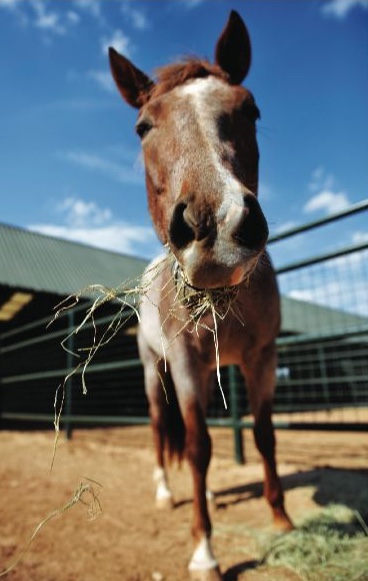
Where there is a hay shortage, people tend to bale — and sell — any tangle of weeds from the side of the road and call it “hay.” Or they might sell old hay, which has sat out so long it’s lost its nutritional benefits.
They say desperate times call for desperate measures, but don’t make matters worse for yourself by feeding hay that could make your horse sick.
The following are signs that the hay you’re buying should not be fed to horses:
- It has mold or smells musty
- It contains weeds, dirt, trash or debris
- It has an over-bleached appearance, especially under the outer layer, or is black in color
- It has signs of insect infestation or disease
- It is all stem, with no leaf for nutrients
- It was bailed from the side of a road or in another circumstance that was not a pasture
To avoid buying low-quality hay, ask questions about what kind of vegetation the bales contain and inspect the product before you buy. Even in desperate times, you have the right to want what is best for your horse.
This article was originally published in the October 2011 issue of Barrel Horse News.