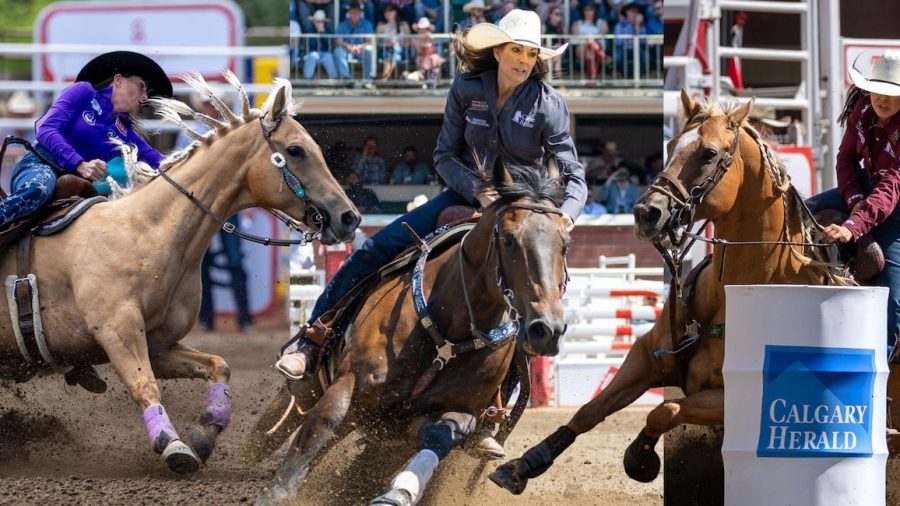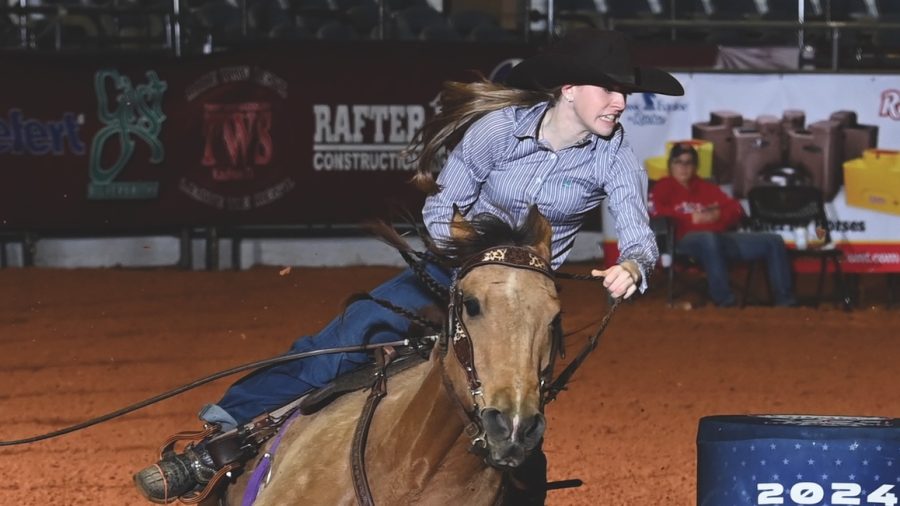

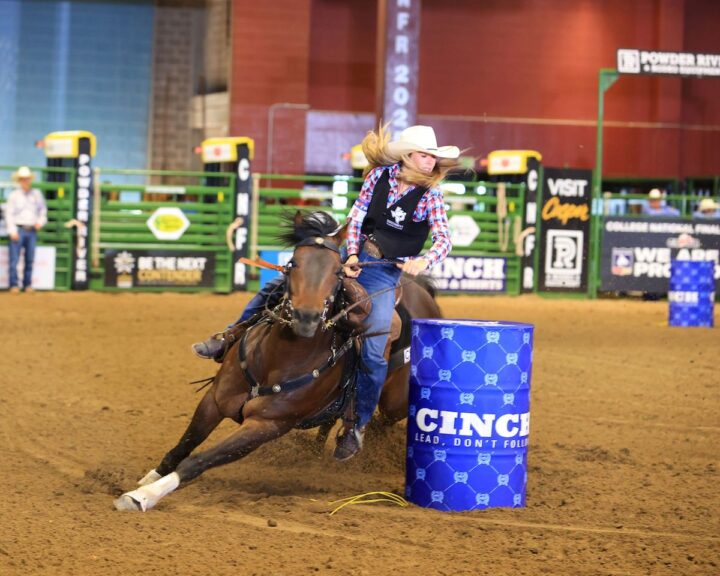
Barrel horses have a renowned reputation in the rodeo community for being kept in the most pristine conditions. The shavings in their stalls are fluffy, the strands of hair in their manes are braided and the saddles on their backs are precisely fitted. This level of care carries over into all facets of the industry, extending into the young world of college rodeo. Even with the logistical challenges college rodeo can present, barrel horses are still met with that same standard of care, though establishing a healthy schedule right out of the gate at college can be tricky. Between environmental, climatic and scheduling changes, adapting to a regimen that best suits you and your college rodeo horse takes time and expertise. For guidance on keeping your college rodeo horse in peak condition, Barrel Horse News spoke with Dr. Sonya Brouillette of Stay Sound Veterinary Chiropractic and 2025 College National Finals Rodeo Barrel Racing Champion Acey Pinkston for tips to ensure success on and off the college rodeo trail.
The Corner You Can Count On
Adjusting to college is hard for even those who don’t own horses. Throw in the factor of another being completely dependent on you for their most basic needs, and that adaptation is even harder. For those who move far from home for school, the people in their corner will change, and so will the team standing behind their horse — from the farrier to the vet to the chiropractor. When driving home for a vet visit isn’t feasible, starting from scratch can be daunting.
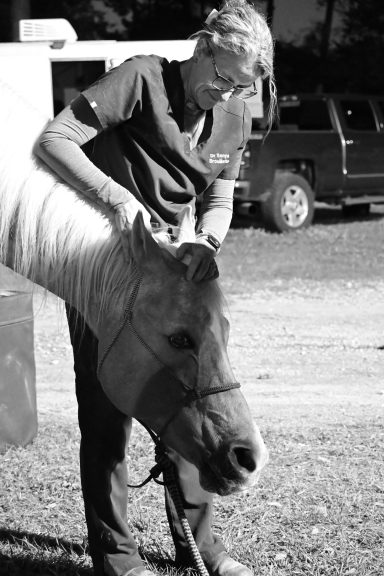
“A lot of schools don’t have access to sports medicine veterinarians, especially smaller community colleges,” Brouillette said. “It can be tough to figure out how to get three or four hours away to see one and even trust someone new that you don’t know. Your whole care plan changes. You have to reset your whole world, which can be large.”
Resetting your world has many steps, but getting a jump on finding those integral team members before you need them will serve you better — and a good place to start is through people you already know.
“It can be tough to just pick somebody out of a lineup when you don’t know their capabilities until they actually put their hands on your horse,” Brouillette said. “Making friends with locals can help in building those connections you need, or you can lean on the ones you already have. If you’ve got a friend who uses a certain vet, you might be more comfortable trying that one because you trust your friend.”
The importance of having people in your corner for both you and your horse isn’t limited to those concerned solely with your horse’s physical welfare. Having someone who can hold your horse for the farrier while you attend a last-minute study session or handle a feeding when you pick up a double shift to make ends meet, is equally crucial.
“I have a really big team to help between my classes and rodeos,” Pinkston said. “It’s so important to have somebody that’s there to help you and knows what your daily routine is, understands your goals and can put in the other 50% if you can only give half that day between all of your responsibilities.”
Adjusting For Success
A major adjustment for many college rodeo horses is the new space in which they now call home.
“A big challenge is going from a horse being used to turnouts to having to be stalled,” Brouillette said. “Some colleges have a facility with a 40-stall barn but no turnouts. That means a horse used to being turned out at least 10 hours a day might end up staying in a stall 24 hours a day. That’s a huge difference, especially for older horses that may have arthritis or need to move to maintain lymphatic flow and get exercise. On top of that, when you’re in class, it can be difficult to find time to exercise them. It’s a big change.”
Keeping your horse in college rodeo-ready shape can come in many forms – even with you on the ground instead of on their back.
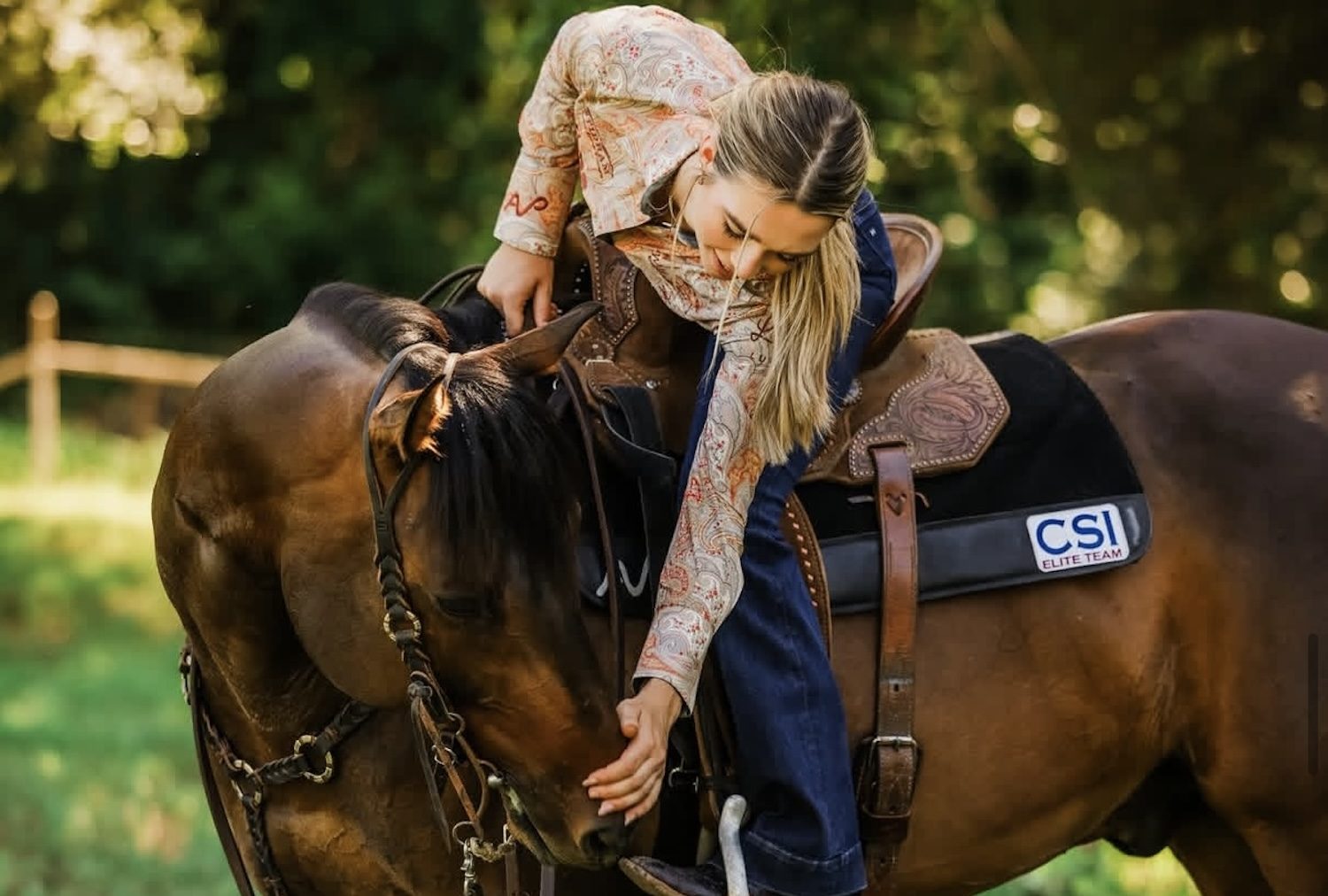
“If people would stretch their horses, I would have a lot less business,” Brouillette said. “It’s so important, especially in the college world because, again, their whole environment and patterns have changed. Carrot stretches are so easy; you just take any treat and take them nose to hip on both sides. It bends their ribcage and folds their neck in half and stretches their poll to really warm up those muscles and prevent a lot of issues.”
Finding the time to exercise your horse — even long trotting in a field for 20 minutes or a few minutes stretching — is easier when you develop a schedule; this should be incorporated into your and your horse’s day from the time you first eat in the morning.
“Sticking to a feeding schedule isn’t always the easiest when your schedule is upside down because of classes and all of your responsibilities, but not having one can cause your horse to struggle,” Brouillette said. “I’ve seen horses colic because their feeding schedule is off. If you’re late to class, and you miss your morning feeding that they’re used to getting, there can be some repercussions.”
Horses thrive on schedules, and college rodeo athletes do, too, when implemented correctly. Maintaining that consistency doesn’t stop at home; it extends to every weekend on the road.
On the Road and Off the Trailer
Once your college rodeo weekend rolls around, be prepared for the drive itself and the facility’s setup once you arrive.
“A big challenge for college rodeo is that you sometimes drive six to eight hours, get there, and there’s no turnout, no pasture, no anything,” Brouillette said. “Then you tie them up for the next two to three days. That’s hard on them. Don’t just get them off the trailer and tie them up. Let them walk around and get their heads down to graze. Horses are made to graze and keep their heads down; that’s what keeps their respiratory airways clean.”
Since college rodeos may not accommodate your horse’s usual setup, making alternative stall plans off-site can help.
“Stalling-wise, not every place is ideal to go and stay,” Pinkston said. “If I’m going to a college rodeo and they don’t have stalls or turnouts, I may try to find a friend who has a place or knows of a place that would let me stay and keep them turned out.”
Along with stalls and turnout, another key factor at college rodeos is water accessibility.
“A lot of times at the college rodeo, the water is different or they don’t have easily accessible water,” Brouillette said. “They might only have one water hose, so I recommend filling the water tank in your horse trailer if you have one or bringing five-gallon water jugs from home. Not drinking and being dehydrated is the number one thing that can cause a belly ache for them.”
After a long weekend in an unfamiliar environment, rest days are necessary at home, but that doesn’t mean putting them in a stall or pasture and not touching them.
“For my horse, rest days consist of icing legs, red light therapy, walking him and just listening to my horse and seeing what he needs,” Pinkston said. “It’s not necessarily him just sitting in his stall. It’s me pulling him out and asking, ‘What are you missing? How can I help you?’”
Grab Your Shovel
There is no singular perfect guide to caring for your college rodeo horse. One athlete’s regimen may differ completely from the next, but one common denominator every successful program must have is a deep understanding of the horse it is designed for. If you aren’t familiar with your horse, grab a shovel and start digging into their care requirements.
“I’m really big on keeping your hands on your horse,” Brouillette said. “You need to know how they normally are, that way you can see their legs have stocked up from being in a stall and or you can know if they’re not drinking like they should. If mom, dad or the barn help have been taking care of your horse for the last four years, you need to get in there and figure out your horse’s needs on a daily basis.”
While routine bodywork sessions and therapy visits can improve performance, from a college student perspective they can be expensive. However, one thing that goes a long way without a hefty price tag is your time. While it may be hard to come by in college, it’s one you won’t regret finding for your horse.
“Your time, effort and consistency are the biggest three things you can give to your horse,” Pinkston said. “And they cost nothing. I understand struggling financially in college and trying to get out from underneath your parents’ wing. It can be hard. But giving time, effort and consistency to your horse is free and at the very least, what they truly deserve.”