
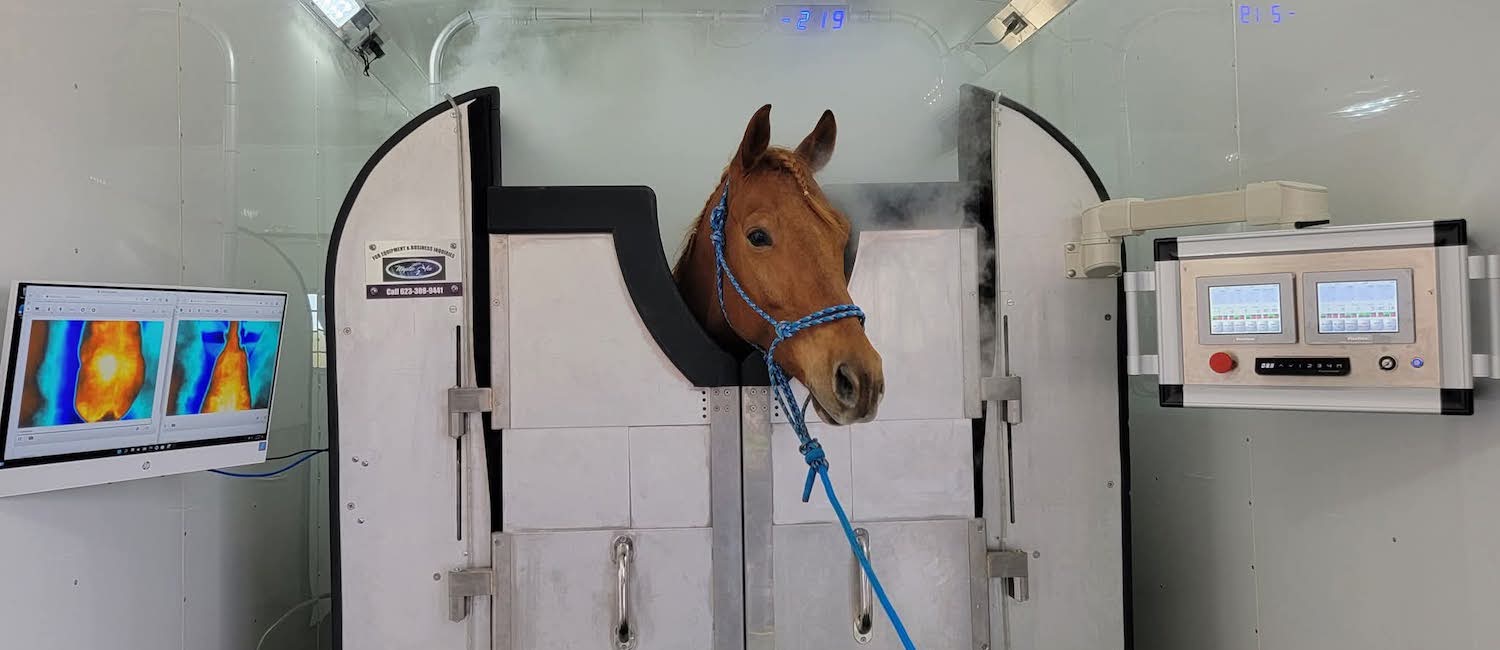
Cryotherapy is the use of extreme cold to reduce inflammation and pain in the body. From targeted treatments to full body exposure, the therapy technique has been known to help performance horses in post-competition recovery.
Post-competition recovery is vital to a performance horse’s longevity in any discipline. With countless therapies, medications and supplements available to horse owners, finding what your horse’s specific needs are can be frustrating. Knowing how certain treatments work and what they target can benefit horse owners in these decisions.
Mystic Ice Full Body Cryotherapy
Cryotherapy originated in Europe, being an all-natural way to relieve pain in equine athletes. Cari and Terry Zenkawich already operated an equine saltwater spa when they became interested in cryotherapy. They imported a full-body cryotherapy unit from Finland but found the environmental differences and language barrier difficult to navigate. After a year of trial and error, they decided to manufacture their own in North America, creating Mystic Ice.
Since 2020 they have manufactured full body equine cryotherapy units and operated their own mobile unit. While based out of Arizona, they travel to horse shows and events, mostly in Oklahoma City and Tulsa.
A session in their cabin can be done pre- or post- competition and only takes five minutes.
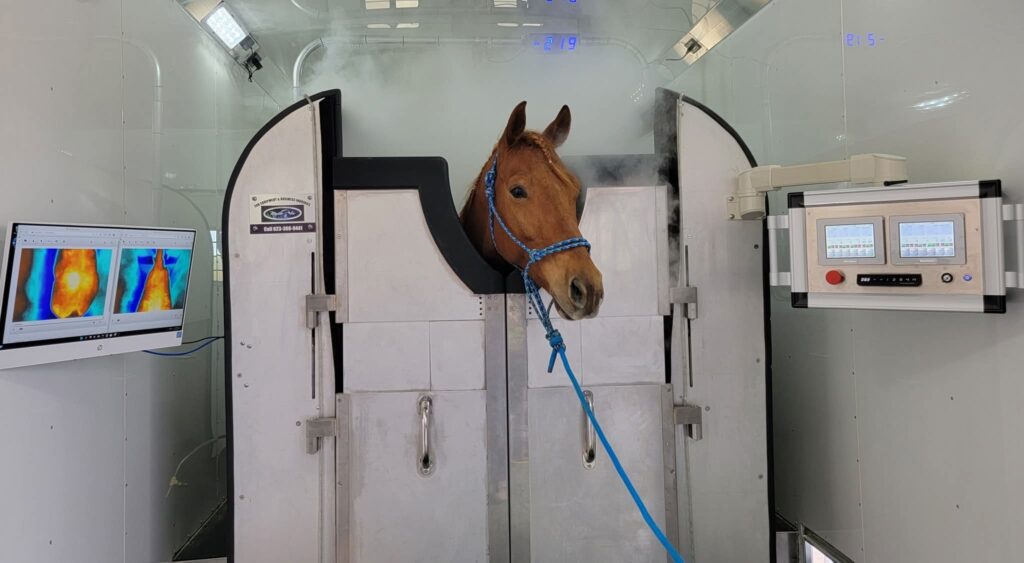
“They are only in the cabin for five minutes,” Cari said. “It is cold enough, long enough to trigger the results. So it’s not necessarily a ‘more is better’ approach. It’s just the duration to trigger the brain to start all the processes.”
From relaxing muscles to pain relief, increased circulation and improved healing, the cryotherapy chamber targets the whole body through thermal shock.
“We do wet the lower legs, so we get an intense icing, much like your saltwater spa. So you are targeting the legs, but we’re also targeting the whole system by creating a thermal shock, triggering the neuro and thermal receptors which activate the brain to start all the processes,” Cari explained. “First they constrict all the blood to the core, filter and oxygenate all that blood and then start increasing circulation through the body, putting it into basically survival mode, where it will try and put the body back into homeostasis, heal any areas that need healing, flush inflammation out of the body, flush lactic acid out of the muscles.”
She compared the results to giving pharmaceuticals like Dexamethasone, Banamine or Phenylbutazone, but all natural because of the self-triggered therapy.
“After they’ve had a session, it encourages them to drink and helps with dehydration, and boosts their immune system,” she added. “We have been able to target things like anhidrosis in horses that quit sweating. We’ve been able to reset thermostats and get them to sweat again. What’s been really refreshing is that we actually have the support of the vets. They send us a lot of referrals to work on these horses too. It’s been a very successful and widely received therapy.”
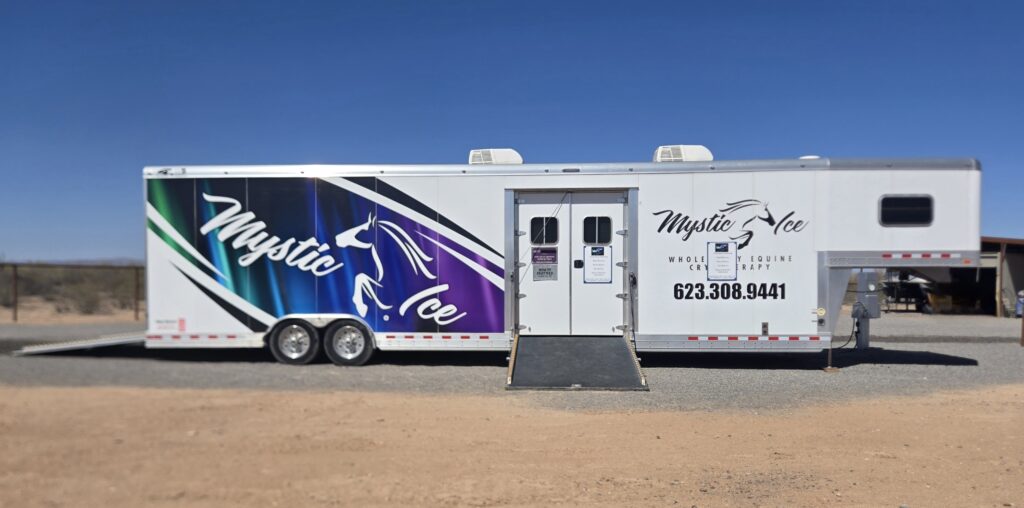
Horses that have lactic acid build-up and muscle issues can benefit from a session every day of the show after being worked, while others might benefit from a reset session in the morning before they compete. Horses with anhidrosis receive three sessions 12 hours apart.
“There’s different ways of using it if you want it to enhance performance or if you want it to help with recovery, or just to help increase and speed up the healing process for an injury,” Cari said. “It’s kind of what I call the missing link in rehab. When a horse goes on stall rest, within four days they start to lose muscle tone and condition. If they’re doing cryotherapy while they’re on stall rest, this is helping with muscle tone and condition so they aren’t quite getting as far behind the eight ball in their condition by being on stall rest, plus it’s targeting healing for whatever the specific injury is that they’re actually on stall rest for.”
Handheld Cryotherapy
While the Mystic Ice full body cabin helps reset the whole system through thermal shock, the handheld units focus on one area of the horse’s body.
Natasha Gray started using handheld cryotherapy treatments on her own horse and saw the impact it had. After professional training specific to equine cryotherapy equipment and safety protocols, Gray then spent time shadowing experts and learning about equine anatomy, injury recovery and performance therapy techniques. Then she launched Natasha Gray Cryotherapy to the public.
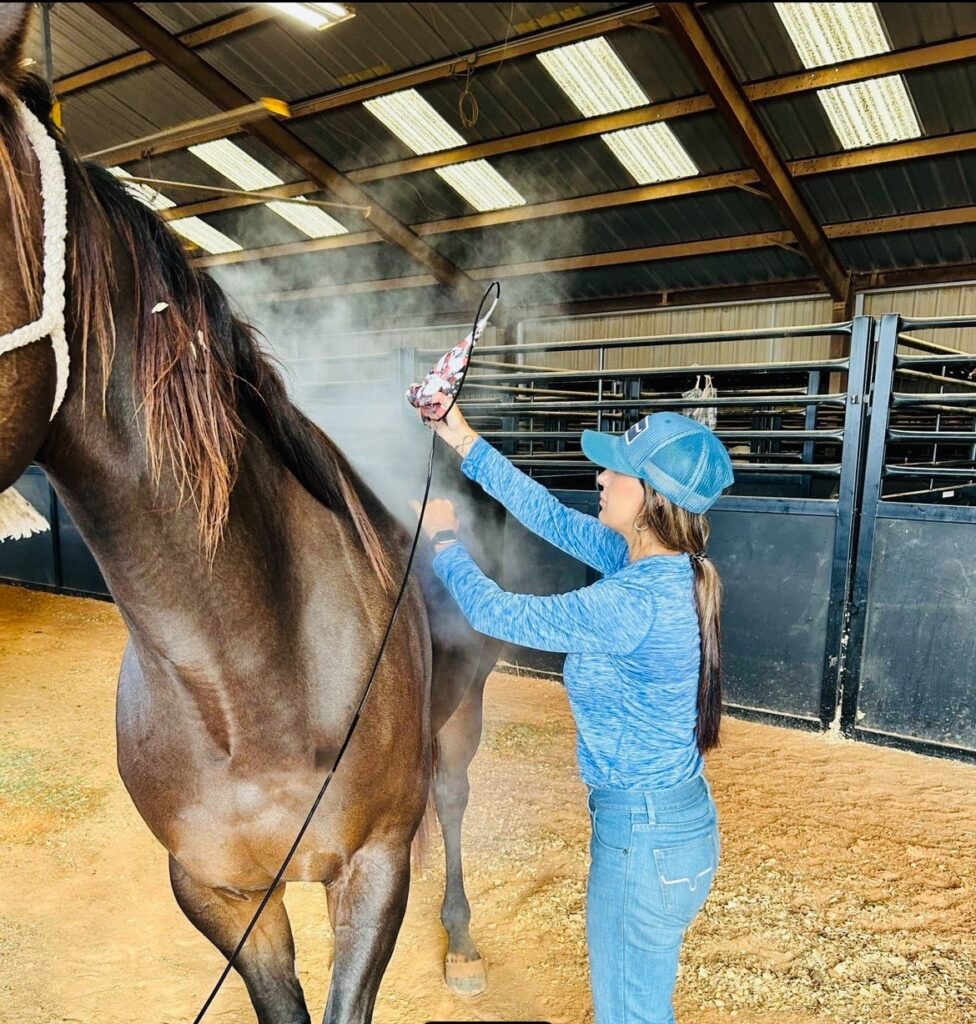
“I can target specific zones like legs, shoulders, stifles, or the back,” Natasha Gray said. “It’s a very calm and non-invasive process—most horses really enjoy it. Whole-body treatment is possible over multiple targeted zones, and I always tailor each session to that horse’s specific workload or recovery plan.”
It is not uncommon to see cryotherapy chambers or handheld machines used by human athletes in the lockerroom which overflows into equine athletes as well.
“Athletes use it to recover faster, prevent injury, and improve blood flow and mobility,” Gray added. “As the technology advanced, the benefits translated naturally to equine athletes, especially in high-impact sports like barrel racing, roping, cutting, etc.”
Targeting the cold air to specific areas of the body can rapidly reduce inflammation and increase circulation for quicker healing as the body warms back up.
“It’s a great tool for both preventative care and post-performance recovery, especially during the hotter months when horses are more prone to heat stress and muscle fatigue,” Gray added.
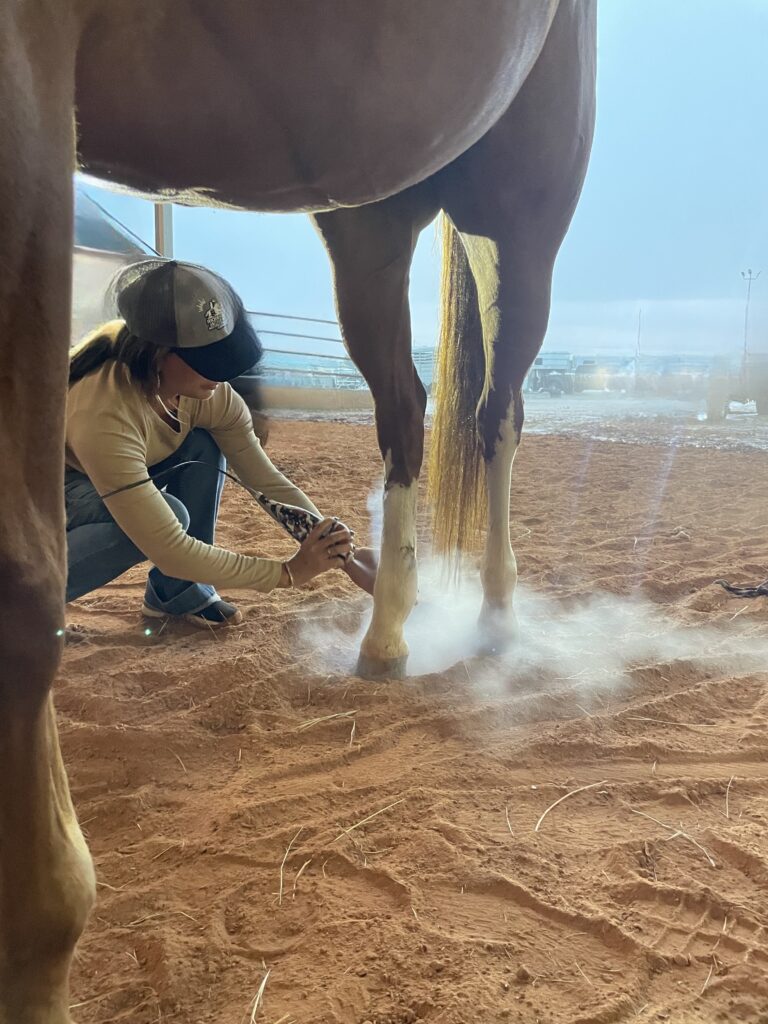
Some of the most common injuries Gray treats:
- Tendon and Ligament Injuries
- Cryotherapy Benefit: Reduces inflammation and prevents further tissue damage. Can speed up healing and reduce scar tissue formation.
- Joint Inflammation
- Cryotherapy Benefit: Controls joint inflammation and helps maintain mobility and comfort—especially after intense training or racing.
- Muscle Soreness
- Cryotherapy Benefit: Reduces stiffness and promotes muscle recovery.
- Hoof Inflammation
- Cryotherapy Benefit: When applied to hooves, cold therapy helps stop the progression of laminitis and reduces pain and inflammation in the hoof capsule.
- Fluid Accumulation in Legs
- Cryotherapy Benefit: Reduces puffiness, increases circulation, and brings legs back to normal size more quickly.
A typical session with Gray’s handheld cryotherapy is about 10 to 45 minutes depending on the area being treated. A large portion of Natasha Gray Cryotherapy is traveling to events where horses need fast and effective support. She also does appointments for maintenance care and post-injury support.
When she’s not treating horses, she works full-time for a branch of Child Protective Services, training new caseworkers.
“It’s meaningful work, and I’m proud to be part of it,” Gray said. “But cryotherapy is my passion, and I’m working hard to grow this business with the goal of one day making it my full-time career. I truly believe in what this therapy can do, not just because I see it in my clients, but because I’ve experienced it firsthand with my own horse.”
Natasha Gray Cryotherapy is based in Weatherford, Texas and more info can be found on Facebook @Natasha Gray-Cryotherapy.
Mystic Ice is based in Wittman, Arizona and more info can be found at mysticicecryo.com or on Facebook @Mystic Ice Equine Cryotherapy