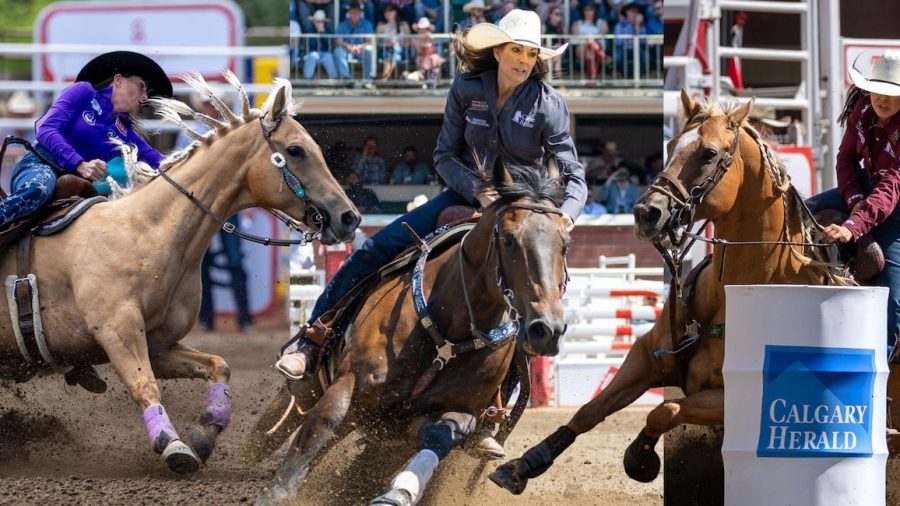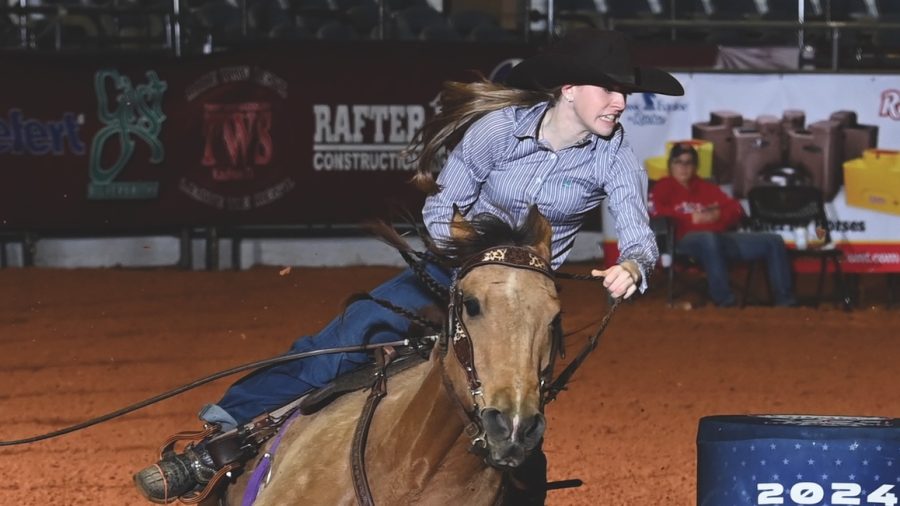


A strain of Equine Herpesvirus-1 (EHV-1) — including neurological cases classified as equine herpes myeloencephalopathy (EHM) — was confirmed by multiple equine veterinary clinics in Texas on November 18, with several cases traced to horses attending major event such as the Women’s Professional Rodeo Association World Finals and Elite Barrel Race held November 5–9, in Waco. The Barrel Futurities of America World Championships held November 15 – 22 at the Lazy E Arena in Guthrie, Oklahoma, was cancelled November 18 through the remainder of the event due to a confirmed positive case of EHV.
While no true preventative to EHV exists, steps can be taken to lessen the symptoms of outbreaks and reduce the spread of the disease.
Barrel Horse News shares horse owners’ and caretakers’ most common questions about EHV, which is highly contagious, answered by Benjamin J. Darien, DVM, MS, a diplomat of the American College of Veterinary Internal Medicine and an associate professor of internal medicine at the University of Wisconsin-Madison, Dr. Frank Cook of Maxwell Gluck Equine Research Center, University of Kentucky and Dr. Nicola Pusterla, DVM, PhD, Diplomate ACVIM and professor at University of California-Davis School of Veterinary Medicine.
Neurological signs and symptoms
Travel recommendations to prevent infection
What is EHV?
EHV-1 is highly contagious to other horses and can cause respiratory disease primarily in juvenile horses, such as nasal discharge, fever and coughing; infection can also result in abortion and neonatal death. The most concerning manifestations of EHV-1 infection are neurological signs, such as a wobbly gait caused by lack of coordination of the limbs, with the hind limbs often more severely affected, as well as urinary incontinence. These appear when the virus causes damage to blood vessels in the brain and spinal cord.
EHV-1 can affect horses of all breeds and ages. Though the incubation period for EHV-1 can be as short as 24 hours, horses begin to show signs typically a few days after exposure. The horse may only have mild fever, slight nasal discharge or a cough (some horses exhibit no signs of disease) before neurologic signs develop, so careful monitoring is key.
If you find your horse’s temperature to be above the normal 99 to 101.5 degrees Fahrenheit, you should contact your veterinarian, who will do a physical examination and, if indicated, will take both a nasal swab and a blood sample, and send them to a laboratory to be tested.
How is EHV transmitted between horses?
“EHV-1 and EHV-4 tend to be transmitted from mare to foal or from animal to animal within the same group of horses,” he says. By 2 years of age, almost all horses have antibodies to EHV-1 and EHV-4, demonstrating that they have been exposed to these viruses.
“As a result, these viruses are difficult to control by good management practices. Once a horse has been infected, that horse tends to remain infected because herpes viruses use stealth tactics including a dormant state to avoid being eliminated by immune responses,” says Cook.
“Equine herpes viruses such as EHV-1 can enter white blood cells or nerve cells and hide in those cells by becoming almost completely inactive,” he says. In this latent stage they stop multiplying, and the immune system cannot detect them.
These viruses can then be reactivated at some future time, such as when the horse undergoes stress. Transport or even vigorous exercise may create enough stress to enable the virus to come out of hiding within the body.
EHV is spread via direct contact (nose-to-nose contact), indirect contact (from shared water buckets or tack, as well as from people’s hands), and through the air (aerosolized transmission).
How does an EHV outbreak begin?
“All horses carry some form of EHV, and all it takes for it to reemerge is stress,” Darien said. “There is a latent infection located in a nerve, just like herpes simplex in people. It stays latent until periods of stress, such as under performance conditions for horses, then the horse has a recrudescence, a recurrence, of the disease, like a human getting a cold sore.”
Are there different types of EHV?
EHV has five forms. They’re distinguished by their genetic make-up, or DNA. EHV-2 and EHV-5 are present in the body, but haven’t been linked to any disease. EHV-3 is a sexually transmitted form of the virus. EHV-1 and EHV-4 are the most common forms of the virus, and pose most of the problems for competitive barrel racers.
Both EHV-1 and -4 can cause respiratory disease, commonly referred to as Rhinopneumonitis, Darien explains. “Rhino” means nose, “pneum” means lungs, and “itis” means inflammation. So they can affect the respiratory system anywhere from the nose to the lungs.
EHV-4 is most commonly associated with respiratory disease, especially in younger horses. But, Darien notes, you can see the respiratory form in foals, weanlings and adult horses.
The respiratory forms of EHV-1 and -4 have the same clinical signs, or symptoms. The most common clinical sign, says Darien, is an acute febrile episode, so 104 to 105 degree temperature. The normal range for an adult horse is 98.5 to 101 degrees and slightly higher in younger horses.
The fever is generally accompanied by a snotty nose, coughing, lack of appetite and general depression.
EHV-1 is also responsible for reproductive problems such as abortion, still birth and weak foals. Abortions generally occur after seven months gestation and usually the mare shows no signs of illness at the time.
In fact, EHV-1 accounts for 10 to 15 percent of all diagnosed abortions. The number may be much higher since few mare owners have post-mortems on their lost foals.
Although not as common, EHV-4 can also cause abortion, Darien says.
EHV-1 also has a neurological form, a myeloencephalitis, or inflammation of the brain and spinal cord.
The neurological form produces symptoms very similar to that of other neurological diseases such as West Nile Virus (WNV) and Equine Protozoal Myeloencephalitis (EPM). These symptoms include lack of coordination and the inability to perform normal bodily functions.
“At first the horse is weak in the backend, but is bright and alert. It can eat and drink, but it can’t urinate and can’t pass manure. It’s often dog sitting,” Darien describes. “As the disease progress, the horse may lose the ability to stand completely.”
How is EHV treated?
Rhinopneumonitis doesn’t respond to antibiotics because it’s caused by a virus, not bacteria. Generally, the symptoms are treated with anti-inflammatory drugs such as Banamine®, DMSO® and some corticosteroids, as well as intravenous fluids to maintain hydration.
With the neurological form, measures such as bladder catheterization and manual manure removal from the rectum may be required. Body slings may be used if the horse is uncoordinated or unable to stand.
In some instances of both the respiratory and neurological form, the anti-viral drug, Acyclovir® may be administered.
Do vaccines prevent EHV?
Vaccines are available to protect against the respiratory forms of EHV-1 and -4. None exists to protect against the neurological form.
It’s believed that vaccination may reduce the severity of symptoms of the respiratory disease. By lessening those symptoms, vaccination may reduce the risk of neurological form development.
However, a controversy does exist in regards to the frequency and timing of vaccination. Retrospective studies following previous outbreaks have linked frequent vaccination to an increased risk for the neurological form of EHV-1, Darien says.
The problem lies in the fact the neurological disease also spreads to the immune system.
“If you vaccinate in the face of an outbreak (when it’s known to be in your area), you are increasing the antibodies in the blood. In essence you can actually make the horse more susceptible to the neurological form because the antibodies are there and can now develop a bigger, more robust reaction to the virus (due to the horse’s effected immune response),” he said.
Darien advises a common sense approach to vaccinating for EHV.
“My recommendation is that you would vaccinate for equine herpes no more frequently than is indicated for your performance and it’s exposure during the performance season. If your horse is exposed to a large number of susceptible horses and you have a good vaccination level you will have less clinical signs and less clinical disease of the respiratory form.”
For example, you don’t need to vaccinate when you horse isn’t exposed to outside horses such as during winter turnout. However, if you plan on hauling to bigger events starting in May, you would want to start vaccinating for EHV with your spring shots in April, says Darien.
Protection from the vaccine lasts two to three months. The vaccine is effective seven to 10 days after the horse receives the initial injection and first booster (two shots). So, vaccination should be repeated as necessary during the competition season.
For broodmares, vaccination should occur during gestation to prevent abortion.
“The recommended schedule against the reproductive form was traditionally five, seven and nine months,” Darien said. “What most people actually do is three, five, seven and nine.”
Can I boost my horses immune system to prevent them from getting EHV?
“There is nothing preventing a horse from getting EHV,” Darien said. “What you are trying to do is lessen the severity of the disease.”
Vaccination is the most effective method, but good general nutrition can also help a horse fight off infection.s
The supplementation of the amino acid lysine has as been recommended by some practitioners.
Prevention Tips:
Infection by EHV is airborne. Particles of the virus can spread as far as 35 feet. It’s also possible to spread by contact with contaminated objects, such as stalls, buckets, shared bits, and even the rider’s hands.
Along with a judicious vaccination schedule, other preventive measures include isolation and disinfection.
Isolating new horses, sick horses or those just returning from an event helps prevent the spread of disease. New horses or those returning from competition should be isolated for at least seven days. Horses returning from shows where illness was present should be isolated for 21 days. Sick horses are quarantined for 30 days or longer.
“It’s just like your kids. You don’t want them sharing the same glass of juice when one of them is sick,” quipped Darien.
Luckily the virus is effectively killed by disinfection of all contaminated areas, stalls and equipment, including boots and shoes. One part bleach to 10 parts water generally does the trick.
Has there been an EHV outbreak before?
Back in 2006, (EHV) outbreaks forced the quarantines of racetracks, training facilities and private farms in Kentucky, Maryland and Wisconsin.
In 2011, two cases were confirmed in horses that competed at The Four Sixes/National Cutting Horse Association Western Nationals, a show held in late-April and early-May at Ogden, Utah. Two cases were reported in Colorado cutting horses shortly after followed by multiple California cutting horses being affected, resulting in immediate show cancellations or postponements.
In 2016 the Texas Animal Health Commission (TAHC) confirmed EHM in a mare at a breeding farm in Cooke County, Texas in May. The affected farm was placed under quarantine and restricted from moving animals and semen.
Some information in this article was originally published by Barrel Horse News in 2011, 2013, and 2014.
To obtain the latest information on equine disease events or to find resources visit talc.texas.gov/animal_health/equine, www.equinediseasecc.org/alerts