
Debunking hypothermia in horses with Benjamin R. Buchanan, DVM, DACVIM, DAVECC of Brazos Valley Equine Hospitals.
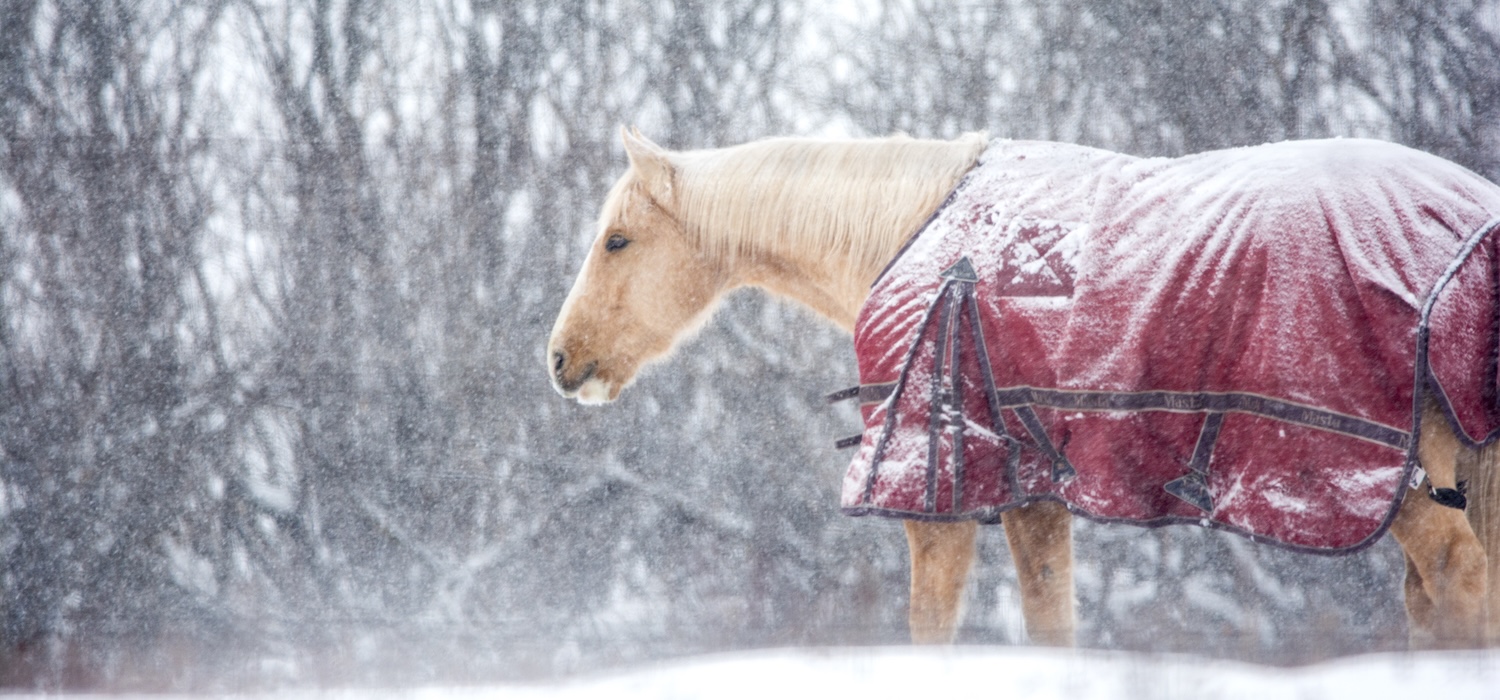
Winter temperatures are harder for humans to adjust to than horses. People feel the cold more than horses, and consequently think their horses must also be cold. Horses are by nature plains animals that are well designed to withstand the elements. Healthy horses can regulate their body temperature to adapt to the surrounding weather without human intervention. There are exceptions to the rule — extremely young or old horses and those with medical conditions — will be more sensitive to extreme weather. Body clipping or blanketing to limit hair growth also impact a horse’s natural ability to tolerate cold, snow and rain. For healthy horses, the winter weather isn’t nearly as much of a challenging as it is their human caretakers.
“Wind is going to have the most significant impact on cooling a horse,” said Benjamin R. Buchanan, DVM, DACVIM, DACVECC of Brazos Valley Equine Hospital in Navasota, Texas. “Something as simple as a tree line or outcropping of rocks can serve as a wind block when run-ins and stalls aren’t available.”
Because horses are naturally designed to survive outside in the elements, it’s rare to hear of one suffering from hypothermia, which is defined as a condition where the core body condition falls below normal limits. A horse’s normal core temperature range is 99 to 101 degrees Farenheit. When the animal’s temperature dips between 89.6 F and 98.6 F, that’s considered mildly low hypothermia. A moderately low temperature is 82.4 and 89.6 F. Severe hypothermia is defined as a body temperature less than 82.4 F.
“Fortunately, it’s pretty rare for a horse to have hypothermia,” Buchanan said. “The most important things horse owners need to realize is that it doesn’t always happen in the winter, and horses who are hypothermic have to be warmed up carefully.”
Help, I Can’t Get Warm
The most widely promoted case of hypothermia tend to be in dogs, cats or cattle falling through ice. Those rescued are often able to recover, but in worst-case scenarios, animals can freeze to death. Fortunately these cases are infrequent, according to Buchanan.
However, he says the biggest misconception about hypothermia is that it only occurs during winter in snowy, icy conditions. In reality, a horse stuck in the mud or a river in the middle of summer may also experience hypothermia.
“Wind is going to have a significant impact on the heat a horse produces. Wind will blow it away. The most important thing to do is provide shelter or a wind block.” — Benjamin Buchanan, DVM
“It’s any incident that occurs where a horse’s core temperature drops below its normal range,” Buchanan said.
While a human or horse may be cold, hypothermia doesn’t actually set in until the body’s core temperature drops enough to negatively impact physiological functions such as cardiac dysfunction, respiratory dysfunction, central nervous system abnormalities, kidney dysfunction, lack of gastrointestinal motility and blood clotting.
A small region of the brain called the hypothalamus signals to the body to being warming when exposed to prolonged periods of cold. Shivering is one of the most noticeable signs. As the skeletal muscles tremble, warmth is created by the energy of the motion.
“The neat thing about horses is that they can retain heat in their core while shutting down heat on the periphery to help sustain them,” Buchanan said.
Water conducts temperature, and when the entire body surface is wet with cold water or mud for extended periods of time, it contributed to the loss of core body temperature. Water will conduct heat away from an object 25 times faster than air.
The length of time an animal can sustain in this state without damage depends on their age and body condition. A younger animal with extra fat stores may just experience a slow-down of the system and frost bite on its extremities, according to Buchanan. Older, thinner horses are going to have a harder time staying warm.
In Buchanan’s experience, newborn foals and older compromised horses are the most likely candidates for developing hypothermia. The youngsters can’t thermoregulate well within the first few hours of life and need assistance keeping their core temperature warm. Senior horses or those with vascular conditions such as laminitis, sepsis, low body weight or Cushings can also increase a horse’s chances for suffering from hypothermia.
The Recovery Process
People tend to turn to heaters or heat lamps to raise an animal’s body temperature. That is the worst option for bringing an animal out of hypothermia, Buchanan says. Instead of using heating devices, which can rapidly increase the external body temperature, a slow rewarming process is necessary. Getting out of the wind and getting dry is crucial. Use of a blanket or simple cover is appropriate.
“Heat causes the vessels to dilate, and the vascular system may not be able to handle rapid blood flow. That could cause blood pressure problems,” Buchanan said. “I prefer to get a catheter in hypothermic horses so I can control blood flow and other treatments.”
In extreme cases, veterinarians can administer warm fluids that go directly to the horse’s core to warm it from the inside out rather than the other way around. IV and gastrointestinal tubes can deliver warm fluids to the core of the horse, warming it up slowly and internally.
Monitoring the horse’s body temperature throughout the warming process gives an indication of how the horse is recovering. When the reading on a rectal thermometer reaches 95 degrees, the horse’s body can take over and the horse can warm up on its own. Throughout the process, veterinarians will continue to monitor organ function to make sure they are working properly. The most common side effects include sepsis and pneumonia.
“No one truly knows the long-term outcome for recover from hypothermia in horses, because it’s not that common. More is known about recovery in humans,” Buchanan said. “The horses I’ve worked with have been fine after receiving treatment.”
Preventing Hypothermia
Fortunately, horses have naturally adapted over centuries to protect themselves from the elements. Their thick haircoat and subcutaneous fat provides natural insulation against the harshest conditions. Both act as a buffer or insulator helping to maintain a constant core temperature. Wild horses in Serbia have been reported to tolerate temperatures as low as -90 degrees Farenheit.
“Wind is going to have a significant impact on the heat a horse produces. Wind will blow it away,” Buchanan said. “The most important thing to do is provide shelter or a wind block.”
This doesn’t necessarily mean a stall or even a man-made shelter. Tree lines, hilly areas and other natural features within a pasture can provide a natural barrier from the wind.
“Keep an eye on older horses or those that are not as healthy,” Buchanan said. “You know when your horse is not normal. Call the vet for help.”
When hypothermia results from an emergency such as being stuck in water or mud, Buchanan urges horse owners to call first responders for help rather than rushing in unaided. Trained responders know how to assist without putting people in danger.
“You don’t want one victim (the horse) to turn into two (you and the horse),” Buchanan said.
Once dislodged from the situation or when a hypothermic horse is found, the first step is to bring it in out of wind and elements. Calling a veterinarian for help is critical so they can oversee the warning process and help the animal avoid going into shock from warming too quickly.
“The most important thing to remember is that hypothermia doesn’t just happen in the winter,” Buchanan concluded. “It could be being stuck in mud or moving water for a long period of time [during any season]. Slowly allowing the horse to rewarm itself is key for a positive long-term outcome.”
This article was originally published in the March 2020 issue of Barrel Horse News.