
Tegan Still, a product developer at Equibrand, which manages Classic Equine, Classic Rope, Rattler Rope and Martin Saddlery shares insight into the proper use of winter blankets, sheets, slinkies and coolers.
One of the most important steps in blanketing your horse is to be mindful of their comfort. Measuring your horses correctly (using a soft tape, measure from the middle of you horse’s chest, along the widest part of the shoulder, directly along the length of your horse to where their butt cheeks meet under the tail head) is the first step in ensuring comfort. Tegan Still, a product developer at Equibrand also suggests you always check your horses by placing a hand under their blankets to ensure they are not too hot. If you start to strip your layers off, then you probably need to remove a layer from your horse, also.
Barrel Horse News: What do different blanket weights mean, and how do you decide when to use them?
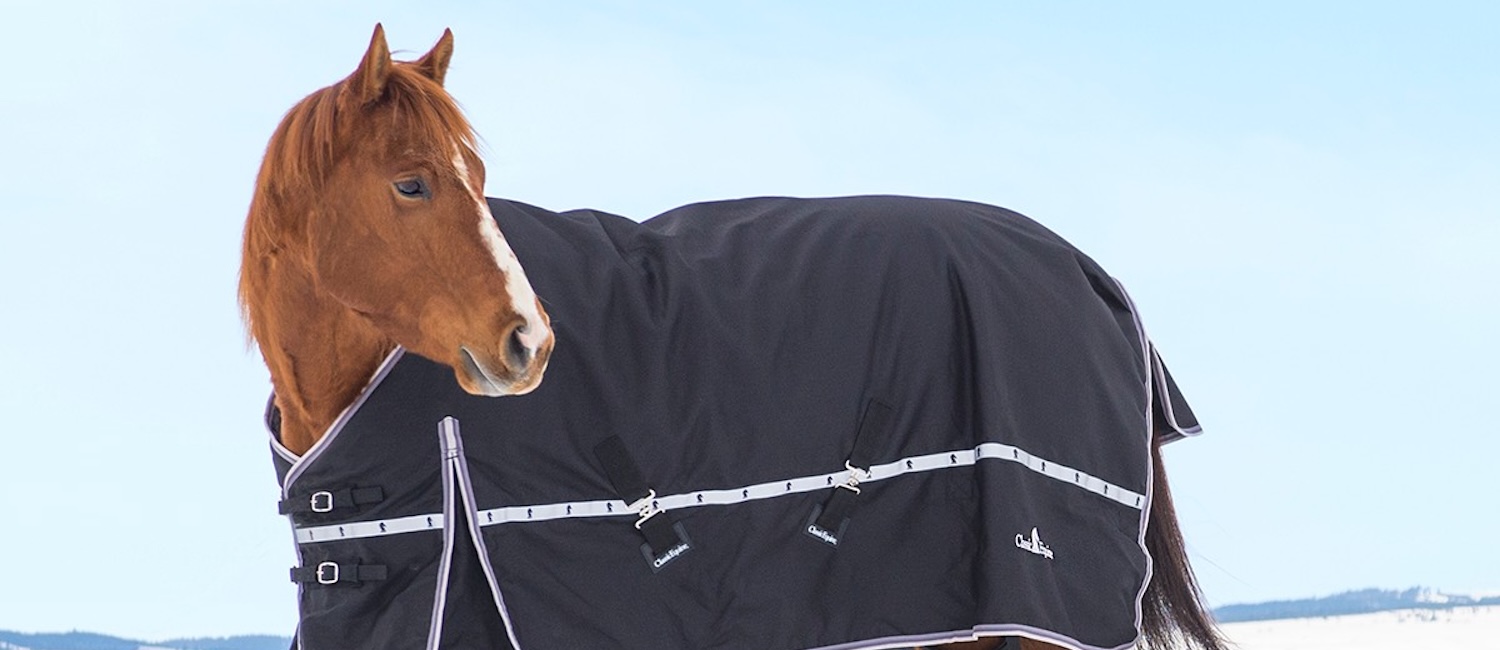
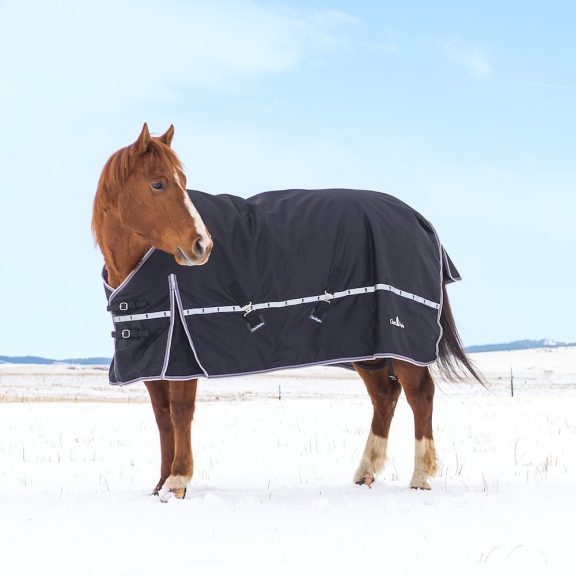
Tegan Still: 10K has 300g of fiber fill whereas the 5K only has 100g of fiber fill, which is essentially the same as the difference between you putting on a lightweight jacket for milder weather and a heavy weight jacket for extreme cold weather. For areas such as Texas and Arizona where we tend to have milder weather the 5K blanket is what I would recommend. The 5K is also great for use in layering. It can be layered with a slinky and a sheet (stable sheet or windbreaker depending on the temperature). The 10K is designed for more inclement weather such as they have in the northern regions, where they have extended extreme cold periods. It can also be layered with a slinky when needed.
BHN: What is the purpose of a slinky and when would you use one?
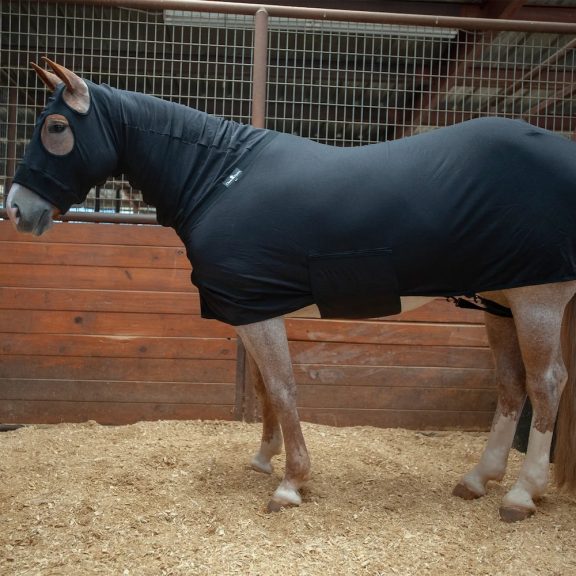
Still: The purpose of the slinky is to keep horses slick and clean (designed for the show horse industry). I would usually start using a slinky when the temps start to drop below about 60-65 degrees Fahrenheit. It helps to keep your horse from hairing up in the early fall period when the days start to get a little shorter. It is also nice for keeping your horses coat nice and clean during the cooler months. Layering depends on the temperature.
- When temperatures start to get between 50-55 °F, I would layer it with a stable sheet.
- When temps drop between 42-49 °F, I would layer it with a Windbreaker.
- When it gets between 35-41 °F, I would layer it with a 5K.
- If temps drop between 27-32 °F, I will layer it with a stable sheet and a 5K depending on the feels-like temperature.
- Any extended period below that I would layer it with either the windbreaker and 5K or with the 10K.
BHN: When would you use a hood and when would you not?
Still: If you are in an area where you get a lot of winter moisture and your horses are turned out, I would suggest using the hooded blankets. The hoods are also good for showhorses that you want to keep a very slick, even coat.
BHN: When would you use just a sheet?
Still: I would use a sheet on its own in milder weather if it around the 50 to 60 °F mark for a stable sheet and 45-55 °F for a Windbreaker, but it also depends on what level of slickness you desire in your horses’ coat.
BHN: What is the difference between a stable sheet and turnout sheet?
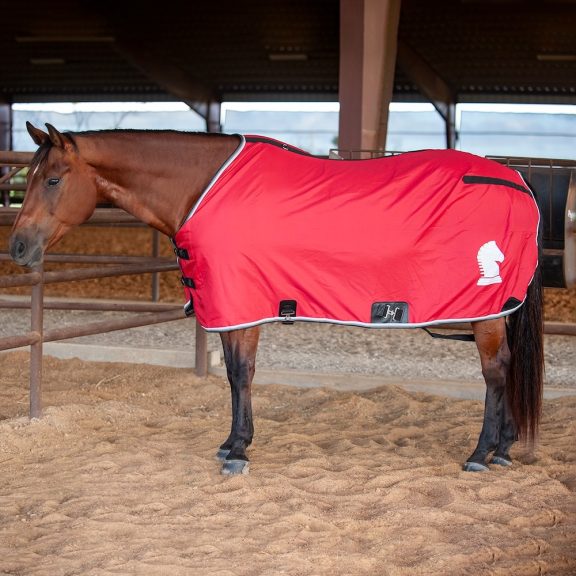
Still: Stable sheets are designed to be used in a stall only. They are made from a lighter material. Turnout Sheets (or Windbreakers) are designed for use in the pasture and are made from a high denier ripstop material. They are also fully lined.
BHN: What are the right and wrong ways to layer blankets?
Still: I would always suggest starting with your lightest layer first and working up from there. However, the most important thing about layering blankets or in fact blanketing at all is to keep an eye on your horse’s temperature under the blankets. If they start to feel overly warm to the touch or start sweating under their blankets, it is time to remove a layer. You do not want to cause them to overheat under their blankets.
BHN: What is the purpose of a cooler?
Still: Coolers are designed to be used in a couple of different ways. You can use a cooler to keep your horse covered and comfortable when you have taken their blankets off to saddle them and before you get on them to ride them on cold days. You may use one to two coolers depending on how cold the temperature is. There is a slit in the cooler over the saddle horn so that it sits comfortably over a saddle. Coolers were also designed to keep your horses warm during the cool down period after you have ridden them and also after you have bathed them. Again, you can use one to two coolers to keep them warm after bathing depending on how cold the temperature is.
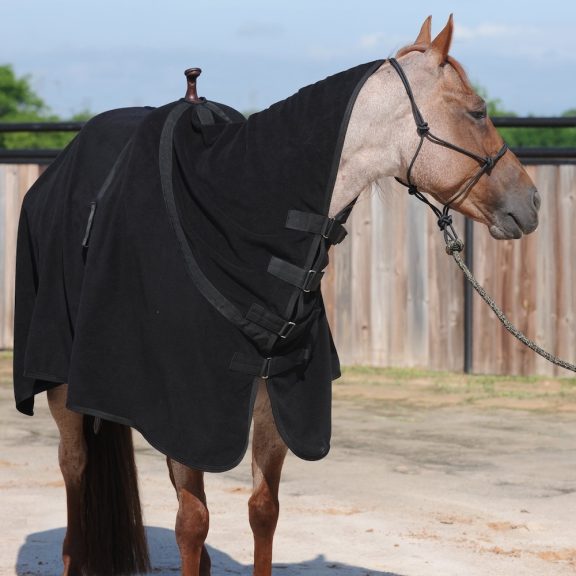
There is a belly strap, tail strap and hook and loop strap that attaches to your halter to keep the cooler comfortably in place. The polar fleece material is moisture wicking and helps to draw the moisture away from your horses’ body to help them dry faster and stay warm while drying.
The wrong way to use a cooler is to turn your horse loose with a cooler on. You should always keep your horse contained when you are using a cooler either by tying your horse up or holding your horse. Coolers were not designed for horses to lie down in. The polar fleece material will collect shavings, etc. if the horse is turned loose and decides to lay down in their stall.
Read More: Winter Weather Checklist.
Read More: Horse Blanketing Tips