

Understanding how headgear affects your horse helps you make the most of its use.
Tack and equipment play important roles in a barrel racer’s success. From saddles to sport boots, the gear you use impacts your horse’s comfort, understanding and ability to perform. While finding the perfect bit and saddle fit tend to take center stage, seemingly subtle choices can also affect your horse in significant ways.
Headgear — including tie-downs, bonnets, training forks, German martingales and draw reins — don’t often dominate the conversations, but their use in training and competition can have a powerful influence over your horse. Learning how to choose the right headgear for your horse and developing a thorough understanding of the impact it has once applied can help you make the most of your headgear choices.
A Firm Foundation
In a world that’s big on instant gratification, it can be easy to reach for a new training tool in a time of frustration and cross your fingers for a quick fix. Weatherford, Texas-based trainer Danyelle Campbell cautions against this approach, opting instead to take as much time as the horse needs to master basic skills before introducing any type of headgear.
“When you have a horse that’s had the right kind of start, the odds of needing headgear further down the line are slimmer,” Campbell explained. “I’m very passionate about a good start on a horse, because I believe it can make or break one. There’s nothing wrong with needing to add a tie-down or whatever you feel your horse may benefit from later —some need it regardless of how fantastic of a start they’ve had — but it’s not something I introduce right away. I don’t want it to be a Band-Aid.”
Barrel racing clinician Dena Kirkpatrick says she also takes a horsemanship-based approach to headgear.
“Everything starts with good basic horsemanship,” said the Post, Texas, trainer. “I want to start with a clean slate with a horse that’s nicely broke. To me, that means the horse is soft. It knows how to break at the poll and give to pressure. If the horse starts with a good understanding of these things, it’s going to decrease the chance we’re going to use something like headgear to cover up a problem later on.”
Once a horse has a thorough understanding of the aids, Kirkpatrick says she evaluates its conformation to help her determine which headgear may be beneficial later.
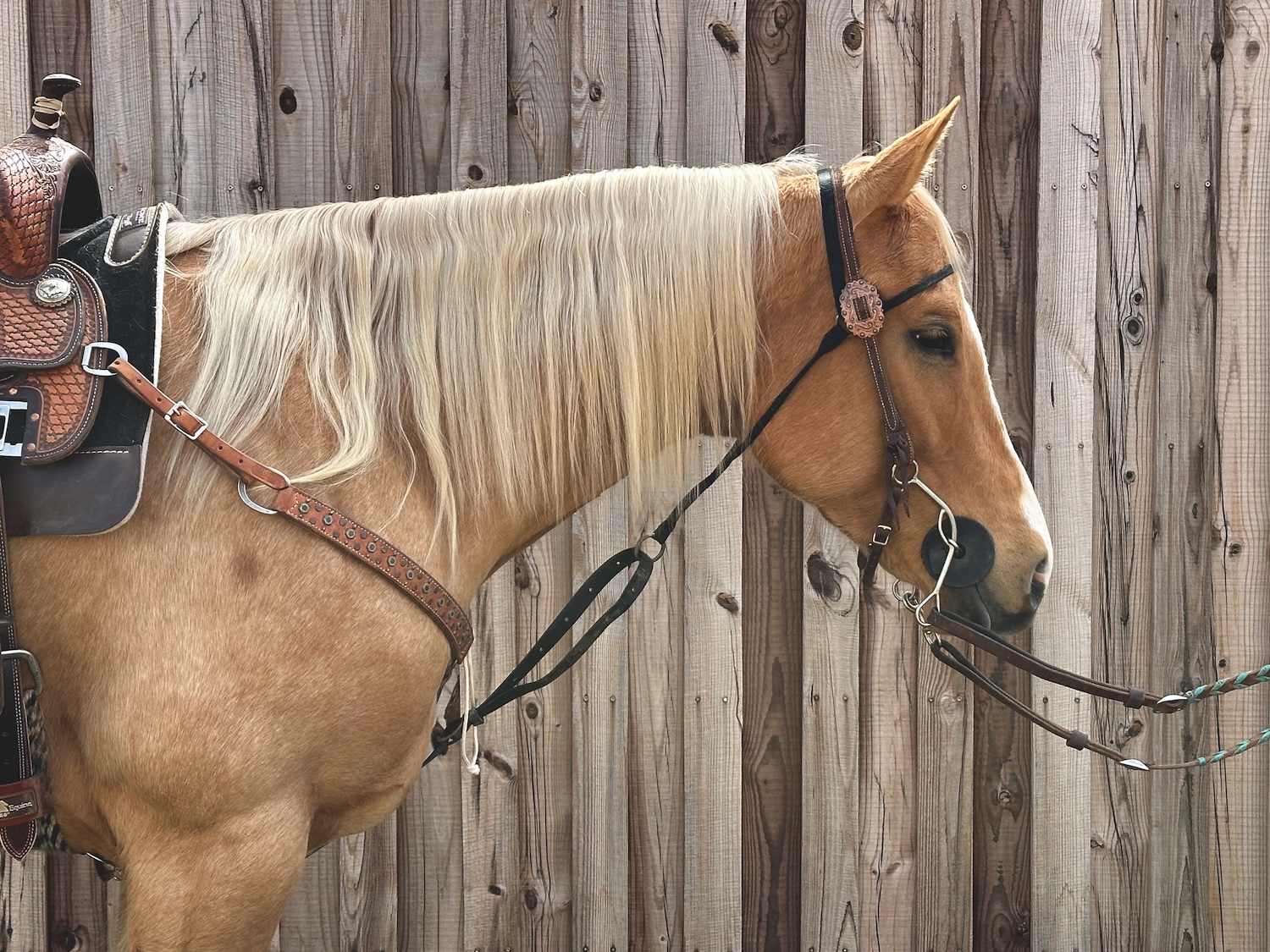
“Some horses are physically built in a way where you know they’re going to need some help, but I don’t put something on a horse just because,” Kirkpatrick explained. “I have a filly at my house now who will probably need a bonnet, because her headset is naturally really high. It’s not going to keep her from being a good barrel horse, but she’ll likely need help keeping her poll down enough to correctly execute a turn. That doesn’t keep me from taking her down the same path as all the other horses, getting her broke and teaching her how to use herself correctly — it just means no matter how broke she is, the odds are good she will need a little extra help.”
Safety First
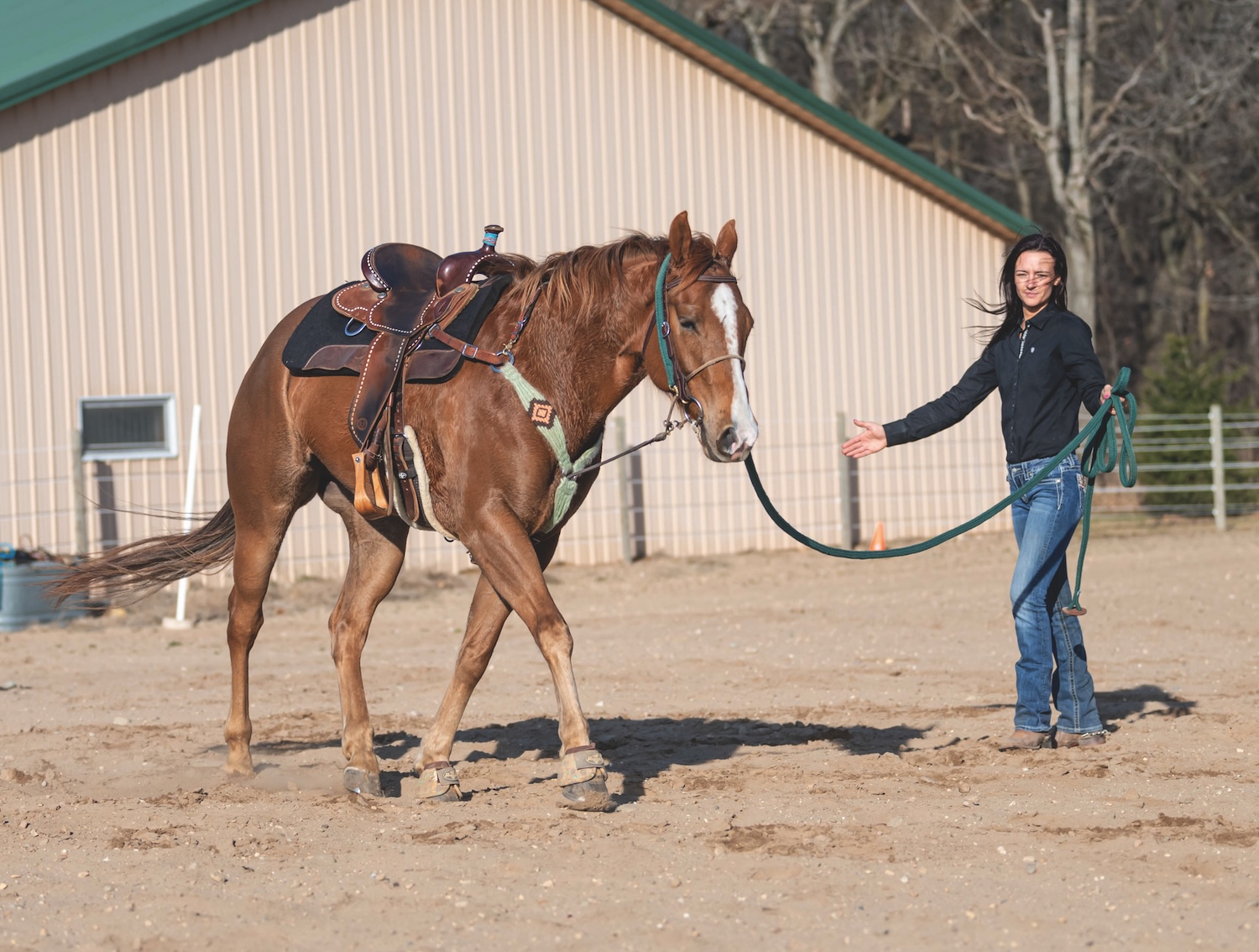
Ensuring your horse is well broke not only lays the foundation for competitive success, it also helps make the introduction of new headgear safer. A horse that understands how to yield to pressure is less likely to panic when unfamiliar pressure is applied. Even so, Campbell says she prefers to introduce a horse to new headgear on the longe line or in a round pen.
“I have a firm rule about that,” Campbell said. “Anything you’re putting on your horse for the first time should be done with you on the ground. If you put a tie-down on, longe the horse around. Stop hard and make sure it hits the tie-down. It may seem like overkill, but you don’t want a horse reacting badly or flipping over with you.”
Kirkpatrick agrees, adding that starting with a loose adjustment can help a horse ease into any equipment changes.
“I start with a loose adjustment with me on the ground in my round pen,” Kirkpatrick explained. “I’ll let the horse get a feel for it and gradually adjust it to where I want it to be. I make sure the horse gets a feel for stopping and turning around before I ever climb in the saddle.”


Tie-Downs and Bonnets
Of all the headgear seen at barrel races, tie-downs and bonnets are arguably the two most used. While Campbell says both are appropriate for training and competition, knowing which one to use can be the difference between helping and hindering your horse.
“A tie-down works by putting pressure on the nose,” Campbell explained. “With a tie-down, a horse can still get its head up, but it can’t push its nose out. On the other hand, a bonnet helps keep the head down by putting pressure on the poll but allows the horse to get its nose out.”
Campbell says evaluating each individual horse’s needs helps her determine what headgear to use.
“A lot of what I use depends on the feel and style of the horse,” Campbell said. “If a horse is really high-headed, I might go to a bonnet just to help them stay level and keep themselves balanced. Some horses are built with a high headset. It doesn’t mean they aren’t broke well or are trying to be bad — it’s just physically how they’re made.”
If a horse needs help balancing in a turn, Campbell says that’s where a tie-down may be useful.
“Sometimes a tie-down can help a horse that wants to get its nose out too far and needs something to balance on,” Campbell explained. “A lot of times things like these are just little tools that help us enhance something a tiny bit. We aren’t making huge changes — we’re just giving the horse a little extra help.”
Kirkpatrick adds that evaluating your horse’s turn style can also help you make an appropriate headgear choice.
“Tie-downs tend to make a horse stiffer through the ribcage,” Kirkpatrick said. “If you have a horse that naturally has a stiff turning style, it may not affect much, but on a bendier horse, it can really change how your horse uses itself in the turn. I don’t use a tie-down much — I’m likelier to go to a bonnet, because I like a round horse, and the bonnet doesn’t take that away. It lets the horse have as much lateral movement as you want and helps keep the ribcage round.”
Training Forks and Running Martingales
Training forks and running martingales are commonly utilized training tools across a wide variety of Western disciplines. Usually constructed of nylon, rope or leather, one end of the training fork attaches to the cinch while the bridle reins run through individual loops on the opposing ends. Although not ideal for competition runs, Campbell says a training fork or running martingale may help encourage a horse that has trouble keeping its head down. Even so, she says she is slow to use them in most cases.
“Anything you’re putting on your horse for the first time should be done with you on the ground.” — Danyelle Campbell
“I don’t love them for barrel training, because it can pull a horse down too much,” Campbell confided. “Every once in a while, I’ll use one in my dry work if a horse needs help coming to my hand without hollowing out, but it’s pretty rare.”
Instead, Campbell says her go-to piece of equipment in these circumstances is a Dennis Moreland California martingale.
“It’s similar to a running martingale, but the rings are tied on the sides of the rope around the neck,” Campbell explained. “It gives you a little bit of that vertical leverage while also allowing you to laterally bend and flex a horse. This way you can keep the horse’s head from going straight up in the air but still bend it around with an open ribcage. You lose a lot of that feel in a traditional running martingale.”
Like Campbell, Kirkpatrick says she isn’t a fan of training forks or running martingales.
“I really don’t use either one,” Kirkpatrick shared. “I feel like when I use one, I have to do a lot of pulling up to bring the head down. It doesn’t give me the feel I like to have on one.”
German Martingales
A German martingale can be used on horses in a variety of training stages, from colts to finished barrel horses. It works by increasing leverage and encouraging the horse to soften at the poll. Like a training fork or running martingale, the German martingale attaches at the cinch but then runs through each side of the bit before connecting to a specialized set of reins that allows the martingale to be affixed at various lengths. Suitable for training but rarely used in competition, Kirkpatrick says German martingales are a good tool for riders who need help establishing feel and softness.
“The German martingale is a good starting point if you feel like you need extra help getting a horse soft at the poll or working toward collection,” Kirkpatrick said. “There are several rings, so you can adjust to have as little or as much collection as you want — you just have to be careful not to adjust so tight that you’re asking the horse to travel behind the vertical. If you use them incorrectly, you can actually encourage a horse to get heavy on its front end.”
Because of its design, Kirkpatrick says a German martingale tends to be a good choice for less experienced riders.
“If the horse is staying soft and in your hands where you want it, there’s no added leverage,” Kirkpatrick explained. “It’s only when it ventures outside of that, that the martingale engages and reinforces where you want the horse’s head to be.”
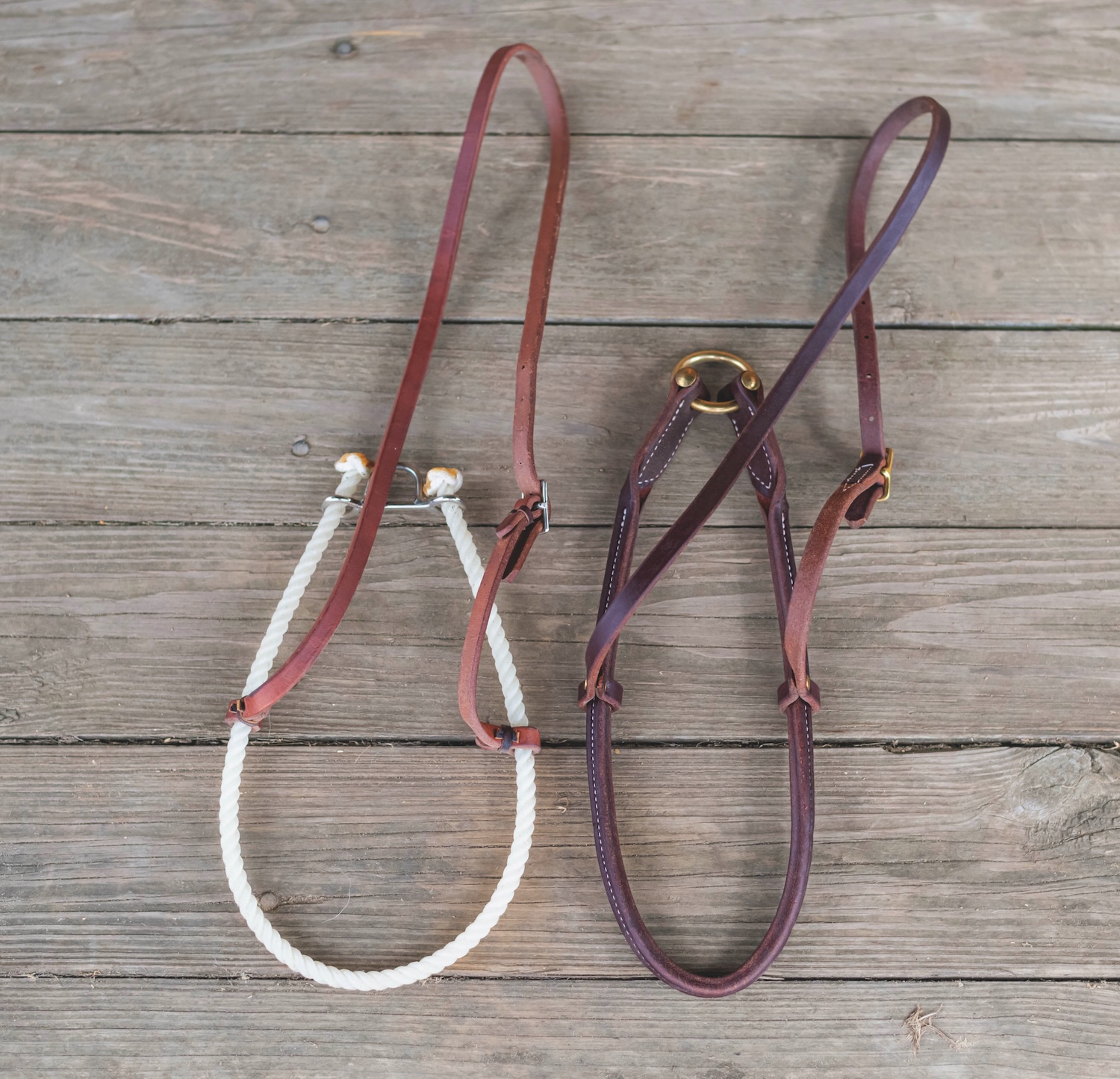
Even though they are user friendly, Kirkpatrick encourages riders to study how a German martingale works before using one.
“If you haven’t used a piece of equipment before — whether it’s a German martingale, tie-down, or something else — do your homework,” Kirkpatrick advised. “Study what happens when you use it and be sure you understand how it physically affects your horse.”
Draw Reins
Like German martingales, draw reins work by adding leverage to help achieve softening of the poll and shoulders as well as collection. But unlike their user-friendly counterpart, Campbell says draw reins are best used by experienced riders who understand both feel and the release of pressure.
“You have to have a certain feel and ability to ride correctly with draw reins, so I do think they’re more appropriate for intermediate to advanced riders,” Campbell explained. “It’s not just about safety — it’s easy to get the horse behind the vertical or pulled down on the front end when you’re using draw reins, and neither of those are ideal positions for a barrel horse.”
Draw reins, which are made of one single rein and run through each side of the bit, can be connected to various places on a rider’s saddle depending upon the desired headset. The cinch, saddle rigging and the D-rings where the breastcollar fastens are all common places for attachment, but Campbell says she prefers attaching to the D-rings.
“I want the horse’s nose pointing straight toward the ground,” Campbell said. “I don’t want the chin curled back behind the chest or the nose poking way out in front of the vertical. Attaching my draw reins up high helps me with collection, softening, body control and lift in the ribs without dragging the horse’s front end down.”
Final Thoughts
Headgear can be a valuable training aid when applied properly. Because tie-downs, bonnets, training forks, German martingales and draw reins each impact a horse differently, it’s important to understand the physical effect a piece of equipment has on your horse.
Assessing physical characteristics helps you make the best headgear choice for your individual horse. Understanding whether your horse has a high or low headset, stiff or round turning style and other variables also offers valuable input. Ensuring your horse is well broke with a good understanding of the aids will help you get the most out of any training aid.
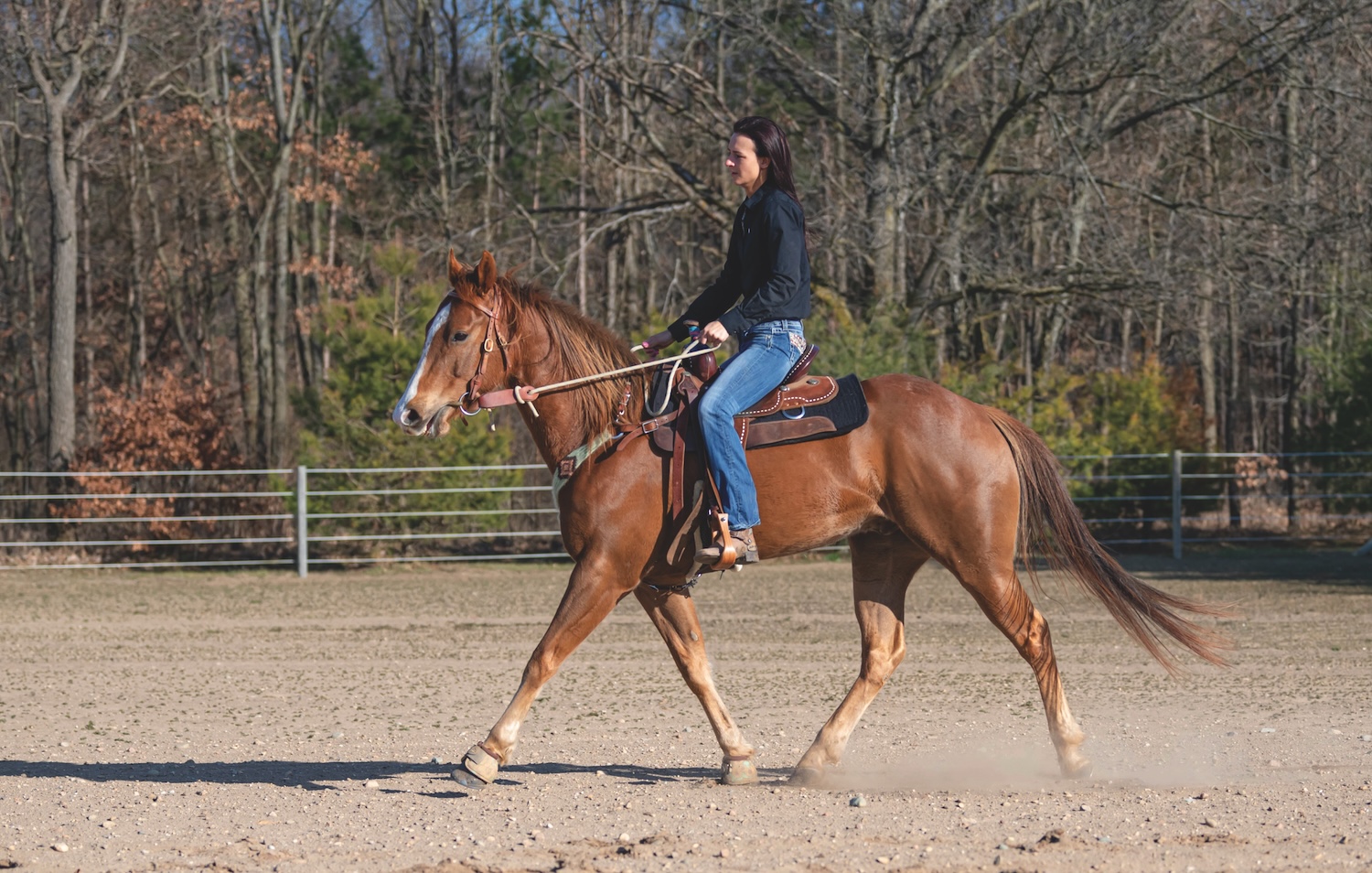
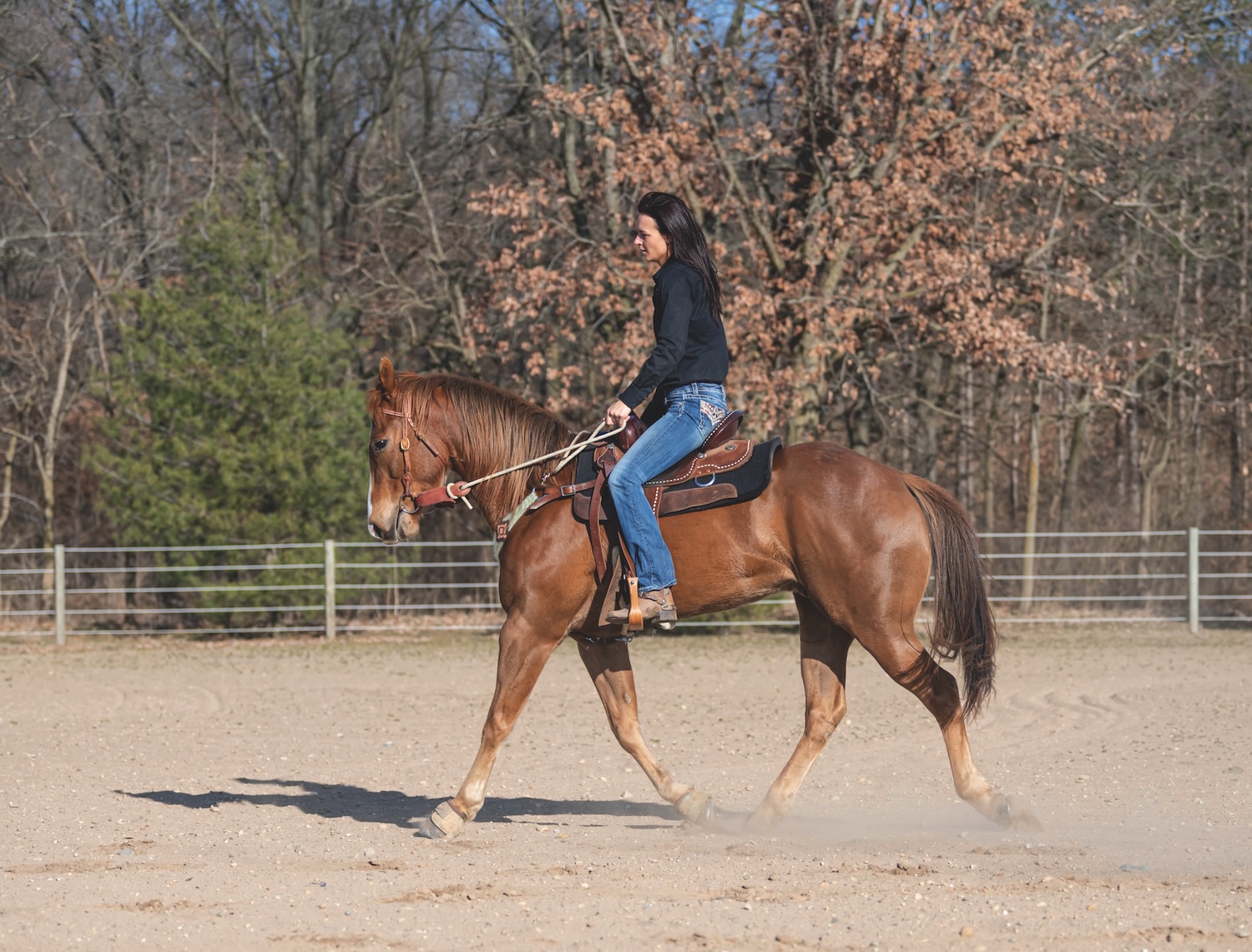
“There’s no one right or wrong way to train horses, but there is a better way for the horse and a safer way for the person doing it,” Kirkpatrick said. “Starting with the right foundation offers the best outcome for everyone — especially the horse.”
This article is the first of three parts and was originally published in the May 2024 issue of Barrel Horse News.