

A colt starter gives your young horse a solid foundation for future success. This guide can help you choose the right program to meet your goals.
When Maine-based barrel racer Tanya Condon wanted her homebred filly started, she knew it had to be a colt starter. In the past, she mainly bought broke, ready-to-go horses, along with a few green prospects she finished and patterned herself.
“Breeding for a horse I wanted out of my best mare and to a top stallion, I wanted to get it right because you only get one chance at a good beginning,” said the NBHA member. “So many of the top futurity trainers talk about using colt starters to get them started right in the different articles I’ve read and podcasts I’ve listened to over the years, I sort of knew I wanted that direction.”
Having attended several barrel and horsemanship clinics, she understood the importance of a solid foundation. She also knew that a “pattern in 45 days” approach wouldn’t work for her filly, Wilys Cowgirl, so she sent her to Chris Tejero in southern New Jersey.
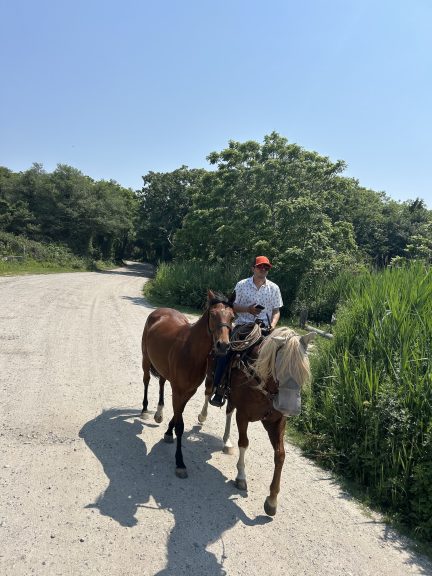
She liked that Tejero was a former pro bull rider who understood the adrenaline that barrel horses bring to the equation. During her time there, Tejero hauled the filly to different venues and used her to move bulls, experiences that helped her gain exposure to a variety of situations.
“Having a colt starter foundation, I know exactly what was done, and I appreciated that he was open to a few things, like hobble training,” Condon said. “Many clinicians I have been to over the years talk about having a solid foundation to go back to, especially if you start having issues, and that has stuck in my head.”
For many horse owners, deciding when and how to start a young horse is one of the most important—and challenging—decisions they make. Both colt starters and traditional trainers can successfully prepare horses for their future, but the approach and priorities differ.
“I feel like [show programs] put more emphasis on finishing that horse quicker, and a colt starter emphasizes truly building that foundation and trust through that horse,” said Tejero.
You only get one chance at a good beginning with your young horse. Working with a colt starter who aligns with your short and long-term goals and fits your young horse’s learning style can help set you on the right path. Here’s what to know when looking for a colt starter.
Building a Solid Foundation
Rapid City, South Dakota, barrel trainer Heather Bauman has trained horses for 25 years and has seen firsthand how colt starters can set the stage for a smoother training process.
“It took me so long to get a result that other people who only start colts can accomplish so much more quickly,” she said. “Then, when I get them, I could get going on the pattern. I could get them patterned after they had been with a colt starter for 30 to 60 days.”
Seven-time PRCA First Frontier Finals Qualifier and professional hunter/jumper trainer Willie Horpeza also uses Tejero for both client and personal horses, though not for every horse.
“The horses I send to a colt starter are ones that I think might be a little more sensitive or reactive,” she said. “It might also be that the timing of my personal agenda doesn’t allow for me to start them properly.”
When her schedule keeps her away at horse shows four days a week, Horpeza knows she can’t give a young horse the consistent handling it needs.
“When you’re getting on a young one, it has to have consistency, especially because a lot of them can be quirky and they need the routine,” she said. “If I’m away showing, they’re not going to get that, and I trust the colt starter to be doing the right job with them.”
The Right Age to Start
Timing matters. Tejero believes the ideal age to start most horses is between 2 and 2 ½ years old. Depending on your goals, the horse may get started and come home after 30, 60, or 90 days and get time off, or they might continue with their barrel training. In either scenario, starting them at an age when they’re more open to learning is helpful.
“I’ve had some that come in as four-year-olds,” he said. “Yes, you can train them, but if you did them correctly as a baby, as a two-year-old, your workload as a four-year-old would be easier.”
While the first rides are a key part of colt starting, many colt starters prioritize methods to develop the horse’s confidence by providing exposure to numerous environments. That may include trail rides, working cattle, moving a ball, or hauling to unfamiliar venues.
“At this age, you have to teach them about the outside world; that it’s okay to be out,” Tejero said. “It’s like a child. If you seclude your child, and then put them in the world, they think they’re in an alien world.”
Horpeza noted that exposure is one reason many professional trainers, herself included, rely on colt starters before sending a horse to a specialized trainer.
“The high-end professionals in our industry tend to have horses started by colt starters before they go to a barrel trainer because it gives them a more well-rounded start,” she said. “It gives them the ability, so whether they’re rodeoing or in barrel horse competitions, they can adapt to that type of atmosphere.”
Plus, Horpeza adds that winning barrel horses are doing more than going around barrels. They must have suppleness, rhythm and confidence.
“If you have the right person helping you, give them the proper foundation that makes their job easier in the future, especially when we make mistakes as riders,” she said.
Finding the Right Match for You
Choosing a colt starter isn’t just about skill; it’s about compatibility. There’s no formal credential or standard for colt starting, which means owners must do their homework.
“Ask, ‘how many colts’ have you started?’” Tejero said. “Find people who are true colt starters, those who start horses for a living rather than somebody who only starts a few colts a year.”
For Tejero, knowing if the individual is committed to lifelong learning is another factor to consider. When he started training professionally, he assisted with starting 300 colts a year for a Thoroughbred flat track trainer. Riding that many horses allowed him to learn how horses think differently and to modify his methods to fit the horse.
Tejero continues to ride with mentor Martin Black, who has spent his lifetime ranching, riding, training horses, starting young horses, working cows and roping in the Great Basin tradition, and participates in clinics with other professionals like Jim Hicks, a noted clinician, specializing in bringing dressage principles to horsemen of any discipline worldwide.
“A colt starter should also be studying that horse’s brain, too. If that colt starter is not starting that brain, there’s another red flag,” Tejero said. “And you want to find someone who can tailor their program for the horse.”
Condon agreed. “Make sure you discuss what you want at the end. I am picky and wanted more than just a barrel horse, and Chris and I had those discussions,” she said.
Before sending a horse to a colt starter, do your research. Ask others who have sent horses to the person, watch videos of them working with horses, and, when possible, attend events or clinics where you can see them working with young horses, and gain valuable insights into their methods.
“For me, it’s important to have the same beliefs and way of understanding a horse, especially if I’m keeping the horse for myself,” Horpeza said. “I’ve known Chris for 15 years, and we share those beliefs.”
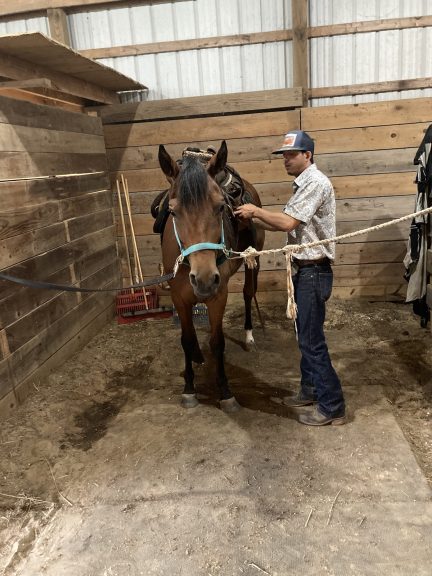
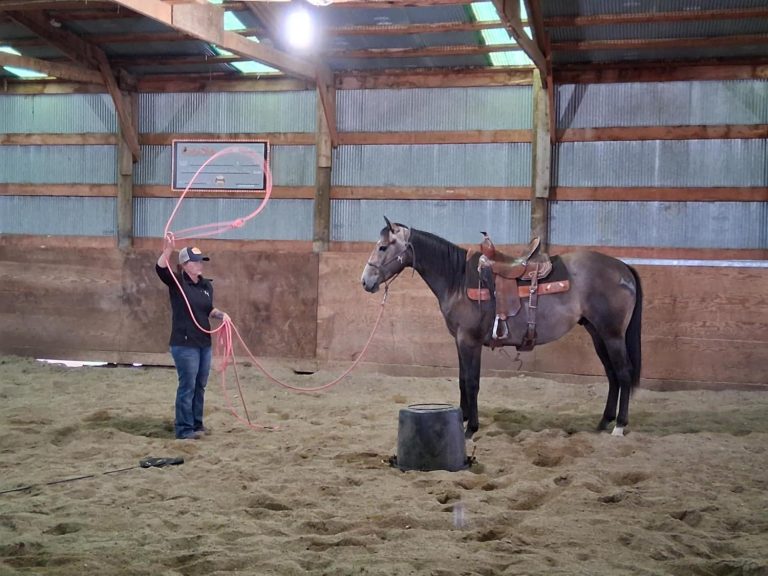
For Bauman, groundwork is a fundamental part of her program, and when choosing a colt starter, she asks about the person’s use of/approach to using groundwork. Before her young horses have a rider step up on them, the horses are dragging logs, going over ground poles and familiar with the sensation of a swinging rope.
“Some people don’t do groundwork; for me, it’s very important because I’m not tall and the horse has to stand still,” she said. “I can’t just throw my foot in the stirrup. Since most of these colts are tall, leggy and want to go forward naturally, these colts have to learn to stand there and not react when you step a foot in the stirrup.”
Other factors she considers include whether the colt starter starts them in a snaffle, a bosal, or a halter. It’s also helpful to know if the colt starter will ride horses exclusively in an arena or if they are ridden outside too.
“Some of the colt starters I work with go ride them outside and through cattle,” Bauman said. “I personally like that because I’m the person who rides outside as well.”
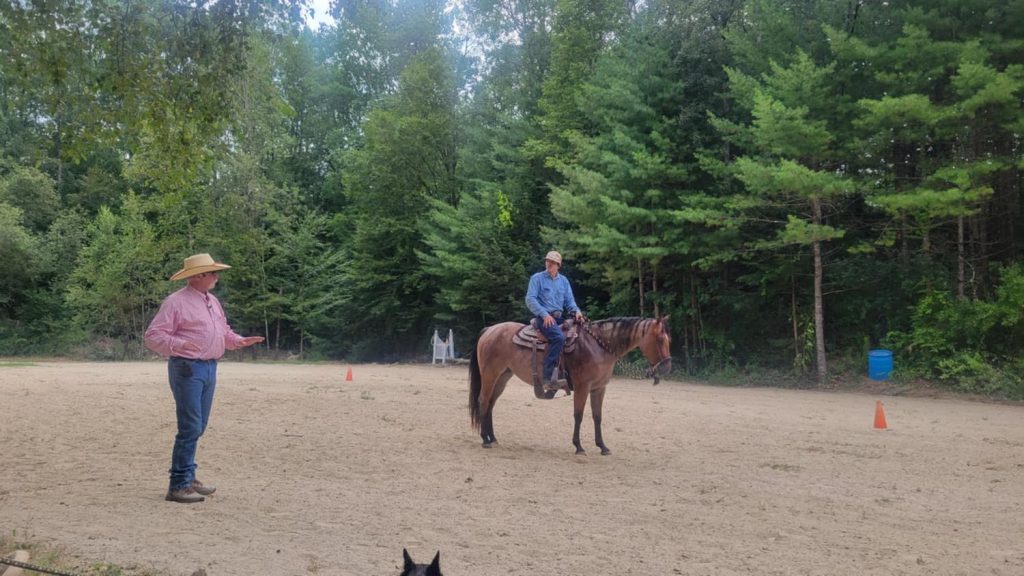
Bauman also suggests evaluating if you can “ride behind” the colt starter.
“Make sure they are someone you can ride behind,” she said. “I’m only 4’ 11” and I’ve struggled riding behind some super tall people. Then I almost have to retrain the horse to be used to somebody my height.”
Condon agreed that choosing a colt starter you can ride behind is critical. “There are some amazing starters/trainers out there that are tops, but I know I cannot ride behind them,” she said.
Defining Expectations
Compatibility for the horse is as important as it is for your preferences. Because Bauman does a lot of groundwork, she has an idea of how their brain works and who she might send them to. Reactive horses go to a trainer who stays calm under pressure, while easier-going horses might go to someone who adds more pressure and specificity.
“I don’t have one colt starter that fits the mold for every colt I have, so I send them to different people based on their training style and the horse,” she said. “When I get my 2-year-olds back from one colt starter I use, an 80-year-old person could ride them because of all the little things she goes through with them.”
Sending a horse to a colt starter is an investment and you should know up front what you can expect from the colt’s time in the program. Every horse is an individual and may be a faster or slower learner, more relaxed or more reactive. However, ask the individual up front what you can expect your horse to learn in a given period of time and have frequent check-ins on progress to determine if expectations should be shifted based on the horse.
“A colt starter should be able to tell you roughly what to expect in 30, 60, or 90 days,” she said. “Communication and updates are huge. I don’t get updates daily; who has time for that? But I did get pictures and updates often enough, so I knew how things were progressing.”
Visitation policies are also worth asking about. Remember, colt starters are busy working for you and other clients. Give them time to respond to calls/texts and be courteous by arranging a visit. However, if a colt starter discourages visits altogether, that could be a red flag to consider.
Preparing for the Long term
Ultimately, colt starting is an investment in a horse’s future. Pairing the right horse with the right colt starter can set the stage for a lifetime of success.
“We’re here to prepare this horse for a lifetime,” Tejero said.
Who you choose to start your young horse with has lasting consequences. The foundation a horse receives will follow that horse throughout its lifetime.
“When it comes to colt starters, the value is a big deal,” she said. “I have had some horses pretty much ruined by sending them to the wrong people. Maybe you think you’re saving money, but that is their foundation forever. Make sure you’re pairing the right horses with the right people — and keep communication open.”