
Make or Break Time
While he begins with the end in mind, Lovendahl is careful not to let the calendar dictate how much he asks of his horses. Losing an entry fee or paying a turn-out fine, he says, is better than compromising confidence and progress that would come from making a sore horse more so or a fractious horse more unsure of himself.
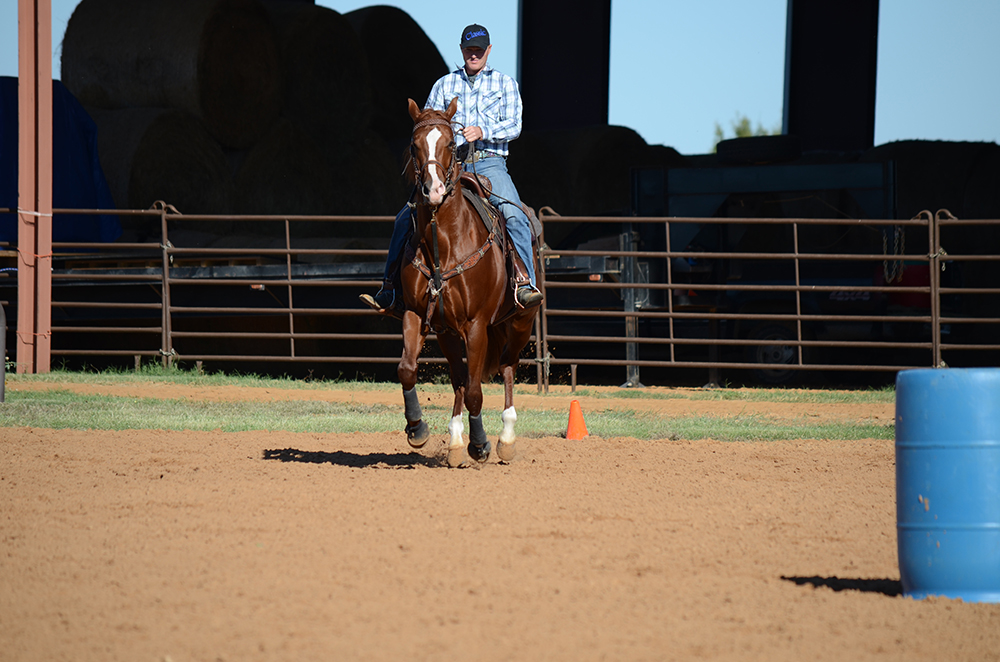
“Once a horse is being exhibitioned, you should let him tell you when he is ready to go faster and ultimately compete,” Lovendahl said. “I’m not going to enter one when he’s not ready and set him up for failure. A horse’s body and mind doesn’t mature just because we have an event coming up, nor is life over if he doesn’t make a futurity horse.”
Lovendahl cautions not to let your own goals get ahead of your horse’s well-being and future career as a barrel horse.
“A lot of people feel that they’re in a position where they have raised these colts and they want to get them shown and sold, but that’s not always the best route to go,” Lovendahl said. “If a horse isn’t really on his game, it could really make a bad name for your whole breeding program. He may be the most talented horse in the world, but not without an adequate amount of time. If you had given him another six months to a year, he might have set the world on fire and it would’ve changed the whole entire outcome of his career.”
A horse’s potential is directly in line with his physical abilities and limitations, and Lovendahl adds that it is very important not to lose appreciation for a horse working to the best of his ability on a given day, whether it is early in his training or later on in his career.
“Even if you just accomplished the one thing you were working on that week, you need to enjoy the horse going in there and working,” Lovendahl said. “These days, a 2D run is a really nice run—those used to be the 1D horses. Now, there are usually one or two or three freaks out of 600 head that outrun everybody by a half a second and make you think you’re riding a 2D horse, and if you were to take that really nice, consistent 2D horse to a rodeo, you’d win some money. If your horse is going in there and giving you 100 percent and it’s fun, then come out and pet him on the neck and be excited for the next time.”
Getting Into the Ground
One of the perks of futurity and jackpot barrel racing is the extra attention given to the ground, which is routinely groomed to provide the safest possible surface. At rodeos, however, a barrel racer’s playing field is shared with six or more other events, come hell or high water.
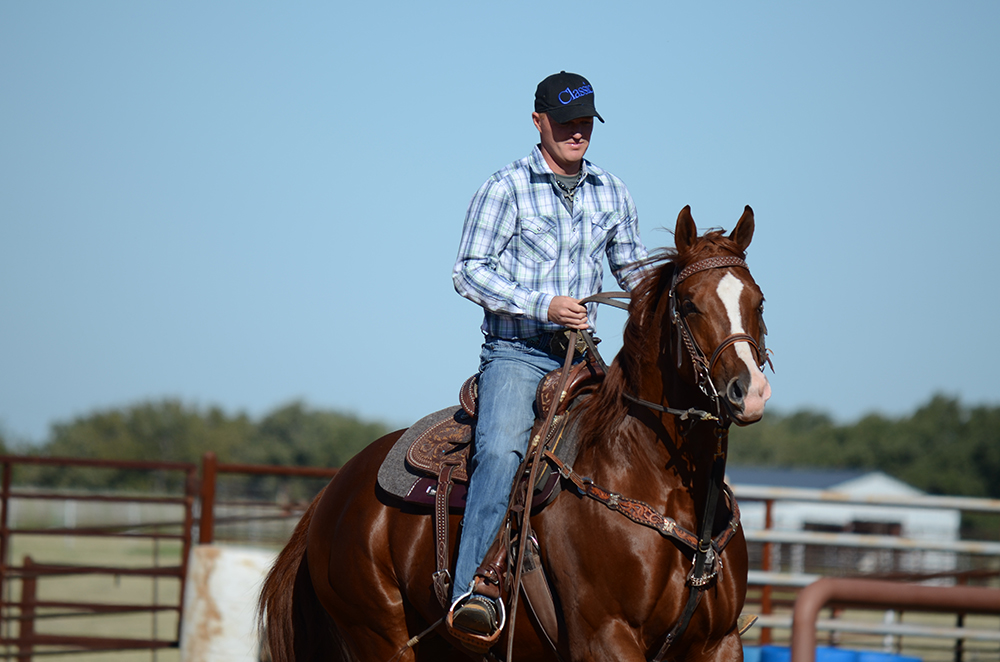
“A lot of people come out of the futurity world and think, ‘Well, now I need to start taking my horse to some rodeos so he can get used to bad ground,'” Lovendahl said. “Well, in a sense, that’s true. The ground, however, is only part of the equation.”
On well-groomed ground, you can trust the dirt to hold a horse, and the horse comes to depend on it, as well. The best footing is forgiving of some unconventional turning styles and missteps a horse may take. But on ground that is shallow, shifty or slick, Lovendahl says balance is the key to a safe run and a sound future.
“On good ground, you can let a horse be as aggressive as he wants because the ground will hold him even if he gets a little radical in his turns,” Lovendahl said. “When a horse runs into ground trouble, it is often because he is either slinging his hip to the outside or dropping his shoulder going into the turn; that’s usually when the ground is going to give way and he’s going to slip. But even if the ground is poor, if you can keep him back on his hip, the horse will be able to get around the barrel in a completely different way than if you just threw the reins to him and pulled his nose around.”
This is where the basics resurface—those that the horse will remember from as far back as the round pen.
“This is where outside rein pressure needs to mean something to the horse,” Lovendahl said. “The move a horse makes on the backside of the turn is similar to the move a cutting horse makes on a cow. When a horse leaks through a turn, it’s because he’s getting onto his front end and crawling out of it instead of sucking back through it. In cutting, those are the horses that get beat by a cow because their power is gone and they get bogged down in the deep ground. If a barrel horse is rolled forward that way, if he slips, all of that momentum and weight is going down. But if that horse will stay back on his hip, when he runs into bad ground, that front end is accessible and he can move it.”
Finished Products
“Most great horses are born with the ability to be great, and a trainer just shows them which event to be great at,” Lovendahl said. “Good trainers add their own style, but I don’t think it’s the trainer that makes a horse exceptional. There are many great horses out there that have done extremely awesome things but they’re completely different, athletically. The key is that as long as you’re able to adapt to keep all your slow work the same, you can keep it correct but also let their natural ability take over when you go fast.”
Lovendahl wraps up his series with a few words on some of the greats that have gone through his hands and how he tailored his program to suit their natural styles.
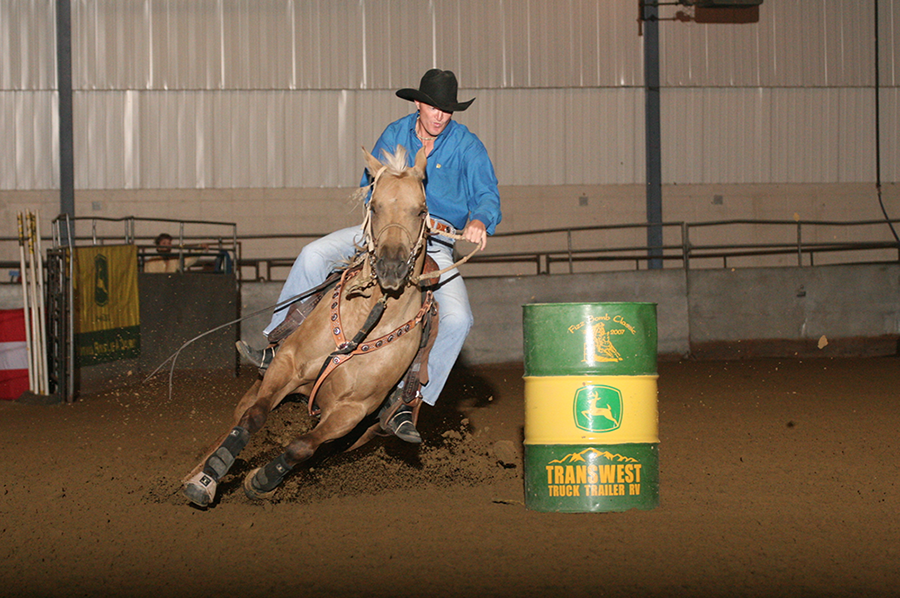
MP Meter My Hay
“I had Stingray for two years. She was patterned when I got her, and we were able to feel early on that she had a lot of potential and athletic ability. We knew she was going to be a more square-turning horse, so we used draw reins on her and worked to keep her really round,” Lovendahl said. “If a horse is naturally stiff or excessively bendy, you need to find a happy medium. I think a horse that is too round will have more ground trouble than a horse that turns more square, because the round horse will usually get down to his front end a lot more. To me, a ring bit and a Loomis [draw gag] are extremely round-acting bridles; a bit with a noseband or a longer shank will help square a horse up and keep him balanced.”
Sheza Blazin Move
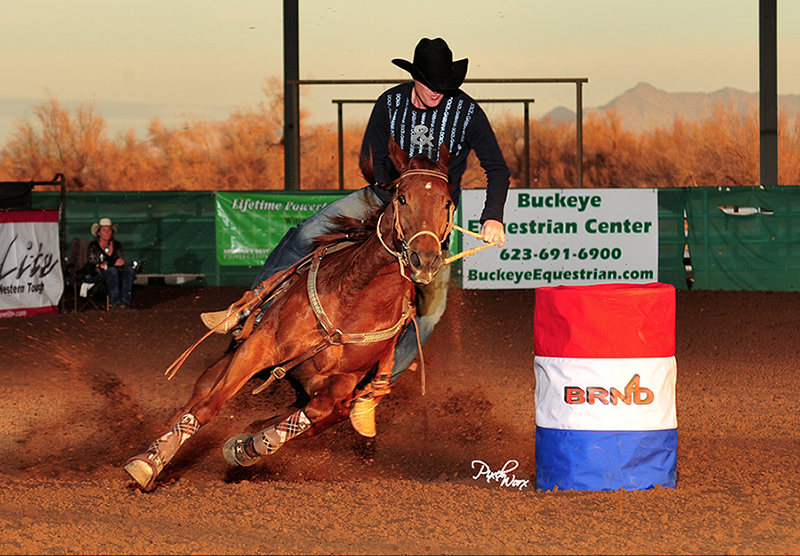
“My favorite kind of horses are those you can run in a hackamore, and that’s what I ran Sheza Blazin Move in,” Lovendahl said. “Hackamore horses seem to do really well at the rodeos, because in order for them to be in a hackamore, they’re usually pretty supple and turning on their own because you’re not going to get a lot of help from a hack. A horse that’s turning on its own is a horse that is balanced and smart about it. Sheza Blazin Move did have areas on the pattern where she was round and areas where she was stiff. She was one of those horses that may make you invent a new bit, but it didn’t seem to hinder her on the clock.”
Blazin Jetolena
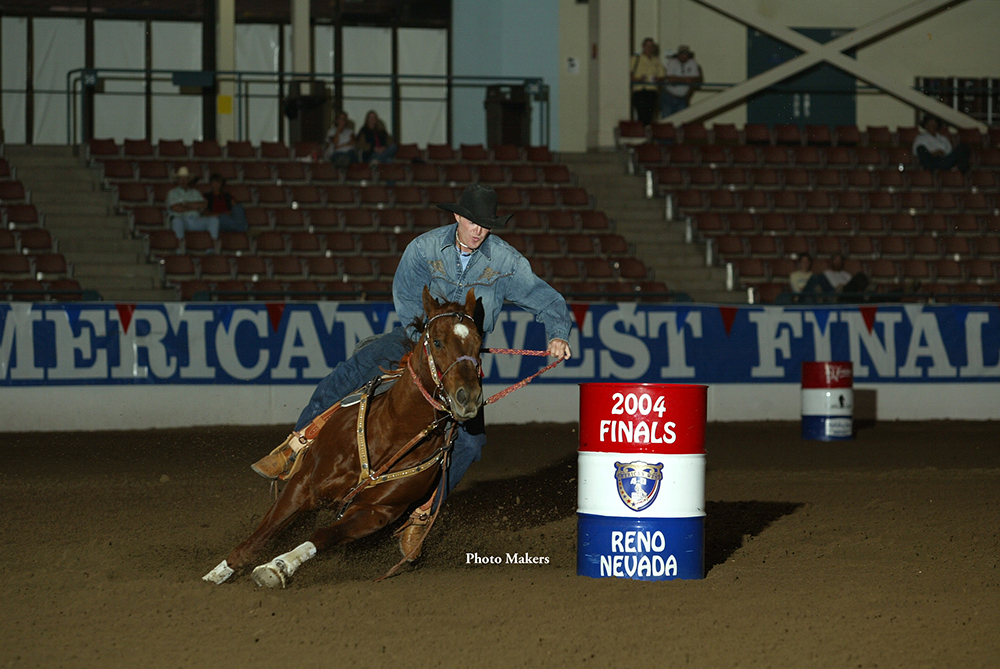
“Blazin Jetolena was kind of middle of the road, but more of a square turner,” Lovendahl said. “There are a lot of horses that undeniably understand what this is all about. No matter what, they want to run barrels, they understand that it’s a race and they have to turn them tight. Blazin Jetolena was one of those horses. It didn’t matter if the ground was as hard as the parking lot, if when he got to the first barrel he felt that it was slick, you could see him get mad. Like a cutting horse when a cow gets strong, he’d pin those little ol’ ears back like, ‘You’re not getting past me.’ You knew he was about to get really aggressive, but he would do it correctly, even on slicker ground. I only hit two barrels on him his whole career, and those barrels cost us winning nine of 11 futurities versus seven.”
Meet Ryan Lovendahl
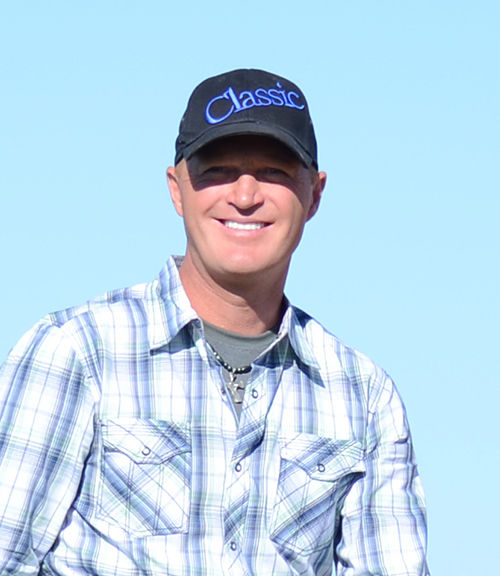
Ryan Lovendahl grew up in Bluffdale, Utah, with six siblings and an enduring interest in horses. From his first hard-earned trophies at the age of 3 aboard a Western pleasure horse to the stepping stone that is 4-H and on to a collegiate career as a calf roper, Lovendahl honed his competitive nature. After college, he went to work for Noel Skinner, a renowned reining horse trainer, and had a hand in the training of Jerry Lees Surprise, the 1996 National Reining Horse Association Open Derby Champion.
“I had a pretty major background,” Lovendahl said. “I got to ride around some pretty awesome reining horse guys that I think gave me a really good foundation for how to get a horse broke outside of the barrel pen. But it never grabbed a hold of me like the speed does.”
Armed with the influence of a Talmadge Green clinic, Lovendahl went on to become one of the first men to barrel race competitively in the western United States when he turned his calf horse into a barrel horse and found immediate success in the amateur and novice classes. He then went to work for Talmadge and Mike Green before starting his futurity ventures. These opportunities eventually led him to Busby Quarter Horses, where he currently heads up the barrel horse program.
“It takes a good team to get multiple horses trained, and KC Groves has been my assistant trainer for 15 years. He plays a big role from getting these horses started to the point where I can compete on them. He takes on the tough jobs with the greener horses and he does great work with them,” Lovendahl said. “We are so excited to be involved with Busby Quarter Horses; they give us the best working conditions and provide optimal care to some of the most amazing horses in the industry.”
Follow Lovendahl’s training process in the series From Round Pen to Rodeo Ready Part One and Part Two.