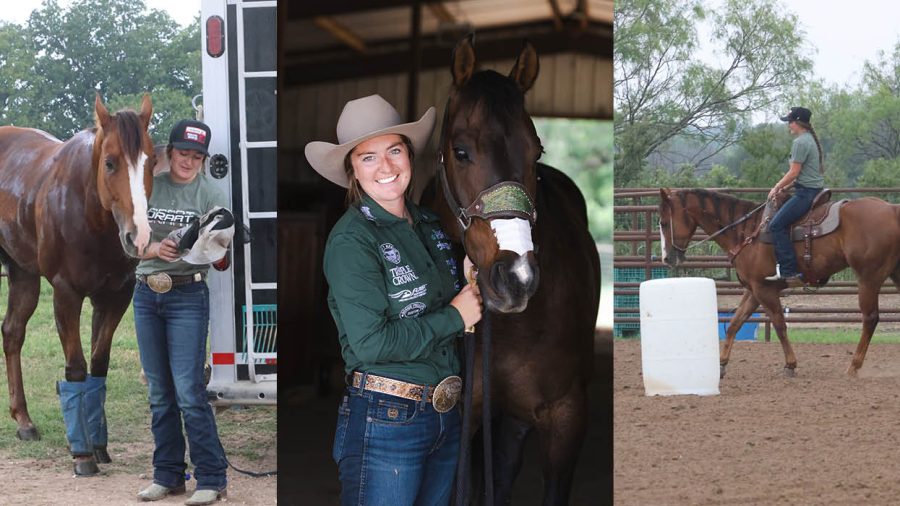

Streamline your horse’s lead change sequence with barrel racer Kelly Bruner’s tips.
Photos by Abigail Boatwright
To improve your performance, I think it’s helpful to teach your horse how to be more comfortable changing leads between the first and second barrel. A flying lead change—one where the horse changes leads at a lope or a run—makes it easier for the horse to go through the pattern without panicking as they approach the barrel. Changing in a straight line across the arena is easier and more fluid than a last-minute, forced change at the barrel. It also makes for a more finished horse and one that is more completely trained.
How This Drill Helps
I think the reason people have trouble with lead changes is they can get the horse to pick up the new lead in the front but not the back end. That’s a real common thing. Every horse changes differently, but if you are precise in the way you ask your horse to change, you’ll make it clear that he needs to change leads on both ends.
Knowing how to cue for a lead change is an important skill for any horseman. But it doesn’t have to be an elaborate set of cues; just be consistent each time you ask.
Setting Up The Drill
Some riders might find a martingale or a German martingale can be helpful while you’re training your horse on lead changes. I’ve found these tools can help keep the horse’s nose under control and keeps an anxious horse from trying to go forward when you are asking for collection and moving the hip across.
If I’m on a 2-year-old, I’ll be sticking to simple lead changes—breaking down to the trot between leads—when I’m practicing at home. As he progresses, perhaps in his 3-year-old year, I’ll make sure the horse can do flying lead changes. The drill I’ll introduce here is how I teach this process.
On a horse that knows this drill, I will do it as part of my warmup. I’ll run through the drill changing leads five or six times, until they are comfortable doing it correctly and are fluid. Sometimes I’ll do a figure eight or some circles each direction changing leads in the middle before a run to get the horse warmed up and listening to me.
The Drill
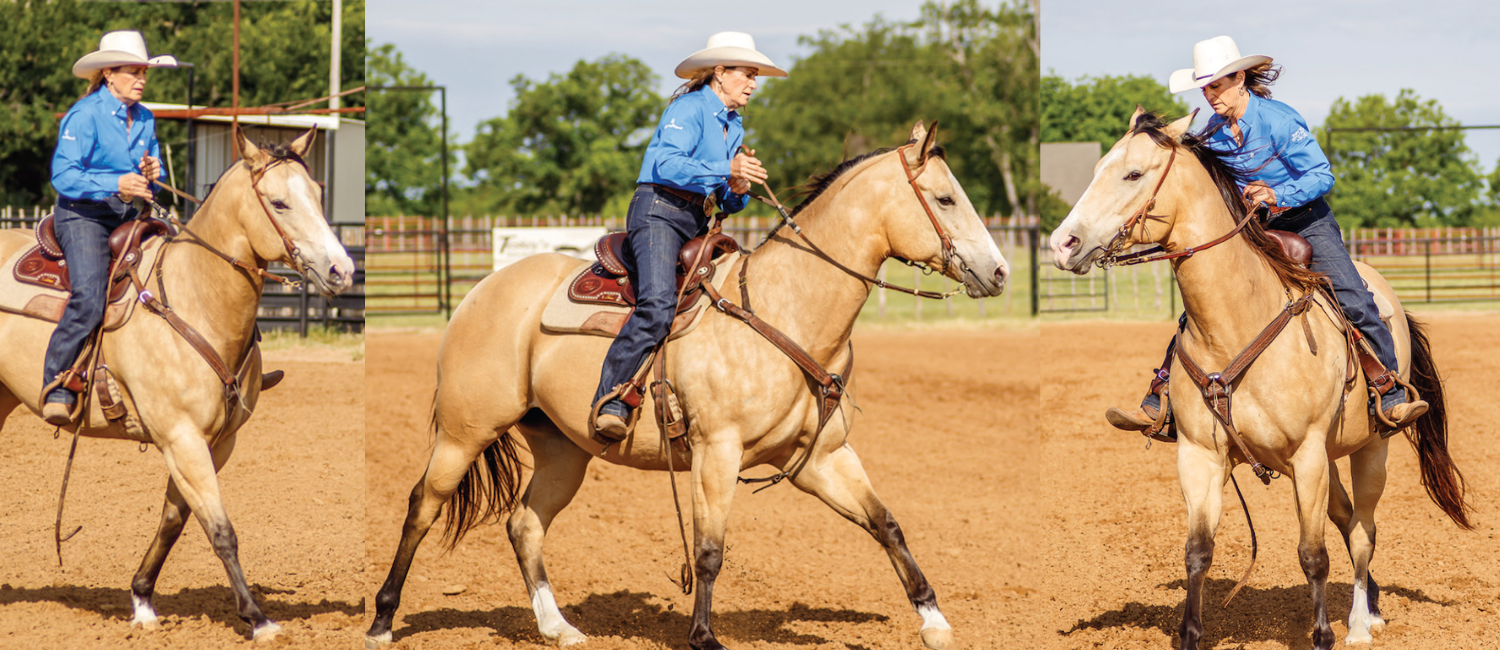
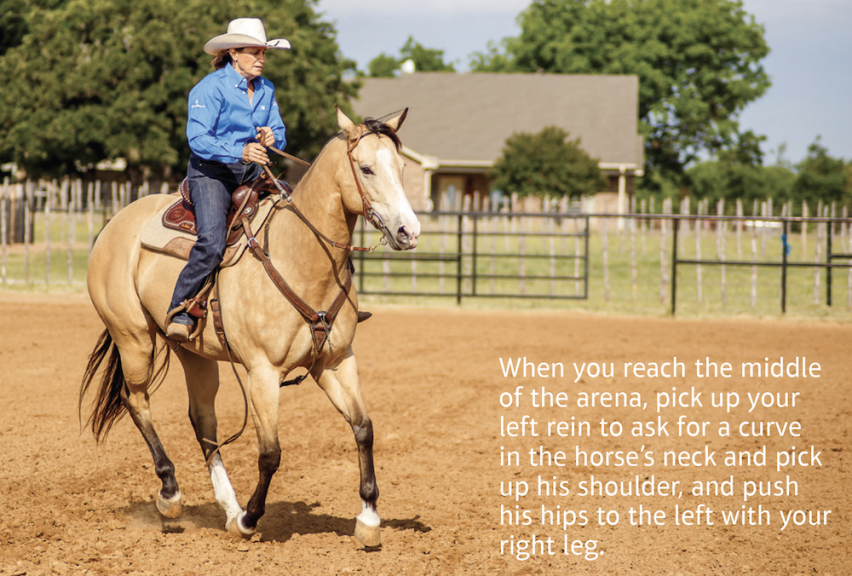
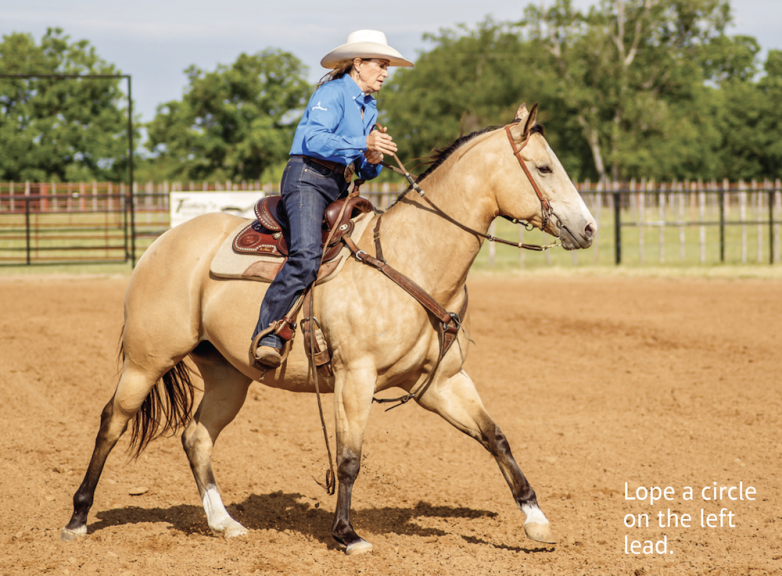
Start by picking up a lope—the left lead, for example. I always cue for a lead by picking the inside rein up—the rein on the direction of the circle—while pushing with the outside foot. Make a circle to the left, and when you get to the middle of the arena on that circle, you want to prepare for the change. To do this, break to a trot. Pick your right hand up to ask for flexion in his face, which will supple his neck in the new direction and pick up his right shoulder. Press your left leg into your horse’s left side further back toward the back girth to push his hip over to the inside of the new circle to the right, in the direction of the new lead. This helps set up the lead change.
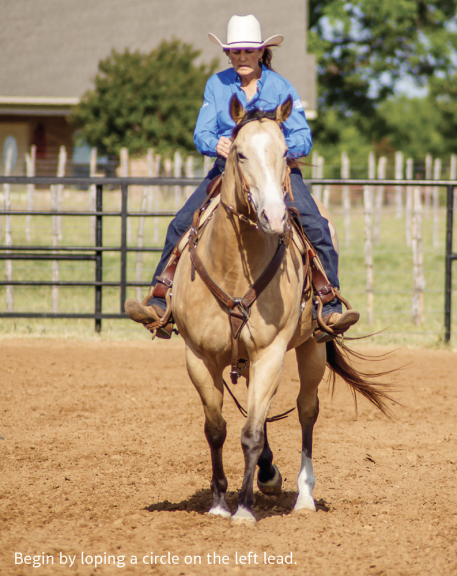
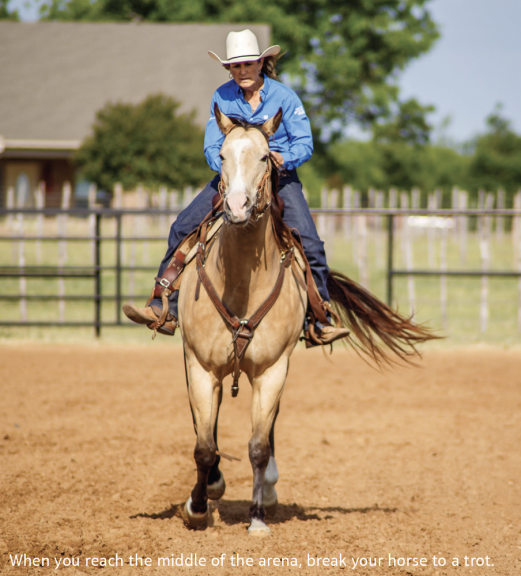
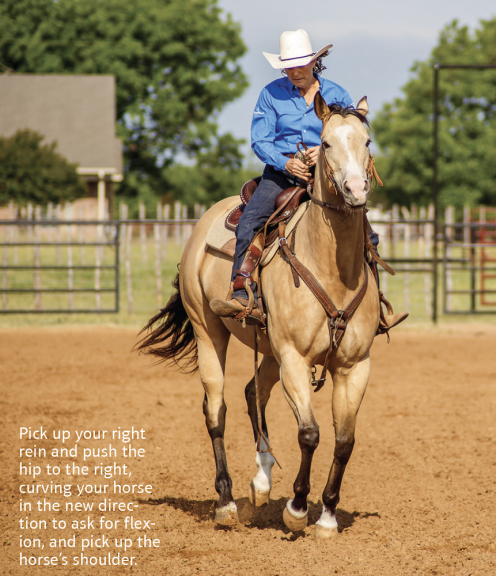
You need to make sure your horse is flexed the direction of the new lead with his hip pushed toward the new lead to ensure the horse changes in the front and the back.
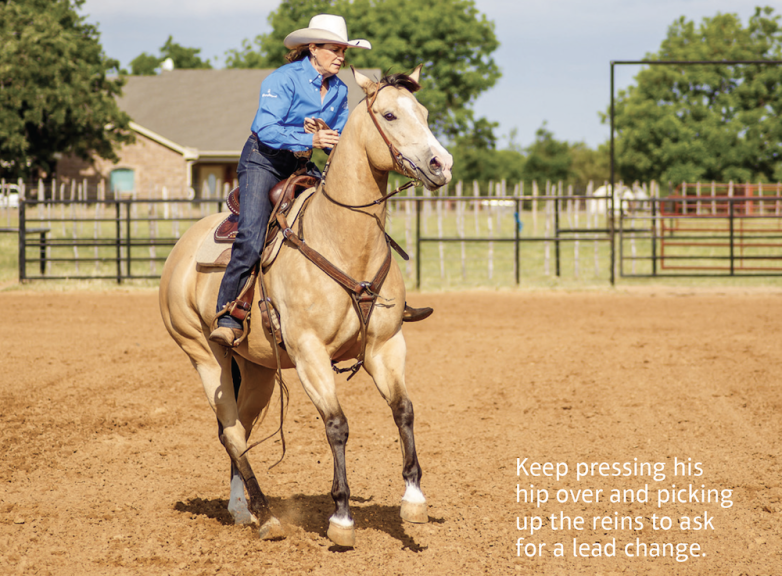
Once your horse is curved toward the right, ask for a lope on the right lead. Make a few circles to the right, and then when you get back to the middle, break down to a trot and repeat the opposite direction. Pick up the reins on the left side to bring the shoulder up and flexion to the nose, press your right leg into your horse’s side near the back girth to ask him to move his hip over to the left, then cue for the left lead.
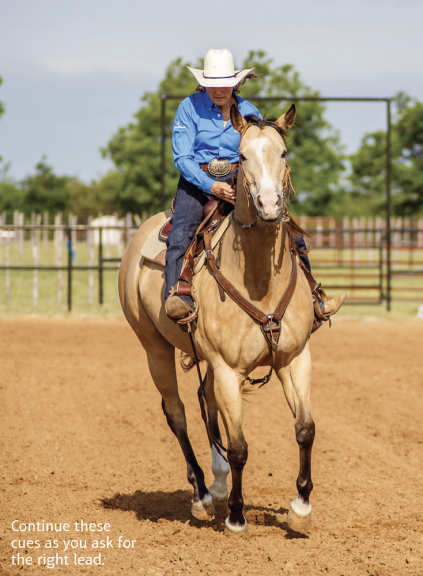
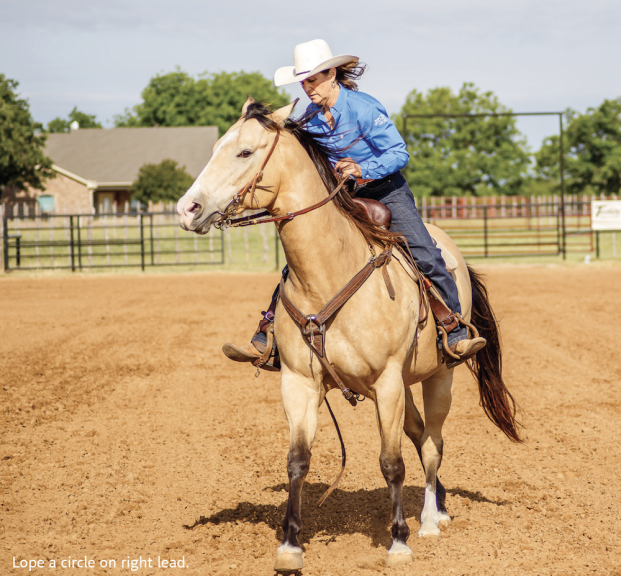
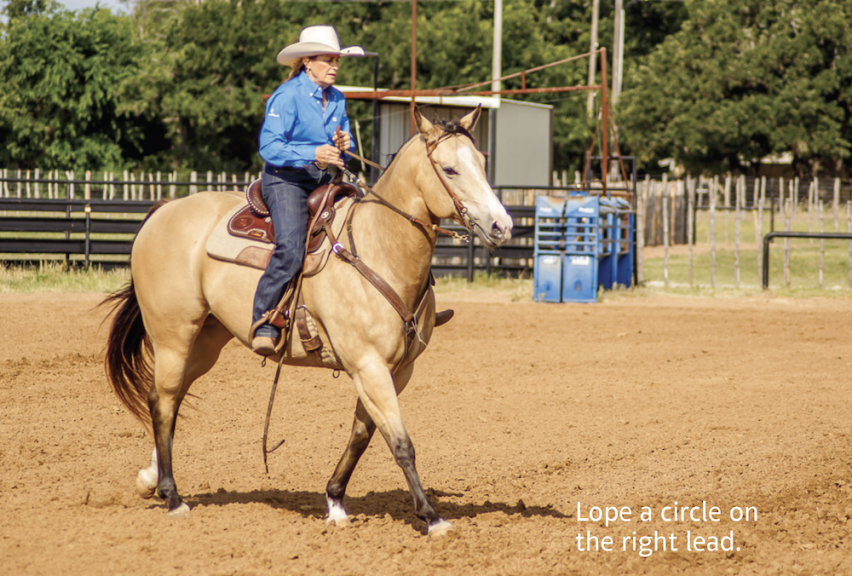
After your horse is comfortable with this sequence and can shift from one direction to the other fairly easily, you can shorten the trot time and ultimately, drop it altogether to do a flying lead change. So rather than ask your horse to trot and then change directions, you will cue with the new rein, push your horse’s hip over and ask him to change while still loping. Eventually you’ll be able to lope to the left and pick up your right hand, press with your left leg and change the leads—and vice versa—without skipping a beat.
Troubleshooting
Sometimes horses can get nervous about lead changes. Don’t get frustrated when this happens—you may have to slow down, break to a trot and do a simple lead change to remind them of what you’re asking.
This article was originally published in the October 2020 issue of Barrel Horse News.