

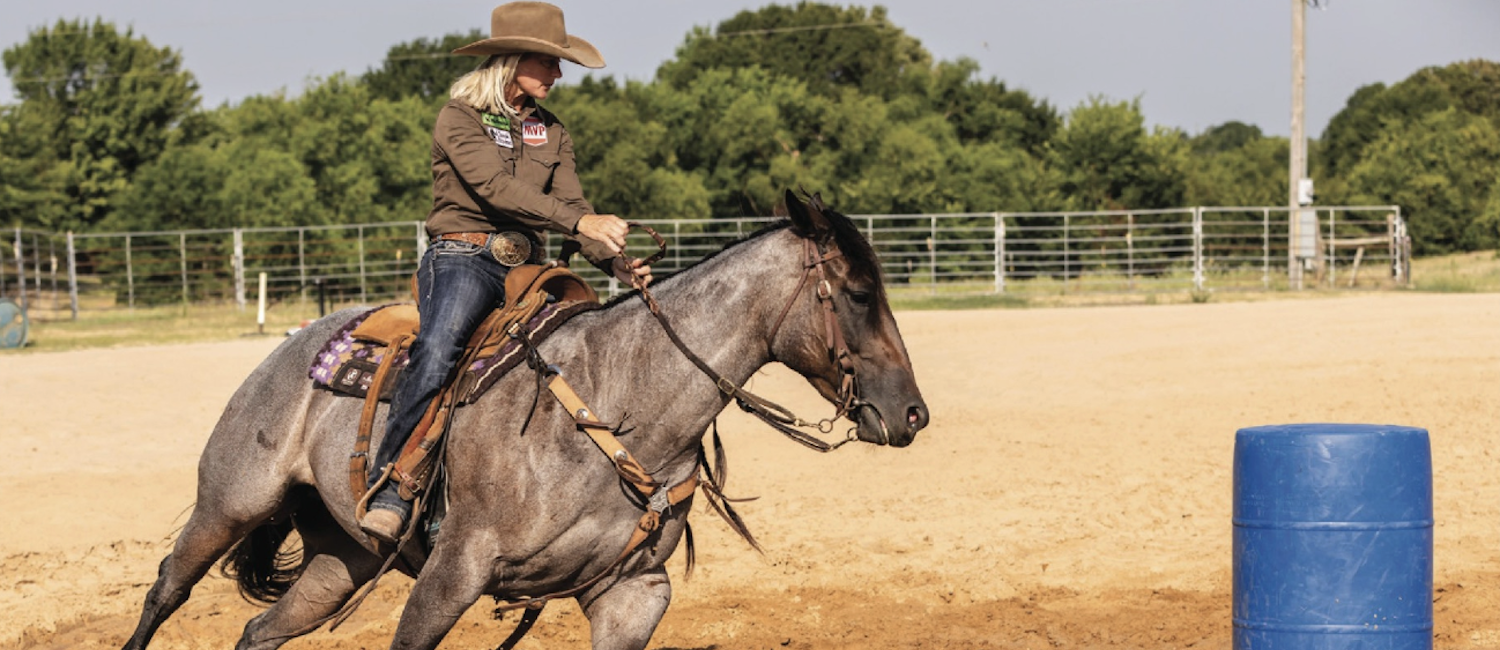
Help your horse achieve a more balanced turn with this drill from trainer Janna Beam Brown.
Knocked barrels can destroy you chances at a winning run. If your horse turns too soon, or you as the rider don’t know exactly where you need to cue your horse to turn, that can result in a downed barrel.
The purpose of this ‘soft squares’ drill is to help your horse have a more balanced barrel turn. It’ll be balanced because the horse has proper foot placement and positioning of the shoulder and hind end, coupled with forward movement.
This drill is great for working your horse to the correct spots on the pattern and keeping it honest through the turn, while keeping its body balanced. The drill allows me to work on my horse having more square shoulders and quick feet, but at the same time, keeping its ribs soft and light in the sides and face.
If done correctly, you should have a horse that is soft throughout the body but also moves forward through the turn. It’ll be free in the shoulders and drive off of its hind end.
Shoulder and hip control go hand-in-hand and can be very helpful when working toward a more efficient turn.
Setting It Up
I try not to steer too far away from a somewhat normal type of headgear when I am doing this drill. If the horse is being pushy or needs to be backed off the bridle some, I will adjust where needed. I tend to work my horses in a little more bridle at home versus what I run them with in competition.
I do this drill as needed, nut that can be a lot of the time. I usually won’t do it on a young horse when I’m starting them on the pattern, but once they’ve learned the pattern, I’ll do a lot of these soft squares on random barrels at a walk or trot when I’m warming up.
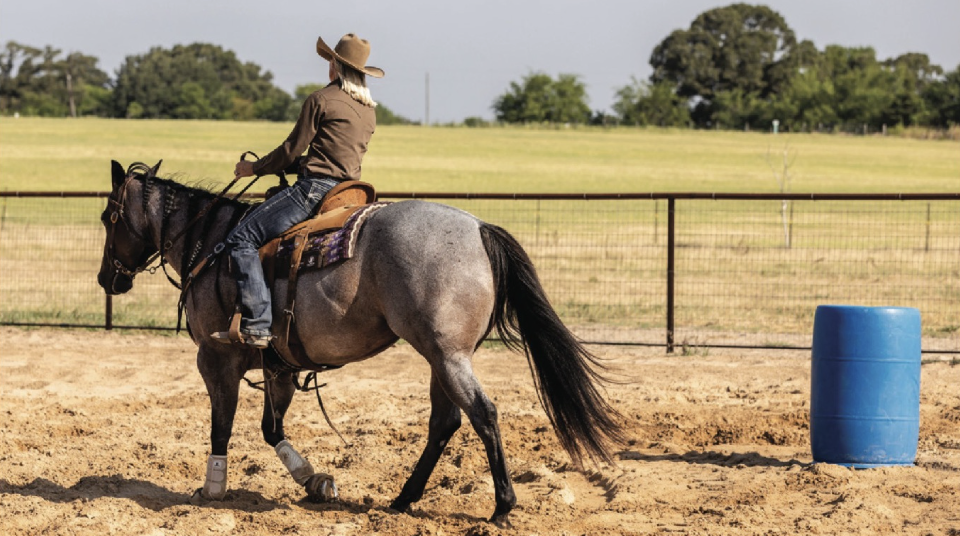
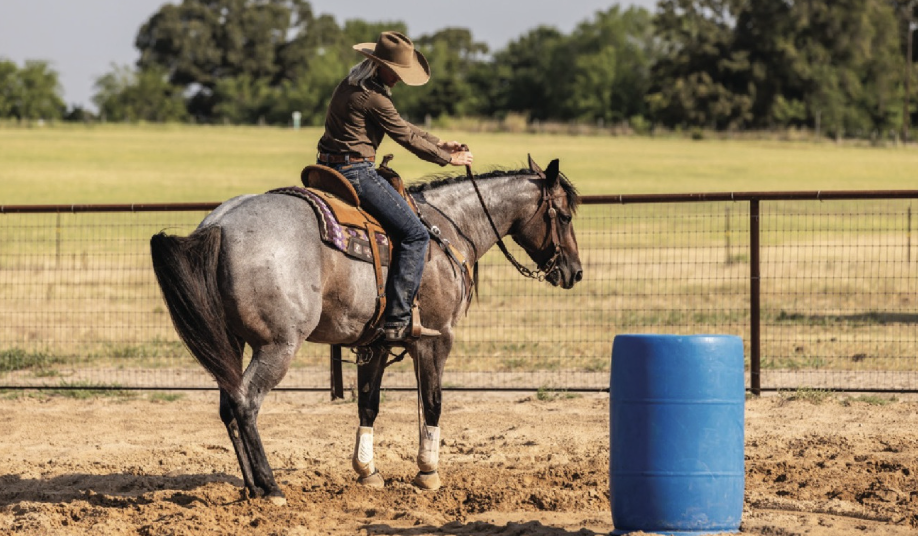
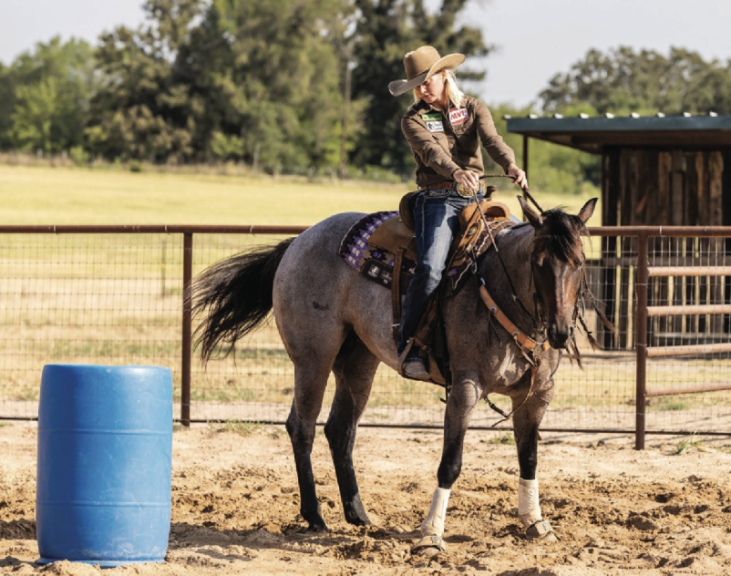
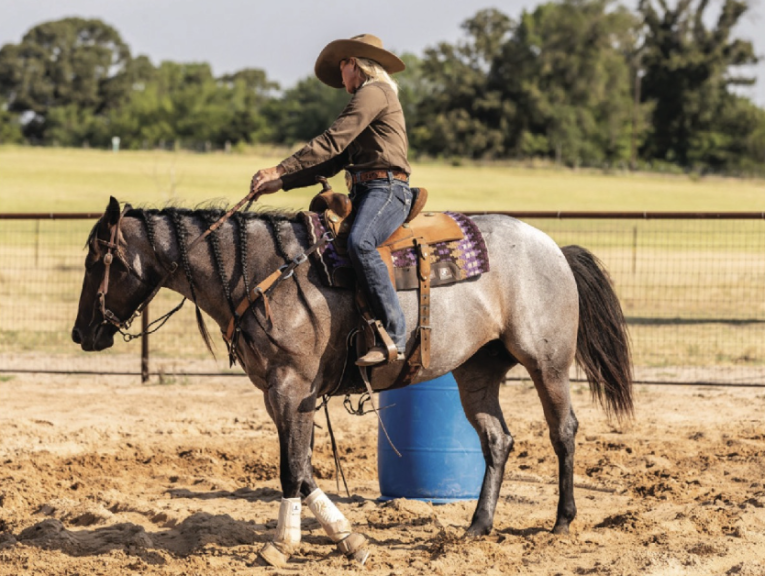
Later on in training, I will still do barrels in a round motion, but the soft square keeps them driving more on their hind end and gets control of their shoulders without getting bound up in the face.
Whenever I feel a horse needs to hit their points a little better or not get so rounded up and close to the barrel, I’ll work this drill. I’ll also do it while warming up at a barrel race, doing a lot of soft squares without barrels.
The Drill
I tend to ride two-handed during the drill and try to keep my arms lengthened more so that I can really move my horse’s front end without getting it bound up. I do use my feet a lot, mostly to keep its back picked up and its body pushed forward.
I work my horse’s hip to the barrel before turning most of the time during this drill, unless they’re really free and need to be set sooner. I do that to prevent setting too soon and to take away anticipation of the turn.
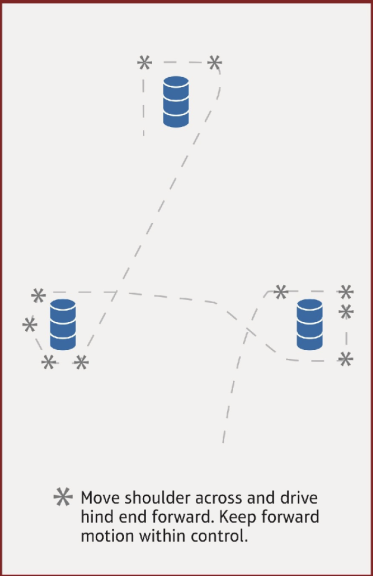
I will work the horse up into the spot where I would be committed to the turn. On the first and third barrels, you’ll make a square. The second barrel is more of a crooked square. It’s a complete turn, but you don’t want to cut off the backside and let your horse get flat, so I take an extra step to assure I’m allowing that room on the backside.
Once I hit my first point at the first barrel, I’ll stop and make sure my horse is squared up with its hip in toward the barrel. If I feel balanced and like I’m in the correct position, I will ask my horse to take one step forward and keep my hands square on the reins. I don’t want to shape them to the inside. I want to drive my horse forward with my feet and really make them pick their front feet up without dragging them through the ground. I will do this same motion at each point and really focus on my horse moving its shoulder across at each point and moving forward to the next spot with a little softness in the midsection.
This may sound confusing, but I will ask for softness throughout the middle of the body — it will be subtle, but a little softness is all you need. I ask for softness with my inside foot and a little bit of inside hand. I want to get the horse’s inside ribcage softened and responsive to my foot. When I ask, I want the horse to give to my foot, stay upward in the ribs and not lean on my leg. I want a very slight tip of the face, just enough so I can see my horse’s eye. I do not want it bent around in the neck and face — that takes away my balance and forward motion.
Repeat that step at all points — you want to keep your horse moving forward with more of a robotic feel, but make sure the feet are moving and the shoulder is really coming across in the turn. As you leave the first barrel, make sure you are lined up for your second barrel.
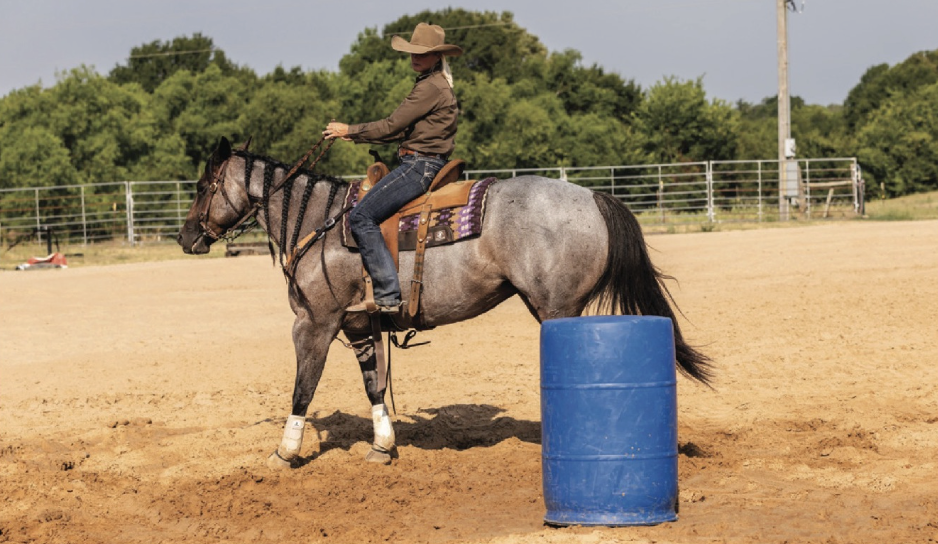
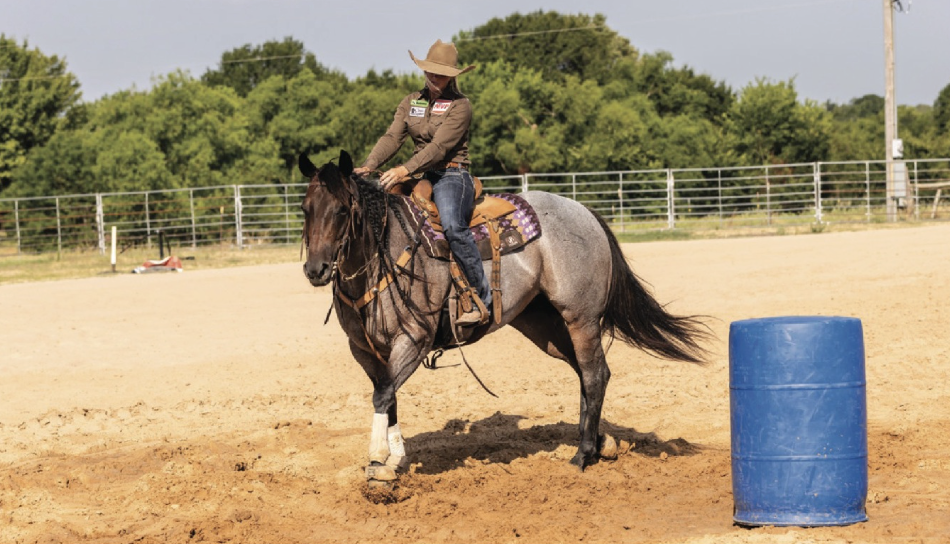
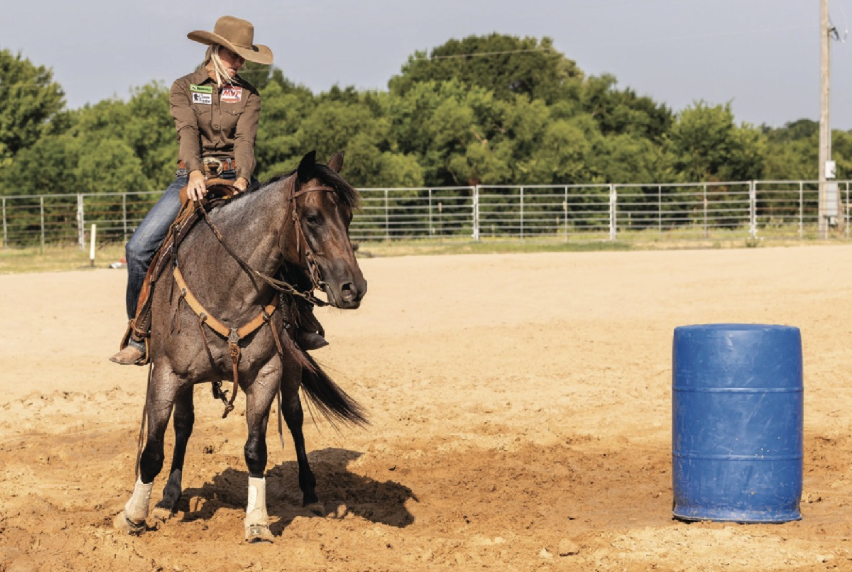
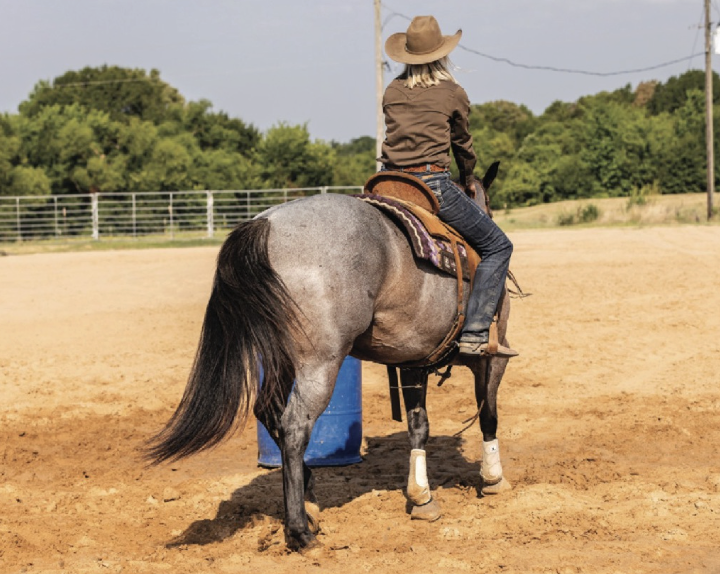
I usually make my horse take one step laterally after turning the first while moving forward to the right, if I went to the right barrel first, by picking up my reins with both hands and getting in the position I want to be by the time I get to the second barrel.
Once I’m at the second barrel, I focus on my points again, but this barrel has one extra step because it is a complete turn. I will repeat the same steps as the first barrel, but once I hit my second turn, instead of cutting across with a 90-degree turn, I’ll make more of a 45-degree turn. This is because we don’t want to cut off the backside of the turn and let the horse get flat, because that will cause us to hit the barrel leaving.
After I make that 45-degree turn, I’ll make another 90-degree turn like the rest of my points, and I’ll set my horse up to leave the barrel with its body square, looking toward the third barrel.
All this time, I am focused on hitting my points, but at the same time, keeping my horse somewhat soft throughout the mid-section of its body. I want collection throughout the whole process too, but not excessively. I just want a nice, level headset.
Once I reach the third barrel, I will make a turn like the first, using the same steps. I make 90-degree turns while working my horse, and really encourage it to keep forward motion and listen to my cues.
Caveats
I don’t do this drill much on a horse that has a stiff and straight style. I work them more round, but I want to find a balance between being too stiff and being too normal.
This article was originally published in the November 2022 issue of Barrel Horse News.

Great drill
Kind of odd… my horse does have a stiffer style; but keeping the edges soft while hitting these points seems to work really well for her… just remember to keep that rib cage soft, and keep the forward motion going.