
Recapture your horse’s mind with this drill from trainer Ben Beall.
Good barrel horses can be fierce competitors. But what can you do if your gritty mount gets too strong on the pattern? The horse I did well on this year in the futurities was like this. He was too strong, and he wasn’t getting on his hind end and slowing down for the turns in our runs.
If a horse is pulling on you going toward the barrel and running too hard, you don’t have any control. Getting their mind back on you and slowing their feet down to turn the barrel will help this issue. You don’t want the horse fighting against you. This drill helps the horse back off and stop that fighting.
Setting Up the Drill
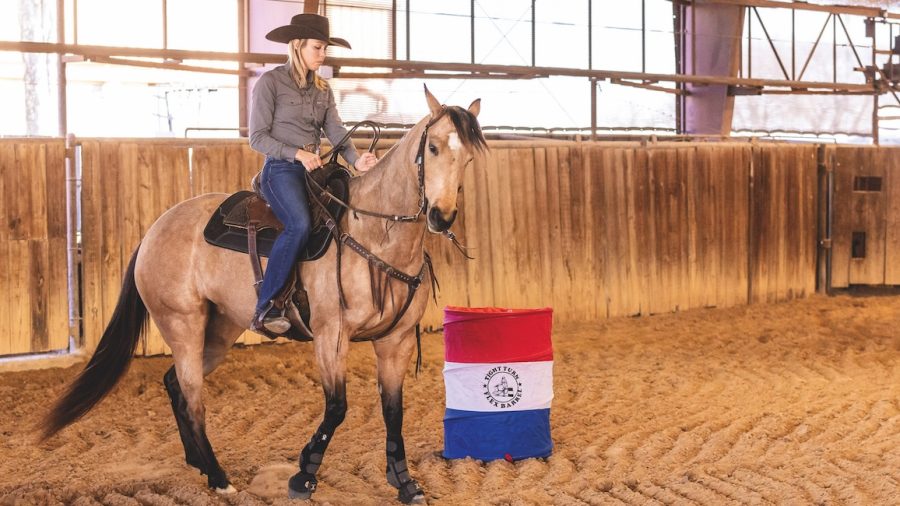
I do this exercise with the barrels set up in the arena.
When I start running young ones, and I can feel how they do in an actual run when they’re nervous or tense, then I’ll take them back to the practice pen and start doing this. When I’m at home, I’ll do it with a full barrel pattern, but if I’m at a competition, I can just use one barrel in the warm-up arena and loop around the arena.
I like to do this drill at the beginning of the week to make sure they’re paying attention. I’ll do it right before I go leave for a race, and I’ll do it in my exhibitions sometimes.
I prefer putting my horse in draw reins and a draw bit setup for this drill, because I feel like it brings their body back, collects them and helps them rock back on their hind end without having to pull on them as much. Draw reins also help me keep them straight as we go into the turn.
The Exercise
I’ve noticed a lot of people, when they go into a turn, they go up to the barrel and slam the horse down to a stop. With this drill, I don’t stop — I ask the horse to melt from lope to trot to sometimes a walk around the turn. I keep that in mind as I’m doing this exercise.
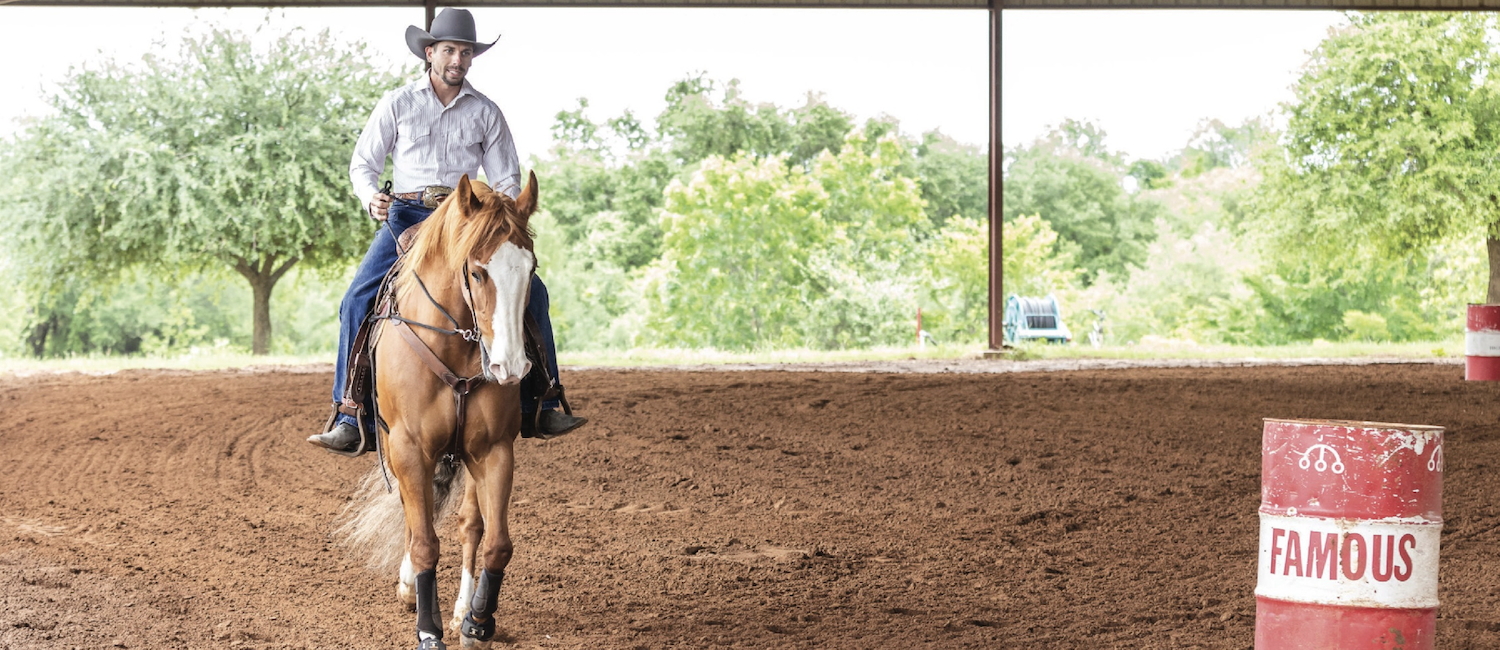
I will start by loping around the perimeter of the arena, and I’ll approach what would be the second barrel in the pattern. If the horse is supper strong and not as responsive, I want to set them up for success and start to melt down pretty early. So around 15-30 feet before the barrel, I’ll start asking the horse to slow down. If the horse is more responsive or more likely to hit their front end, I’ll start the melt-down much closer to the barrel.
To slow down, I’ll sit deep in my saddle and at the same time, gather the horse with my hands on the reins to make sure he is collected. The horse should break down to a trot on their own, and I just keep him moving in a straight line. I will then trot around the barrel to the right two or three times.
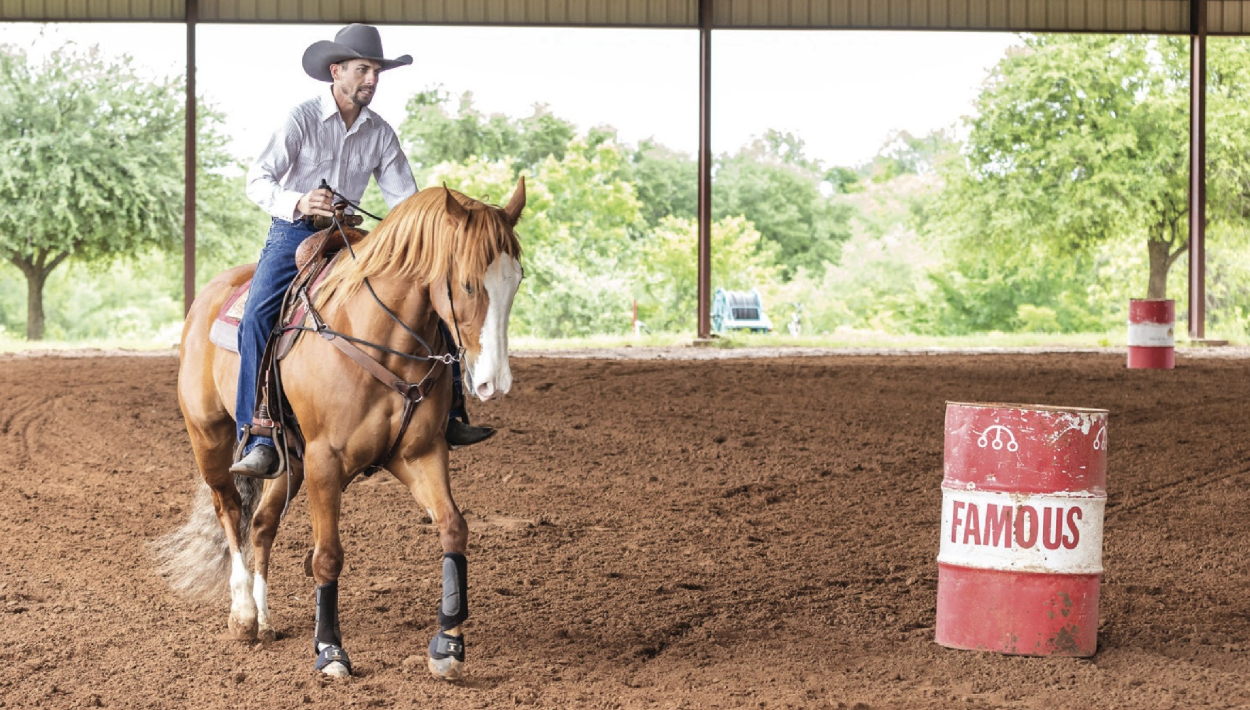
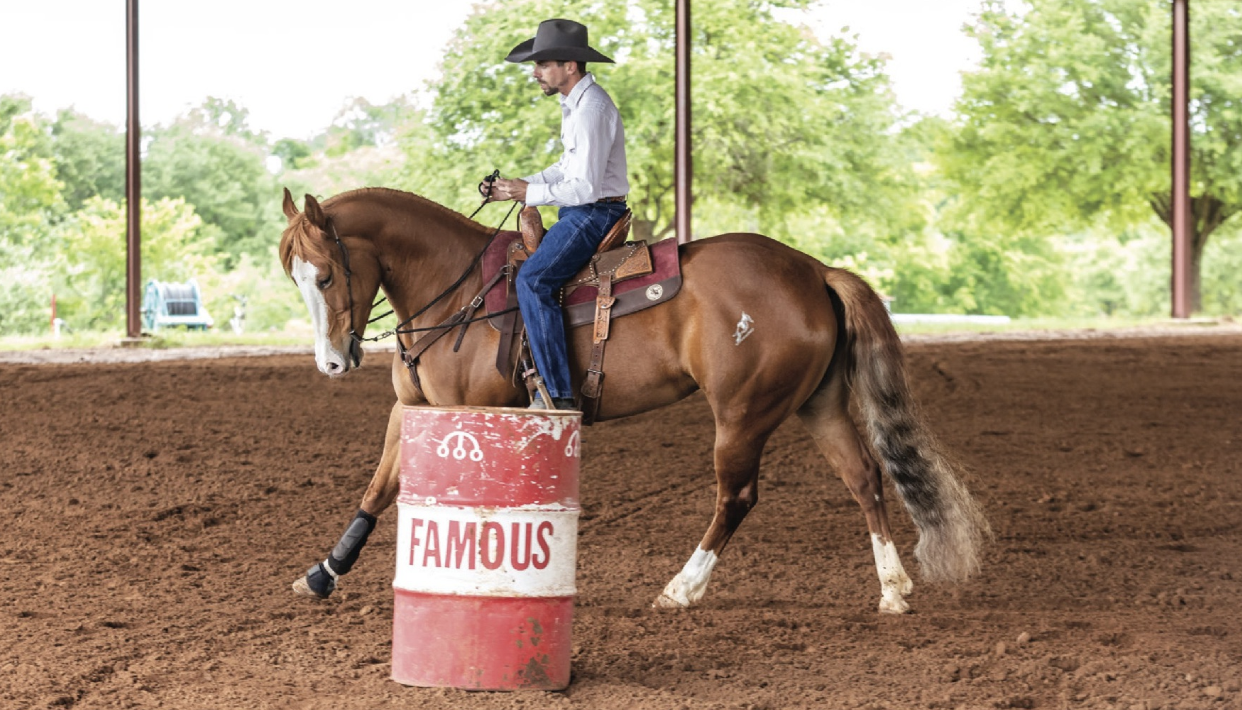
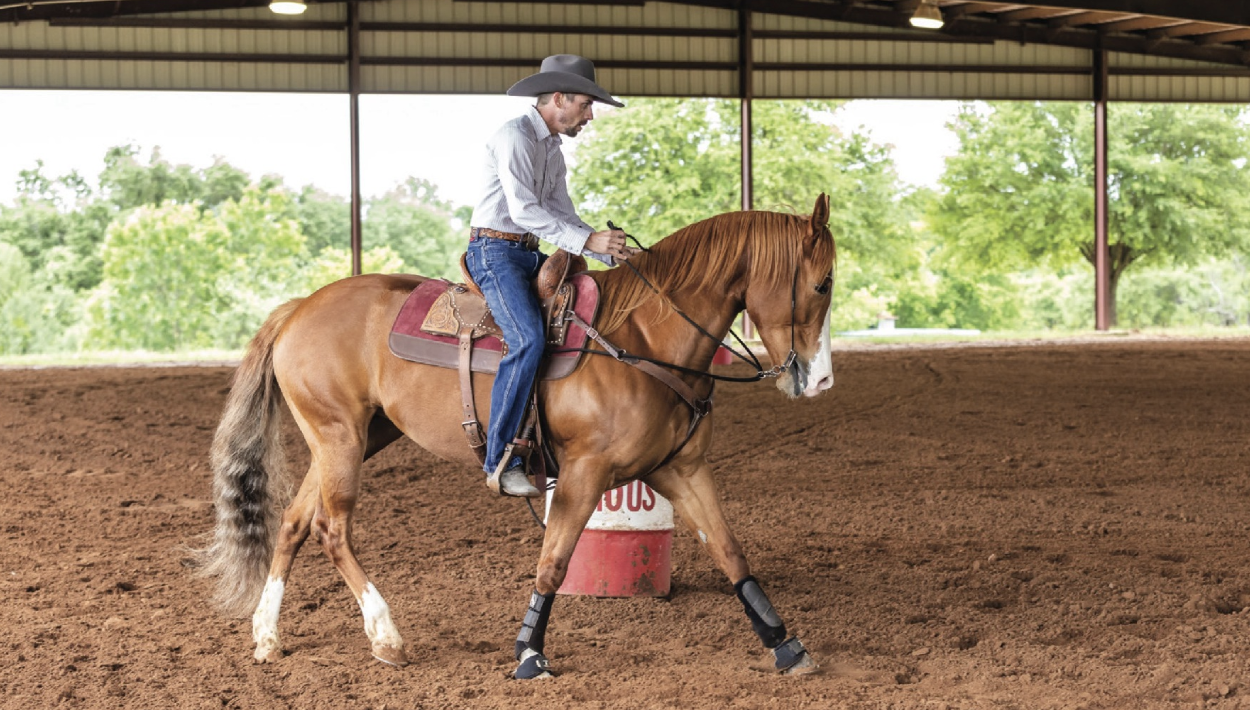
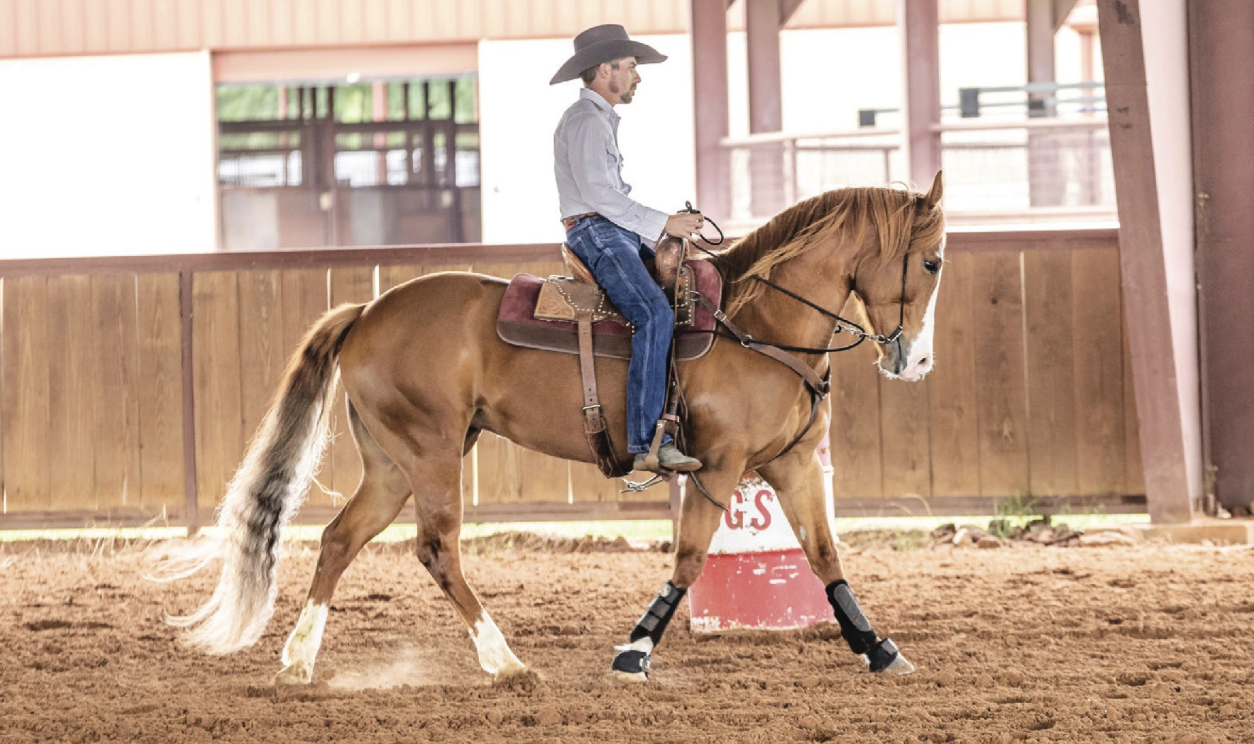
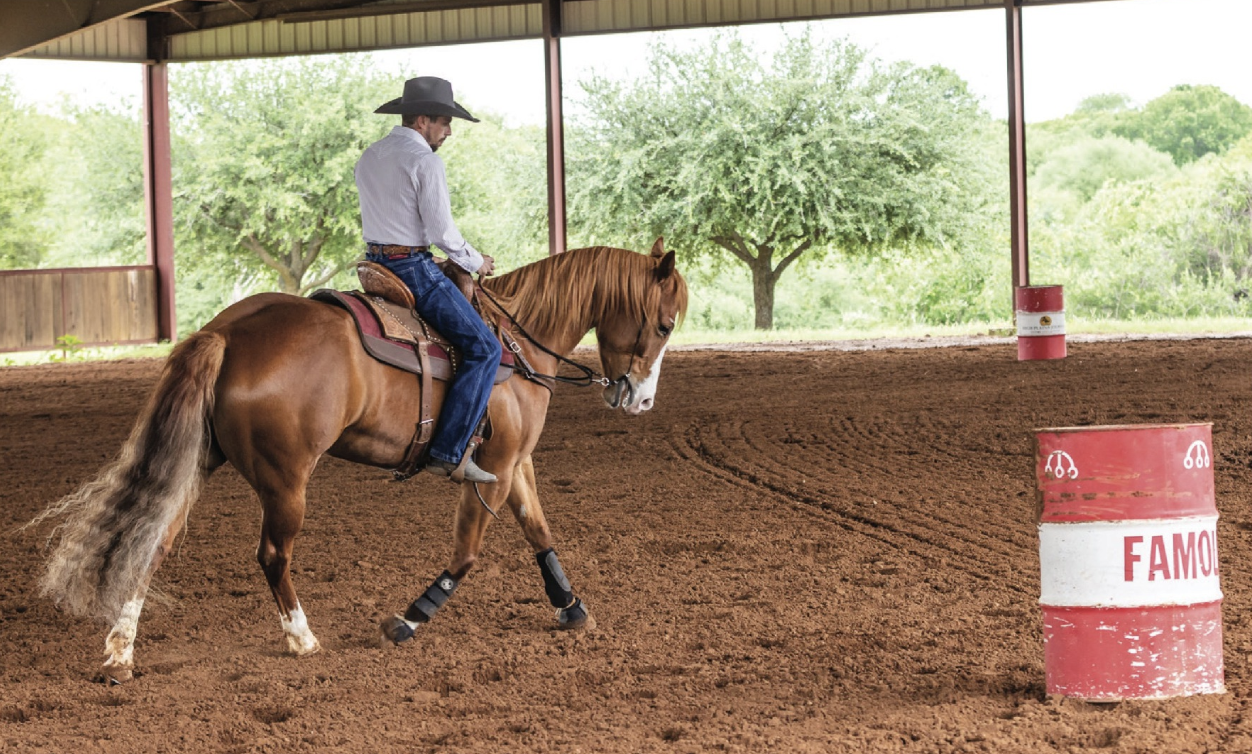
I do not go into the turn quickly. I want the horse calm and moving comfortably. Depending on the anxiety or energy of the horse, I will walk them to help them regain their confidence and take away the pressure of the turn. I want to make sure the horse has transitioned down in speed before I ask them to turn.
After going around one barrel several times, I will continue on in the same direction around the arena as I was traveling before, picking up that same right lead. When I get to the next barrel, I will repeat the turn cues.
You’ll want to do this drill going both directions around the arena, that way you can get turns each way.
I like my horses stiffer around the turn than some. That’s why I focus on them being straight as I’m preparing to go around the barrel during this exercise. We are making more of a square around the barrel instead of a circle. That keeps their hips up underneath them. I like their hip to be at the barrel and their front end moving up and around.
Troubleshooting
Don’t slam your horse down to correct them if they don’t do this drill correctly right away. Sit and wait patiently on what you’re asking them to do, and don’t let them turn the barrel until they’ve slowed down. Otherwise, you could actually make them hotter.
When doing this drill on a pattern, I only do it about two or three times in a row in one direction before ending it and moving on. If the horse is struggling with what you’re asking, especially if you’ve got draw reins on, you don’t want to put too much pressure on them or their mouths. You need to make sure they have a release, and you want them to be comfortable on the pattern. This is a relaxing drill for the horse, so keep it easy going.
This article was originally published in the July 2022 issue of Barrel Horse News.