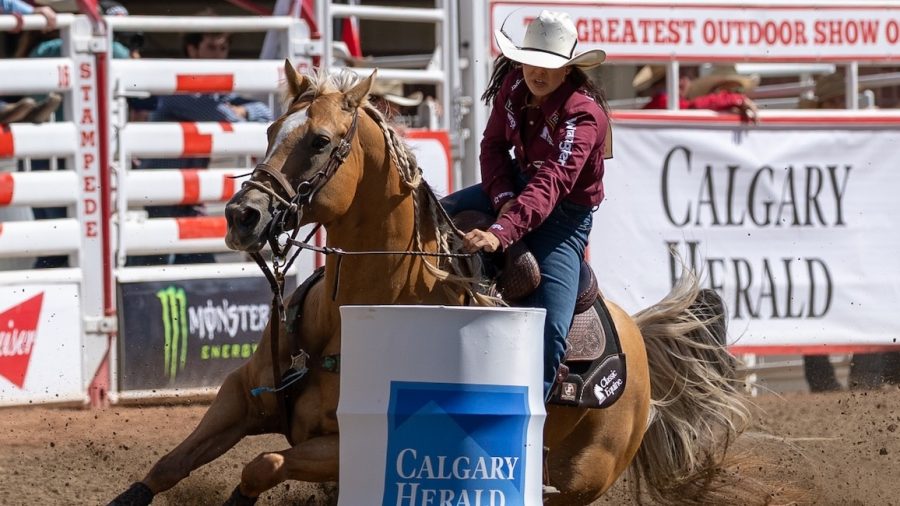

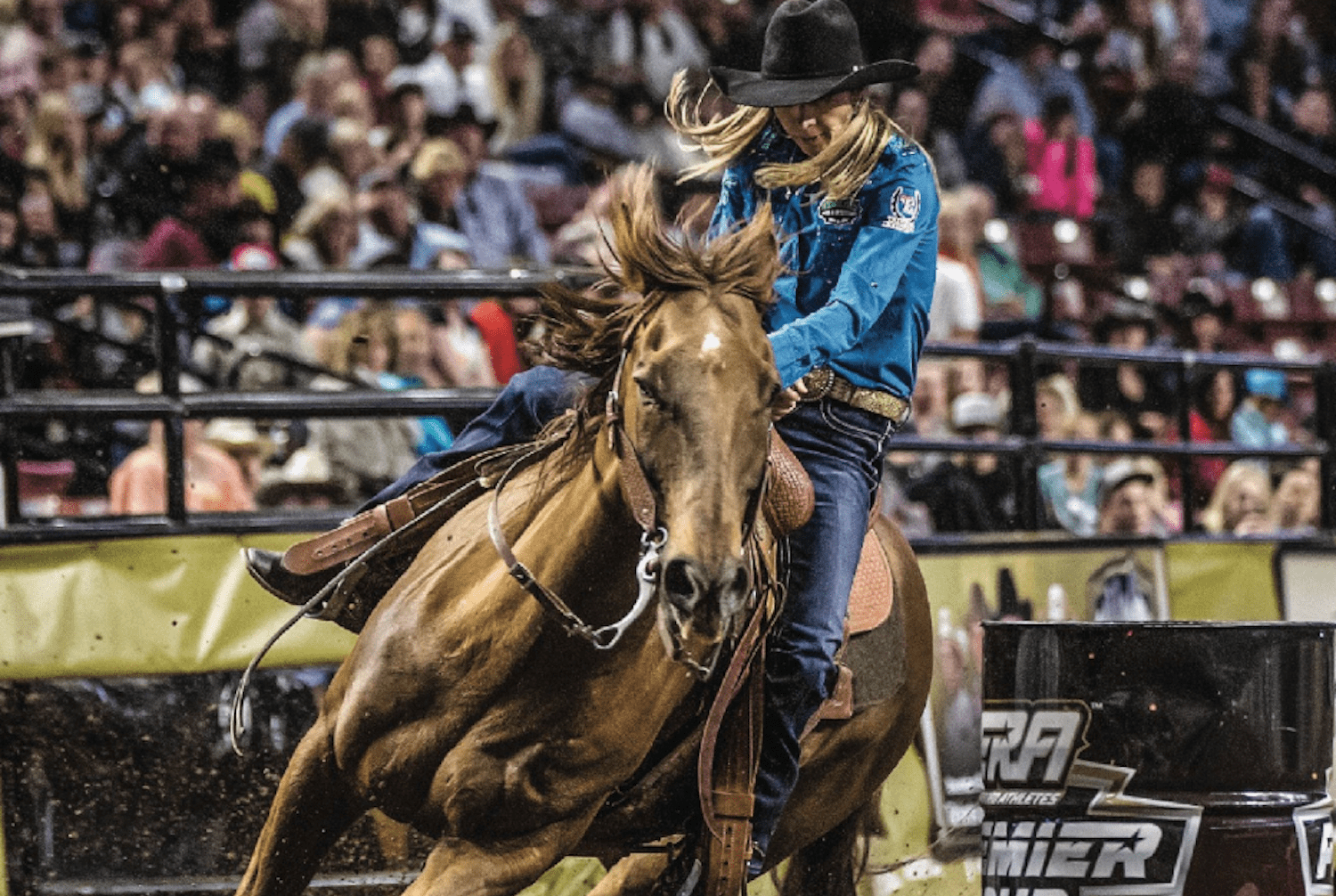
Charmayne James explains three aspects of your riding that are critical to barrel racing.
I believe there are three key things that lead to success on the barrel pattern: 1. Collection; 2. Room going into the turn; and 3. Room on the backside of the turn.
1. Collection
A barrel horse has to be collected to slow down and prepare to turn. You have to keep your horse backed off the bit and soft, which can’t be done without collection through the body. Teaching horses collection is important for people to understand, whether they’re starting colts on the barrel pattern or riding finished horses that are already running barrels — all horses need to respond when cued to slow down and prepare for the turn.
At my clinics, people often ask me at what point in their approach to the barrels do they need to sit and slow down. The answer is there is no specific point, because it depends a lot on the horse’s style of running and turning. Ground conditions and arena size also contribute. In a big, wide open arena, you’ll need to prepare a little sooner than you would on a shorter course. On a large pattern, especially when the ground is hard, it’s necessary to help your horse, preparing them so they don’t run too hard into the turn and get strung out.
A lot of the timing of preparing for the turn and getting collection in your horses comes from experience and feel. But being very aware of your hands and when to come up slightly on your reins to cue your horse will help immensely. You also have to be conscious of having good balance in the saddle and teaching your horse that when you sit, he needs to slow down and gather for the turn.
Some beginner riders don’t have their timing as fine-tuned, so an older, more experienced barrel horse can help those riders because those horses will take the initiative to prepare for the turn. With younger, free-running types of horses, you have to be very conscious of sitting down in the saddle and getting them collected for the turns.
When working on drills at my clinics, we work a lot on preparation for the turn. I don’t worry as much if the rider has a horse that definitely understands its job and is going to turn, but for greener horses every single time through a drill I have them work on collection. I have them work on their hands and seat together to cue the horse to set up for the turn. Gaining awareness of this and developing great timing is huge.
I see a lot of horses come through my schools that have learned to speed up in the turns. Sometimes people get coached to speed up to get by the barrels, but you cannot forget to do a good job of guiding during a run and never use the speeding up approach when working and practicing at home, because it’s collection and position that ultimately work.
2. Room Going into the Turns.
Doing a good job of guiding your horse is how you get good position going into the turns. If you have a tendency to look directly at the barrels or use inside rein to try and pick up the horse’s shoulder going into the turn, horses ridden this way start to move in toward the barrels. Horses move in under your weight, so if you look and lean in toward the barrel or apply unequal pressure to the inside rein, they move in.
You have to learn to focus on the line to the first barrel and ride that route, which takes you about 4 feet to the side of the first barrel. When you leave the alley, you only have a couple of seconds to get the correct position to set up the turn. You want to go a few steps straight toward the third, sitting centered in your saddle, or even slightly to the outside, but not leaning in toward the barrel.
In the case of a blind first barrel, you have to get right over to it sooner, so it’s imperative to have your position, your timing, and aim the horse’s nose in there just enough. Not only do you have to pick out your position, you need a certain amount of speed going that works for your horse — you need rhythm and timing together as a team, as well as great position heading to the first barrel.
Once you leave the first barrel, aim straight to the right of the second, about 3 to 4 feet to the side. If you look in, your weight shifts inward and your horse moves in under your weight, thus crowding the barrel. Ride centered and guide them right up into the correct position with two hands, with enough room to make a good turn.
Look at the road you want your horse to take, not straight at the barrels. Horses ridden that way get used to staying on that track, as opposed to those that get short because your weight comes in or your rein pressure is more on the inside rein. That’s one reason it’s so important to be able to shift your weight and place it where you need it, especially when getting on different horses.
3. Room Past the Barrel
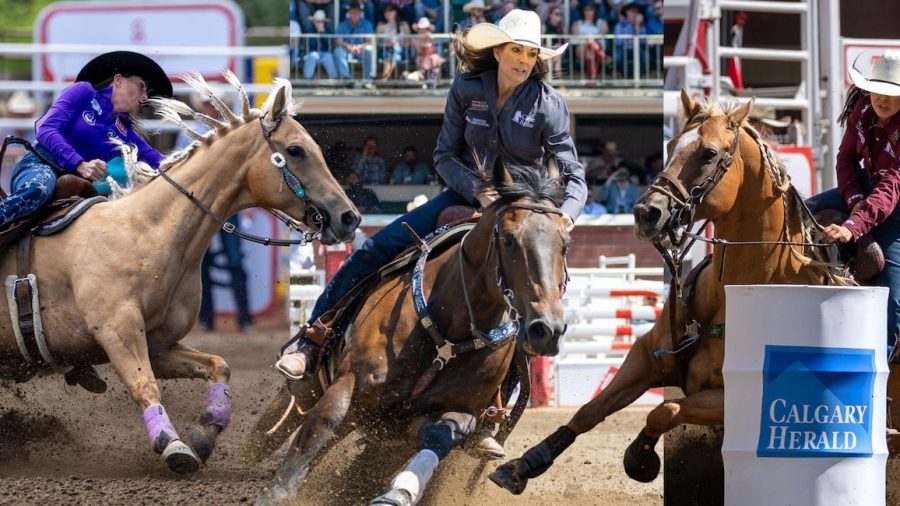
Giving the horse enough room past the barrel to get around the barrel in good position is something you see so many professionals and top trainers work on all the time. A lot of people tend to start the turn too early, but the horse’s hip requires room to get around the barrel. Once people understand that, it really helps their riding. Some people think going wide into the turn will give them the room they need to get around the barrel, but a lot if times it causes the horse to leave the barrel in the incorrect position, getting too tight on the backside. If a horse gets too tight around the barrels, it won’t really have anywhere to go and will often hit barrels, or even bow off the backside trying not to hit the barrel.
Position is everything in barrel racing, and combined with collection and good timing, it’s the key to making winning runs.
This article was originally published in the October 2022 issue of Barrel Horse News.