
Sponsored by Achieve Equine, LLC
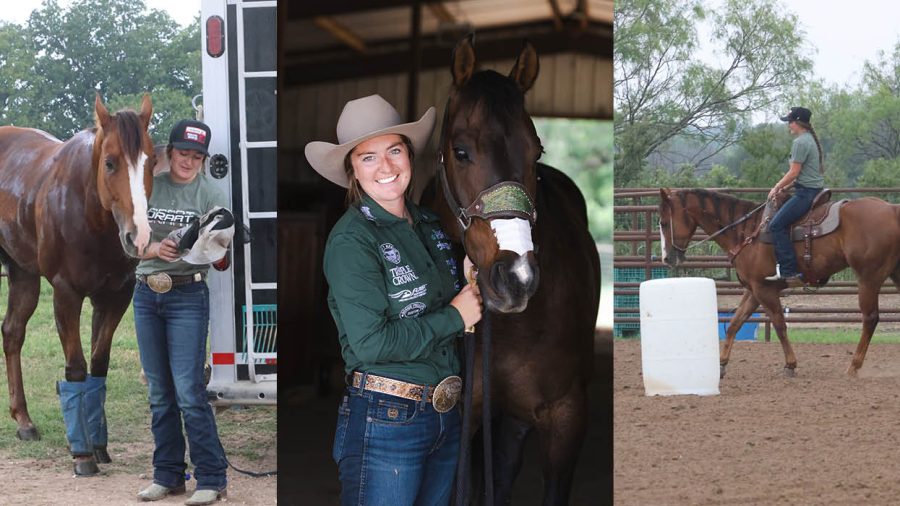
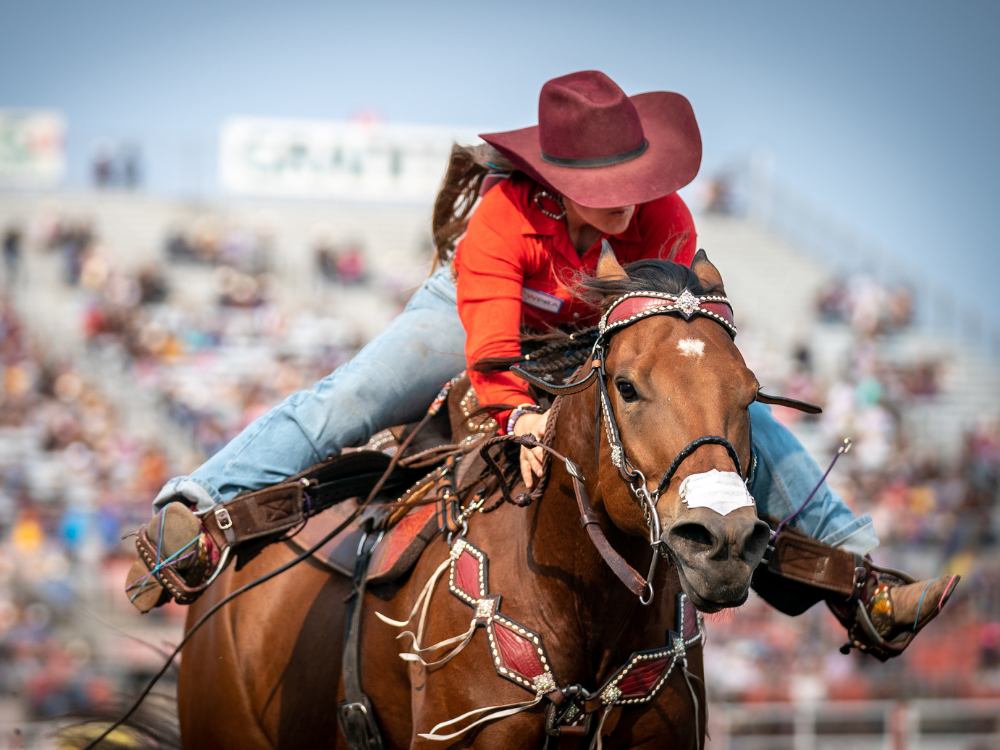
“FLAIR Strips provide my horse with many benefits including faster recovery, better airflow, and less fatigue.”
-Kylee Scribner, 2021 WPRA Rookie of the Year
Unlike humans, horses can only breathe through their nose during intensive exercise.
Breathing easy is important for horses competing at all levels of training or competition. When exercising, unlike a human, a horse can only breathe through its nose. In addition, there is a region of the nose a few inches above the nostrils where the horse’s nasal passages are unsupported by bone or cartilage. During intensive exercise, the tissue overlying the nasal passages collapses inward, which reduces the diameter of the nasal passage, causing increased resistance of airflow to the lungs. In fact, during exercise, more than 80% of the resistance to inhaling air into the lungs occurs in the upper airway and more than 50% of the upper airway resistance is in the nasal passages.
The horse’s respiratory system extends from the nostrils to deep within the lungs. It is divided into the upper airway (nostrils, nasal passages and larynx) and the lower airway (trachea, bronchi, bronchioles and alveoli).
Deep in the lungs in the alveoli, the oxygen in the air diffuses into the pulmonary capillaries to be transported throughout the body to provide energy for exercise. The waste product of energy is carbon dioxide. Carbon dioxide is transported out of the body by taking the reverse pathway. Blood carries carbon dioxide from the tissues back to the lungs, where it passes through the pulmonary capillaries, into the alveoli and is exhaled out of the body.
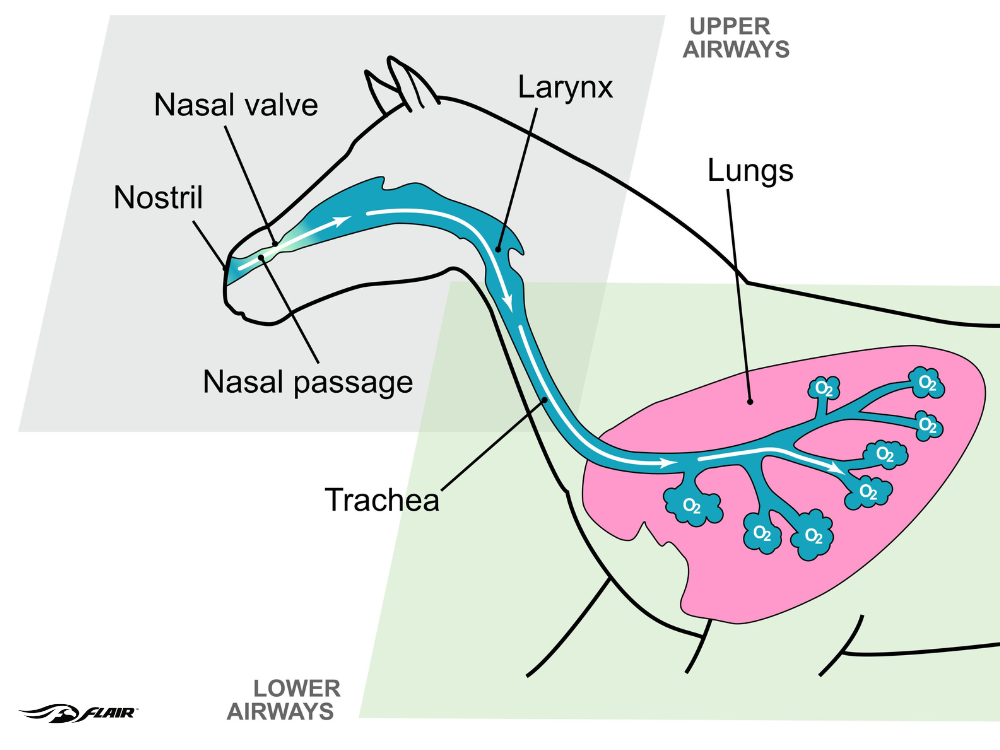
When a horse breathes in during exercise, over 50% of the resistance to airflow is in the nasal passages.
During exercise, resistance to moving air into the lungs increases; 90% of the resistance to airflow occurs in the upper airways, and over half of the resistance occurs in the nasal passages1. One reason for this is that a significant portion of the soft tissue overlying the nasal passages is unsupported by bone or cartilage, including the narrowest part of the upper airway: the nasal valve. As breathing intensity increases, this unsupported tissue collapses during inhalation, reducing the size of the airway and greatly increasing resistance to air flow.
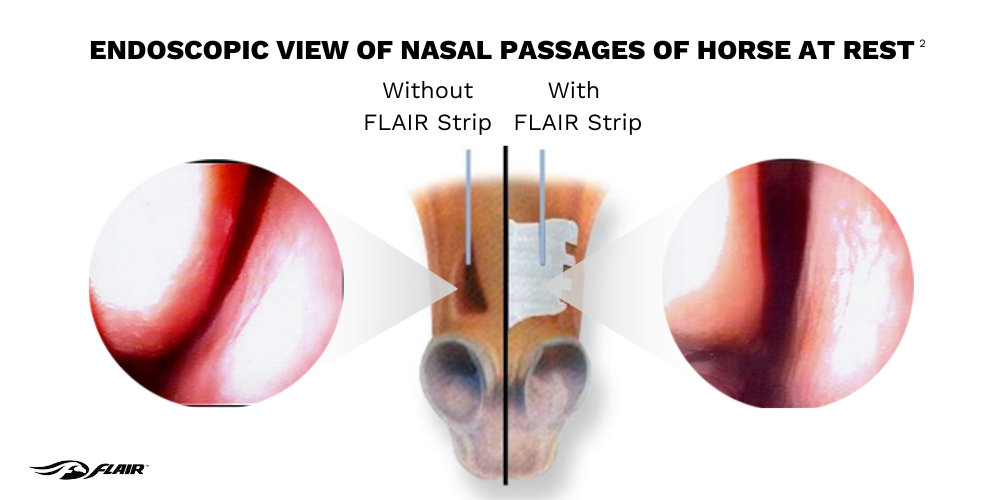
FLAIR Strips reduce airway resistance during exercise to make breathing easier.
The physics principle of Poiseuille’s law tells us that for each incremental change in the size of a tube, resistance to flow changes by 16-fold. FLAIR Strips improve airflow by supporting the nasal passages to reduce the soft tissue collapse that occurs in all horses during inhalation. Using a FLAIR Strip can be compared to drinking from a large, thick straw rather than a regular straw…it’s much easier to get what you need.
1 Art, T. et al. “Effect exercise on the partitioning of equine respiratory resistance.” Equine Journal. Volume 20: Number 4. 268-273. 1988.
2 Holcumb, Susan J. VMD, PhD. et al. “Effect of Commercially Available Nasal Strips on Airway Resistance in Exercising Horses.” American Journal of Veterinary Research. Volume 63: Number 8. 1101-1105, August 2002.
Clinical studies prove FLAIR Strips reduce airway resistance.
Clinical studies at leading research institutions show that by reducing airway resistance, FLAIR Strips make breathing easier, reduce fatigue, reduce lung bleeding, conserve energy, and quicken recovery. See the science at flairstrips.com/learn
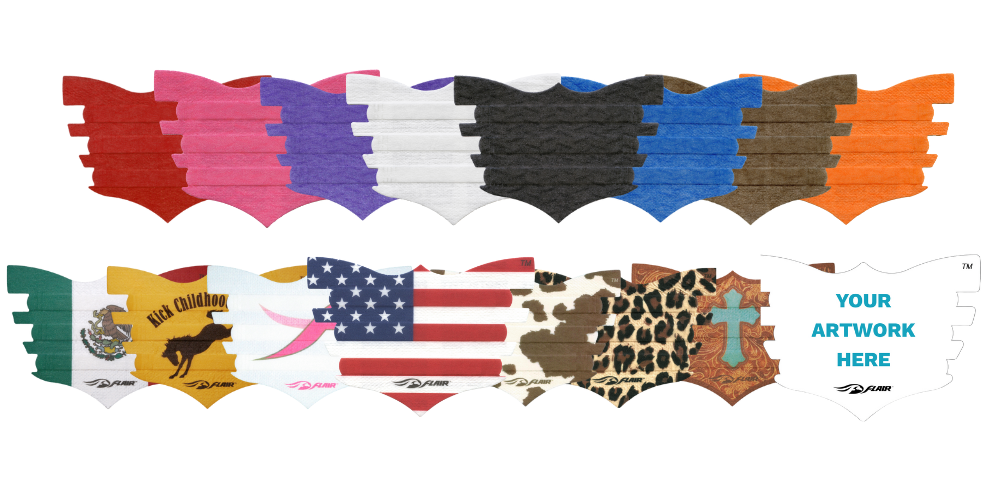
Visit flairstrips.com to learn more, shop online or find a retailer near you to breathe easy. You can also customize your FLAIR Strips to match your style. Information on the Custom FLAIR Strip program can be found at flairstrips.com/customize.