
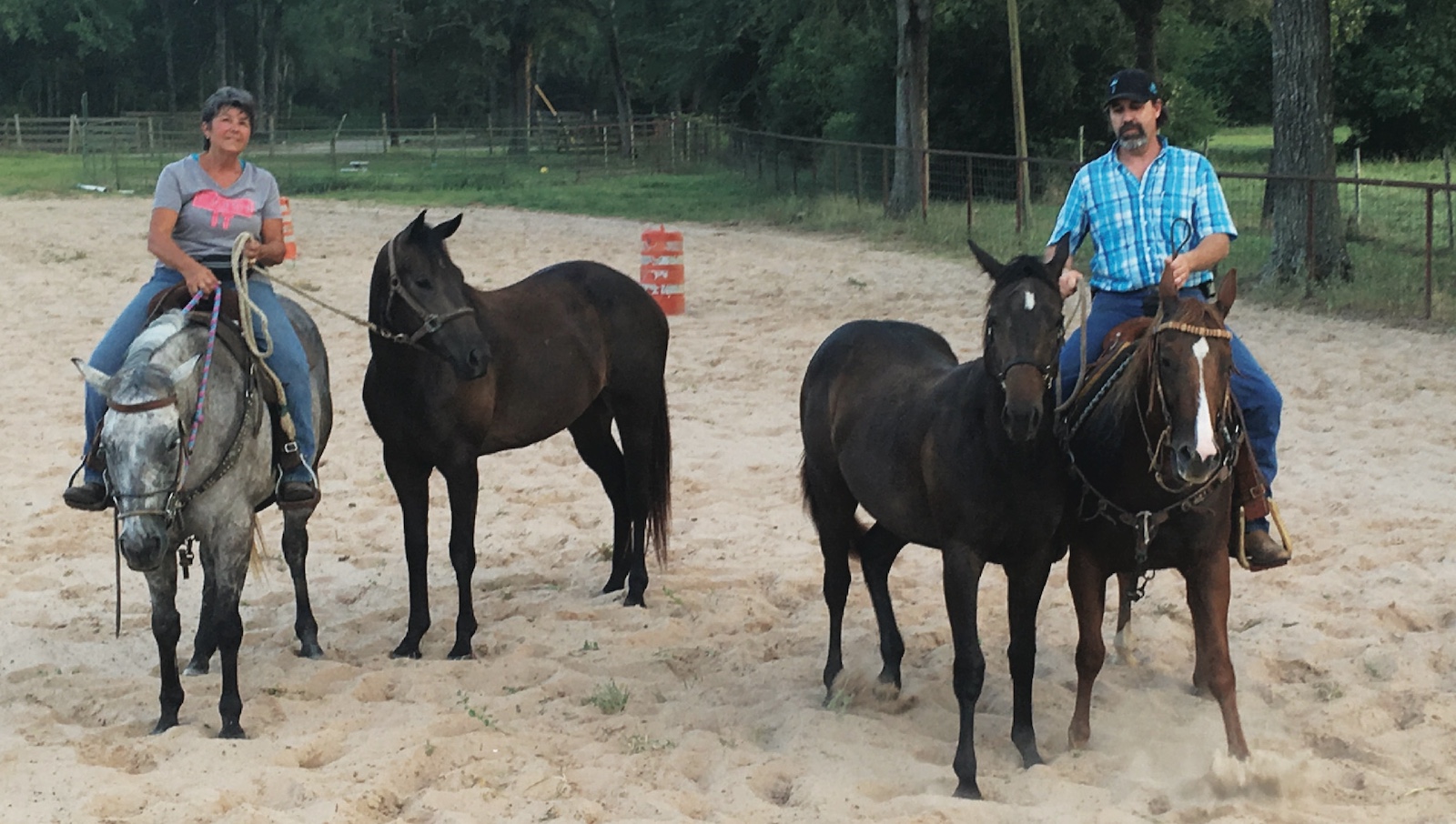
Set your colt up for a successful start under saddle with some common-sense homeschooling.
When a young horse is started under saddle, those first few months set the foundation for the rest of the horse’s career. It can be an ulcer-inducing process for both the horse and owner, but it doesn’t have to be, especially if a horse is properly prepared.
From birth until the time a horse is sent to the trainer, an owner can “homeschool” their colts, teaching them basic manners and preparing them for what’s to come when they’re started under saddle.
We caught up with a few trainers who shared what they wish owners knew and did before sending colts to be started. Oklahoma trainers Audra Masterson and her partner Bill Fleming, Robin Weaver’s best-kept secret in Pennsylvania, LaWayne Graham, and Utah’s Brady Weaver share some of their homeschooling preferences that help save them time, you money and keep the horse safe.
Handling
If properly prepared for the colt starter, young horses with basic handling skills are less likely to be a danger to themselves and the handler.
“It’s a lot safer for the horses,” Weaver said. “I’m going to mess with their legs and hobble them. If they know the basic things about being restrained, like tying, it seems to be a safer process for them.”
Colt starters typically see three types of horses: the wild ones with little or no handling, the pets and princesses that are rude and spoiled, and the ones that are just right – handled enough, but still responsive to cues.
The Wild Ones
“I can’t tell you how many times we’ve had to back the trailer up to the barn and run them in a stall because you can’t touch them,” Masterson said. “I don’t know how many times we’ve spent the first 30 days halter breaking them.”
Now, Fleming and Masterson will only take special cases like that from long-standing clients who understand that it’s going to take more time and money with those horses.
“If someone wants to send me one of those now, I tell them no,” Masterson said. “They need to go to someone else to be halter broke before coming to me.”
Masterson says sometimes people are so worried about handling a colt too much because their growth plates are open that they don’t handle them at all. Plus, too many people assume that “ranch raised” means not handled at all, when in fact many programs periodically bring their colts in one group at a time for elementary education.
How you raise and handle young horses can be greatly impacted by bloodlines too, Masterson adds. The more cool-minded barrel horse lines can do well with with a lot of turnout and few handling sessions, whereas hotter lines might need more handling and desensitization.
“I think where people go wrong is they breed their mare and have a colt and then forget about them until they’re 2 or 3,” Masterson said. “They’re bred like a cheetah crossed on a lion – they’re big and strong. They’re so hot they don’t know what to do with it. I think breeding has a lot to do with how much you need to handle them. If they’ve got good minds, you can raise them out more.”
No Pets or Princesses
Overhandling and overindulging is just as bad as no handling. You’re raising and training a horse, not a dog.
“The horse is a prey animal,” Graham said. “You can’t treat them like a dog. You take something out of a horse when you do that, and the horse becomes something else. They end up with no manners and it’s a disaster when that happens.”
A horse that wants to be in your space at all times is difficult to train, because they don’t have basic manners or respect a handler’s space.
“When I work with a horse, I want to set it up to be a positive experience,” Graham said. “If they have no respect for humans, it’s hard to set boundaries. You’ll have to use some negative reinforcement – you just have to.”
That’s where being able to read horses comes into play for a trainer.
“You have to set boundaries, but at the same time you don’t want to scare them to the point that they can’t think,” Graham said.
This can be particularly problematic with hotter-bred barrel horses.
“You want them to respect you, but you don’t want them so scared of you that they become reactive,” Brady said. “A horse gets eaten in the wild, and those hotter-bred horses tend to want to be more reactive anyway. We don’t want them reactive to everything.”
Respect
What horse owners should aim for is a horse in the middle – respectful of the handler and reactive enough to respond to cues but not overreactive enough to be afraid of making mistakes.
Weaver says he got a big, strong 2-year-old filly in that had all the basics to make his job easier.
“They did a really good job with this one,” Weaver said. “She’s halter broke. You can mess with her feet. She’s been trimmed. It made it really easy for us. It saves some time and arguments with the horse. It doesn’t have to be fancy stuff, just so you can handle them and do what you need.”
Safely standing tied is also another basic colts should have before going to the trainer, because odds are they’re going to spend a lot of time being tied.
“I like if they can be taught to tie before they come here,” Graham said. “It might not seem like much, but it helps the colt learn boundaries. There is an end to that rope. Of course, you want it to be safe, too.”
Every little bit helps, Masterson says, who has a hands-on policy with her personal horses from the time they’re weanlings.
“With all my babies, I put hands on them from day one,” Masterson said. “The day we wean them, we start a routine. That’s what I wish people knew – it’s not, ‘Oh, I don’t have to mess with them until they’re 2.’ It’s not like we do a whole lot with them when they’re weanlings, but it’s something, even if you just lead them around for 15 minutes.”
Having hands on your colt also doesn’t mean it has to be kept in a stall all the time “like a hot house flower.” You can turn them out and bring them back up to be handled from time to time.
Turnout time is important as well, especially for young horses developing social skills.
“I think one of the most important things is for a horse to be out with a group of horses,” Graham said. “They learn how to relate to other horses, and we use those skills when we’re working with them. If they don’t have those socialization skills, it’s harder.”
Graham also uses turnout time once a horse is in his training program to gauge how the horses are taking training.
“I like to gauge their training by how they react to me in the pasture,” Graham said. “With them turned out, will they come up to me or will they avoid me? If things are going well, they’re more likely to come up to me than if things are a little rougher.”
This article was originally published in the August 2018 issue of Barrel Horse News