
Awareness is Key
“Most people, the first sign they tell us about is the horse coughing during a run and feeling like they’re sort of waning at the end of a run,” Hutchins said.
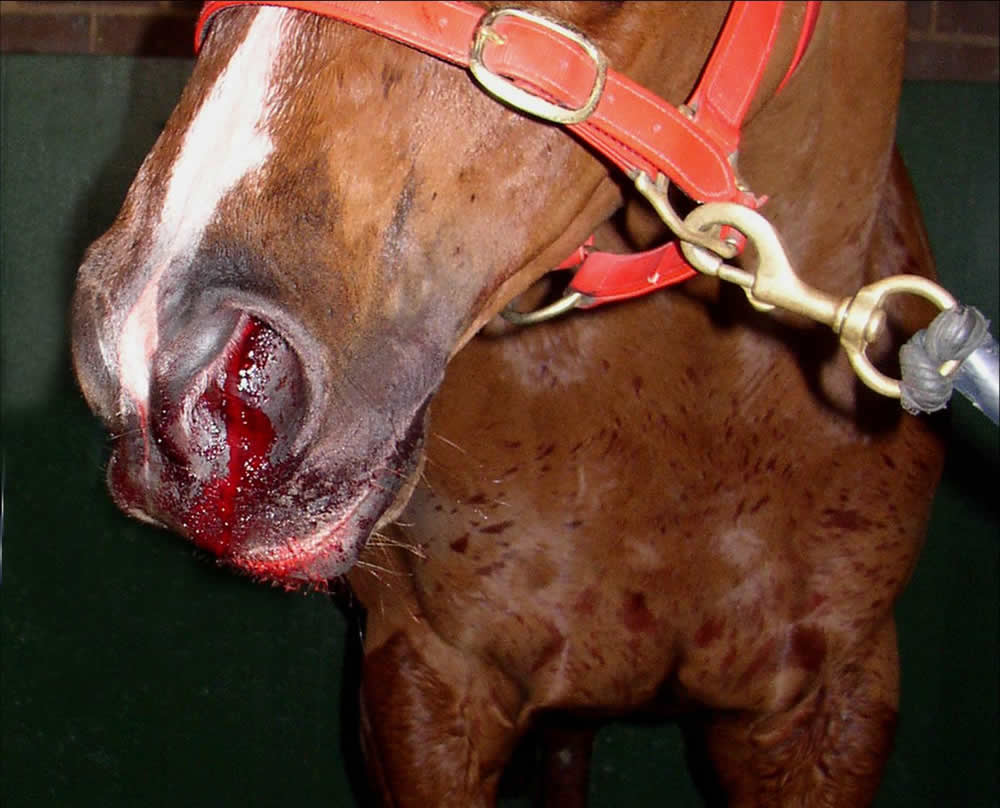
Hutchins says in his practice, some owners will say, ‘We ran this horse this weekend and then cooled him off, took him outside his trailer, and he’s got his head down,’ and suddenly they see blood trickling out of one nostril.
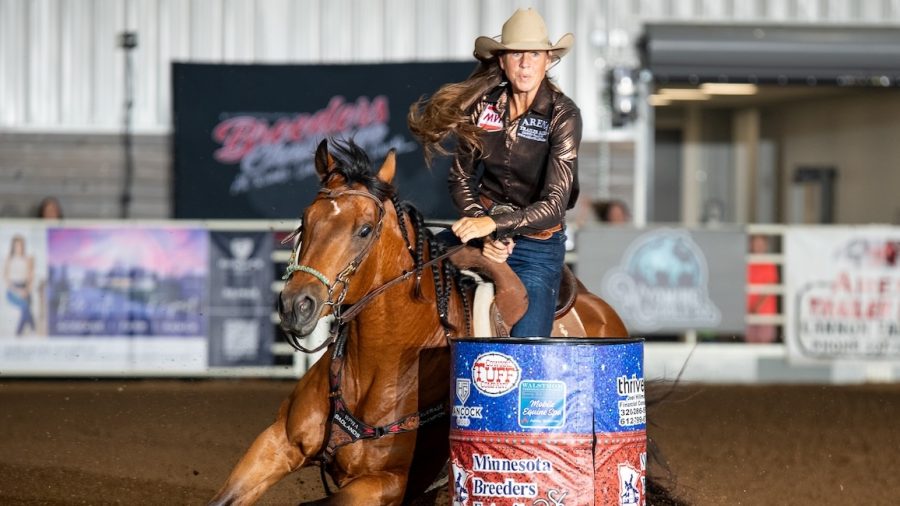
“They bring the horse to us typically the next day, hopefully, if they’re not being evaluated right there at the show, to look for traces of blood in the trachea,” Hutchins said. “A lot of times, by the next day, you don’t see any  Barrel horse trainer Jolene Montgomery (formerly Stewart). Photo by Kenneth Springer.blood in the upper airway, as far as the blood in the nostril or even in the throat, but you’ll see it down in the lower airway in the trachea.”
Jolene Montgomery (formerly Stewart), one of the most successful futurity trainers in the industry and a former trainer at Jud Little Ranch in Ardmore, Oklahoma, says one her first experiences with a bleeder came in 2008, when she noticed her then-4-year-old mare, Smooth My Credit, was having trouble at a WBRA event in Guthrie, Oklahoma.
“I noticed she wasn’t really running up to her full potential,” Montgomery said. “She put her head down a couple times after I ran her, and after the second run, she put her head down and coughed. She never bled out, but I suspected because she wasn’t running all that great. I had her scoped, and she was bleeding. Not real bad, but I’ve run her on Lasix ever since.”
Montgomery says warning signs of potential bleeding include a horse putting its head down after a run, coughing or suddenly starting to act funny in the run, blowing off turns or just running off.
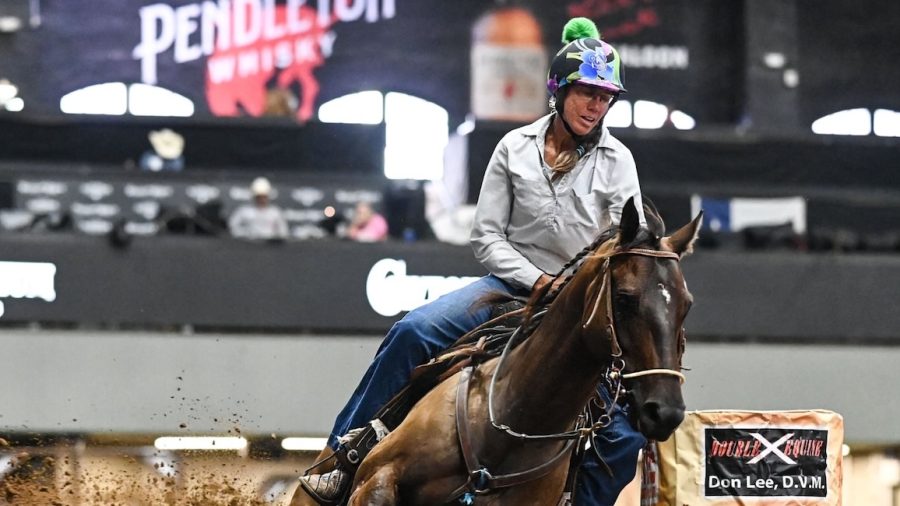
“The ones I’ve had bleed are the ones that really run super hard, and then you’ll start to be able to tell,” Montgomery said. “They’ll get nervous before they run. They’ll put their heads down after they run. They’ll get a little wild. It seems like when they do bleed, their first barrel, sometimes their second, are pretty good. Then that blood will get in their lungs, and by the time they get to the third, they’re scared and just running. Sometimes they’ll blow that third barrel. They can’t breathe. They get scared.”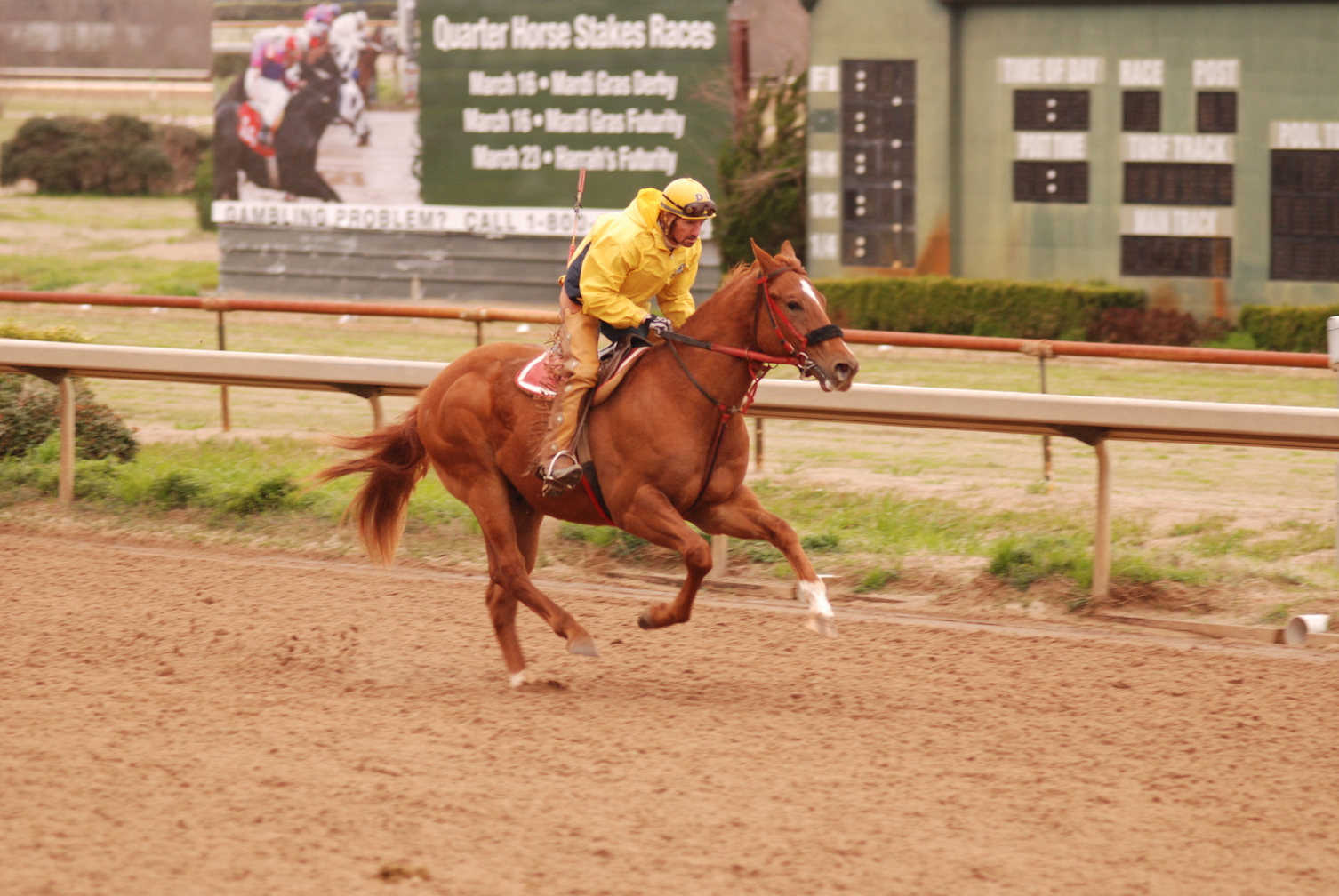 Being aware of any changes to your horse’s normal behavior and recovery time during heavy exercise and during and after a barrel run are key to spotting a potential case of EIPH. Photo by Danika Kent.
Montgomery says if a horse is a bleeder, every time you run it hard, there is the potential for it to bleed.
“I think it’s pretty common,” Montgomery said. “I think most of us will tell you, especially track vets, that 75 to 80 percent of horses bleed, especially those that try hard and run hard.”
Montgomery says it’s easier to tell that a horse is having a problem if you know the horse and have ridden it for a long time.
“There’ll be a change if they start bleeding,” Montgomery said. “It’s not major things, but if you pay attention to your horse and know your horse real well, there is a little bit of a change.”
Hutchins says one of the biggest potential complications of a bleeding episode is respiratory infection. He says blood is a growth culture medium for bacteria, so repeated bleeding exacerbates the chances of developing serious problems.
“You add on top of that environmental contaminants from dust and stuff, and that sets them up for a potentially low-grade to a chronic respiratory infection,” Hutchins said.