
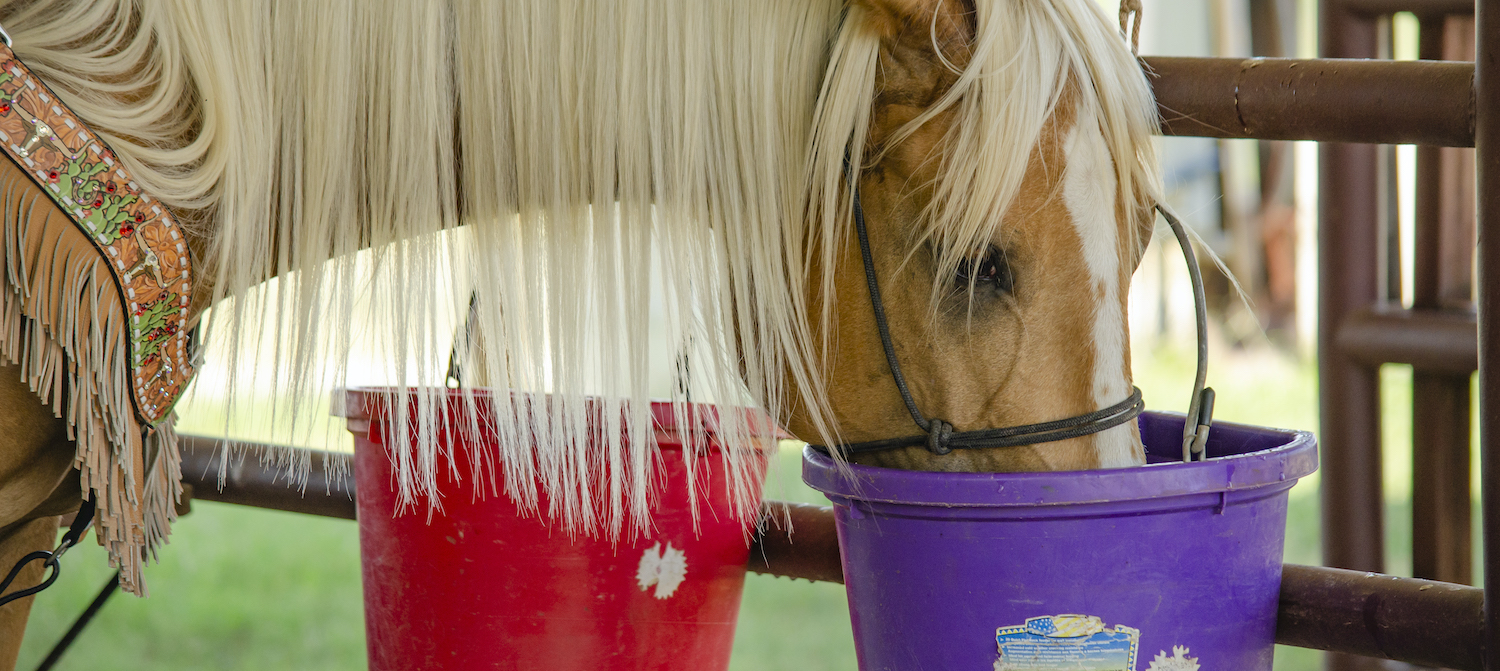
Can you make him drink? Let’s talk basics on equine hydration and what you can do to ensure your horse is getting enough water.
By Josie Mac Fladager
The summer heat is stressful for you and your horse, whether you are traveling the country competing or enjoying a few weekend jackpots. Similarly, weather changes in the fall and winter can also affect your horse’s water intake. Most dehydration colic cases occur in the summer and winter, and especially when temperatures change quickly. Horses can get behind on water intake when temperatures rise quickly, and they are likely to drink 6-14% less water during a cold snap. Water is the most imperative of the six essential nutrients in equine nutrition, but how do you know if your horse is properly hydrated?
Erik Moore, DVM, with Signature Equine Hospital in Morgan Mill, Texas graduated with his Doctorate in Veterinary Medicine from the University of Missouri, and sat down to discuss how different factors play into your horse’s hydration status, what you can do to prevent dehydration, and how to properly use electrolytes in your horse’s diet.
The Basics of Equine Water Intake & Feeding for Hydration
Horses are episodic and circadian drinkers, meaning they will take one long drink with many sips several times each day. On average, a horse at maintenance will drink two to eight times per day for ten to sixty seconds, for a total of six to ten gallons consumed each day.
Water intake levels can change with a variety of factors, including when horses are participating in heavy exercise, when temperatures rise, when humidity is high, and what type of feed a horse is consuming.
Horses will sweat more in humid environments, therefore losing more electrolytes. While six to ten gallons is a starting place, Moore says horses can consume much more than that under the right conditions.
“Under heavy exercise and really hot weather, some of those horses can need up to 30 gallons a day, so about six large buckets,” Moore said.
A horse’s water consumption will also change based on the type of feed it is consuming. A horse that is being hauled, and therefore eating grain and hay, will need to consume more water than one that is turned out on pasture. Pasture contains 70-80% water while dry feed and hay contain only about 10-15% water. Moore says supplementing one ounce of sodium chloride — table salt — on top of grain twice each day is a simple, easy, and safe way to encourage a horse to drink more water.
Offering a free-choice salt block, both at home and when traveling, is also an excellent way to allow horses to self-regulate their electrolyte and water consumption.

Know the Signs of Dehydration
Horses lose water primarily through urine, feces, sweat and respiration. Dehydration is scientifically defined as an 8-10% deficit in water throughout a horse’s body. Knowing the signs of dehydration begins with knowing what is normal for your horse. This includes doing simple hydration tests when you know a horse is well hydrated, paying close attention to the horse’s physical appearance, and taking note of things like a horse’s feed consumption and urine color.
A quick way to tell if a horse is beginning to be dehydrated is with a skin tent. Lift your horse’s skin by gently pinching a small piece, usually on their neck. The skin should snap back into place withing one to two seconds. If it takes longer than two seconds, this is a sign the horse is dehydrated.
Another way to check a horse’s hydration status is through the capillary refill time in their gums. Press your thumb against your horse’s top gum and then release. The color should come back to the area within one to two seconds.
According to Moore, another simple way to look for dehydration is by noticing the soft area just above a horse’s eye.
“There’s a little soft spot you can feel. As a horse gets dehydrated, they will sink in there a little bit. A lot of older horses look that way anyway, but if you are familiar with your horse and you notice he’s sunken in more than normal, especially if you are paying attention, that’s a really easy one to see just visually,” Moore said.
Another sign to look for dehydration is a horse’s urine color. Regular urine is a light color, almost close to clear. The darker or more yellow urine is, the more dehydrated the horse.
Electrolytes
Electrolytes are essentially specific minerals that help a horse stay hydrated. These minerals include sodium chloride (table salt), potassium, calcium and magnesium. Most feed companies are going to have these minerals included in their formula for the horse to eat every day, but when temperatures rise, humidity rises and exercise levels are high, it might be a good idea to supplement some electrolytes.
When hauling, Moore says offering constant water to a horse in the trailer is great if the water is fresh and the horse is willing to drink it. Otherwise, it is best to offer the horse good, clean water at least every six hours while traveling. If an owner wants to use electrolytes as a preventative from dehydration when traveling, Moore says it is a good idea to make electrolytes part of a routine when traveling, rather than a one-time-use.
“I think the key to that is that if you are going to a show, start your horse on electrolytes before you leave and keep them on some level every day, not just right before the event or before you compete,” Moore said.
Electrolytes for horses can come in a variety of forms including table salt on feed, powder that can be added directly into water, and paste. Moore says that no matter what form of electrolyte you are using, it is important to be sure the horse likes it so it serves its purpose.
“I’ve seen clients that have used powdered electrolytes that you put in the horse’s water bucket and then the horse doesn’t like the taste or the smell, so then they won’t drink water and you can be counterproductive,” Moore said. “I always recommend offering them a separate bucket of fresh water and paying close attention to see if they like it or not and how much they are drinking.”
Moore also says the vast majority of electrolyte brands are good to use, but to pay attention to the ingredients. If possible, use an electrolyte that will supplement your horse’s feed the best. Do research and understand that some minerals may have more than one name, such as scientific and common names (like table salt).
Another factor to watch in electrolytes is sugar that can have other names such as glucose or dextrose. Studies have shown there is not a difference in hydration between electrolytes with or without sugar, but there could be other negative metabolic effects from those with sugar. Some electrolytes will contain ingredients with sugar for taste, but it is best to find one your horse will like that does not include added sugars.
Let’s Talk About Lasix
Horses running on furosemide (Lasix) are excellent candidates for an electrolyte supplement. Since Lasix is a diuretic, horses will lose electrolytes through urine they would normally have reserved. But while an electrolyte supplement is a good idea, Moore says to avoid messing with a horse’s system too much at one time.
“What we don’t want to do is alter their electrolyte balance further than we already are when we restrict water,” Moore said. “We want to give electrolytes several hours in advance or after the run when we start to give water again.”
Find a system and routine that works best for your horse. A couple options include using a paste several hours before you run or some powdered electrolytes in your horse’s water after you run.
Dehydration Treatment
The most appealing water to horses will have all three of the following elements: fresh, clean and cool. Dehydrated horses are most likely to drink water with all three, and it is best to offer it gradually. Moore says about half a bucket (approximately 10 quarts) at a time about every 45 minutes is best until the horse becomes rehydrated.
Mild dehydration can be treated at home with clean water and an electrolyte supplement. Extreme cases of dehydration, where a horse loses access to water for hours at a time, can be treated by a vet with intravenous (IV) fluids.
“I would say the biggest conversation I have about hydration is usually on a horse associated with a colic episode. So, I would say it is very common for us to assess the horse’s systemic hydration status and then use IV fluids,” Moore said.
Most dehydration colic cases occur in the summer and winter, and especially when temperatures change quickly. Horses can get behind on water intake when temperatures rise quickly, and they are likely to drink 6-14% less water during a cold snap. Daily table salt on grain is an excellent way to prevent dehydration through major temperature changes.
Talk to Your Vet
As always, it is best to have a conversation with your vet about how to best keep your specific horse hydrated. Consult your vet before using electrolytes if your horse is on any medications or if they have any metabolic issues that may be affected by electrolytes, especially those containing sugars.
We know you can lead a horse to water, but you cannot always make him drink. As always, ensure your horse has access to fresh and clean water so they will want to stay hydrated.
“Dehydration prevention is probably the biggest key. Staying ahead of it, paying attention to it, and trying to avoid those expensive vet bills,” Moore said.