
What does a diagnosis of PPID mean for your barrel horse? Dr. Steve Grubbs, DVM, PhD, DACVIM, explains.
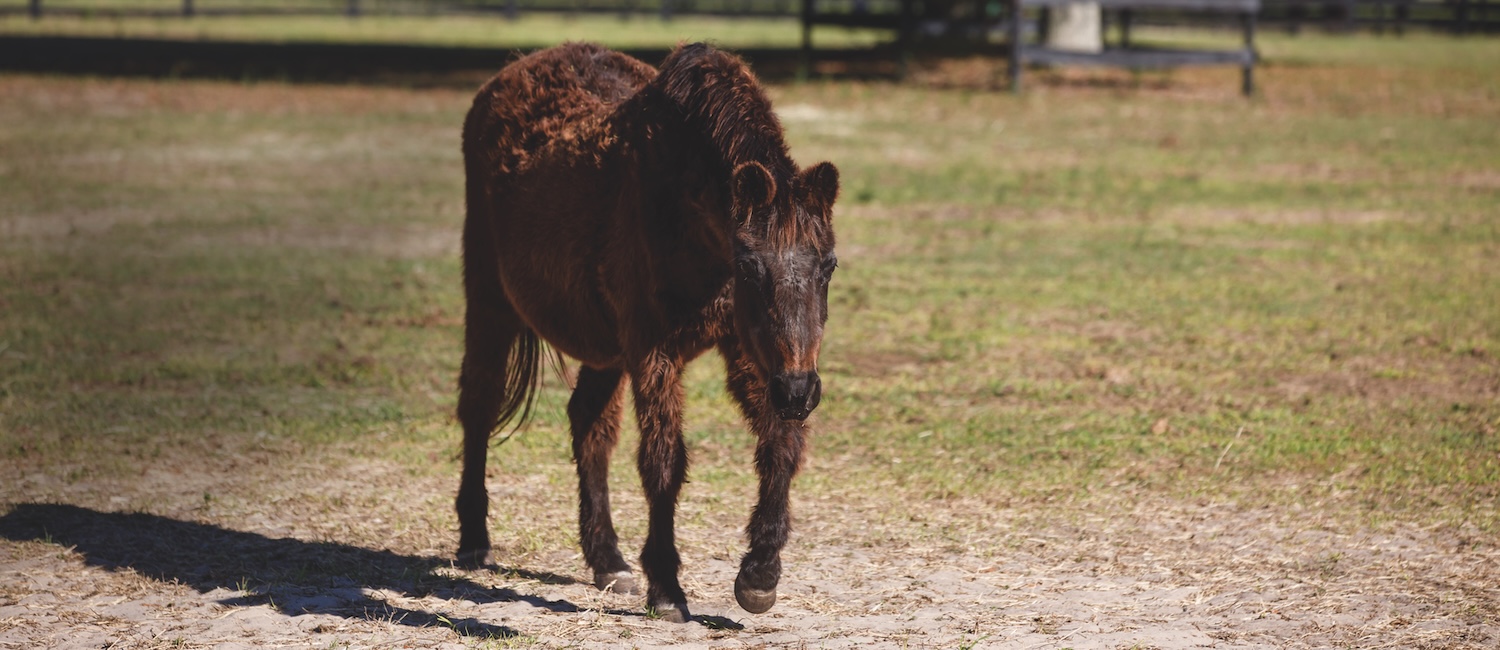
Many of us have seen a horse looking like a wooly mammoth outside of the winter months, perhaps with a loss of muscle tone. We often say that a horse with these visual characteristics might have equine Cushing’s disease, but that’s not the whole story. Today we’re going to focus on pituitary pars intermedia dysfunction, also known as PPID, which is sometimes called equine Cushing’s disease.
Dr. Steve Grubbs, DVM, PhD, DACVIM, equine technical manager for Boehringer Ingelheim Equine Health, shares info on what this disease is, how to diagnose and treat it, and what the prognosis is for a barrel racing horse with the condition. We also spoke with two barrel racers about managing their equine partners’ PPID condition while competing.
The Cushing’s Disease Label
The term Cushing’s disease is common and often used as a catch-all term for two different issues in horses: equine metabolic syndrome, and PPID, Grubbs said.
“Those are different diseases on what the cause is and how we manage it. But there is overlap, and that’s the hard part about it,” Grubbs said.
As a veterinarian, Grubbs will call the disease the most accurate term to reduce confusion.
“I’m not against it, but if you as a horse owner are using the term Cushing’s when you’re talking to a veterinarian or another horse owner, be clear that you’re talking about either PPID or EMS,” Grubbs said.
What is PPID?
PPID is an endocrine-related disease that affects the pituitary gland in the horse that is located at the base of the brain and supplies various hormones to the body. The specific region of the pituitary affected by dysfunction with the disease is called the pars intermedia. It’s a slowly progressive, age-related disease. While it’s really uncommon in a 5- or 6-year-old horse, as a horse ages, the risk gets higher, Grubbs said.
“The No. 1 misconception about this disease is that it’s an old horse disease, but it’s not only an old horse disease. We also see it in middle-aged horses,” Grubbs said. “We do see it in horses that are really still competing but aren’t able to do what they were, due to the disease.”
Neurons in the pituitary glad supply it with the hormone dopamine. Dopamine keeps the pars intermedia very quiet. When everything is functioning, the pars intermedia doesn’t have much to do, he says.
“When we get this degenerative process coming in and we have less dopamine, that part of the pituitary wakes up and starts producing some hormones [that the horse doesn’t normally have at those levels], which then causes us to see the clinical signs of PPID,” Grubbs said.
Signs of PPID
Clinical signs of PPID can be classified as early or advanced. The most common and most noticeable is hair changes, specifically delayed shedding of the winter coat.
“The early clinical signs of delayed shedding is usually in certain areas that we call regional. Sometimes we see it on the side of the neck, or in certain body parts. Sometimes it’s only one or two places,” Grubbs said.
Usually you’ll notice this clinical sign if you have a herd of horses, and seven or eight horses are slicked off for summer but the eighth one you’re still currying the hair off, maybe just in one spot.
“That’s a horse we should ask questions about,” Grubbs said.
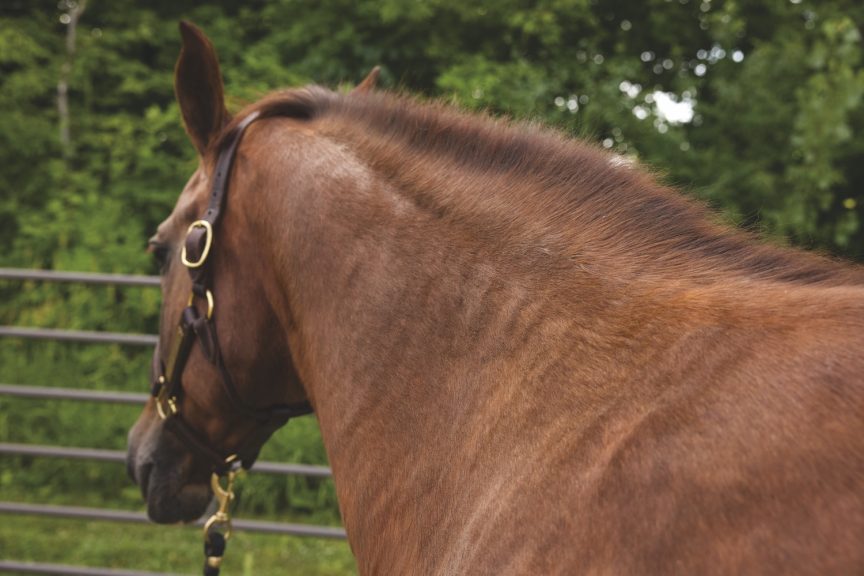
Horses may show signs of muscle loss, typically along the topline. Another early sign is a slow decrease of athletic performance — the horse may be a little more lethargic.
You may also notice abnormal sweating, either more than usual or less.
“We’re not saying that every horse that has decreased sweating or anhidrosis is PPID,” Grubbs said. “But if a horse comes in and it’s 10, 12 or 13 and it’s not sweating, I’ll back up and look at the rest of the horse to see if I notice anything to test the horse. If it’s a 6-year-old, I’m probably not — I’m treating anhidrosis.”
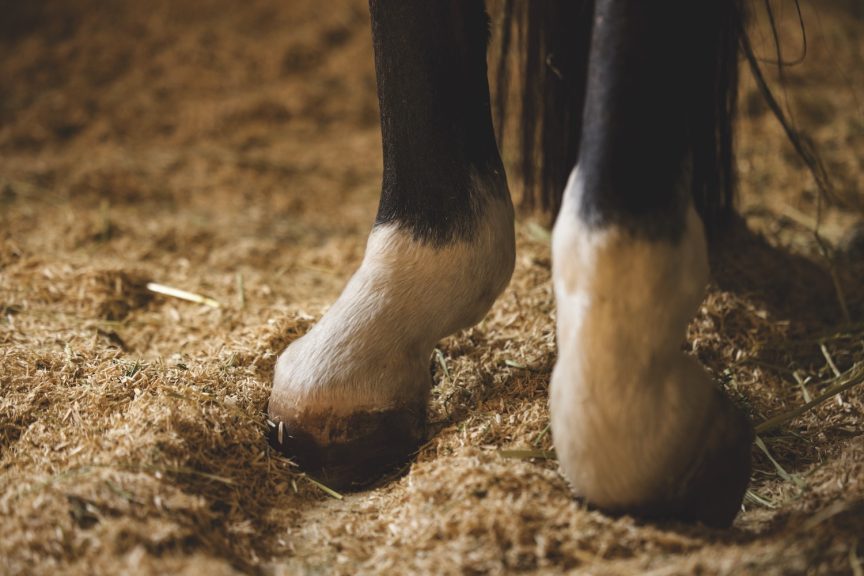
With PPID, tendons can be affected, and laminitis can also be triggered. Some horses with PPID can have elevated insulin levels that put them at a higher risk for laminitis.
Advanced clinical signs of PPID are the previous signs, only increased in severity. The horse may look like a wooly mammoth, which is the most distinctive sign.
The horse may also have generalized muscle atrophy that usually starts along the topline or over the rear end.
The horses often have a depressed energy level that could be attributed to mellowing in old age, but is actually related to the disease.
And some horses with advanced clinical signs of PPID will drink a lot of water and urinate excessively.
Finally, PPID can affect a horse’s immune system.
“They can have some recurrent infections, whether it’s skin infections, sinus infections, tooth infections, abscesses,” Grubbs said. “Some horses, if they’re really advanced, may not have the response to vaccinations that you would have in an age-matched, non-PPID horse.”
Long-Term Effects
Horses can live with PPID for years, Grubbs said. Usually they will eventually meet their end from another cause.
“If there’s an associated clinical sign like laminitis, that is one example where it could,” Grubbs said. “But what I really think it effects is what the horse can be used for.”
PPID can shorten the horse’s ability to perform in a specific discipline and the level at which it can compete.
“How do we define a horse’s quality of life? You want to keep that horse doing what its job is as long as possible,” Grubbs said. “Based on some of the clinical signs, if left uncontrolled, it does seem to affect a horse’s ability to do that.”
Causes of PPID
The cause of PPID is not completely understood. Grubbs said in horses with EMS, research has shown there can be a generic predisposition. But it’s not known how strong the generic factor is for PPID. Environmental causes are also still being researched.
“There hasn’t been anything that’s been shown as far as environmental, but people are spending careers trying to understand it a bit more. We’ve tested tens of thousands of horses over the last 11 years and have not shown anything environmental,” Grubb said. “When we look at all the information, we’re not seeing a specific area of the country that’s any more prone to PPID than other.”
How is PPID Diagnosed?
Grubbs says there’s a three-pronged approach to diagnosing a horse. First, the horse’s history from the horse owner. This includes clinical signs, infections and other conditions as well as the horse’s typical temperament. Is it always quiet and laidback, or is this a new personality?
“Some of these clinical signs are historical that I wouldn’t know when I go out there for an examination,” Grubbs said. “I wouldn’t know if the horse is off a little, a little lethargic, a little decreased performance, unless they told me.”
Second is the physical exam, where the veterinarian will be looking for any of the clinical signs of PPID while listening to the heart and lungs and other aspects of the body.
With these two pieces of information, the veterinarian will determine if a test is needed. From a blood sample, the veterinarian will be looking at specific hormones produces in the pituitary that may be elevated, including insulin levels.
“Once we have the results, I’ll look to see if the lab work coincides with the clinical signs and history I’m seeing,” Grubbs said. “That is usually the starting point, unless it’s an early horse.”
An early horse may also need a TRH stimulation test, because it’s more sensitive to detecting horses earlier in the progression of the disease.
Grubbs advises against testing normal horses — horses with no clinical signs — unless the horse is 15 years of age or older, but that would be to set a baseline.
If a horse is suspected to have an endocrine-related disease such as PPID or EMS, Grubbs said you want to make sure you’re examining the rest of the horse as part of the diagnosis.
“When we manage the horse’s health, we want to manage the whole horse, and the first step is whole-horse diagnosis,” Grubbs said.
What are the Treatment Methods?
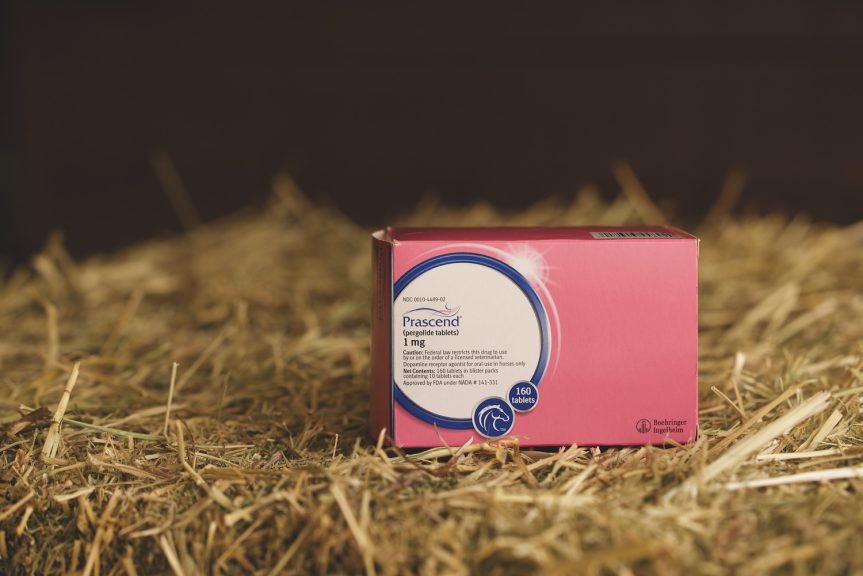
At this time, pergolide mesylate tablets — brand name PRASCEND (pergolide tablets) — are the very best treatment method for PPID. This medication is a dopamine receptor agonist, which can counteract the loss of dopamine in the neurons of the brain.
“Typically within 30 days or so, the horses start to feel better and they look better,” Grubbs said. “If they have been having that increased urination and drinking a lot of water, that’s usually one of the first clinical signs to improve. It may take 2-4 months for the haircoat to shed out.”
The main downside to this medication is a potential loss of appetite. Your horse may have a decreased feed intake or may even go off feed for a bit. If that happens, speak with your veterinarian to manage the dose your horse is being administered. Typically by reducing the dose, the horse returns to eating normally.
Management
If you have a horse with PPID and you’re treating the condition, you’ll want to make management changes as well. For example, a horse with excess hair may need to be body clipped to keep it comfortable with its body is responding to treatment.
A horse with PPID will also need nutritional management, regardless of the stage of illness. If your horse is losing topline muscle due to the disease, the right diet is critical.
“Nutrition is a huge part of getting that muscle back to where it needs to be, as soon as possible,” Grubbs said.
That could look like ration balancers or other dietary changes. For a horse who also has elevated insulin levels, you’ll want to change its diet to compensate for that issue as well. Consult your veterinarian on the best diet for your horse’s particular needs.
Depending on where you live and the diseases prevalent in your area, some horses with PPID will need a vaccine booster twice a year instead of once a year.
The horse will also need to be on a good deworming schedule — Grubbs said many horses with PPID will be high shedders, meaning they respond well to dewormer, but they shed more parasites in their manure than a low shedder, which can affect other horses in the herd.
What PPID Means for Barrel Horses
An early diagnosis can mean treatment while the horse is still experiencing minor clinical signs, and that can reduce the amount of muscle loss it’ll encounter, Grubbs said. Muscle loss in a 6-year-old horse is probably not PPID, but if the horse is 8 or older, pay attention.
“If your horse is 10 years old, really competing, and you notice a difference in its topline or repeated suspensory issues, look at the whole horse, not just that issue,” Grubbs said. “We want to identify some of these early signs before we get to the advances signs.”
He stresses that even a horse with advanced signs can see tremendous improvement, but they may not be able to get back to pre-PPID abilities.
Grubbs says this is a progressive disease that cannot be cured, but you can slow the progression down and manage the disease to allow your horse to have a good quality of life and do the work it enjoys for longer than it would without treatment.
Similar to how you adjust a healthy barrel horse’s regimen to do everything you can to improve its performance, Grubbs said with a PPID horse, you’ll be looking to make minor improvements.
“You start out with big picture adjustments, and then you look for little tweaks you can do, because it’s the little things that can make a big difference,” Grubbs said.
This article was originally published in the October 2024 issue of Barrel Horse News.