

When it comes to traveling and staying on rodeo grounds overnight, finding what makes your horse most comfortable is important. Knowing your horse and the event location helps when choosing to use facility stalls, build pens off of your trailer or stay at an off-site location.
Traveling to rodeos and being on the road is hard on horses. Making sure they are physically comfortable away from home and have a space to relax is important to ensuring they are ready to perform at their best in the arena. Some facilities offer stalls or permanent pen options for competitors, but they are often limited. Building pens off your parked trailer can be a great alternative to stalling horses and may be more comfortable for them.
Emma Ricke is a junior at Southeastern Oklahoma State University in Durant, Oklahoma and college rodeos in the Central Plains Region, where most of the rodeos don’t offer stalls.
“Every time I am there for over 5 hours, I will build pens whether that is a college rodeo or pro rodeo,” Ricke said. “My barrel horse prefers pens at the trailer over being in a stall. As large as he is, he typically gets more room with the pens I build rather than a stall. Since I have started setting up pens, my horses don’t get as stocked up or stiff when on the road. I think it lowers the chance of a horse to colic or have other complications because they seem much more comfortable.”
Qualifying for the College National Finals Rodeo twice and traveling to pro rodeos in between college rodeos where she is currently No. 9 in the WPRA Resistol Rookie standings, Ricke has found electric fence or hot wire to be the easiest to build pens for her horses.
“When I am by myself, panels can be difficult and time consuming to set up,” Ricke said. “When packing a trailer, panels take up a large portion of space while hot wire only requires limited space. Hot wire is light and easy to set up. I also like it because you can make a diverse set of pens. When parking is limited, I can set up smaller pens to be considerate, but I can also make large pens if there is an exceptional amount of space.”
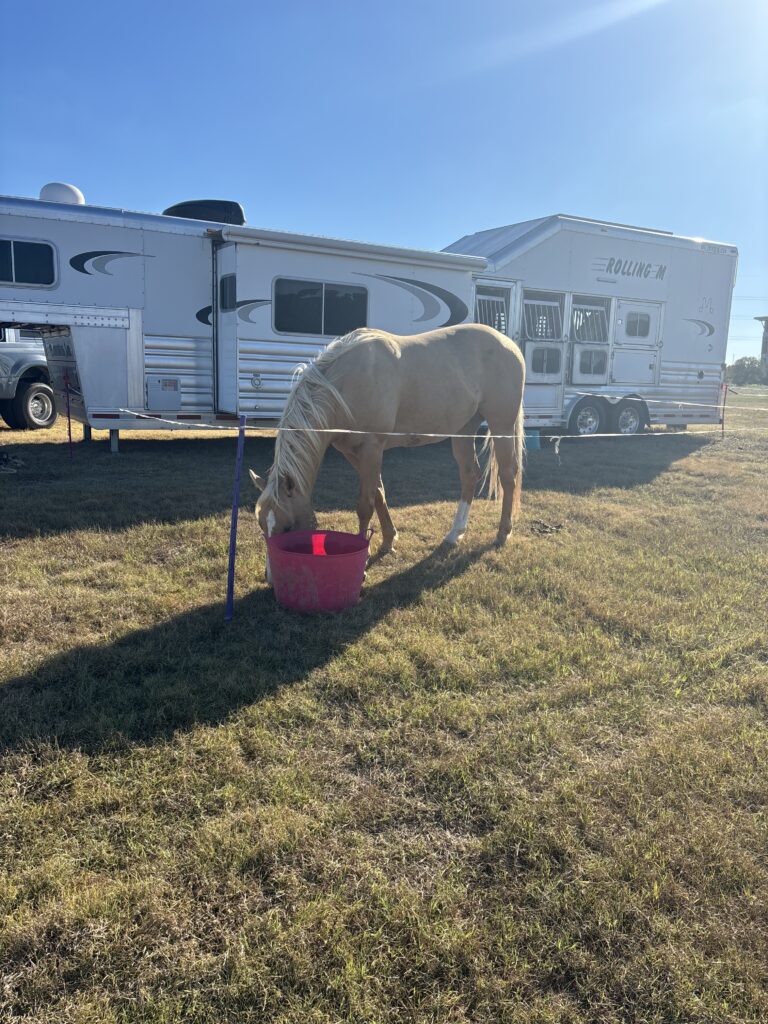
When building hot wire pens, Ricke prefers using metal posts over plastic because they are easier to get in the ground. She also uses white portable tape because horses can see it better.
“Get your horses used to hot wire before using it at a rodeo,” Ricke added. “I like to have my horse in pens during the college rodeos. I feel like a pen keeps my horses distanced from others better. It also lowers your chance of someone messing with your horse.”
The 2023 Montana Pro Rodeo Circuit Champion barrel racer, Tayla Moeykens is no stranger to success in the rodeo arena. From an impressive college rodeo career for Montana State University making four appearances at the CNFR winning numerous national titles to winning Rookie of the Year for the Montana Pro Rodeo Circuit and now sitting on the bubble for a possible National Finals Rodeo qualification, she’s seen it all. She builds pens at least 75% of the time.
“The only time we don’t [build pens] is if we are leaving after I run or if the parking area doesn’t allow for it,” Moeykens said. “All of mine would rather be next to the trailer as they are comfortable there. I think they get better rest and they believe they have a better chance of getting a treat. However, they are fine with stalls as long as they are together.”
Knowing your horse’s preferences and habits is key to keeping them comfortable on the road.
“We use portable panels my dad made. We have one horse who will push on hot wire, even heated, and we feel safer with him being in panels,” Moeykens said. “The biggest thing is making sure your horse is safe and is not likely to get loose. Our panels are heavier so they can’t push underneath them.”
She recommends assessing the situation and determining which type of pen is best for the location and your horse. Things to consider are how long you will be there, how busy the location is and how close you are to the road.
“I would really recommend panels overnight, in busy situations where there is no fence holding them in the fairgrounds where they can get out on a road or when you are in a place for more than a day,” Moeykens said. “It seems the longer the horses are in hot wire, the more they push on it and get loose.”
A disadvantage of portable panels is the shape and size of the pen can be limited and they take longer to set up in addition to more storage space in the trailer.
“With hot wire, it’s more convenient to set up in an odd-shaped area, can make bigger pens, and doesn’t take as long to set up but it seems that horses get out easier and more often,” Moeykens warned.
If using hot wire, she recommends having a hammer to help pound posts into the ground when setting up. Moeykens also hangs water buckets for horses that typically dump theirs, parks in the shade when possible and puts shavings in each pen to keep her horses comfortable.
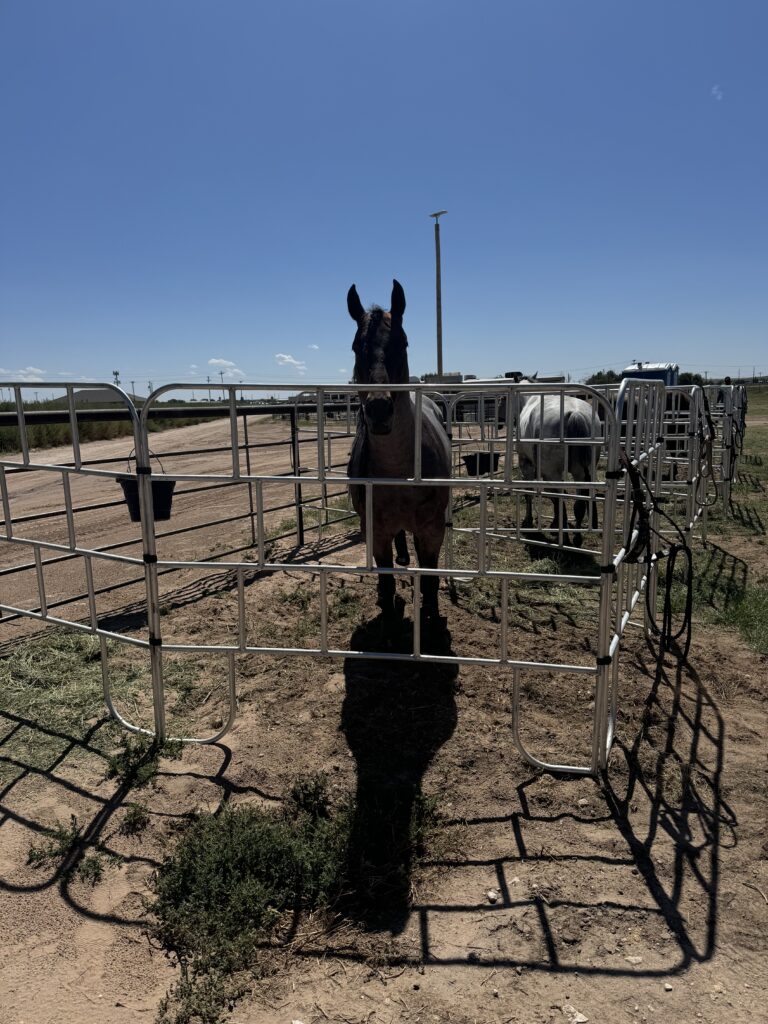
Jordan Driver rodeos for Tarleton State University in Stephenville, Texas and has qualified for the CNFR three times as well as pro rodeos between college rodeos, currently No. 25 in the world standings. She uses lightweight aluminum panels to build pens at the rodeos.
“After three years of college rodeoing and three years of going out hard on the pro rodeo trail, finding what makes your horse most comfortable is the most important part for me,” Driver said. “Personally I use panels at most of the college rodeos and some pro rodeos. I had Bloomer trailers weld a panel rack on the top of my rig to make it easier to travel with them.”
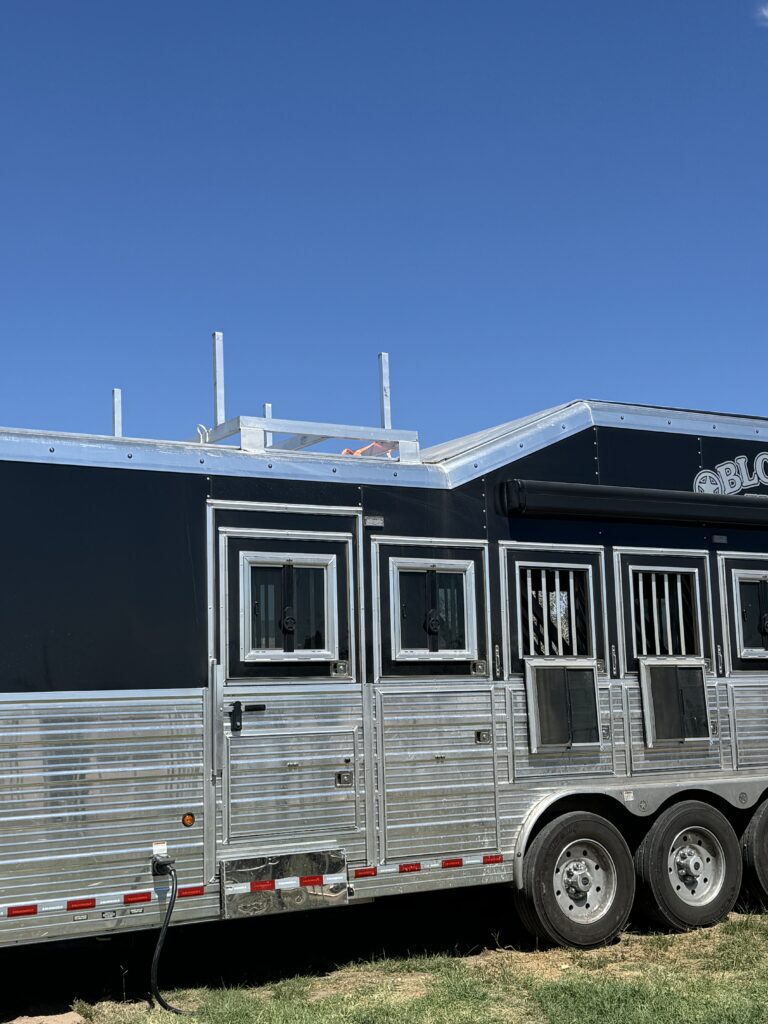
“At the college rodeos, with the number of kids and trailers that are in our region, setting panels up to your trailer seems like what works for me the best and my horses,” Driver said. “The only downfall I have found from the panels is just loading and unloading and the setup. It does take more time to do this compared to hot wire where you can just stake it and roll out the tape.”
When setting up her pens, especially at college rodeos, she will usually try to find a fence to use for one side of the pens and then use her rig to try to block the horses in to decrease the chance of them getting out and keep outside factors from bothering them.
She recommends having lots of extra poly cord to tie and secure your panels and finding flat ground to build the pens on to make it easier on your horses to lay down. She doesn’t hang buckets or hay bags on the panels themselves to help horses from getting hung up or pulling the panels over accidentally.
“Don’t stress about the situations you will come across,” Driver said. “There are many others in the same situation figuring it out so don’t be afraid to ask or do what is right for your horse. The rodeos are chaotic when it comes to parking and staying the night, so make the best out of the situation and put you and your horse first.”
For Driver, that means making sure her horses are in a calm and relaxed location, usually off the rodeo grounds. In the last year of rodeoing, she built pens less than 10 times.
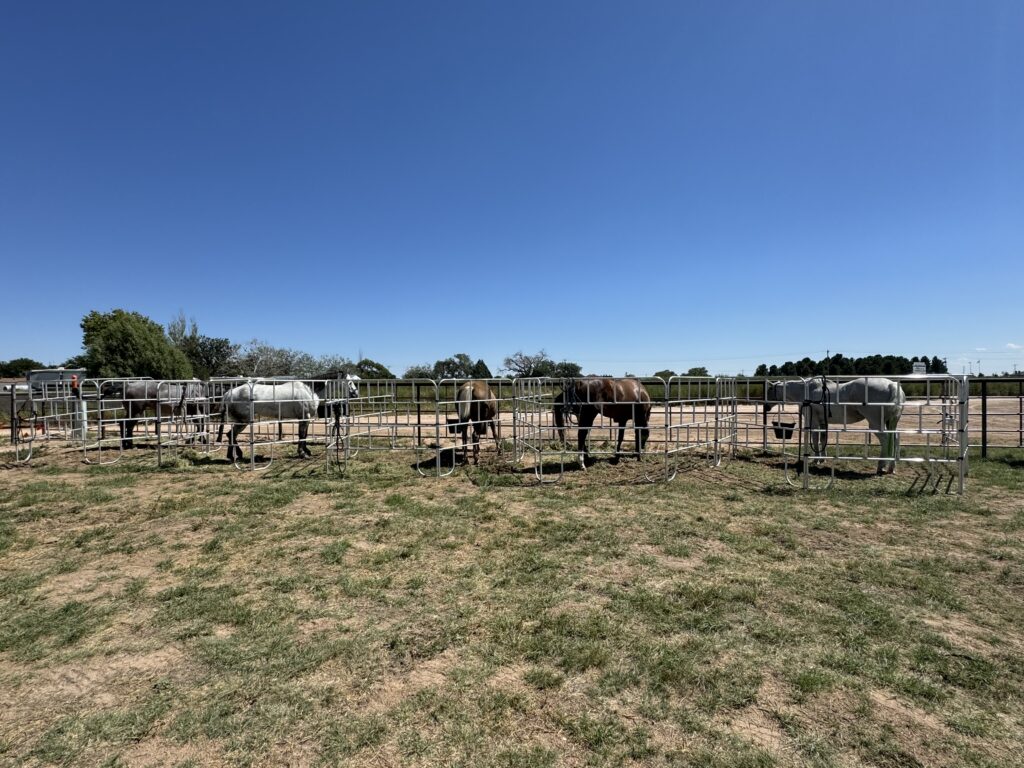
If Driver can find permanent pens at college rodeos or pro rodeos, she prefers those over temporary pens. She doesn’t mind driving a couple of hours extra to stay off grounds if it means her horses can be in a turnout or run for the night.
“My horses rest a whole lot better if they can get away from the fireworks, people, and just chaos of a rodeo itself,” Driver explained. “My horses do well in pens if needed because they have seen all the sights of rodeo which is a relief but for some people this may be different depending on their horse. Definitely do what you think you need to do to guarantee your horse to be successful even if it means driving three to four hours to an arena that has stock pens.”