
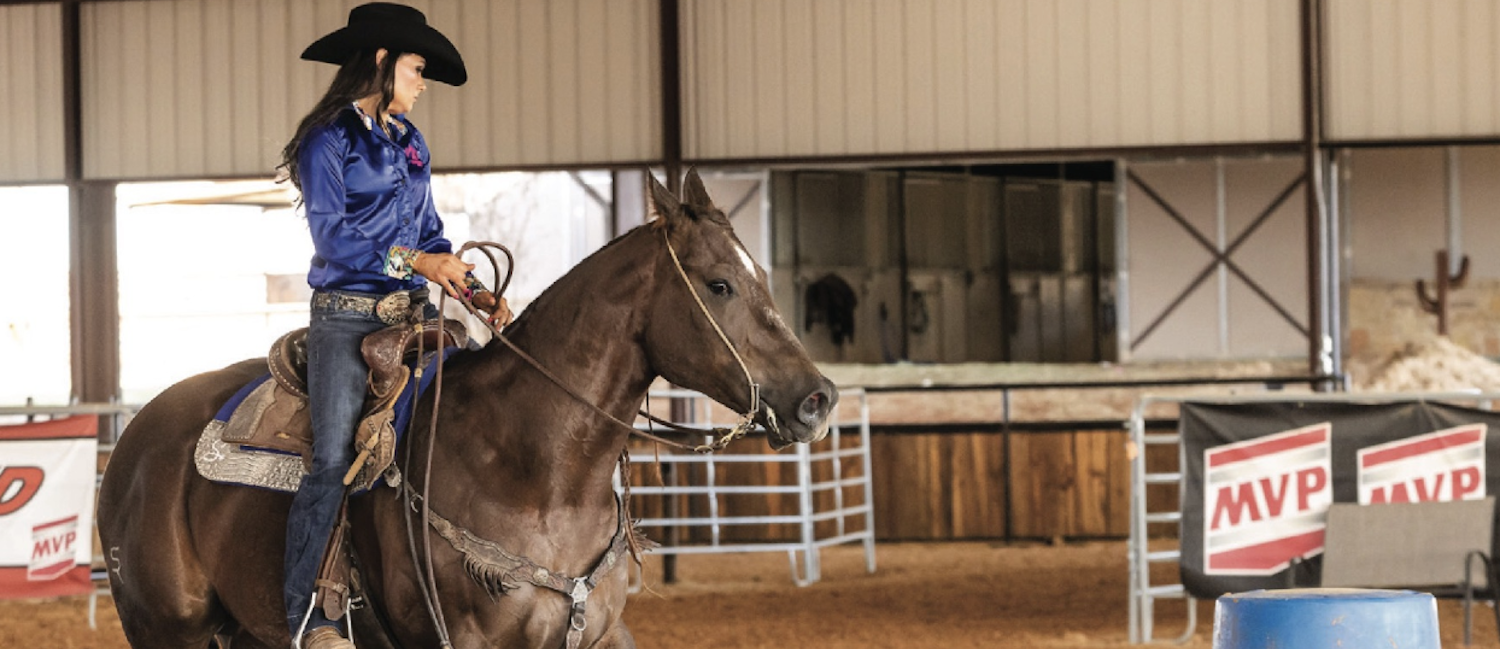
Hone your horse’s rate button with this exercise from barrel pro Scamper Cole.
It’s a tricky thing to build rate into your barrel horse. Sometimes you’ll end up with a horse that tends to cheat the pattern, resulting in hitting barrels. Scamper Cole’s method to train horses to rate brings them back onto their hind end, without resulting in cheating or shifting to their front end around the turn. This simple exercise uses the same barrel pattern as your runs. Your horse’s honesty will keep more barrels up in your pattern while their responsiveness will improve their times.
Why This Drill Works
Cole aims for her horses to hold their shape around the barrel on their own, staying balanced between her hands.
“I do a lot of straight lines,” Cole said. “I’ll do circles, but even when I’m doing circles, I don’t want to feel like I’ve got a shoulder floating away from my hands. I want their shoulders to stay in between my hands at all times, and I don’t want their hip to kick out.”
What results from this drill is a natural, fluid way of going around the pattern, says Cole. This drill helps with a horse that wants to drop its shoulder, or rate and fall onto its front end. It also keeps their feet moving.
Cole says this drill also helps teach a horse to handle tough footing.
“Ima Epic Hustler doesn’t really seem to have a lot of ground trouble, because he stays in there and he keeps his hip underneath himself,” Cole said. “He’ll just run straight to it, set, and keep his feet moving around the turn. He gets close to the barrels, but he never cheats me or leans in on me because his shoulders and body are in the right position.”
Gear of Choice
Cole has a special combo set up for training her horses. On a young colt just starting to add speed, she’ll leave them in the training headgear they’re used to. But for an older or finished horse, she’ll turn to a rope draw gag bit with a square mouthpiece and split reins.
“With this [bridle and reins] you can hold their body exactly how you want to,” Cole said. “I can get the exact amount of rate as I want.”
Cole recommends doing this drill in whatever gear your horse works best in.
When To Do It
Cole typically starts incorporating this drill before she bumps up the intensity in a colt’s training.
“When you’re adding speed, they’ve got to learn how to handle it but be able to rate and keep their feet moving,” Cole said. “If you have a horse that’s running as hard as they can to a barrel, they’ve got to learn how to rate themselves to control their body, control their speed, but also to keep going.”
This drill is also useful when Cole is looking to sharpen a horse’s responses a few days before going to a race.
“I do this as their last tune-up before I run them,” Cole said. “It’ll just quicken their feet up and get them rating. Sometimes they get so excited about running, their brains are going so fast that they’re not really paying attention to where their feet need to be and where they need to be rating.”
Any horse can do this drill, says Cole.
“It doesn’t really require a high skill level on the horse’s part,” Cole said. “You can do it just about anywhere. You don’t even need to have a barrel if you don’t want to.”
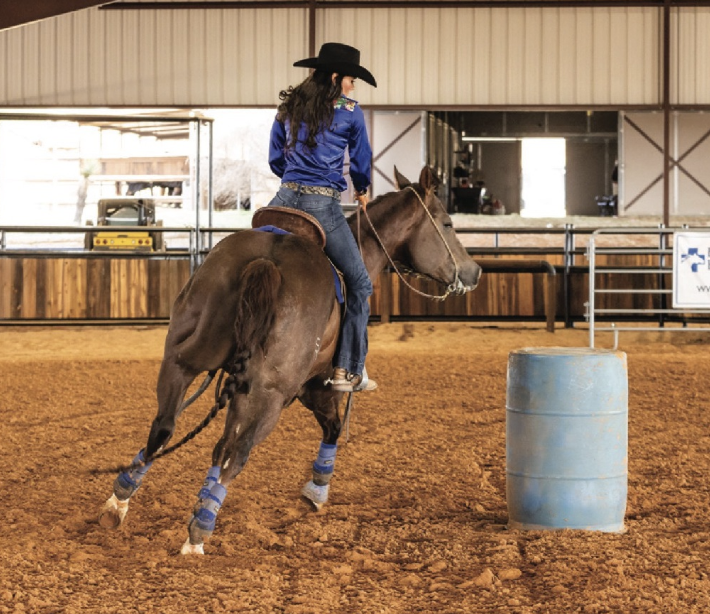
The Drill
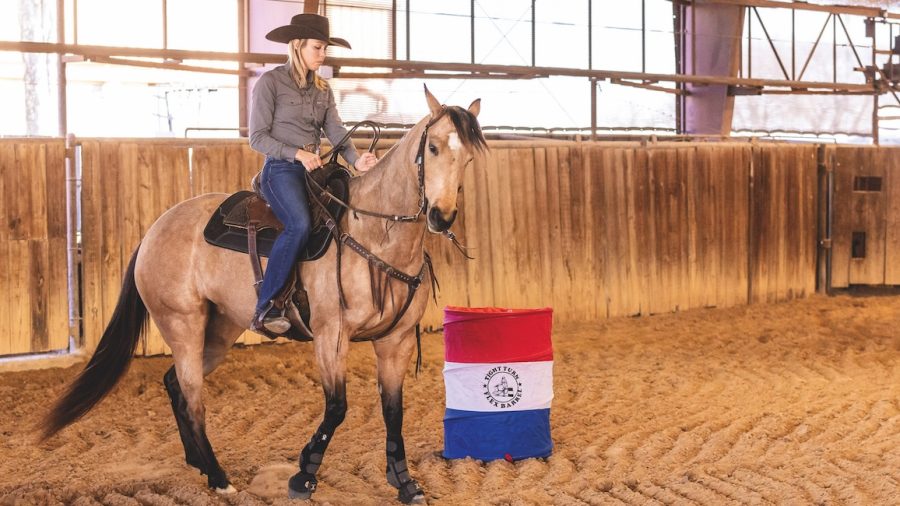
Cole mainly does this drill at a trot, and sometimes at a lope, but not at a run.
“It’s better if you do it at a controlled speed where you can have them do the drill exactly as you’re asking,” Cole said. “It makes them so snappy, and makes them really focused and paying attention to what you’re doing.”
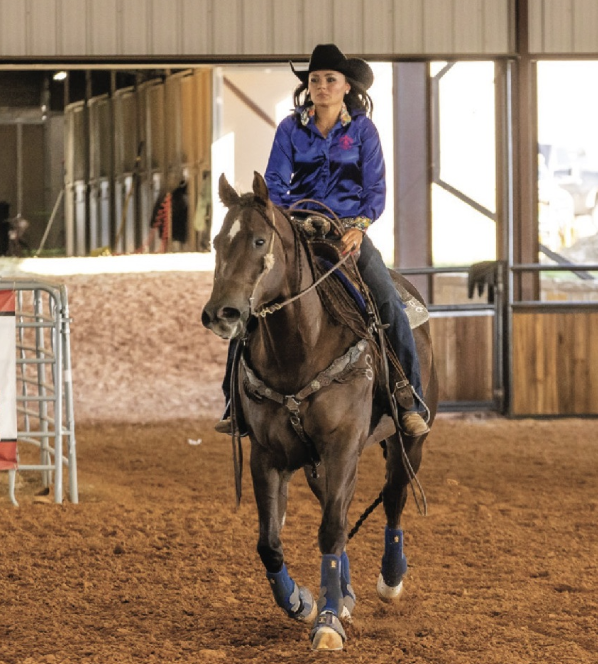
Before leaving the alleyway, pay attention to the horse, make sure they feel like they’re underneath you, between your hands and listening.
“I don’t like to break a horse open on this drill — I don’t want their shoulders [out of alignment with their body],” Cole said. “I want their nose barely tipped to the inside, but not overly broken at the poll or super bridled up. I want to feel them between my hands, their shoulders are up, they’re traveling forward and they are confident.”
When doing her pattern and this drill, Cole goes directly to the pocket — the spot where she’s going to initiate the turn around the barrel.
“I don’t do a big rainbow,” Cole said. “From whatever spot where I’m leaving the alleyway, I make a continuous line to the pocket. I don’t want to have to hold them off of the barrel. I run to the barrel because I’m running straight across.”
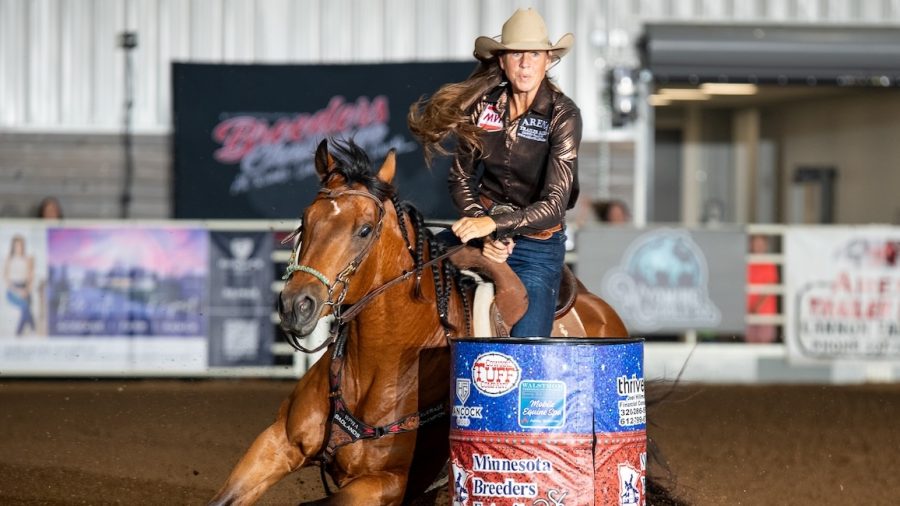
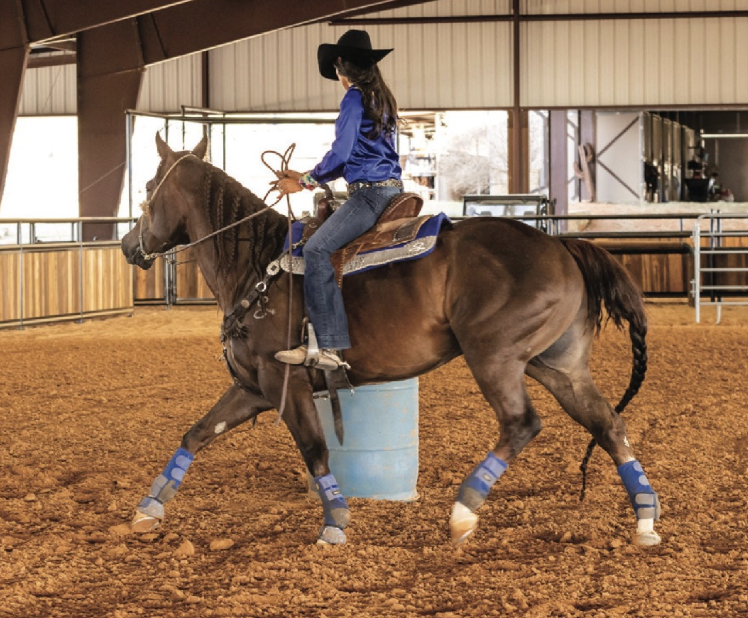
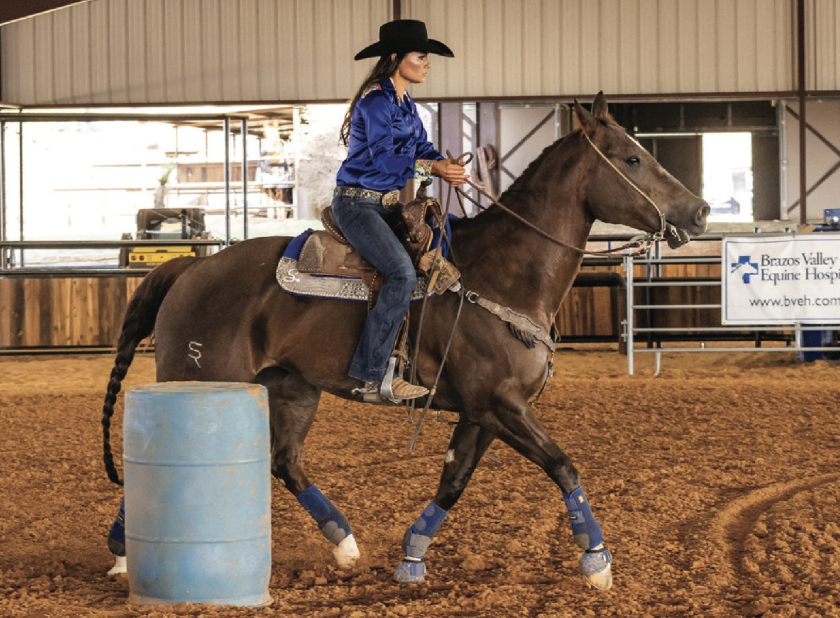
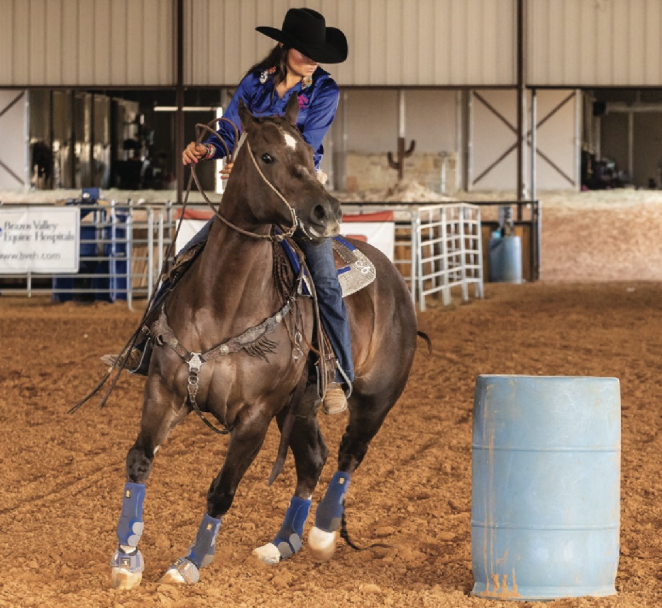
One stride out from the barrel, Cole will cue to the horse to stop, asking him to set on his hocks for a moment in the stop, then kick their hip slightly to the inside of the turn. If they’re not paying attention, she may back two or three steps.
They key to the move is the next step. After rating, she’ll release from the rate, put her hands forward and then ask the horse to pick its inside shoulder up and take a step or two forward before initiation the turn.
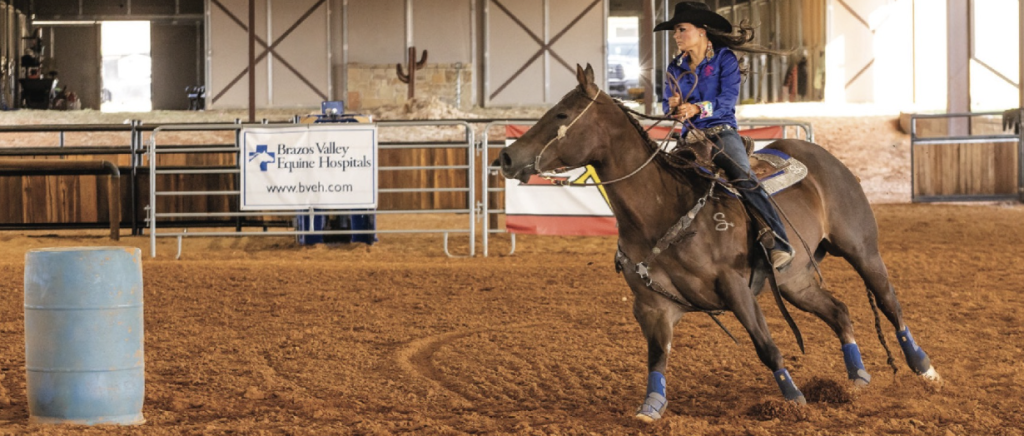
“When they hit the backside, and when I’m in a straight line, I want them ready to go toward the next barrel,” Cole said. “I’m basically making a D.”
Point your horse directly to the next barrel, without acing or covering any more dirt than necessary. At the second barrel, the routine is the same — aim for the pocket, rate, then release and pick up the inside shoulder to go forward one more step, then turn. Straighten out on the backside and head for the next barrel.
“If you’ve got them really rounded out behind the second or third barrel, their shoulders will be broken open rather than in line, and you’ll have to pull them whichever direction to get them straightened out,” Cole said.
Cautions
Cole advises against overdoing this drill.
“It depends on how much they’re listening, as to how long I do it,” Cole said. “Usually it doesn’t take a whole lot.”
She’ll go through the drill a couple of times at a trot, and if they’re a little bit dull and slow to move their feet, she may up the speed and do it at a lope. If they’re pushy, she’ll stick to a trot.
“It’s not something you spend a whole lot of time on,” Cole said.
If your horse is already rate-y, Cole advises to implement this drill sparingly.
“You can still do the drill, but don’t set them hard at the barrel,” Cole said. “Just keep them moving, pick up their shoulder, finish them on the backside, and go to your second. Make them stay between your hands and keep their feet moving past the barrel.”
This article was originally published in the March 2022 issue of Barrel Horse News.