
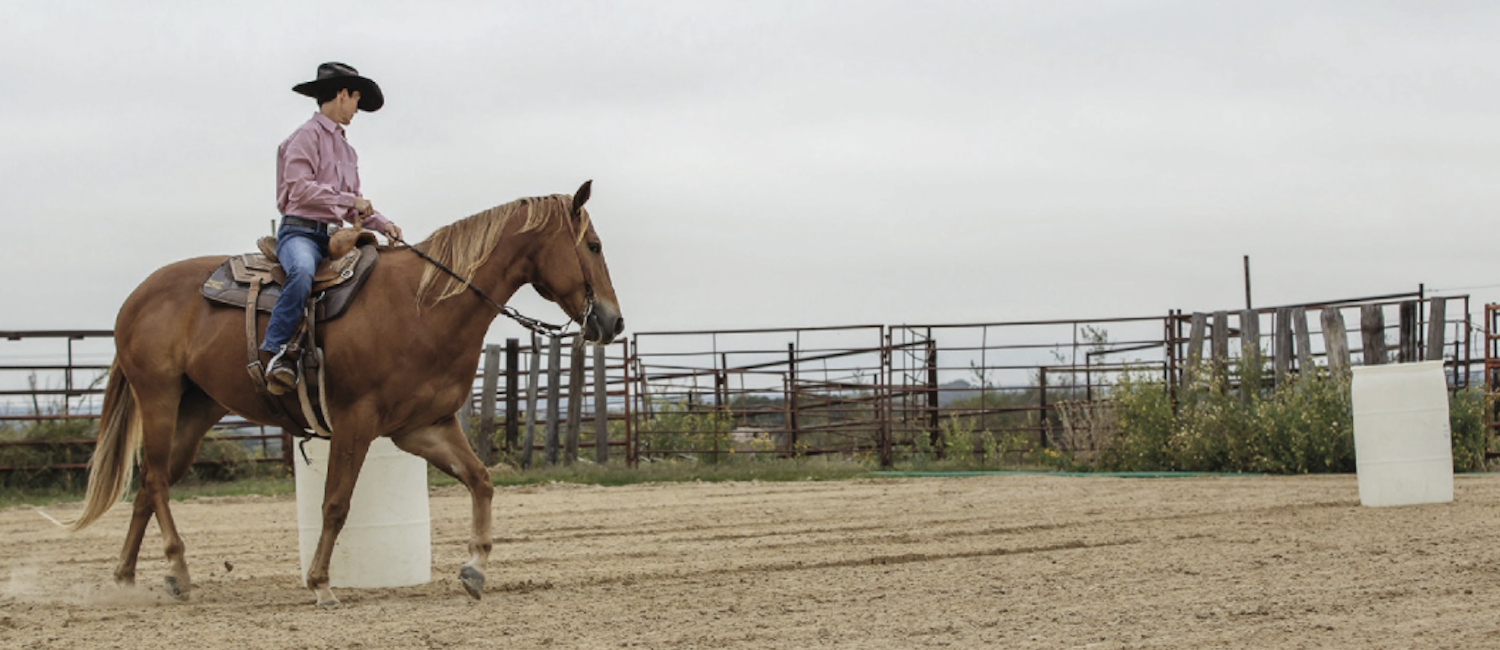
Barrel racer Schelli Creacy shares her tried-and-true warm-up drill to focus her horses.
If you’ve done any patterning on a horse, you know that sometimes horses can get pretty bored with the repetitiveness of the cloverleaf. This can lead to them getting unfocused and half-heartedly making the turns. When my horse Nico Suave was a futurity colt in 2016, I experienced this same thing, and one day I felt like I wasn’t getting through to him on the pattern. I decided to go back to my figure-eight drill that I did on weekends when I was trying to speed up his pattern. After a couple minutes of doing this drill at a lope, he started putting his head in the right position, which put his body where it needed to be, without me having to touch his face. This drill has been my old faithful to use on all different horses.
How this Drill Helps
I want my horses to be where I don’t have to do a lot to their face when I’m in a run, because I don’t believe I’m ever going to win a pulling contest with a big horse. I don’t kick a lot — I squeeze. So if you can squeeze a horse into a turn and keep pressure there, their ribcage will follow a more natural motion around the barrel. This, paired with your horse putting his head and neck in the right position, makes the turn very easy for the horse because everything is in the right place.
My husband Adrian Mortimer calls this connecting their face with their left or right side, whatever direction you’re going. But if they’re not communicating with you and you’re not communicating with them, that’s when a horse will elevate in a turn. That’s when they’ll stop and you’ll have to get them going again. If your body language and their lines are not connected, it’s going to be rough — it’s not going to be smooth or effortless with no wasted motion.
With this figure-eight drill, I’m making a barrel the center of a big circle, but I’ll mix up what I’m doing around two or three barrels in a line. I’m working on keeping the horse in forward motion. The exact pattern doesn’t matter so much as focusing on where the horse is looking when you’re going into the turn.
This drill encourages the horse to move loosely, smoothly and comfortably in forward motion while staying engaged with you. The goal is to relax the horse into the turn by relaxing your hands lower and lower with each circle.
Setting it Up
I use tack that the horse is already comfortable in when I do this drill. I don’t use any particular training headgear. I use what I feel my horse needs when they’re loping a circle — do they keep their hip under them naturally when they’re on the circle, or do they want to string out a bit and need collecting? That’s the horsemanship side. You need to be able to sit and feel that and connect. Over the years, I have found that the less I have to do with my hand can help the horse carry its head in the right place. I’ve found if I have to pull on them to stay in position, there’s usually something going on — maybe they’re sore somewhere, maybe I need to adjust my body position or maybe I am sitting in the wrong place.
At home, I’m trying to work on the focus that I expect my horse to have the minute I get on them. I give it to them in return for that 20 or 30 minutes — I never have my phone on me, and I set aside time to be with that horse every day and pay attention to what we’re both doing with our bodies.
I do this drill anywhere. I do it at home; I’ll do it at a race. It’s great for warming up. I’ll kick them off in a long trot around a couple times and then start into a big loose circle just to gauge their mindset of the day.
You don’t have to wear your horse out or make them bored doing this. Just work through the figure eights a few times — two to five minutes or less. It shouldn’t be 10 or 15 minutes’ worth of trying to get them to focus.
The Drill
After evaluating my horse’s mood for the day, I’ll start at the long trot and point my horse toward one of the three barrels in a line, and I’ll just see where the horse takes me. When I’m trying to do is get them to connect to me, especially a young horse where their focus tends to be everywhere.
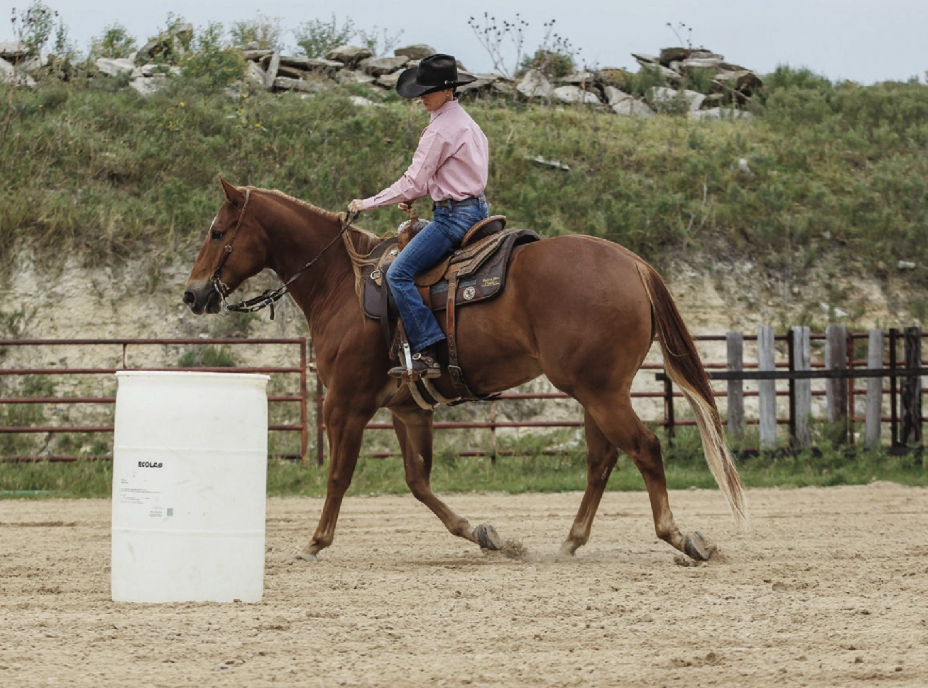
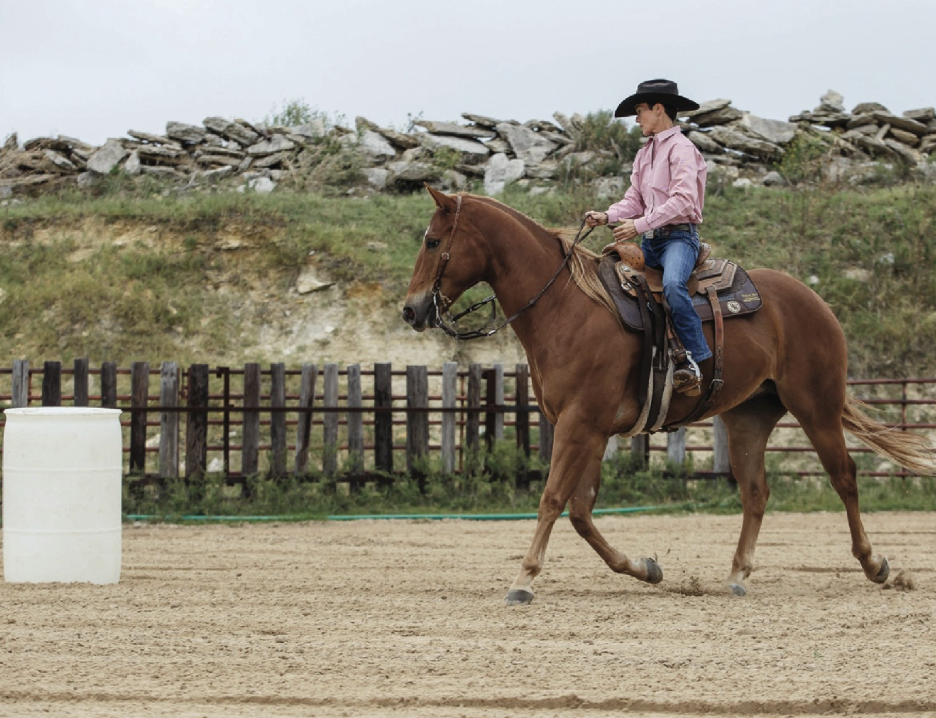
I’ll guide them in some circles, both directions at a trot. The change is direction results in a figure eight — you’re going into a new circle around the next barrel — rather than a reverse in direction.
I want them focused, and I think their head carriage relates to that. If their head is down and looking where they’re going, that’s what I’m looking for. If they’re looking around over the fence, I’ll keep connecting with my feet and legs. I don’t use a tie-down, and I’m not worries about their head being just right. I’m more focused on achieving connection between horse and rider.
If they’re listening, moving forward, arcing themselves in one direction, I’ll push them off toward the other direction and do two or three circles that way around the next barrel. If the horse puts its head in the right place and is moving forward well, I’ll drop my hand while continuing around the circle. When they’ve done those circles well and my hand has been able to drop closer to their neck, I’ll change the arc again and circle the third barrel if I have one, or I may switch back to repeat going the first direction.
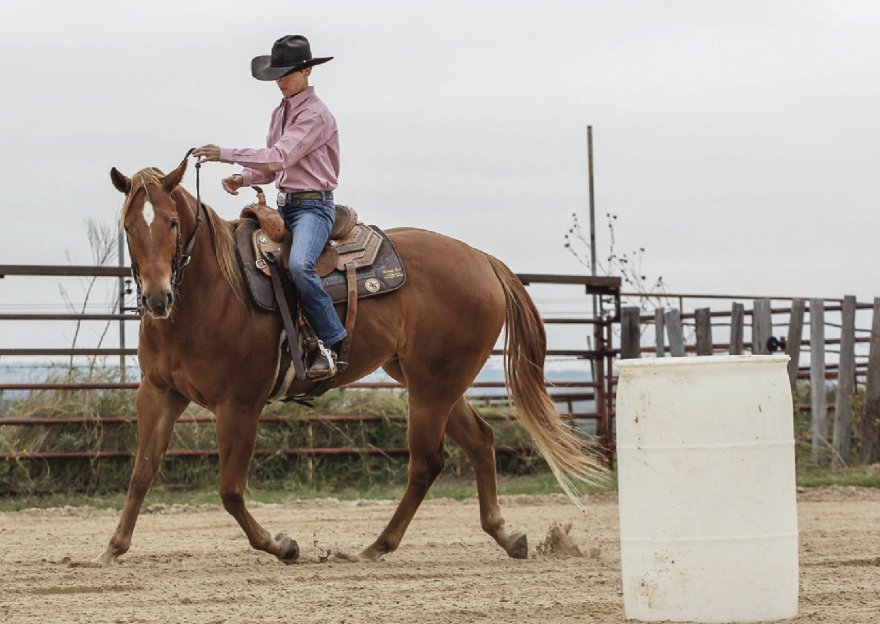
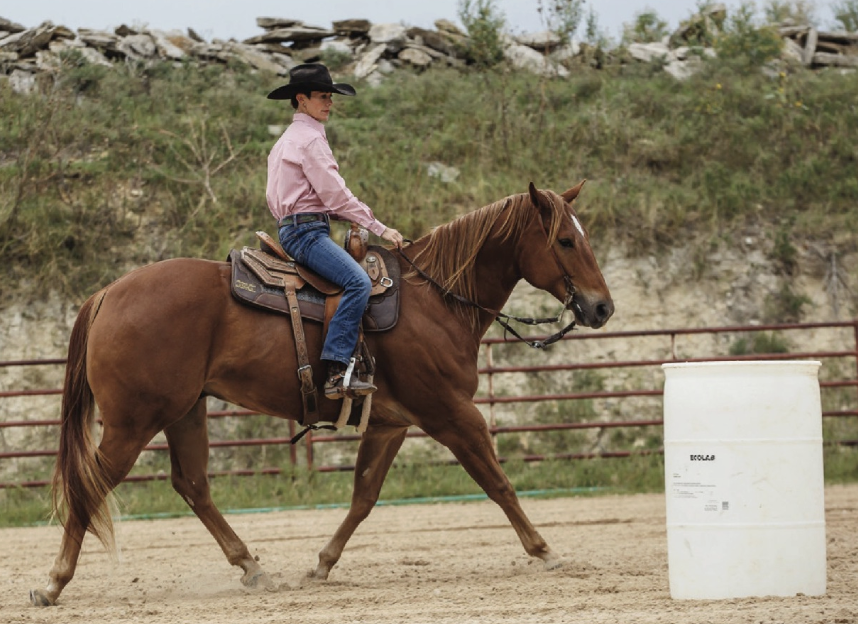
My whole goal is not to pick up the reins unless I have to in order to get their attention. You’re not pulling them in a circle in this drill. You’re just riding pretty straight, on a circle with them moving forward.
Once you’ve got it down at a trot, you can push them up to a lope. But this drill is not about teaching speed, it’s about making you as the rider aware of what your horse needs in order to be as smooth as possible.
Final Thoughts
What you’re really looking for is the mechanics of the turn with your horse. You’re looking for a smooth transition from a straight line into a smooth arc.
Be patient with your horse and try to learn from him as you’re teaching him this drill. If you’re really paying attention and communicating with your horse, that will help him understand it quicker. You’ll allow your horse to find the point of the turn that is natural for them.
My main goal is to encourage you to really be present when you’re teaching your horse, because usually your horse is teaching you.
This article was originally published in the January 2022 issue of Barrel Horse News.