
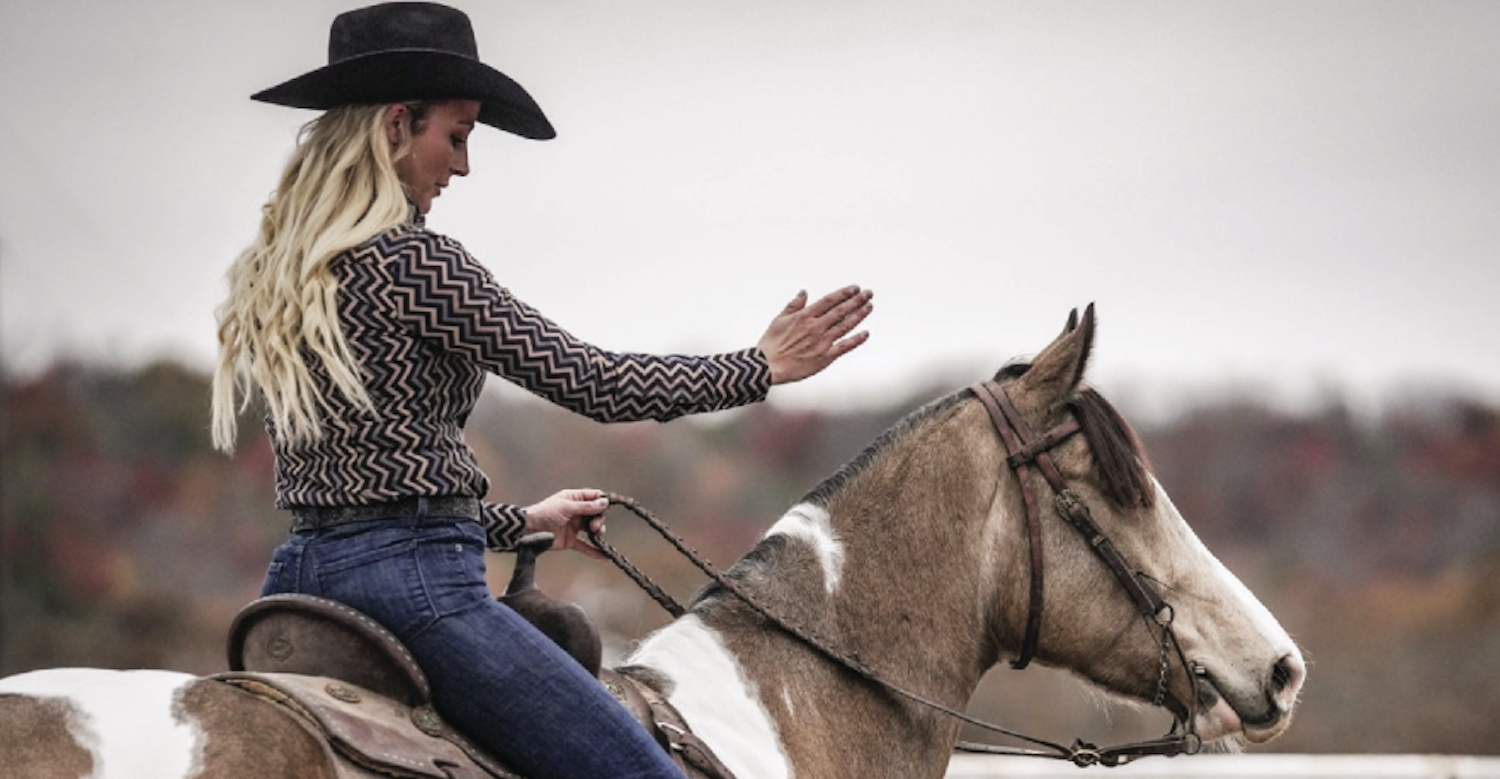
Swap hands on your reins to increase your horse’s honesty in the turn with this exercise from Maggie Wright.
I often switch hands on my reins to riding with the opposite hand. I learned this through my mom, Cindy Wright, and I’ve taken the idea and progressed it on my own.
I rope on all my 3-year-olds a lot. When I’m roping on a breakaway colt, I’ll put both my reins in my left hand, as I’m swinging my rope and tracking that calf. I am keeping that horse in my hand while moving forward tracking a breakaway calf to the right. When I’m working on a heel horse, I’ll have my reins in my left hand, but I’ll be tracking the steer or calf to the left.
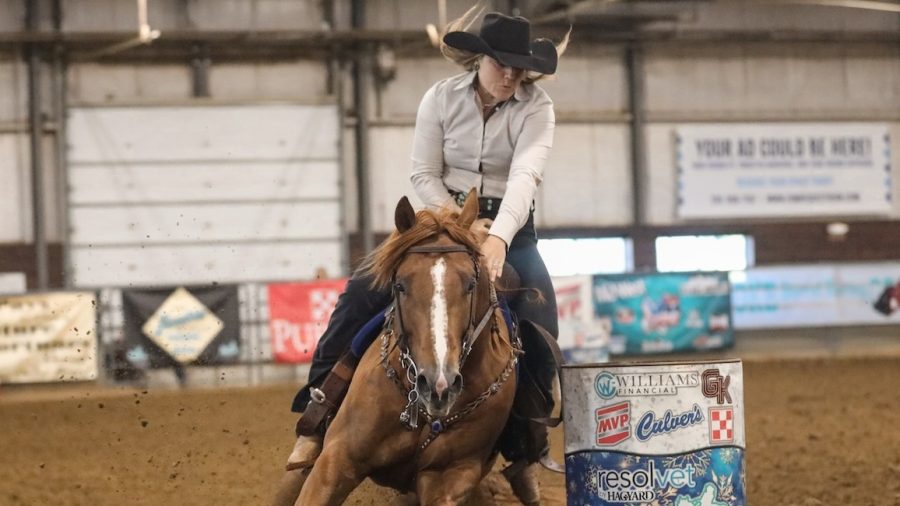
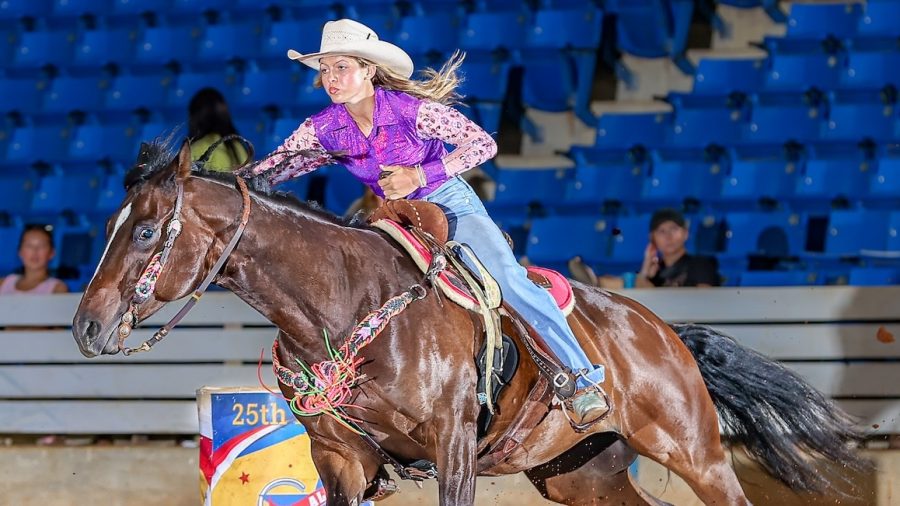
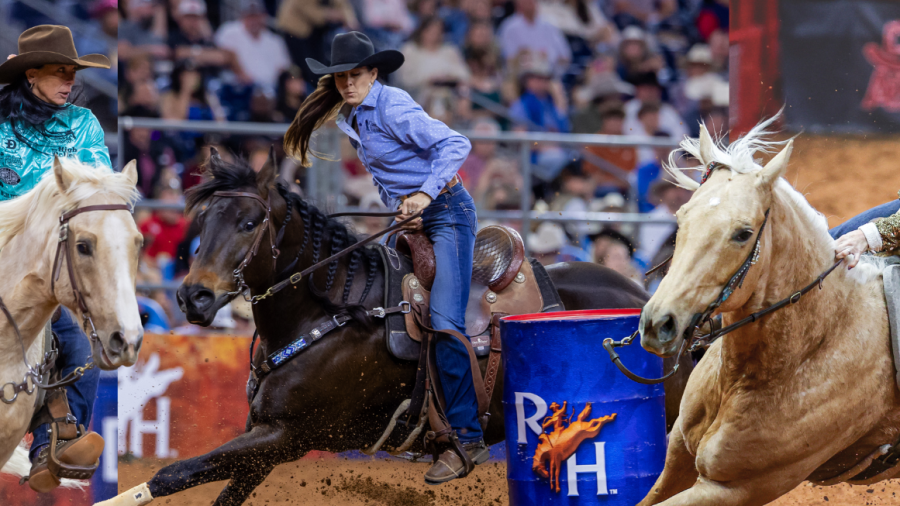
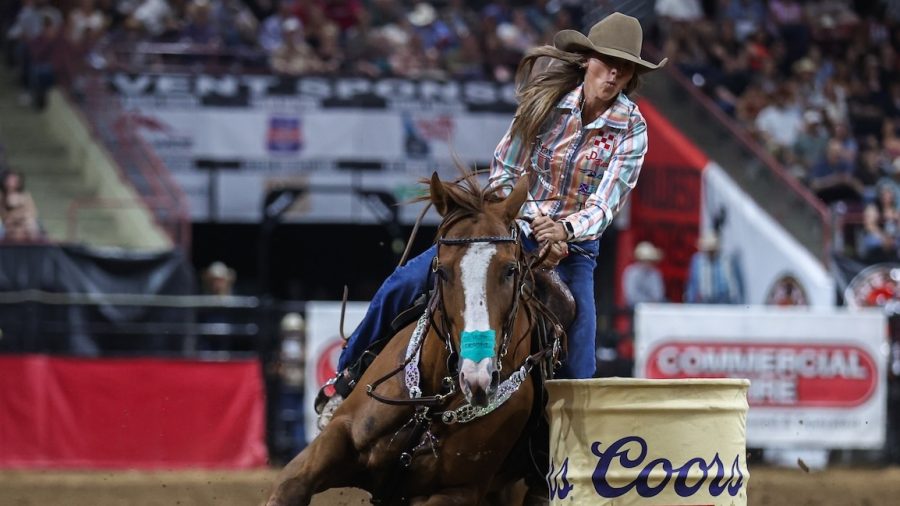
The same thing applies to my barrel horses. I ride constantly with my rein in the hand that is opposite of the direction I’m turning. I think this helps me to stay square, and it helps me not to get ahead of my horse or lean into a turn, while also collecting the outside of the horse’s body with the inside of the body stood up and moving forward.
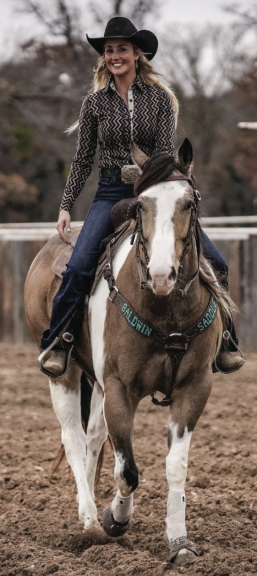
I work my horses pretty close to the barrels, and I think that’s different than what a lot of people do. However, I don’t have a lot of horses that his barrels. My horses stay pretty honest and open, and I contribute a lot of that to doing my drills with the opposite hand.
Problems Opposite-Hand Riding Addresses
A lot of times, we want to fix what the horse is doing. We think the horse is starting its turn too soon, or that the horse is anticipating the turn, or cutting me off. But I think 95% of the time they’re doing things to compensate for us, what we’re doing in our run and what we’re doing in everyday riding.
Putting the reins in the opposite hand addresses my body language. It helps me see where I’m cutting the turn off for the horse or where I start the turn too soon, because the inside of my body is not open — both sides of my body are squared up. I can see that if I put my reins in the opposite hand, instead of having to pull the horse away from the turn if he’s turning too soon. I’m encouraging him to move forward into the turn because the outside of my body has opened up, too.
This takes away inconsistency in your riding. Instead of just drilling your horse and telling them they’re doing things wrong or making mistakes, I can see that actually, I’m the one making mistakes. I need to correct myself for my horse, because I’m making it difficult for him by not making the turn easy or encouraging him to drop his shoulder or turn in.
The Drills
Four Corner Drill
While holding my reins in the opposite hand, I’ll do a couple of drills. I’ll do them in the pasture or in the arena. When holding the reins in the opposite hand while loping circles, it’ll really show you where your body is — if you’re in the correct position or leaning one way or the other.
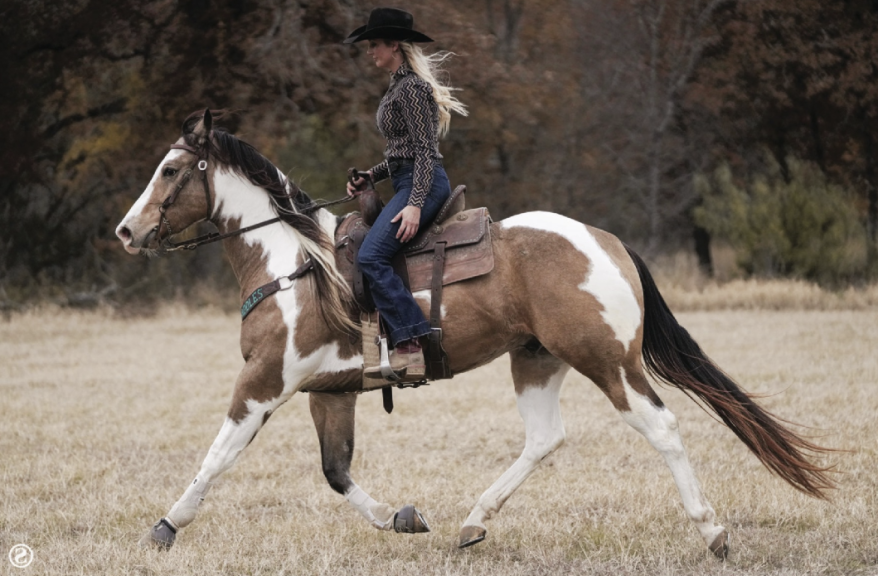
I’ll lope in circles, let’s say to the right, and I’ve got my reins in my left hand. This allows me to keep that horse moving forward. I will do a four-corner drill, where I’ll lope some big circles to the right, then I’ll lope straight across the pen and down into a smaller circle to the right, keeping my reins into my left hand. They are doubled in my hand with my horse’s nose tipped slightly to the inside, to keep the horse collected and moving forward. That keeps my body and my shoulders square and open, and the inside of the turn opened for the horse, and my rein hand is in the middle of the saddle. This keeps the horse from cutting the circle off. I have to keep my body upright and square.
I’ll do that in the four corners of the arena. I’ll make it to where I can lope straight lines, break the horse down into a smaller circle, and keep the horse from anticipating the turn into the circle. They don’t duck into a smaller circle, they stay fluid and open and moving forward, because they mimic our bodies.
Walking and Trotting the Pattern
On the pattern, I walk and trot a lot. I like to keep consistency for the horse, and I don’t think you can walk and trot the pattern too many times. I think that gives the horse the confidence of where we’re going and the repetition of what we’re doing.
I will keep the reins in the opposite hand, keep my body open and moving around that turn, which opens up the inside of the turn for the horse. So then, when I go back to making a run and put my reins back in the inside hand, my body is automatically open, the horse is open and fluid, and they can just follow their nose to the backside.
Backing a Figure-8
I’m really big on footwork. I do a lot of backing drills that show how our horses mimic our bodies. If I’m backing a figure-8, and the horse is leading with the inside, if my reins are in the opposite hand, that’s going to open up the inside front foot for the horse making the turn. When the inside front foot is forward and open, the inside hind leg has to come forward. What I’m doing is bringing the inside front foot forward, so the inside hind leg can come up under the horse, which allows the horse to then later stand up in the turn and follow its nose to the backside.
Equipment
I have a bit that’s been in my family for generations. My grandpa Zane Tibbets designed it and trained a lot of calf horses with it. It is called the Right Bit. My mom travels and does clinics, teaching horsemanship and bitting with this bit. It’s basically what I use most of the time to start my colts, from the first ride to a finished horse or a problem horse.
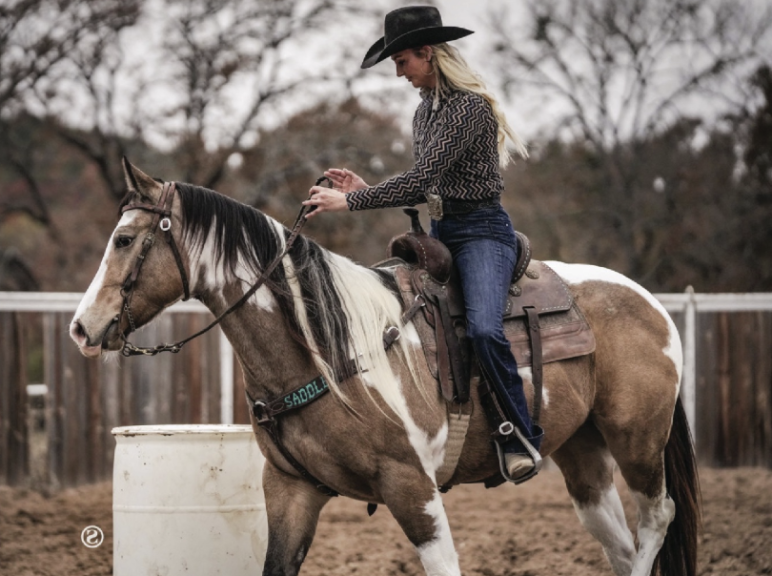
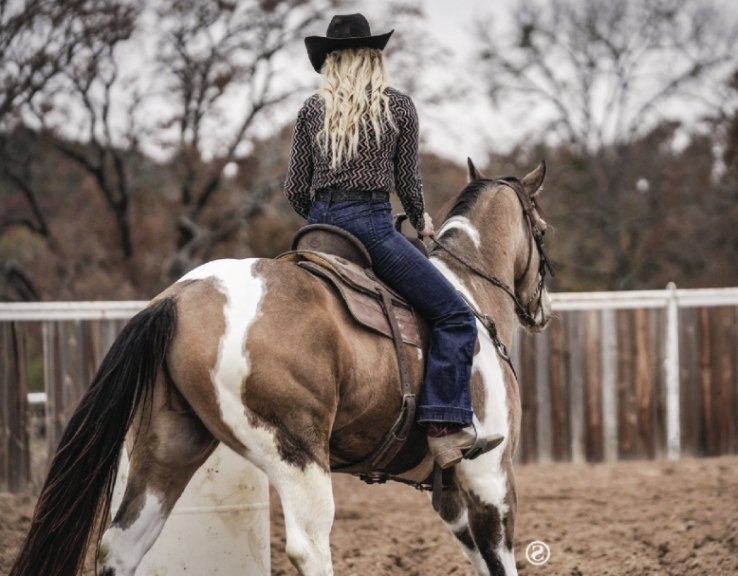
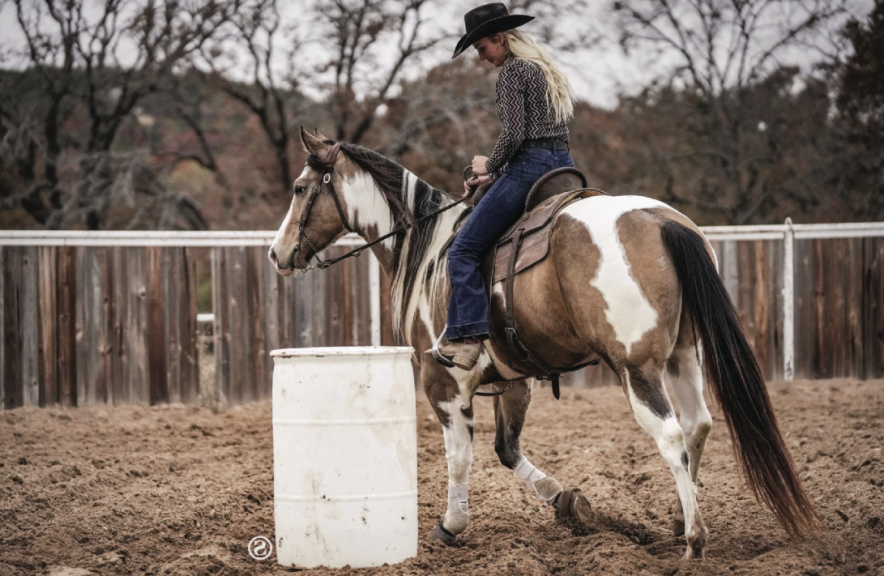
It’s really unique in the way it’s made, and it takes the pressure off the horse’s mouth.
When to Do These Drills
I do them basically every day. When I first get on, I like to make sure the horse is open and moving forward for barrel racing.
Pretty much every day I’ll be doing circles with the reins in my opposite hand, and I’ll make sure the horse is moving forward and collected with the outside hand and rein, and that keeps the inside of the body open.
Final Tips
When you’re working on these drills, make sure you’re square and in the middle of your horse. Your belt buckle should be centered with the saddle horn, and you don’t want to get ahead of your horse in a turn.
Start slow, and when you’re loping circles, don’t think about going fast. I think we don’t understand the value of walking or trotting. Take a slow approach and make sure you and your horse are moving correctly before opening up to full speed.
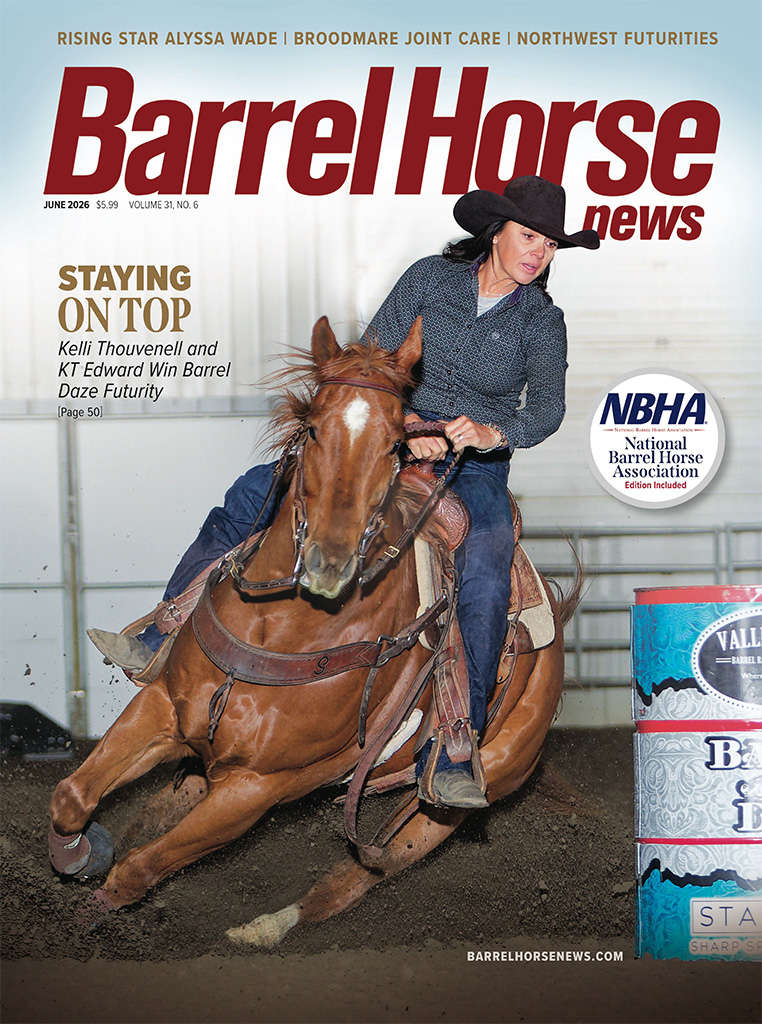
This article was originally published in the March 2023 issue of Barrel Horse News.