

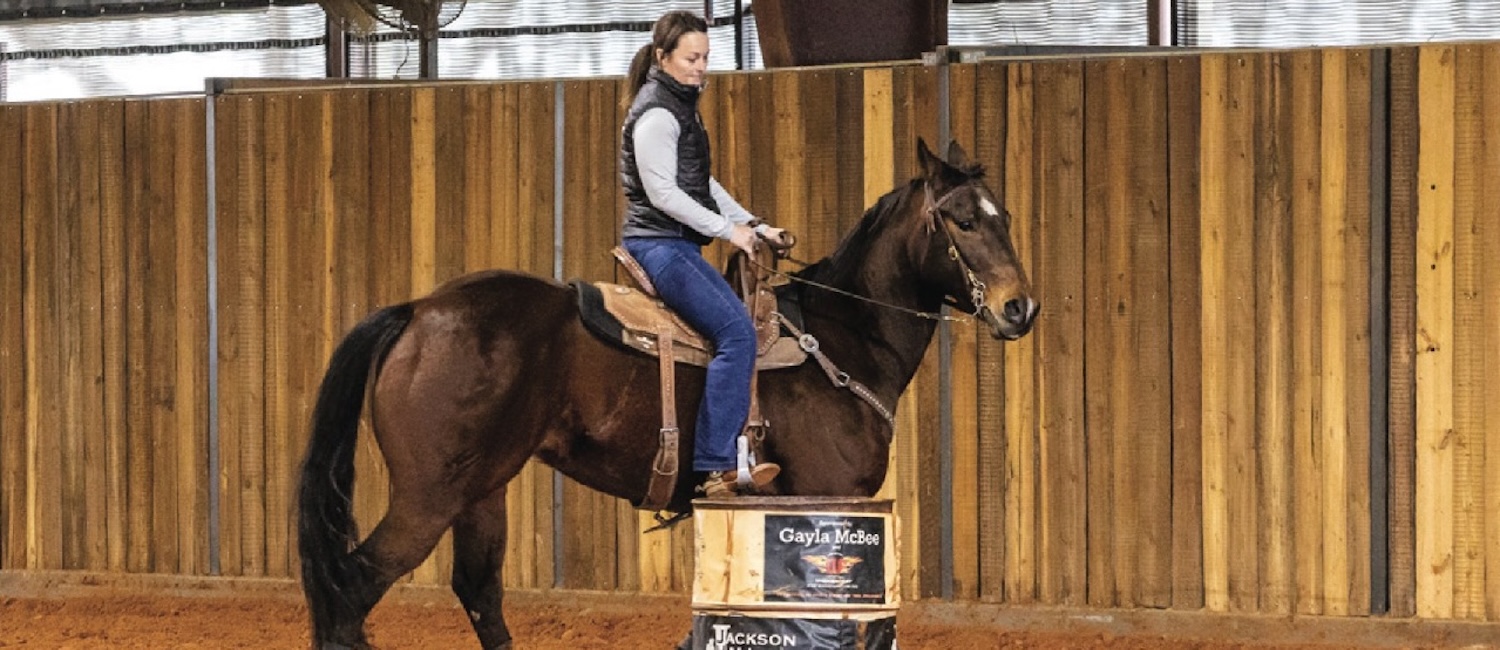
Improve your horse’s second-barrel turn with this drill from trainer Molly Childers.
While the first barrel is often the turn that gets the most attention in training, the second barrel also plays an important role in executing a fast pattern. When a horse is getting short going to the second barrel, the rider will hustle the horse and try to run harder in there, which compounds the problem. But if you can change your approach, work on a quicker lead change and getting the horse to free up a little differently, that helps with having a more efficient second-barrel approach.
Second Barrel Challenges
A lot of people who come ride with me have complaints of the horse shutting them out going to the second barrel or the horse has already started to shoulder in to the second barrel. What that stems from is their lead change.
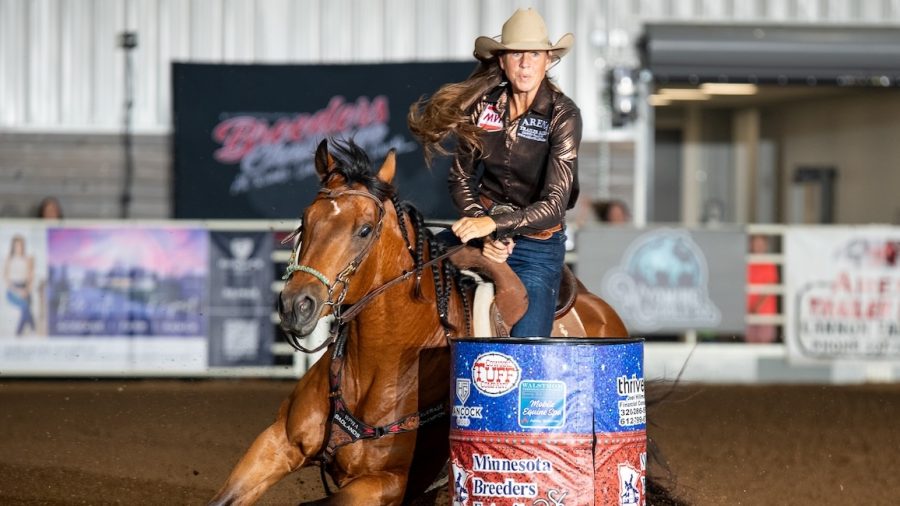
A lot of times, the horse will switch leads a little late, so they’ll get across from the first to the second and will change leads farther than the midpoint between the two. This will cause the horse to overload the forearm, where they’re starting to turn as they are switching leads. This horse is then not able to engage from behind the drive through the turn.
Sometimes people think the horse is shutting them out, but what’s happening is they’re not in the correct position to allow a horse to move through the turn and use its front end to pull it around. If a horse is shortening its stride too early, they will lose the momentum they need to get all the way around the barrel. If they’re not already hitting the barrel, they’re coming in too tight and blowing off the backside. They’re just not going to run as fast this way.
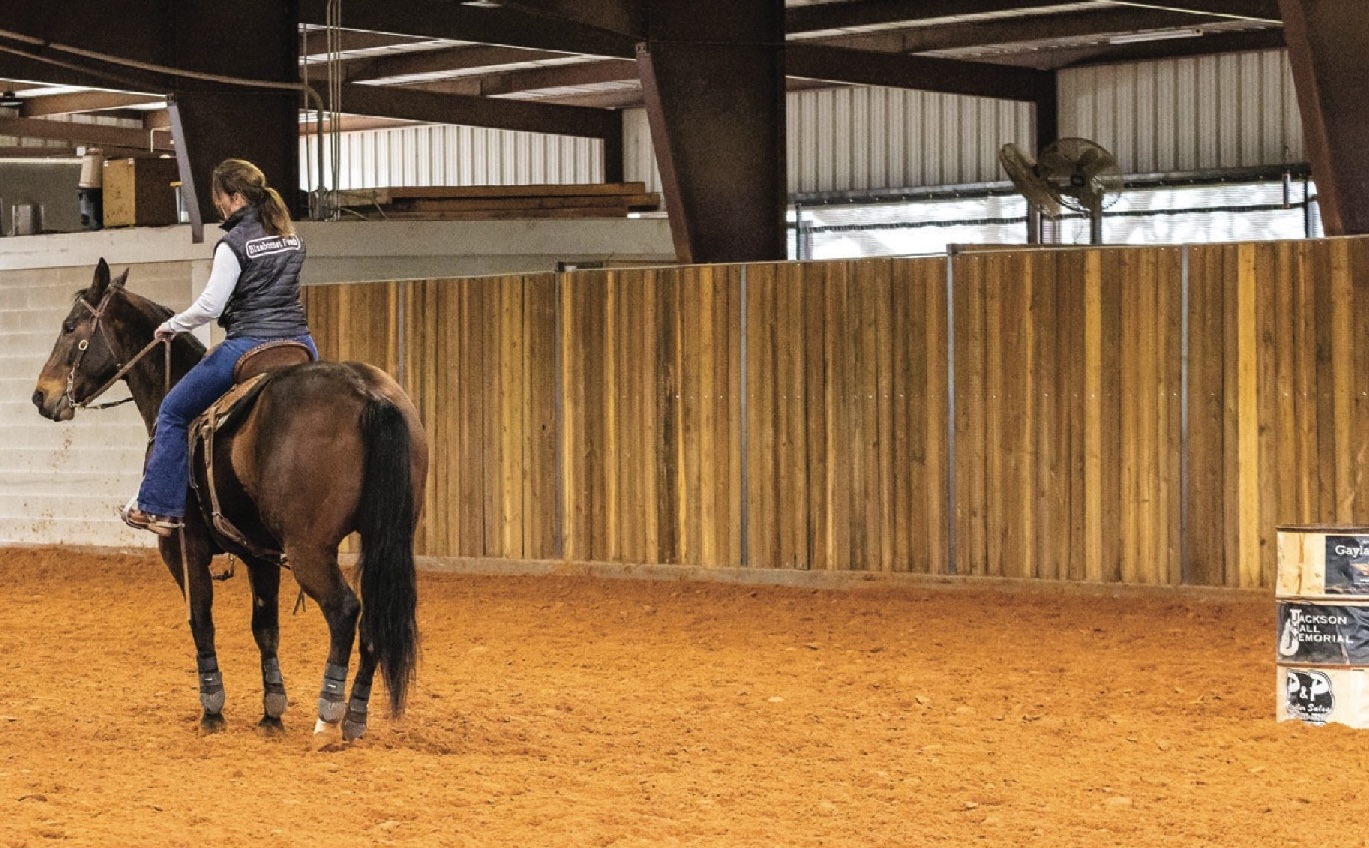
If you can work on getting them to switch leads a little quicker as they’re leaving the first barrel, and most importantly, if they’re in an athletic stance and body position, they can stay up underneath themselves. Their inside hind leg is driving up all the way through the turn, and you don’t necessarily need to make a big pocket around the barrel.
A lot of times those horses know they’re supposed to turn, and the harder people try to pull them off the turn, the more they want to drop in. Changing where you look going around the turn will give them a place to go. When approaching the second barrel, you want to look right between your horse’s ears and stay on the path.
As we look across the pen to the second barrel, we tend to look at the barrel, and then everything starts leaning toward the inside, instead of riding up and around through the turn.
This drill is not necessarily about making a huge swooping big pocket. It’s working on placing their feet and keeping them on that track so they can get their hip to a position where they can come around and be more efficient. It’s more like a two-point turn than one with several steps around the barrel. You’re not having to fight and hold them off the turn. You’re just driving them straight in and letting them come around the back side, where they come to crave that turn and can do it efficiently.
Setting It Up
When working on this drill, I actually do it with a lighter bridle. Sometimes people will put a bit or headgear that will get more of their horse’s attention. But I think if the second barrel is already a problem, if you put something stronger in their mouth, the horse is going to be defensive.
I like to keep it very relaxed, with a smooth mouth. I really like the Goostree Delight in a smooth three-piece with a chain link middle. It is a light bit but offers quicker contact and a little more control when needed. It’s smooth and has a little chain in the middle. With this bit, I feel like I can move them but not scare them. This makes the drill more relaxing. Likely the horse already has anxiety, and the rider has anxiety approaching the barrel if they know things aren’t good.
I try to let the horse know it’s OK to relax, let their face go a little bit and if they want to raise their head up, I let them. In order for them to engage their hindquarters, a lot of times they need to get their butt down, and the head will work itself back down. You have to let them find that balance point, especially if they’ve been blowing the turn or really dropping in. It helps get them squared back up where they’re on all fours driving through the turn, and it makes them more relaxed when you’re not pulling them through the turn or holding them down in the turn. You’re avoiding a battle and you’re getting them moving freer up into that point on the backside, following your hand around softer. There’s no resistance.
I do this drill as needed. If I have an older horse that’s having issues with the turn, I will do it after I’ve long trotted around the pen. I don’t do a big warm up. I don’t want them to get all warmed up and think, ‘Oh, here we go to work.’ I’ll just go straight to the pattern at a walk or a trot.
On some of my older horses, I’ll do this drill every time. But I don’t really do it on 3-year-olds, because I want to keep it simple, and I want them to know their pattern. I do work on lead departures and straight lines, but I save this drill for when a horse starts developing bad habits.
The Drill
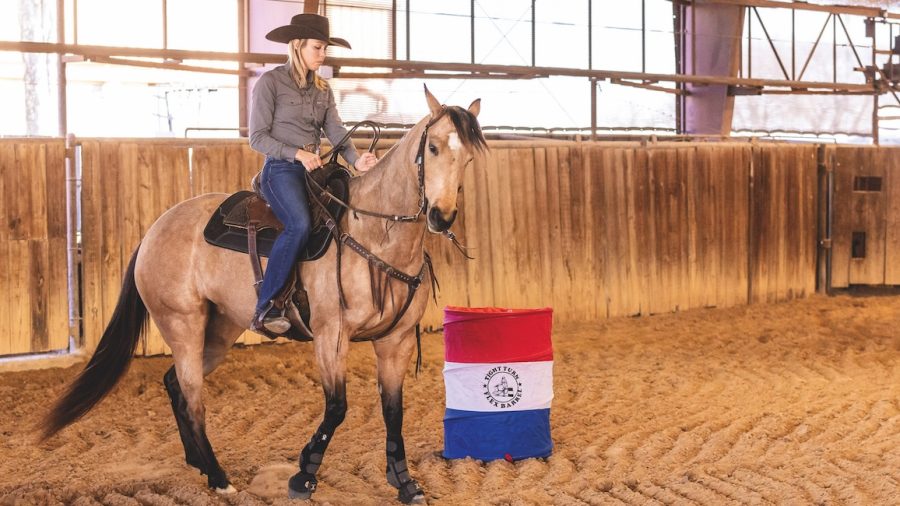
I start this drill from the first barrel. At a walk or a trot, I’ll go around the first barrel easy, and then circle back around to that first barrel as if I’m going to turn it, but at the point of entering the first barrel again, six to eight feet out, I’ll softly stop and let them relax.
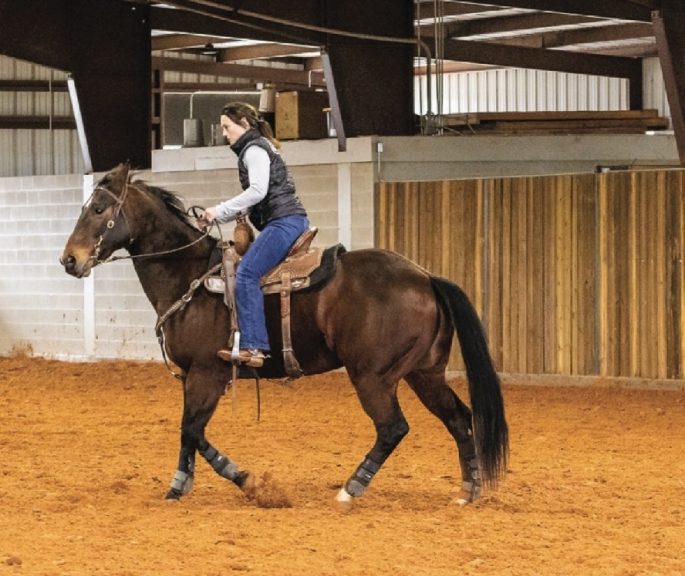
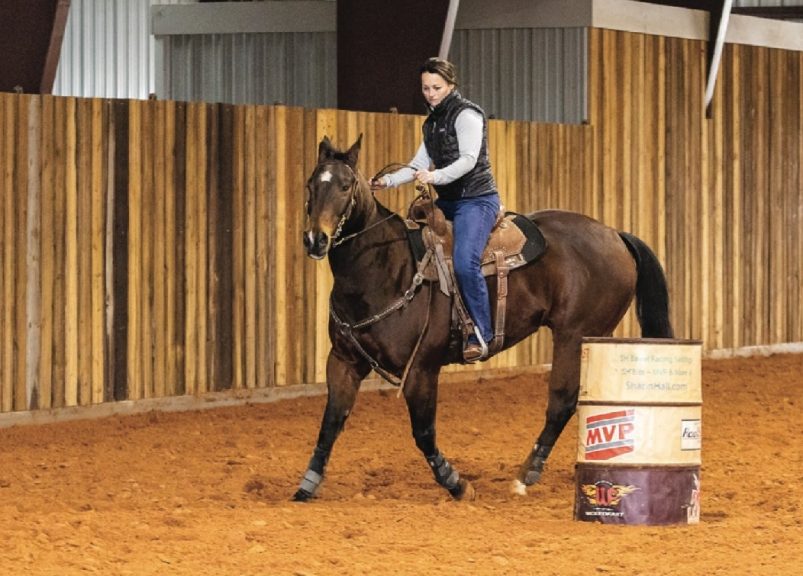
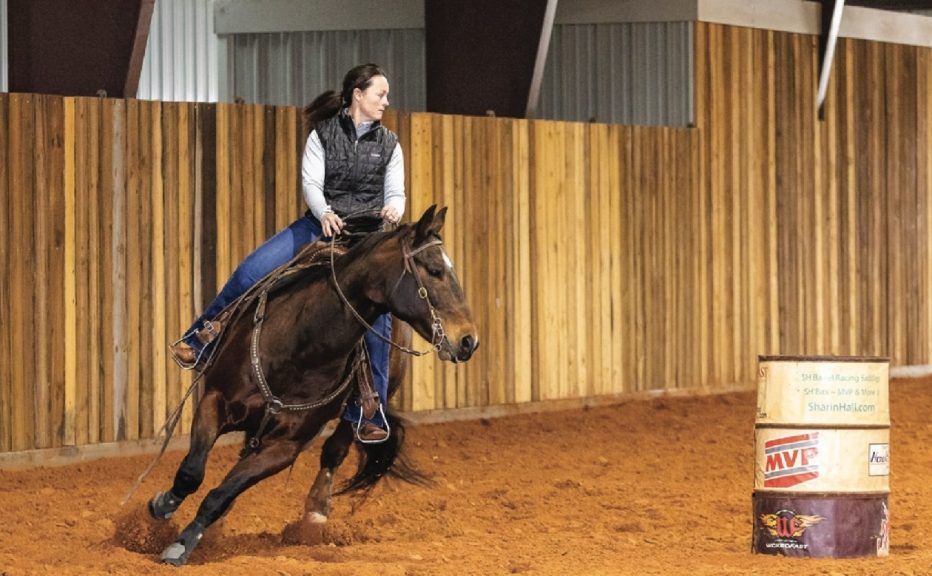
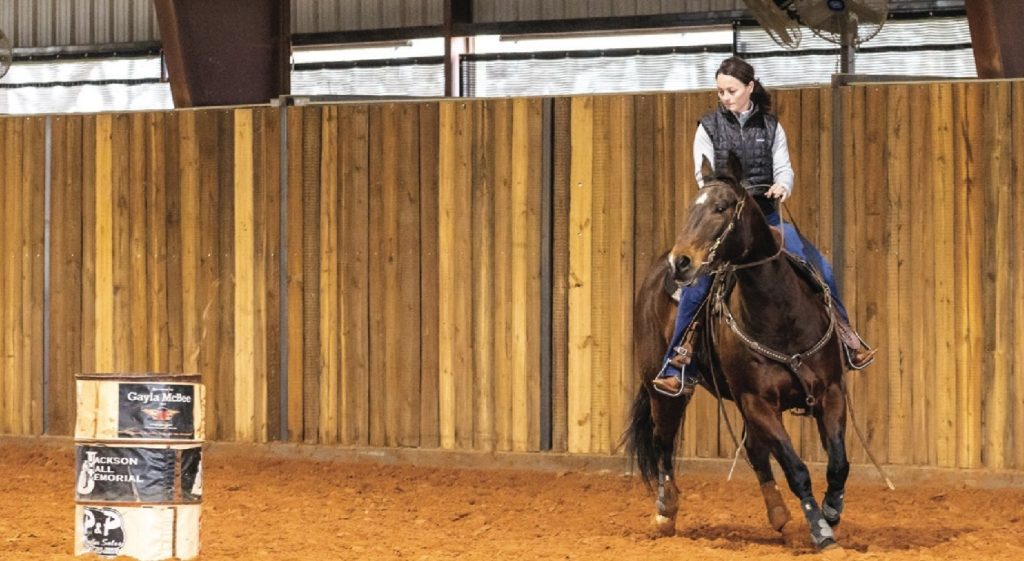
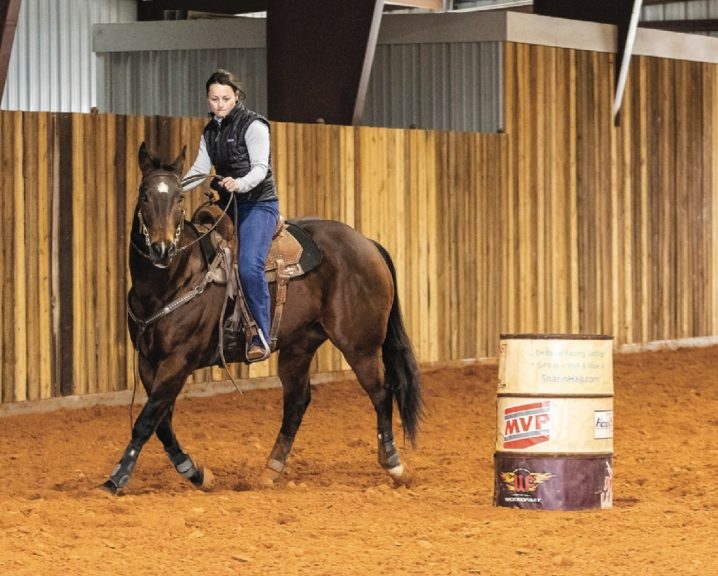
I will then make a 90-degree angle turn left. Your horse is already on their hindquarters, already squared and you’re not pulling on them. Next, I’ll pick up a lope or a trot — whatever the horse is comfortable with. I’ll make a slightly bigger circle around the second barrel, and then I’ll come back around to the normal position to make a second barrel turn.
I want the horse to think about finishing the first barrel all the way, and then getting their shoulders over and hip into position which ensures a smooth transition to the left lead. I want to make sure they’re switching to the left leaf before we go around the second barrel. That’s one of my big things. They must switch leads coming across the pen, and the earlier the better. You need to make sure they have enough room to keep driving around the second barrel, and that they can keep their hip up underneath them.
Don’t over-finish the second barrel. When I get to the back portion for the second barrel, it’s almost like a 45-degree turn. I leave it to where they have just enough room so they can leave straight. I don’t get in a hurry to leave the turn; I don’t let them panic. Sometimes the horse gets to where it really wants to finish the second barrel, and then they’ll swoop going to the third barrel. If you can get the horse to run to that spot on the back side of the second, and then leave the second where the inside hind leg is pointed exactly where you want to go on the third barrel, you don’t have to pick them up and move them over. They can pick up their lead and just hold that lead all the way up into the third barrel.
In the second barrel turn, I don’t necessarily need their shoulder picked up, I just want everything square and moving forward, fluidly, with the horse light in the face. They’re placing every foot relaxed.
I am super particular about foot placement. Before speed, before anything else, they have to be able to place their feet before you can go any faster. When you’re first starting, you may need to increase the size of the circle around the barrel so they can lope a perfect circle. As long as they’re placing their feet and staying soft in the bridle, we can go from there. Otherwise, it just gets into a pulling contest and not a very efficient run.
I’m keeping my hands spread wide on this drill. Keep your elbows soft and bent, your knuckles up, and allow the horse to move up between your hands and your feet. The inside rein is kind of my territory. If I’m going to the left barrel, the second barrel, I don’t want my rein up right to their neck. I want to have a little slack in it, where they know that’s my space. I’m not going to pull on you, so don’t step in there.
Once they realize they need to keep their belly picked up, their back picked up and stay around your leg — neither of us are pulling on each other — it frees up their shoulder so they can run all the way up there and pull around the barrel with their front end.
Final Thoughts
Don’t go too fast, too soon. Keep everything relaxed and show the horse where you want to go. They should be relaxed and paying attention. If they’re not, then stop doing it. It’s not supposed to cause pressure; it’s supposed to be relaxing.
This article was originally published in the May 2022 issue of Barrel Horse News.

What a great article! And the way it’s explained and articulated makes so much sense; promotes staying relaxed, keeping things simple and easy to learn for the horse as well as instilling self carriage of the horse on the pattern. Thank you!