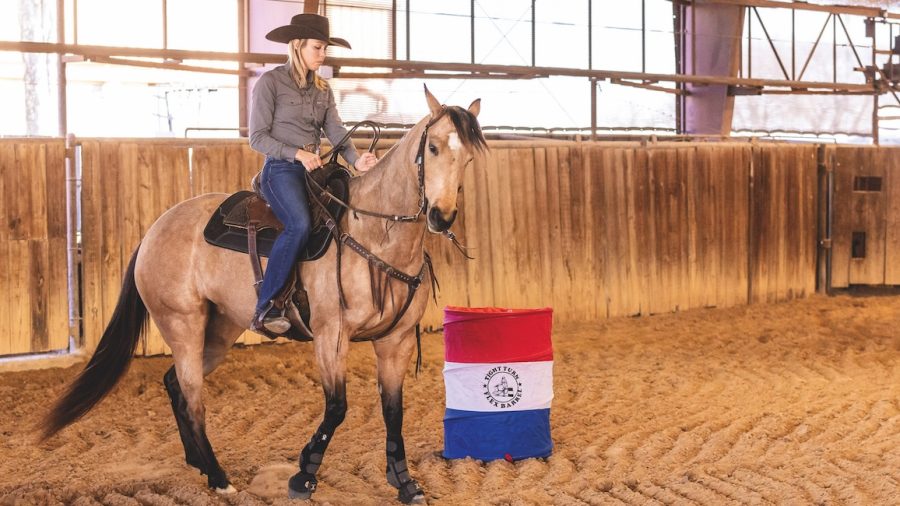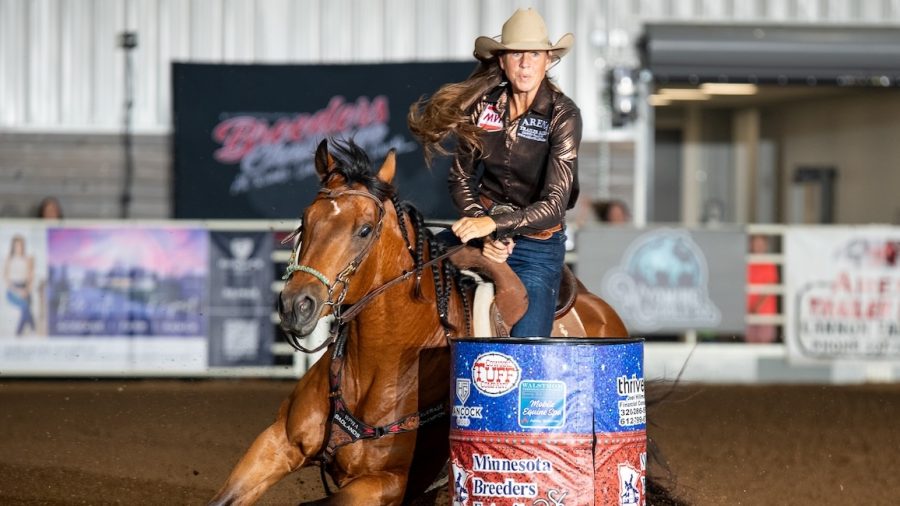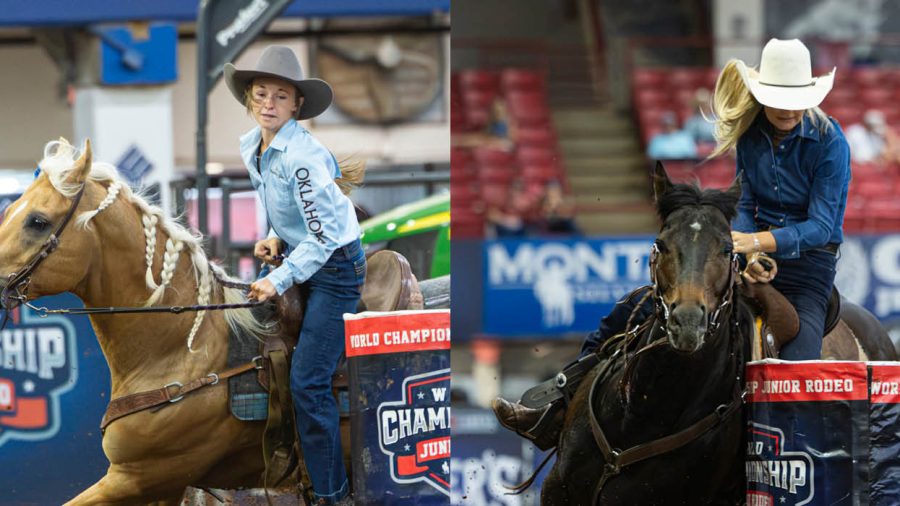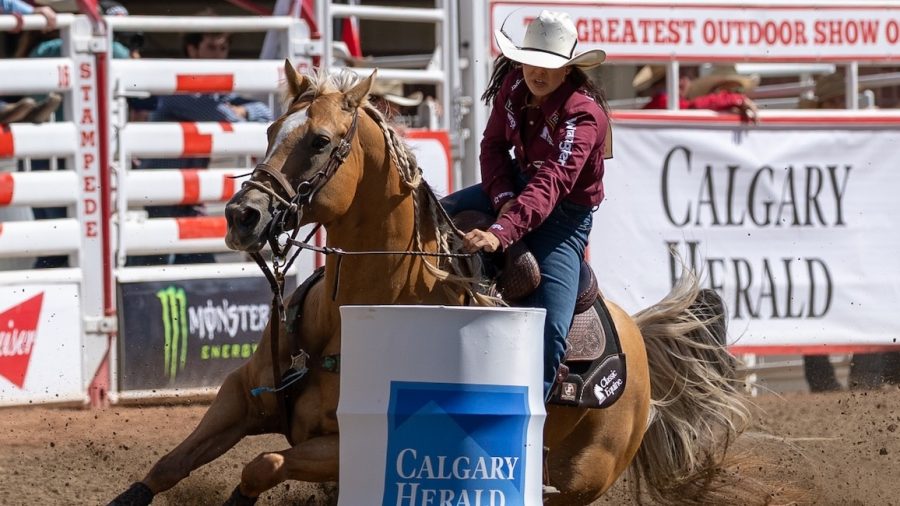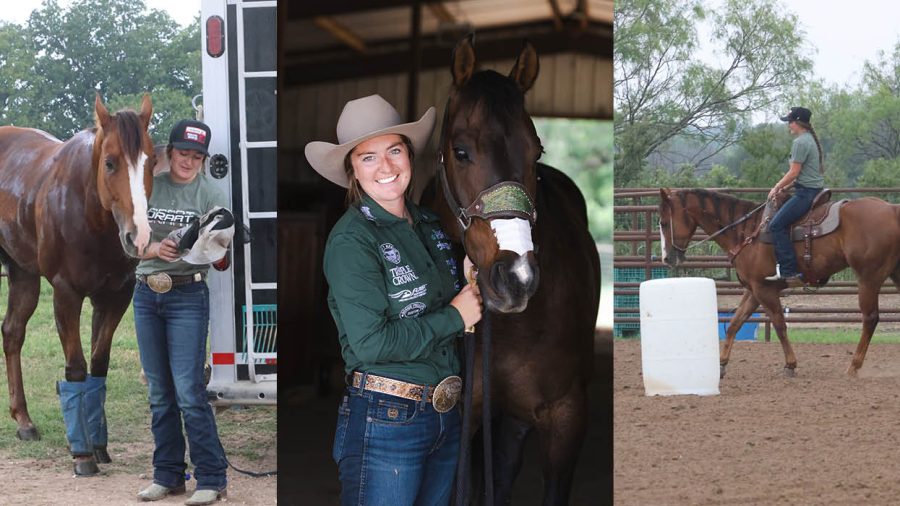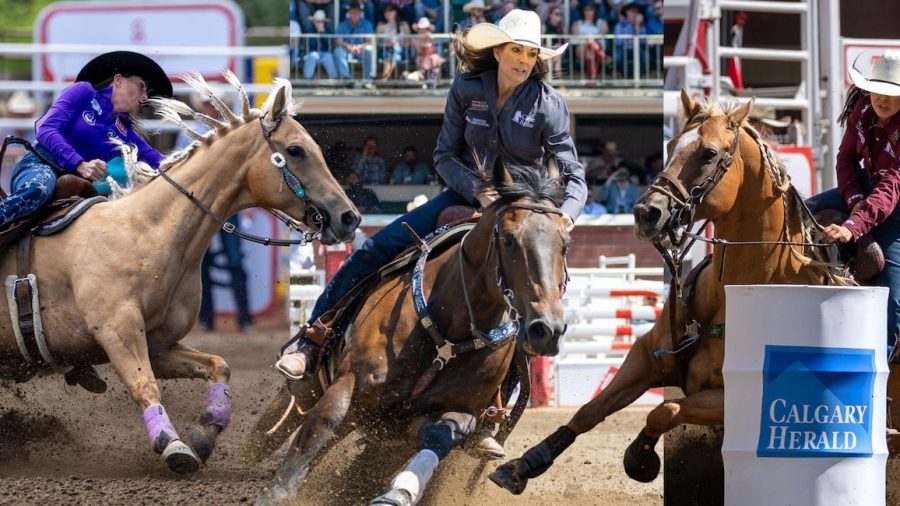

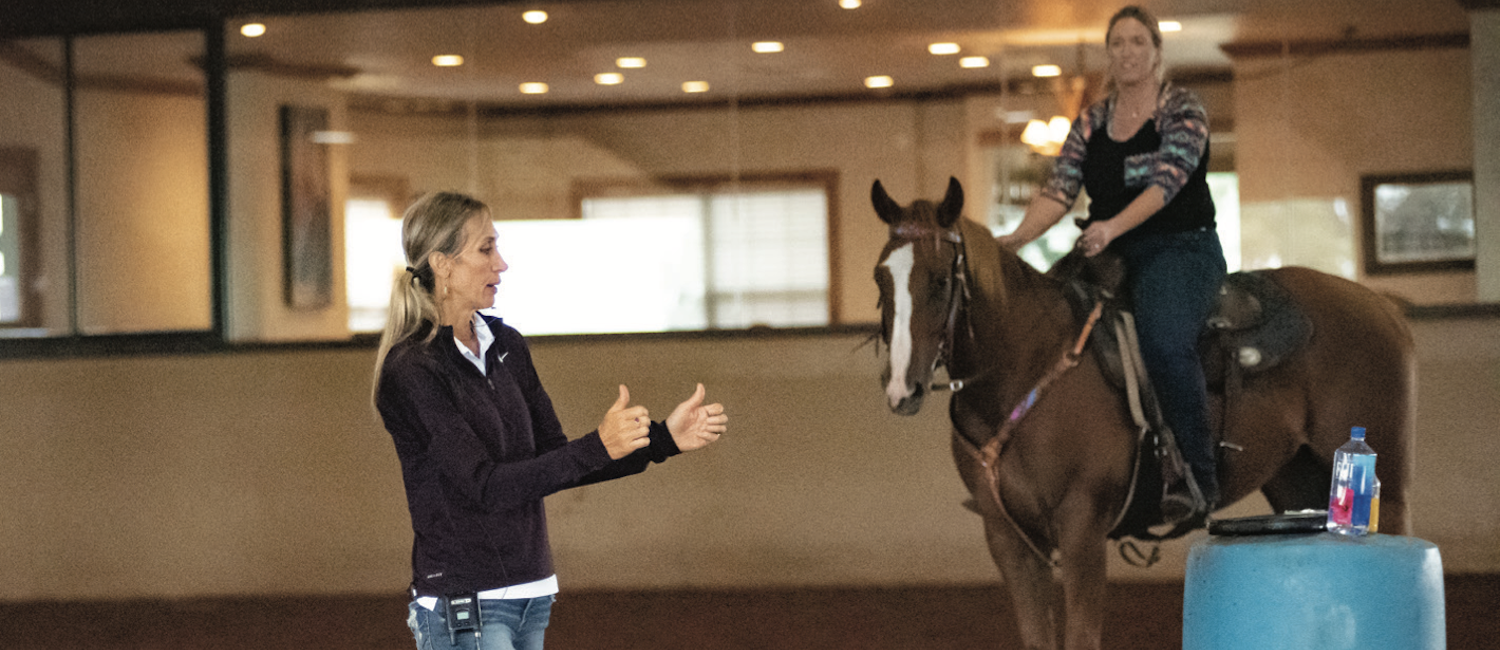
In the first of a two-part series, Charmayne James dives into barrel racing drills and their purpose in your riding and training program. Stay tuned for next month’s column with specific drills you can practice at home.
I do a lot of different types of drills and think they can be very useful for horse and rider. Many people look at drills as just something to do and go through the motions, but they don’t connect that whatever you’re supposed to learn from the drill, you must also bring to the barrel pattern. The drills you’re doing have to mesh with what you need in a competitive run.
The No. 1 problem with people doing drills is not knowing why you are doing the drill. What are you trying to accomplish? Drills are good, but you also have to know the purpose behind doing the drill. What are you working on as a rider? What are you working on for your horse? A good drill requires using skills and fundamentals in the proper controlling mechanism that you’re going to use during your run.
How to Think About Drills
When you start doing drills, riders need to think of themselves as being in training, too. Pro athletes are always working on their form and fundamentals, and when they’re doing a drill, it’s to work on fundamentals.
If you’re going around the barrels set up in a drill format and you’re doing nothing but just going around the barrels, it’s not going to solve any problems or make your run any better. You have to think about your riding, your hands, your body, your eyes, to help your horse get the most out of a drill. You can also use drills to challenge yourself — can I make a 3-foot circle around that barrel, then can I go out to 4 feet? Can I go 8 feet and back down? Challenge yourself to do that with minimal movement in your hands by keeping your hands quiet and practicing feel and micro movements.

Drills Develop Muscle Memory
Drills can help a rider, in a slow, controlled setting, to develop muscle memory for correct riding at speed.
For example, because this is a common problem, a lot of people say their horse shoulders the barrels, which is really the horse moving their front end into the turn early. When you’re doing a drill of any kind involving barrels, and your whole objective is to pick up that shoulder and move it away from the barrel, that only works going slow. That does not work when you’re running, because when you pick the shoulder up and try to move the horse over, all it does is start the turn even earlier, which creates more anticipation and the horse shouldering earlier or harder in your next run.
Instead, as you’re doing drills, work on placing the horse’s feet correctly. As you’re going in, have some room going into the turn, and when your leg passes the barrel, the horse needs to still be straight. Make sure to have room and straightness as you’re going past the barrel, because it reinforces that you don’t want to turn too early. If you turn too early or don’t give the horse enough room, the horse gets on its front end and swings its butt. During drills, don’t hold a horse off a barrel or lift its shoulder up or side-pass away from the barrel. That works against you in a run. Use drills as an opportunity to reinforce correct body positioning going into and around the barrels.
Drills help build repetition as a rider of where your hands need to be — left hand stays on the left side of the neck and right hand on right side, never crossing over nor picking up. Drills help you work on riding with both reins going into the barrel, not pulling the head to the outside or over-bending to the inside. Of course you can shape the nose a little depending on each horse, but as you’re doing drills, you should be thinking about your road around each barrel and exactly where you want to place the horse’s feet.
Anything Can Be a “Drill”
When I’m doing drills and working or training a horse, I like to make it to where they don’t even know they’re working.
Say you’re loping a circle, and you may just be warming up, but good circles are always important. I may be loping a simple circle, but I’m constantly thinking about every part of the circle — is the circle round? Are my hands quiet, is my horse’s nose dropped? Is the shoulder floating out or dropping in? Am I bending his nose too much and making that shoulder float out? Is there equal pressure on my reins?
Whether it’s loping a circle or any other part of your warmup or drill, it’s very important to make sure you’re not mindlessly riding. You’ll get the most out of your rides and drills by being intentional and paying attention to everything while you’re on your horse, not just going through the motions.
This article was originally published in the May 2023 issue of Barrel Horse News.