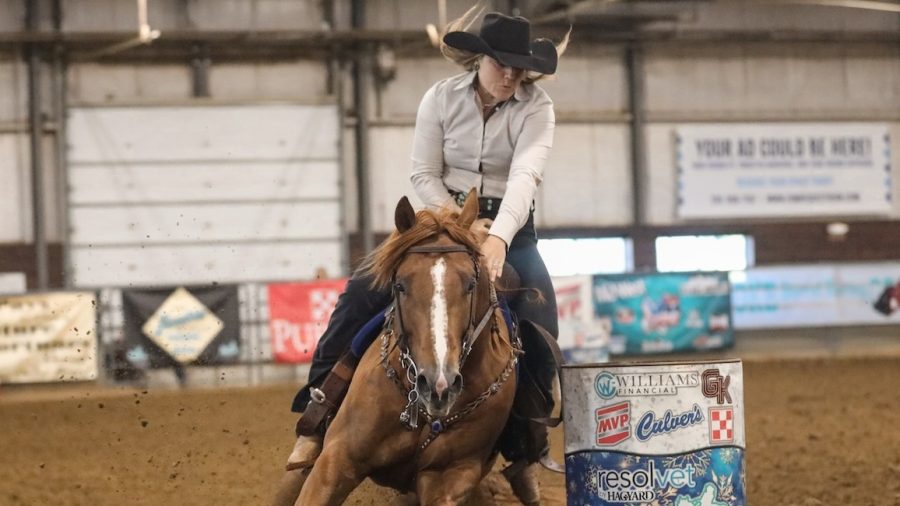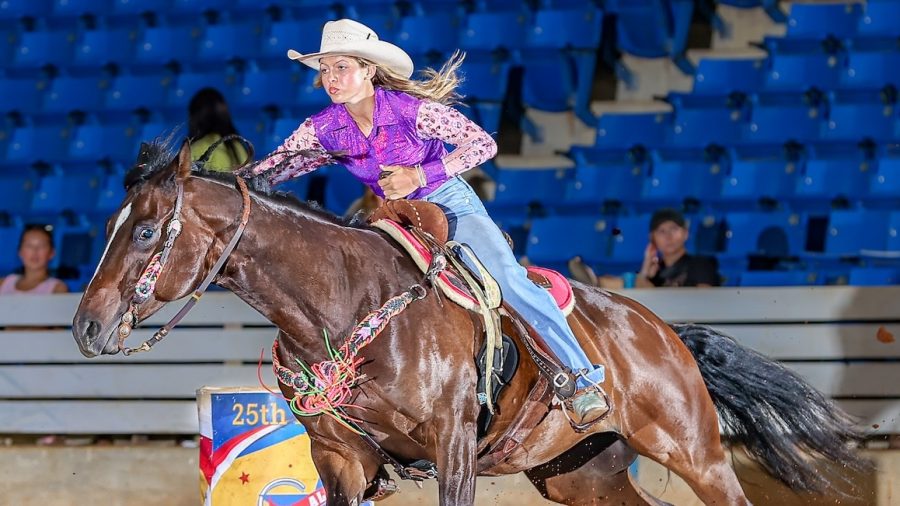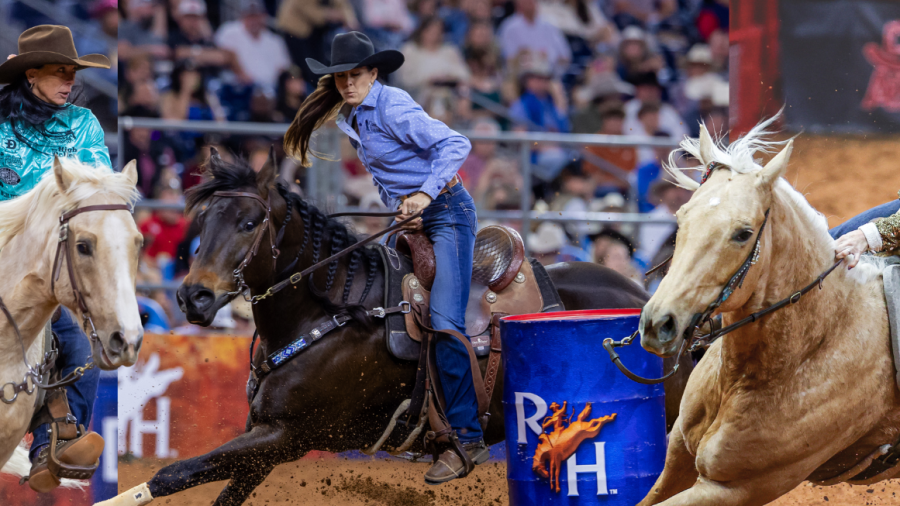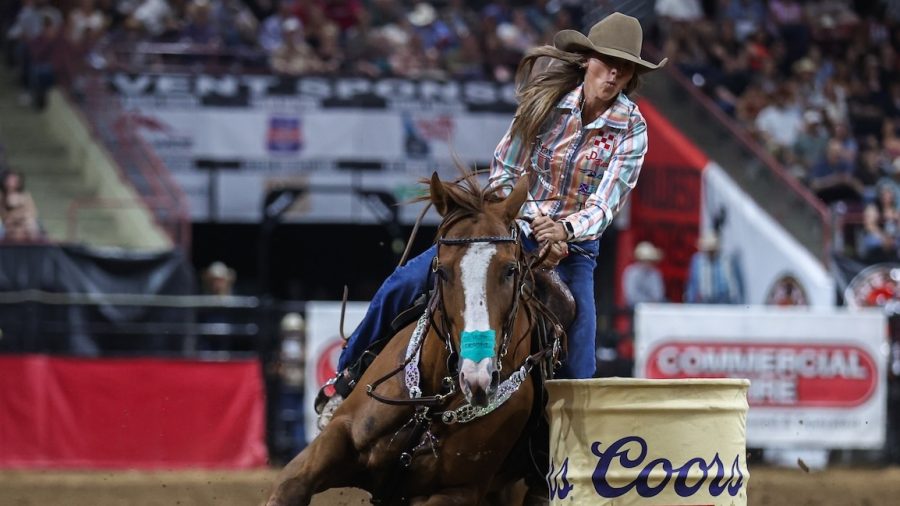

Help your horse through the pattern by bringing awareness to your own body position with tips from trainer Kari Brough.
A lot of what I do with training horses is asking them to be accountable, and I just stay out of their way. But in order to make them accountable, we first have to be accountable for our own moves and actions. Often times we are so busy making the horse be correct, but what about the rider? If you are going to train a horse, then train them to do their job and stay out of their way.
For example, when I am helping someone, I will tell them to walk the pattern. As they are walking to their first barrel, they may automatically have their inside leg on the horse, but what happens if you take that leg off? Does the horse need your leg there, or are you creating a crutch? You have to allow the horse to fail and then correct them by showing them what you want.
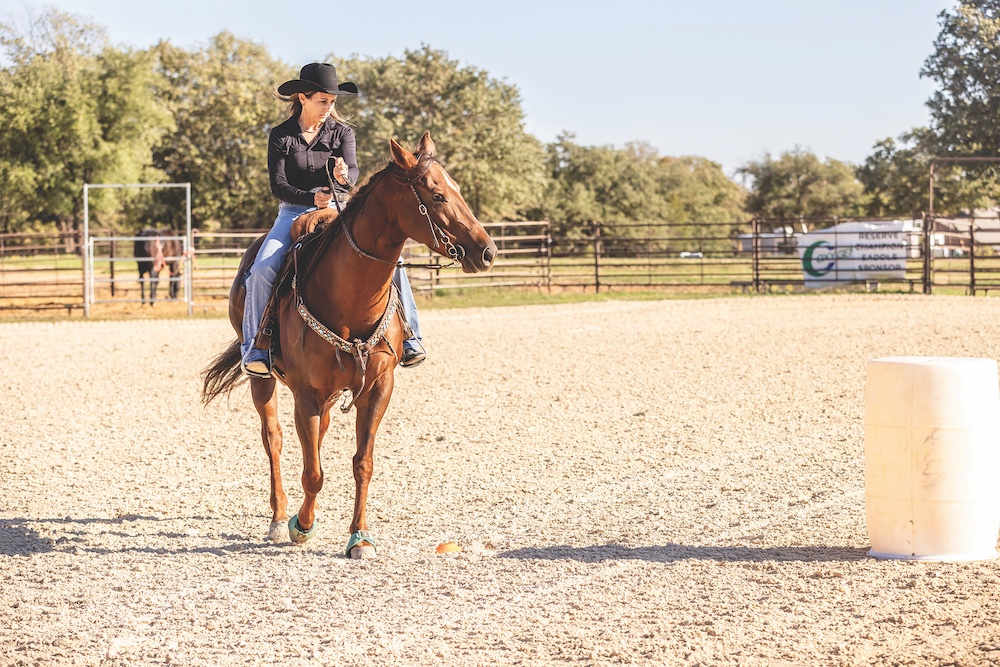
My philosophy about doing this drill came about after talking with a chiropractor about stability in your back. He talked about how you need to be aware when you are sitting in a chair, make sure you have even pressure on both butt cheeks.
Down the road, I got a new saddle with an elk hide seat, and the right side was wearing out faster than the left. That told me I was leaning. I wasn’t sitting square in the saddle. I’m putting more pressure on the right side.
That realization is what brought me to believe this philosophy and to start incorporating this drill.
Why This is Important
I believe a balanced and framed horse is a horse that has longevity, and one that can also stand up on most ground. The more I did this drill myself, the more I noticed when I was watching somebody else. That’s the thing with this drill, I really think you have to have somebody else watching you to see what you are doing in your slow work. Once you get what feels balanced versus unbalanced, you’ll be able to recreate it without someone observing you.
Staying Balanced
When people turn a horse, many want to pull on the rein to turn. I don’t want to have to pull. I want to ride to the same spot at the barrel every time, and teach them what to do with their feet when they get there.
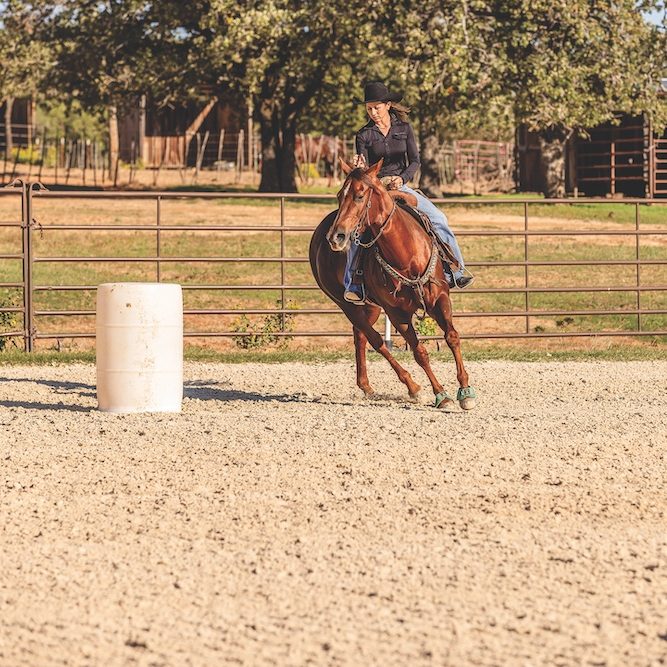
I set up the barrels in the same cloverleaf pattern, and I’m going to ride to the same spot in each gait. I will ride 2-handed and when I get to my spot, I am going to set my hand, keep my body square, and the horse is going to be accountable for their feet, where I have taught them.
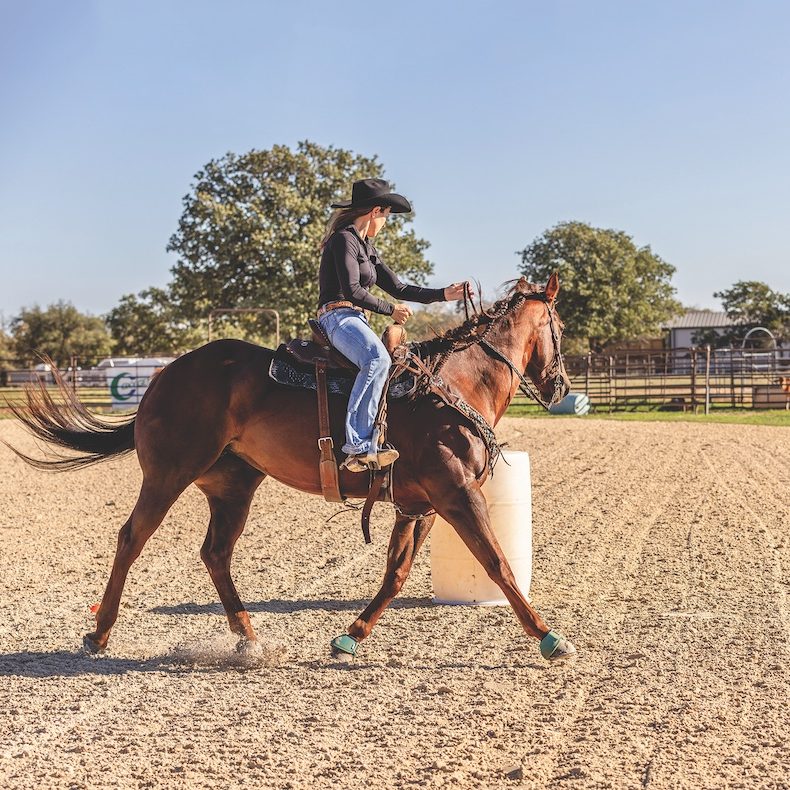
Newton’s Law of Motion says, “For every action, there is an equal and opposite reaction.” If somebody is leaning to the inside, the horse has to step in to get underneath you. This is going to tighten your circle. If you are leaning to the outside, they have to step out of the circle which in turn will affect the next step. If I’m tense throughout my body, they are going to stiffen in anticipation that something is going to happen at this spot, and it may be scary.
So my thought process is: sit square, sit center, and let that horse go do its job, and stay out of his way. I want all 4 feet moving in forward motion.

The Drill
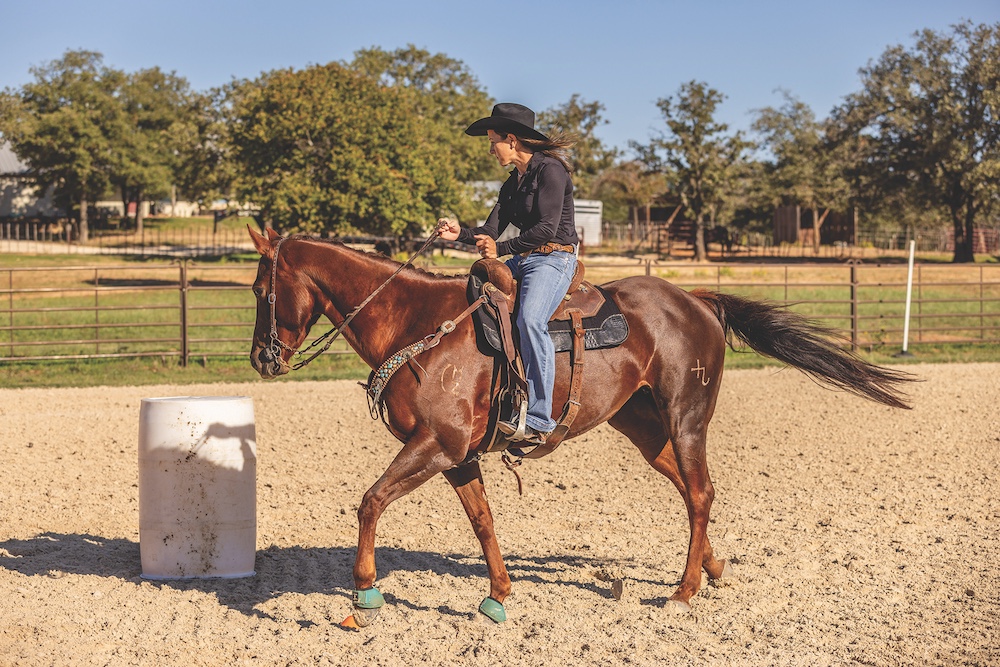
I walk the pattern at least four days a week. I usually do it right when I first get on as a warmup, rather than walking a circle around the arena. I’ll walk through the pattern as if I‘m making a run, and see what they feel like. I ride two-handed to my spot, drop to one hand and let them show me what they know. I also do it when I cool down, four or five times to reiterate muscle memory of where their feet need to go. You don’t have to trot or lope the pattern every day, some days I will only walk the pattern.
Often times you can catch them stepping in too soon, or tensing up where they aren’t real sure where the next step should be. It’s the perfect opportunity to show them where you want their feet, and master it at a slow speed before moving on to faster speeds.
If it’s a horse I haven’t trained myself, I will start by walking the pattern just to see where they want to place their feet. They will tell you what their preferred style is, or where their holes are. So, especially if I’m helping somebody with their horse, I’m always going to make them start out by walking the pattern.
When I am coaching someone, I will watch them from behind. I’m going to see what they’re doing between starting the pattern and getting to the first barrel. What are they doing with their body? What do they do in a turn? What do they do in the time between barrels?
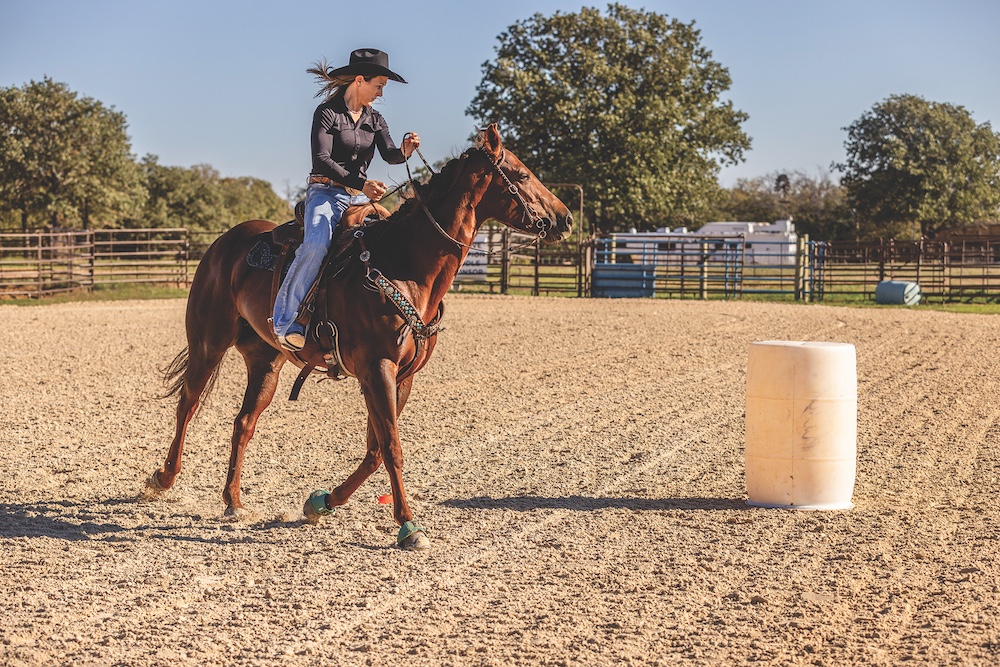
A lot of people feel that in order to go fast, they have to move their body fast. But my mindset on a horse trained on the pattern is, just sit still and even with your body. Set your hand. Don’t lean. You don’t have to pull. Just set your hand and let that horse go. Follow where it needs to go.
The benefit to me comes from making them go on those same tracks over and over. I’m creating that muscle memory in the horse, and myself. Walking the pattern will expose what you may do wrong while you’re actually running.
Walking shows you how confident they are, and it helps you create awareness of where his feet are stepping as he moves around the barrels. Doing this at a slower gait will help you gain feeling of his footfalls at faster speeds. You need to be aware so you know if you need to help them shorten a stride, or drive them a little further into the barrel.
While you’re doing the pattern, don’t try to focus on a hundred things—narrow it down to three things that would be beneficial for that horse. Any more than that and it’s too much in a 16-second timeframe. Relax your body and let them go work.
You don’t realize that you putting your body off balance is putting pressure in places and telling your horse to move in a different way, in a different fashion. Just go up there, sit down and keep square, keep your body framed up. Don’t lean to the inside or the outside. Don’t tilt your head—that will make your body move, and your horse will have to get back underneath you somehow.
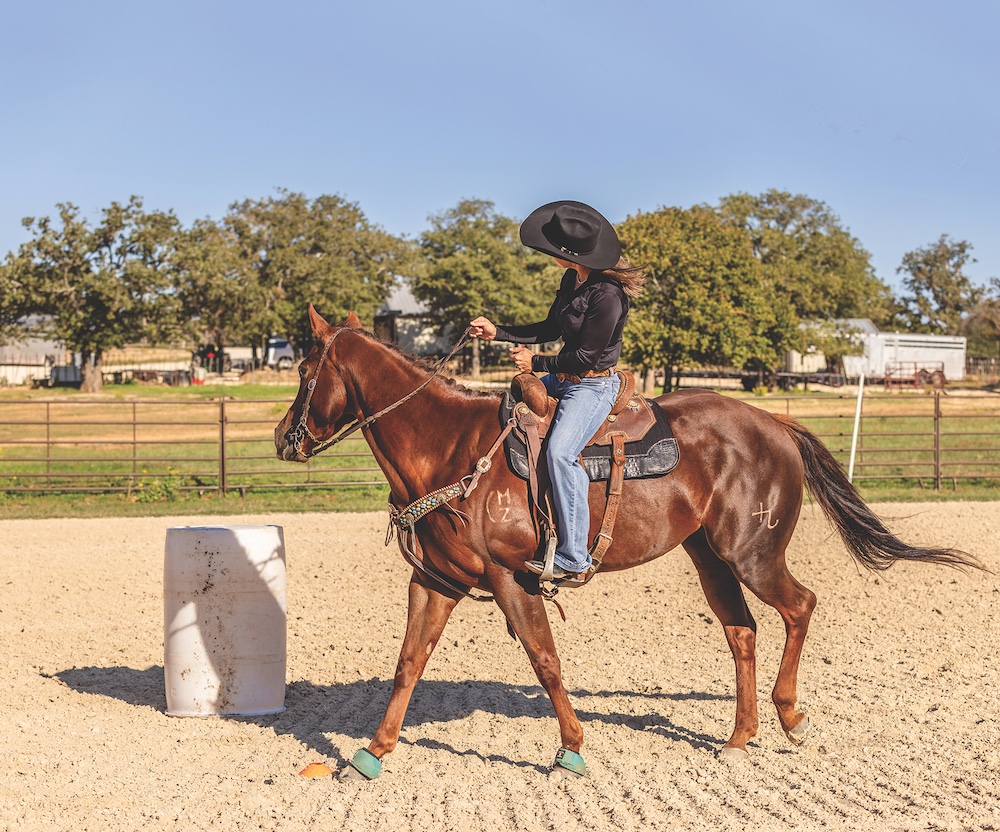
If you are young, maybe around 10 years old, you’re light and your body position may not affect your horse as much right now. But when you get to 13 or 14 years old or older, and you still have the bad habits of tipping forward, you may not understand why your horse is running by the barrels. It’s because your weight shifting as you tip forward affects the way your horse moves. Not all horses can get shut down with you leaning over the top of them.
I just feel like we’re making our horses work harder if we’re not sitting square in the saddle and sitting still.
Progression
Once you feel solid walking the pattern as if you are running, I will do it at a trot. If the horse can’t go around the barrel at a trot with one-hand, I’m going to pick up 2 hands, correct them by showing them where I want them to go, and then drop back down to one-hand. All the while, I’m being mindful of what my body is doing, and letting them be accountable for where their feet go.
When they have mastered the trot, move into a lope with the same focus. Eventually, you should be able to cruise thru the pattern.
How to Check Your Position
The best way is to have an accountability partner, someone who can watch you closely to see if you’re sitting square and balanced. If you don’t have that, then you’ll want to video yourself walking the pattern.
You want to be mindful of how you’re sitting in the saddle. Do you have even pressure on both butt cheeks in the saddle? Do you have even pressure on your feet, or is one leg squeezing versus the other? What are your hands doing? What are you doing with your breath?
Breathing is a huge part of this. I used to have a horse that would short me on the second barrel, and kind of brace, and I found that every horse I would ride or train right afterward, I was nervous going into the second barrel. I would tense my body and hold my breath as I was going across to the second, and that creates a bracey horse that is also nervous to go to the second barrel, because I’m amped up and stiff.
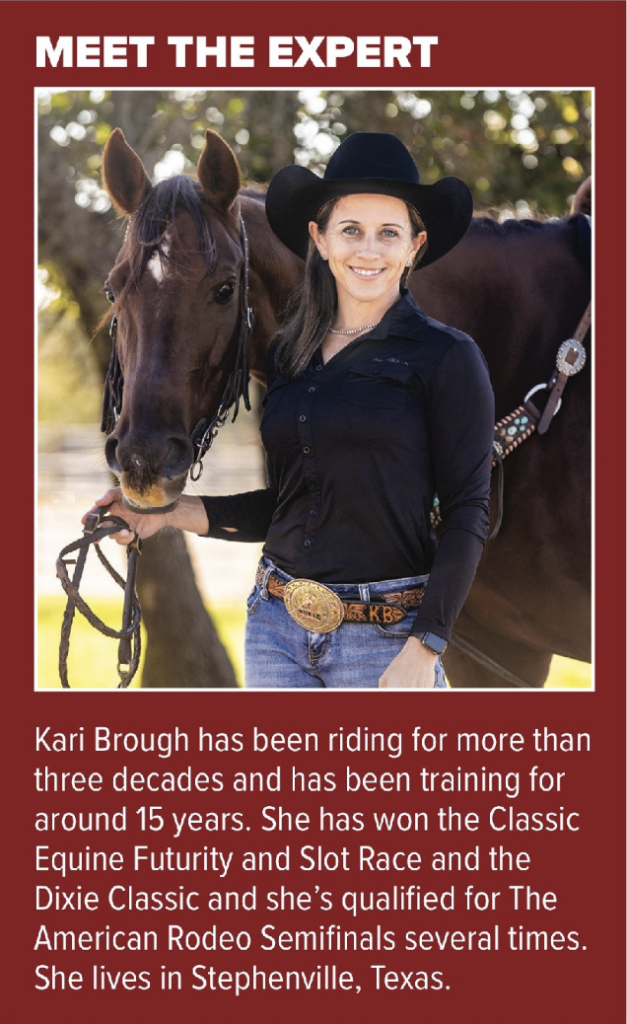
If I can relax my shoulders and just breathe, that helps a lot. You can work on breathing as you walk the pattern, too. You can also focus on deep breathing. Holding your breath while riding is a huge problem. Work on making sure you’re breathing throughout your run.
I always think about a photo I saw of Buck Brannaman cutting a cow. Everything about him in the photo is balanced. His forearm lines up with the horse’s leg, his leg lines up with the horse’s back leg, his sternum lines up with the horse’s sternum. That to me is a balanced horse and rider. I think that’s the goal in running barrels—a balanced horse that stands up on different ground, and has longevity in our sport.
I believe that every time you pull on a rein, you’re shortening their stride. So if you can go into a barrel and not have to pull, and that horse understands where their feet need to go, I think that’ll be a faster run. And that’s what we want.
This article was originally published in the January 2024 issue of Barrel Horse News.