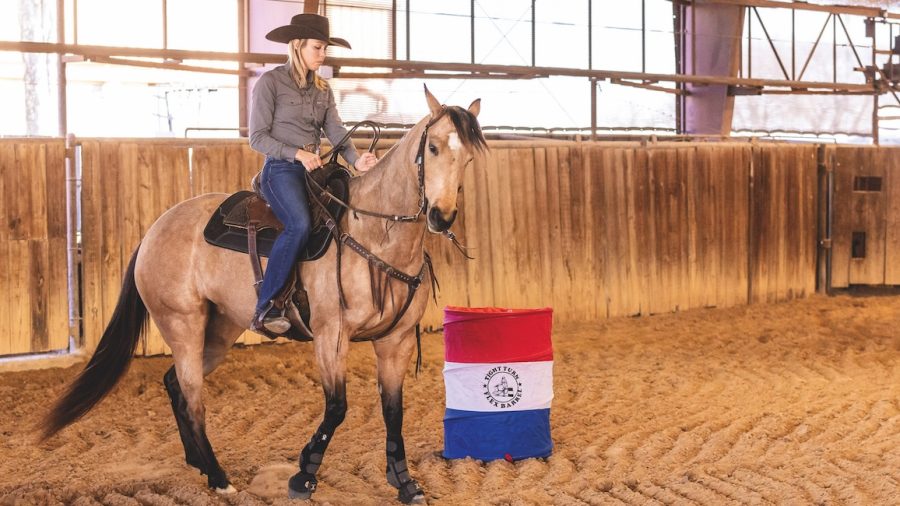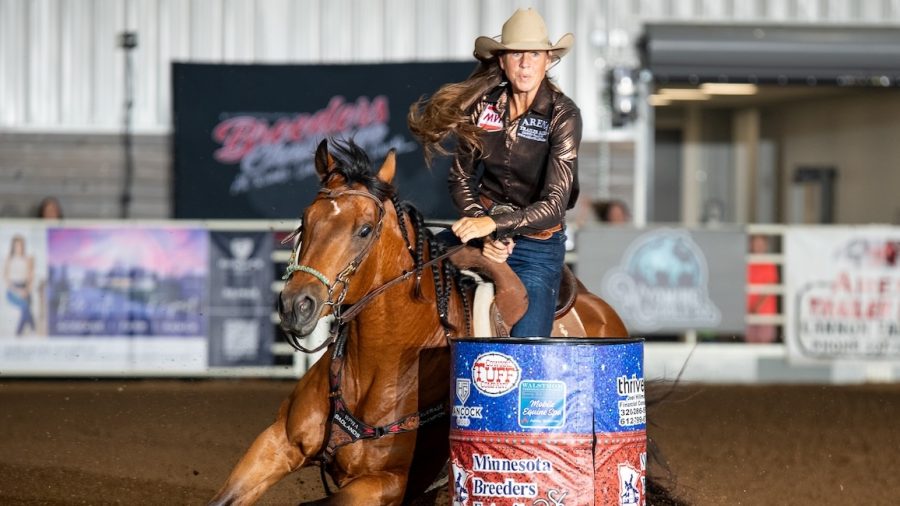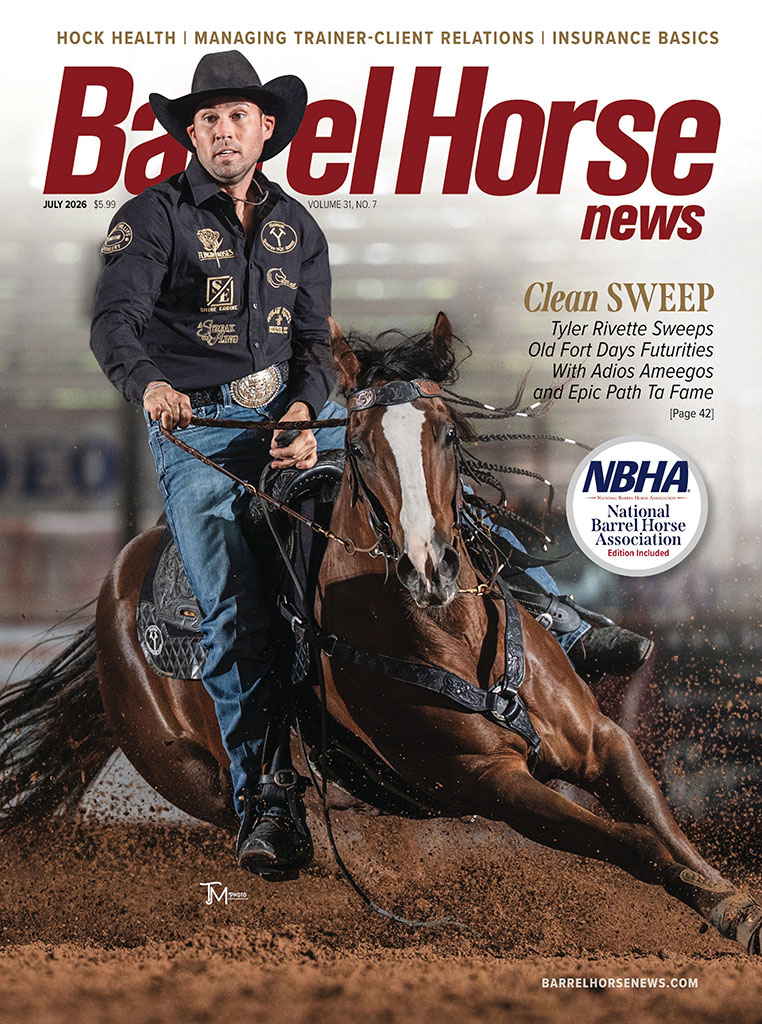


Barrel prospects started by cow horse trainers can receive a different education, and that can help the horse in the long run.
Crossing disciplines seems to be the norm these days, from cutting horse trainers trying reined cow horse, like Jesse Lennox, to rodeo pick-up man turned Mongolian Derby endurance racer Josh Edwards. National Reined Cow Horse Association Million Dollar Rider Ron Ralls is known for aiding barrel racing stallion Slick By Design in his career, so it comes as no surprise that other cow horse trainers have molded barrel prospects in their programs.
“In the cow horse discipline, you have some really good horseman that understand a horse,” says Brady Weaver, who trains out of Enterprise, Utah. “We can’t trick a horse into putting a few maneuvers on them; we have three, or four, events with a horse. We don’t drill one event in them but have well-rounded animals. From other trainers coming to cow horse, they comment on the horsemanship. It’s horsemanship, not barrel racing, cow horse, cutting or reining, it’s thinking about the horse.”
Be it by design or happenstance, Utah’s Weaver and Texas-based Veronica Swales have both started competitive barrel horses. Both have even competed in the sport, with Swales earning multiple titles in Canadian races, and the 2016 All In Barrel Racing Open 2D Champion title. A horse is a horse, of course.
Yet, barrel horses and cow horses are built and bred differently. These two trainers discuss the benefits of working with barrel prospects in a cow-horse trainer’s mindset and how cow-bred horses have influenced barrel racing.
Beginning in Barrels
Training cow horses and rope horses in Canada, Veronica Swales was focused on creating an all-around animal. Though she ran barrels a few times in high school, it wasn’t until a client approached her in 2011 that she took on training a barrel racing prospect.
“I was strictly working cow horses, but I said I would give it a whirl. I trained this mare, went to my first futurity and won it, then it went crazy from there. For a while, I had more barrel horses than cow horses. It was really good, and that lady gave me the opportunity to ride some really nice barrel horses.”
Soon, Swales’ program was split between barrel horses and cow horses. Over the years she claimed derby and futurity finalist berths, wins at events like the 2016 South Country Barrel Futurity as a go-round winner and the 2016 Fast Moon Chic Memorial Barrel Race Derby Champion and Futurity Champion. She found that working with both cow horses and barrel horses was making her a better trainer.
“As I got going training prospects, I was learning so much from riding the running horses that I could incorporate into my cow horses,” she says. “They taught me so much patience, different ways to get through to a horse—because some of those running horses can be hotter or more fractious. It taught me different was to train. I got where I enjoyed training barrel horses because it was teaching me so much to go to cow horses, and vice versa.”
For Weaver, starting barrel horses came with making a living in southern Utah. A racehorse jockey turned cow horse trainer, Weaver was no stranger to speed or handling a race-bred horse.
“For years, I started barrel horses because it was what was in my country to do for work,” he says. “I always told those girls I’m not a barrel racer, but I can put on the basics. I did go run a few horses so I could have a better idea what they liked and didn’t like in a horse. Those horses, some of them are fun to be around!”
While neither trainer focuses on barrel horses predominantly as their cow horse careers have advanced, they both still have prospects in the barn. Training a good horse is fun, not matter the arena in which the horse will compete.
Cross-Training Compliments
Standing a 2-year-old race-bred horse next to a 2-year-old cow-bred horse emphasizes the differences in the horses breeding and purpose. But that doesn’t mean that both horses can’t be started in the same manner.
“All horses need the basics of horsemanship: to yield off your leg, honor your hands, and those basics at any speed, but I think it is important to treat them all like an old ranch horse,” Weaver says. “I tie, hobble and use them. That way, when the horse gets bigger and stronger—because these horses are bred to be big—they can’t hurt themselves as easily and they are able to be handled. In our country [Utah], it comes from the racehorse background. Those horses are not mannered like performance horses but people tiptoe around them. They get led by hand everywhere or put on the hot walker. It’s a different way of thinking about a horse.”
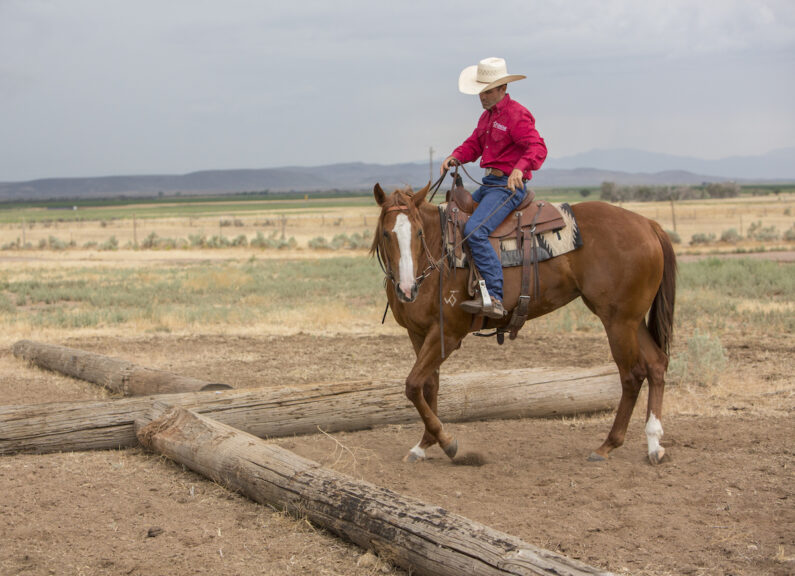
He often begins a young barrel horse with riding out on the Bureau of Land Management land surrounding his facility. It forces a lanky horse to learn coordination, and strength.
“I start by riding outside, putting some miles on them to build muscle, learn to pick up their feet by going through the brush and washes to build coordination and strength, that kind of stuff,” he explains. “These barrel horses are bred bigger, and you can see their knees are still open; cow horses, they are a little faster moving early on, the fine motor skills are there early on, I would say.”
Swales agrees, focusing on training any young horse in her program with the same mindset. For barrel-bred horses, she makes sure she slows down and builds positivity with every ride.
“The big thing I tried to carry to barrel horses was the idea that it still needs to be a nice, broke horse that anyone can ride,” she says. “I try to be very black and white on what I’m trying to teach them. If I’m focusing on one point, once I get a little bit then I put the horse away for the day. I try hard not to get into large battles or overdo things if I feel like the horse isn’t taking it that day. I take that over to my cow horses, too, and that way, they keep building what they know in a positive way.”
Though the goal is to have a horse that clocks and can be handled by the rider, Swales says that she starts them on cattle and the flag like any cow horse.
“If you were to take a barrel horse to someone that does the cow horse, it gives those barrel horses a different outlook,” she explains. “They get broke; they work the flag, they see cows. It gives them experience so that if they need to back up in training, it gives a good base so that you can regroup and go forward again.”
A Horse for All
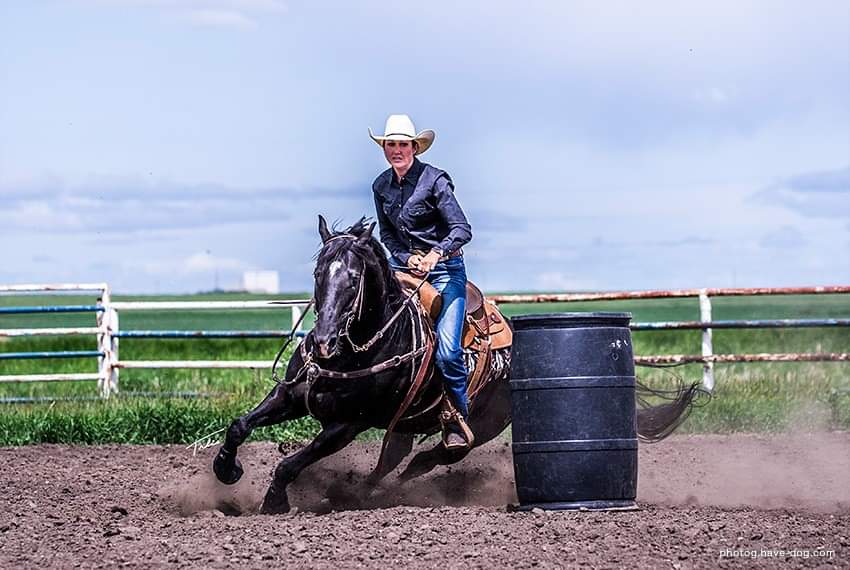
While Weaver and Swales have swung their legs over royally bred prospects that have gone on to compete at the top level, they both agree that not every horse they start fits that level. Breeding race-bred horses to cow-bred can produce a desirable barrel horse.
“I love crossing cow horses onto some good running mares; I feel like it gives them more maturity at a quicker stage,” Swales says. “If the run is bred on the right cow horse, there is still speed and turn, and still has all the qualities you need in a barrel horse, and that may help cool them off. Some are so hot, it can be hard to keep them focused like a cooler cow horse, then you have a calmer, easier-minded mount.”
Weaver couldn’t agree more. Crossing quieter bloodlines can help create a more user-friendly horse, he says.
“Maybe a horse with cow horse blood won’t win the 1D but that grandma, or mom with kids, that wants to ride, that horse will not be a fire-breathing dragon but still run and have some brains and be gentle,” Weaver agrees. “That is a horse that doesn’t need to be ridden for too long and she can still be in the industry and be involved. Winning a 3D still means you win a breast collar or some money, and then they can go again. You lose entries if people don’t enjoy it and don’t come, and that shrinks your industry. There needs to be a horse for everyone that wants to be part of it.”
The challenge of training a horse excites any trainer, no matter the discipline. When it’s a horse that keeps you on your toes, or makes you think, the allure of building horsemanship skills is what keeps Swales working with both barrel and cow horses.
“I love the challenge of training barrel horses,” she says. “I feel like it takes a very good horse and very smart schooling and training to make a nice horse that clocks for people. The running horses have taught me so much patience and different ways to train and keeps teaching me new things. It’s amazing when you ride a good barrel horse; they are amazing animals. It’s the same feeling as when you ride a good cow horse.”