
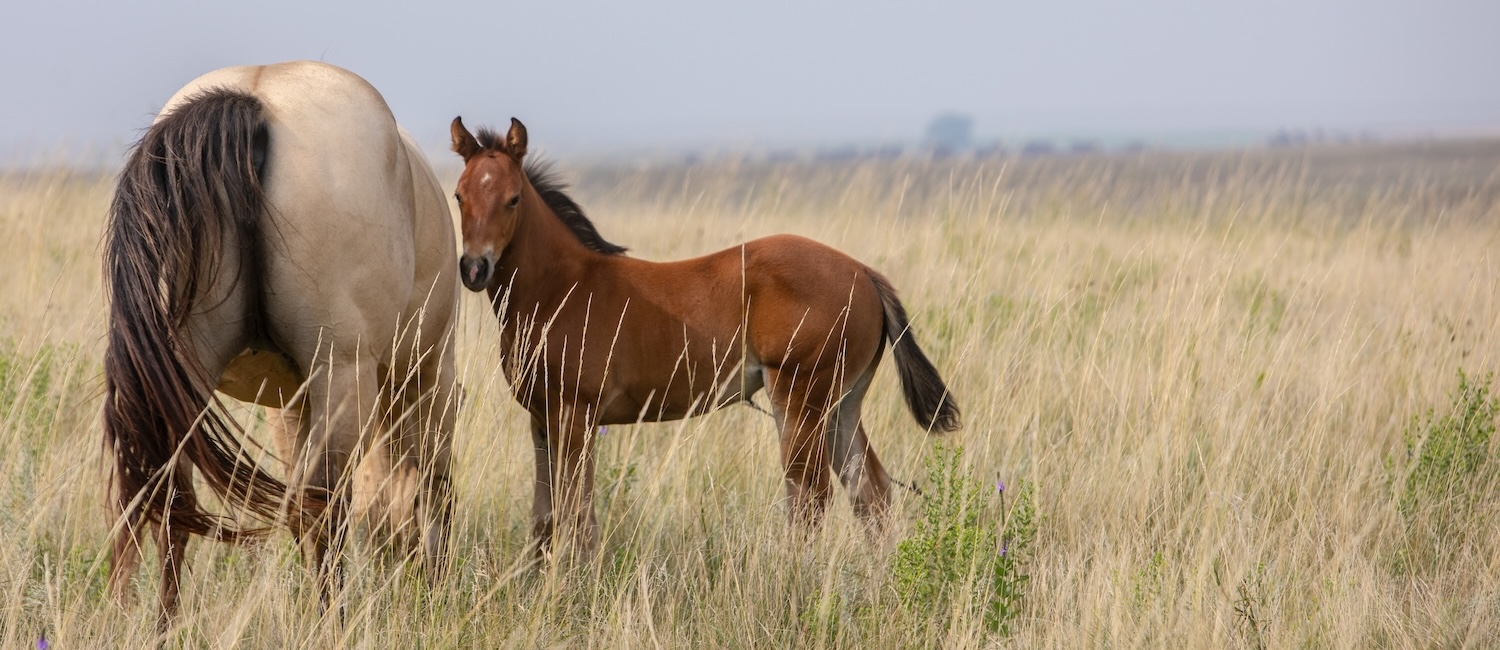
Foaling season has begun for many and with that, constant checking of broodmares and watching stall cameras. Many barrel horses are born under strict supervision inside the barn. While this is common, another approach is often used by those who also run cattle ranches — pasture foaling.
Raised in a Pasture
Rodney Yost utilizes pasture foaling with his broodmares in Gann Valley, South Dakota where he and his family operate Broadaxe Ranch. Yost also starts colts and does horsemanship clinics.
“The only difference is especially up here, my first foals won’t come before May,” Yost explained. “It doesn’t mean we won’t have some cool days in May, but just being able to have them out here [in the pasture], because there is no more sanitary place.”
Yost foals out about 30 mares and stands his own stallions. He only does pasture or hand breeding. A big part of his program is letting nature take its course and building natural immunity.
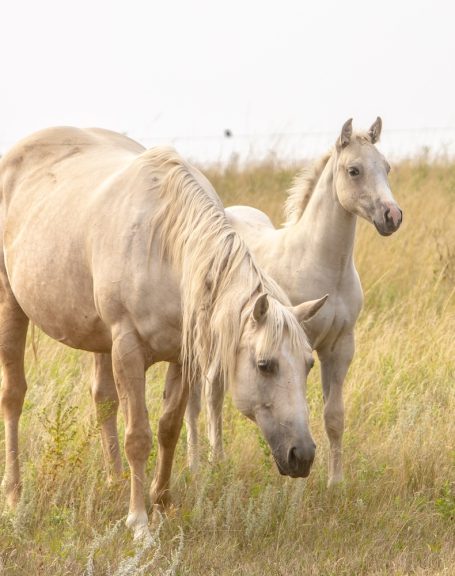
“I almost feel like to some extent you can get in the way a little bit too, and those baby foals can get sick so easy,” he said. “I just think every time you handle them, you put them at some risk, especially anytime that they’re off grass. I understand people [foaling in stalls] if you have colts that are worth a pile of money and that’s your thing but it’s not really likethat for us. Because of the cattle and as much other stuff as we’re doing, it’s not very practical for us to do it that way, plus we do have the access to pastures.”
His breeding program aims to produce high quality ranch horses that can go on and be competitive performance horses in the arena too. Yost believes an influential part of a good ranch and performance horse is the ability to be a horse from the beginning.
“These colts grow up in barbed wire. They’re raised in a pasture,” Yost said. “I’ve had some colts in pens, and it’s not that you can’t take them to pasture but they’re always going to hit a fence or two before they learn it. I also think, development wise, they just grow so much better. I think the fact that they have to travel so much more, developing joints and soundness wise, I think it just sets them up better.”
Yost adds that foals born and raised in a pasture often know where their feet are and are better at their first rides outside because they understand changes in terrain and where they are going.
Keeping it Natural
Cally Thomas Kindred owns and operates Thomas Ranch Performance Horses in Oelrichs, South Dakota, home to the late leading barrel horse and dam TR Dashing Badger. Thomas Kindred said they have always foaled their mares out in the pasture.
“That’s what we did at my grandpa’s place. When I took it over, he just told me that it’s not like cows and you don’t check them all the time and they like to be left alone. They should have them like in 15 minutes and if not, there’s probably a bad problem,” she said. “He said essentially, you’re probably not going to catch them foaling, and you don’t want to because they’re not comfortable with people around. So we foal out in the pasture.”
Thomas Kindred foals out seven to eight mares a year. While she prefers to breed mares to foal late in the spring like Yost, some due earlier have to be in stalls because of the weather.
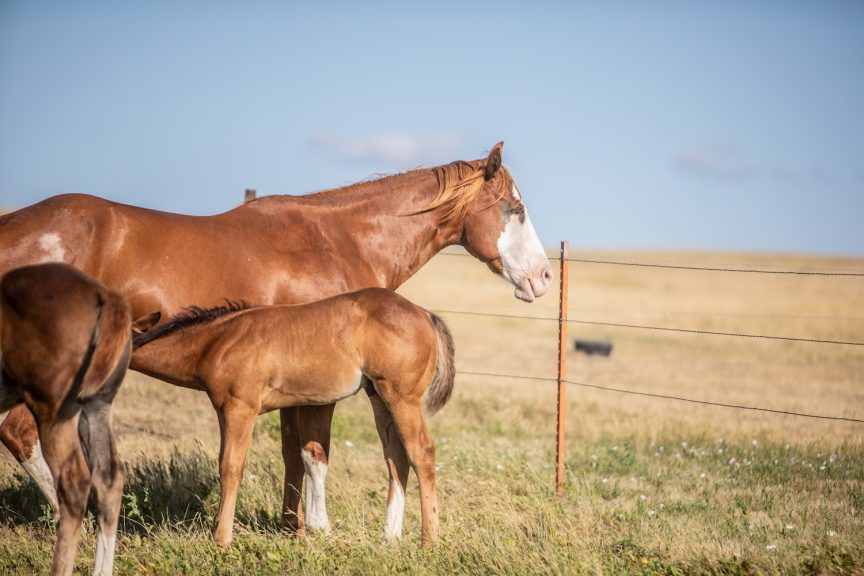
“We have had some embryo babies over the years that are due earlier because the mare is getting flushed down in Texas or Oklahoma, and so those have had to go through a barn,” Thomas Kindred added. “We pretty much have cattle everywhere over here, so I actually was sending them off to a girl who did a great job and foaled them out for me, and it was wonderful, but we still had more issues with them than just the ones that we foal out in the pasture. So we’ve tried to stick to that. We’re lucky because we have a vet close by that if you think they need plasma or something, they will drive out to your pasture and you can catch them and do it out there, rather than bringing them to the barn, because just pretty much everything around here has been has had cattle on it at some point in time, so we feel like it’s best and they stay healthiest doing that.”
A Vets Perspective
Clinical Instructor at Colorado State University’s Equine Reproduction Lab, Chelsie A. Burden, DVM, MS, DACT said there are advantages and disadvantages to both foaling in stalls and foal in the pasture.
“Foaling in a pasture or larger yard/arena is a more natural experience for the mare and allows for a small group or herd environment to be maintained,” Burden said. “ Foaling in a stall provides easier monitoring of the mare prior to foaling, the birthing process, and both the mare and foal in the postpartum period.”
Stalls allow better weather and temperature control and are generally in proximity to clean water sources and lighting to allow you to intervene if necessary. Foaling stalls are typically larger than regualr box stalls, usually 12’x24’ or 20’x20’ to allow enough room for both the mare and foal.
“Stalls and small runs or turn-outs do have the disadvantage of hygiene control,” Burden added. “Small spaces often get dirty quickly and have to be well managed and thoroughly cleaned between individual animals to ensure the foals, born with a weakened immune system are not at risk. Depending on the individual mare, stall confinement can be stressful. This is especially true when an individual is removed from a herd or group in anticipation of foaling.”
When pasture foaling, the mare will separate herself from the group and select an adequate spot for foaling, indicating a mare is in stage one of labor. Burden added that this change in behavior is one indicator of impending parturition that is not observed in a stall.
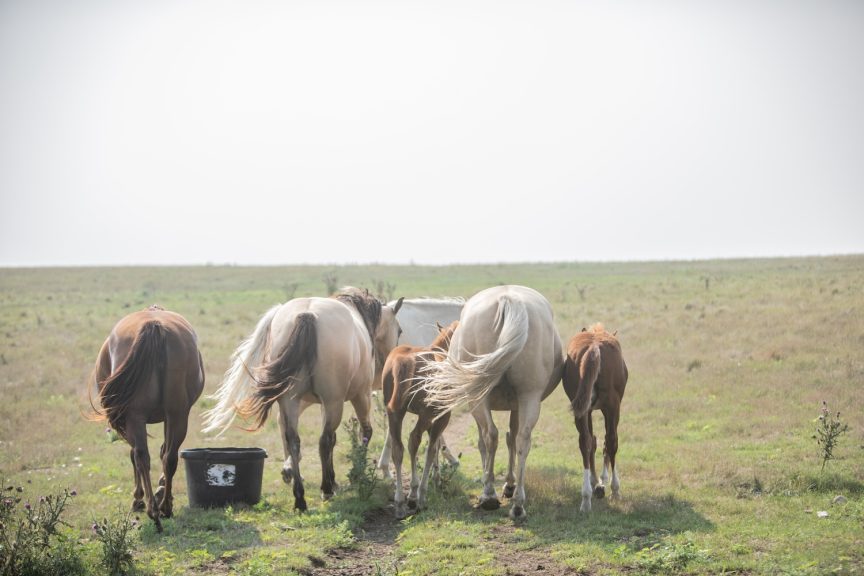
“Depending on the weather conditions and stocking density, open space foaling is often cleaner and provides a more natural space for the mare to give birth and reposition during foaling when necessary,” Burden said. “The disadvantages are more associated with monitoring of the individual mares. Lighting is difficult in large open spaces and often mares will be checked by headlight or spotlight.”
Regardless of foaling in either location, Burden encourages the environment for foaling aim at being clean, accessible in the case of emergency and free of hazards such as farm equipment, poor fencing or deep-water sources.
“In my opinion, allowing the mares to remain in pasture groups until foaling is noted — breaking water, presentation of the foal is best,” she said. “The mare can then be moved to a small enclosure adjacent to give birth. This allows for both a more natural foaling experience and observation. It also allows isolation from other animals that may cause stress to the new mother.”
An alternate compromise to this could be smaller foaling yards or stalls for observation at night and turnout into a clean pasture environment during the day. It is generally recommended that mares are checked throughout the day and night.
“While every operation will differ, monitoring mares every 20-30 minutes is recommended,” Burden said. “Alternatively, alarm systems can be utilized; however, alarms do have the potential to fail. This is especially true during dystocia or abnormal foaling as the foal may not be present in the birth canal properly to trigger the alarm system. Observation is the gold standard approach in my opinion.”
Burden added that foaling in the pasture can be very successful. A pasture with easy access and good visualization is ideal. There should be limited hazards and good grass coverage to ensure a clean environment for a newborn foal. She does suggest the decision be made by considering the mare — if she is high risk, closer monitoring is likely necessary, and a stall or small run may be a more suitable environment.
“The natural experience is the biggest benefit [of pasture foaling],” Burden said. “Mares seem less stressed and more likely to progress with labor in a normal fashion. Mares under constant lighting or disruption are often delayed in foaling, may run milk and loose valuable colostrum sources and show abnormal behaviors.”
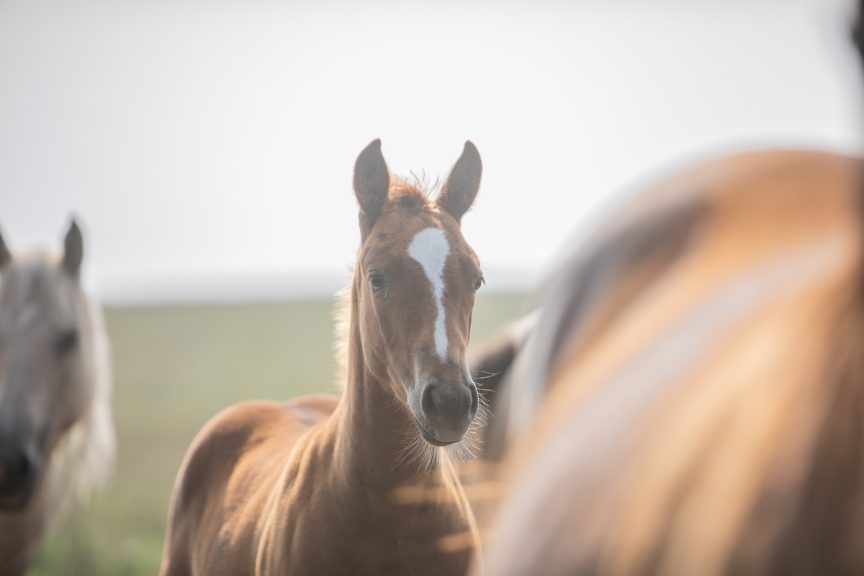
After the foal is born either in the pasture or in a stall, there should be no difference in their newborn care.
“Despite the environment, newborn foals need observation,” Burden continued. “Ideally colostrum quality should analyzed at birth and foal IgG levels tested at 12-24 hours to ensure proper immune stimulation. In either case, a plan should be in place for foaling emergencies or management of a sick animal or foal in need of confinement.
She added that in either situation, analysis of the placenta or fetal membranes is very important to ensure future health of the mare and foal. This can be difficult in pasture foaling due to movement of the animal away from the birthing site.