
First ride fundamentals from a panel of experienced colt starting experts.
Like a child’s first day of kindergarten, the early training stages in a barrel racing prospect’s life can often determine their future success. While sometimes overlooked, the nature of a young horse’s initial contact with people, and whether it’s a positive or negative experience, can stick with that horse for a lifetime. Like most barrel horse trainers, those specialized in the art of starting colts tend to all have a unique approach, so Barrel Horse News caught up with a few of them to gain from their combined years of experience.
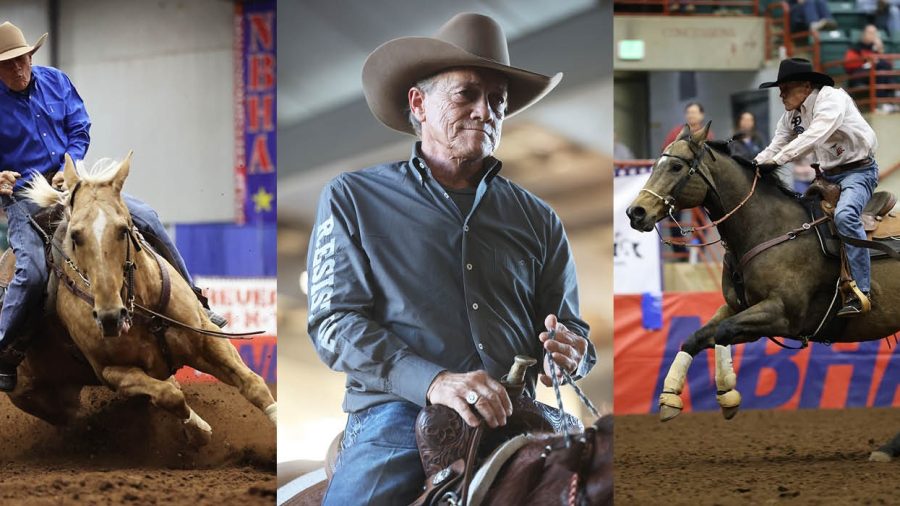
Troy Flaharty
Establishing trust and a solid work ethic are core values in Troy Flaharty’s colt starting program. Located in Tryon, Okla., Flaharty has competed in a host of different disciplines, from cutting and reining to roping, steer wrestling and ranch horse contests.
These days his focus is exclusively on starting barrel horse prospects and operating Flaharty Bits and Spurs with his wife, barrel racer Colette Flaharty. Regardless of the discipline he chooses, Flaharty “wants to ride a broke horse,” and for that reason, his focus is on building an early, solid foundation in the 20-30 colts he starts each year.
“I think when you’re talking about barrel horse prospects, you run into some horses that are a little fractious-minded, a lot of racehorse bred horses,” Flaharty says. “I want to establish trust and create a bond with that horse right away because I want that horse to want to be trained, versus being forces into things.”
“Also, I work really hard to make sure that I establish a work ethic in the colts, so that when they leave here. whether they go back to Bo’s [Hill] or LaTricia’s [Duke] or wherever, that when they leave my house, they are willing – they don’t argue, they don’t want to fight you because they learn it’s just simpler not to.”
Flaharty’s facility is a hands-on operation, which helps him form a bond with the horses in his care, and they quickly learn to look to him as the source for their basic needs.
“I get a lot of colts off the racetrack,” he says. “I get quite a few of the Dash Ta Fame fillies that have the reputation of being a little hard to handle, but the thing I’ve found with them, personally, is that they are insecure and are looking more for someone to kind of bond with who will show them the way. I actually get along with them better, and they’ve been fun for me. They’re what I call ‘busy’ horses. They’re really smart and athletic and want to be doing something. They can be challenging at times, but I’ve had good results with them.”
Part of Flaharty’s thoughtful approach to starting 2-year-olds is making sure he treats them like a work in progress.
“In the first 30 days, I’m not asking them to do anything perfect,” he says, “or pretty soon they’re thinking, ‘Geez, I can’t please this guy.’ I ask for improvement, not perfection — that’s my job as a trainer, to gain their trust and build that foundation a little bit at a time.”
When Flaharty initially gets colts in to start, his goal is to get through the groundwork smoothly and be on their back within a day or two. He emphasized, however, that he will not proceed to step 2 in his process until step 1 is good.
While every colt is different, step 1 typically involves turning a colt loose in the round pen and getting them hooked up and paying attention to him on the ground. When that step is accomplished, and he has them watching him closely and responding to him on the ground, Flaharty will progress to putting a halter and long lead rope on them, getting them soft and responsive in the halter first, before going to a snaffle bit. The lessons of pressure and release begin early on through these steps.
“Typically, I pretty much want to get right on them with nothing on them but that halter and lead rope,” he says. “I might get on and sit there and get back off and mess with them on the ground more. It really just depends on the colt. But I never go to the next step until they’re ready. I like to say that there is never an ‘always’ or a ‘never’ in the horse business because as soon as you say I ‘always’ do this, or that ‘never’ works, a horse will prove you to be a liar.”
While there are exceptions to every rule, the saddling process is the next step.
“Once they’re soft in the face, disengaging their hips, moving their feet around, and they’ve gotten comfortable with me giving an order,” Flaharty says, “then I’ll get a saddle pad and kind of rub that around and get them used to that. I don’t want to just have to sneak around them. I want them to know it’s coming and accept it — the pad and saddle both.
Some horses might take me a little longer to saddle than others, but once they accept that, I cinch them up and get them moving their feet around with the saddle on. If they want to buck or blow up, I make it a lot of work for them, so they figure out that it’s not the best idea.”
Pressure and release are critical in all phases of Flaharty’s program, so having impeccable timing is critical to achieving the softness and trust he is after.
“Colts learn from the release of pressure,” he says. “The quicker you are able to give them that release, the softer and more responsive to you they will be.”
After two or three rides in the round pen, Flaharty is generally ready to get colts out and change the scenery, training them to be round and soft, responsive and supple in order to develop the building blocks they will need later for the barrel pattern.
“I want them to be happy,” Flaharty says. “In the first 30 days, every one of them is different, but I want them to trot and lope circles and have the basics of a good stop, the start of a counter arc, be light in their face and their shoulders and ribcage. I don’t think at that time they need to be all bridled up or dragging their butt in the ground. They just need a good foundation for doing things correctly.”
Flaharty also feels that the attention span of young horses is such that training should be done in small time increments versus overloading them.
“One final thing that I feel is very important is that it’s better to ride the 2 year olds for 15 minutes each day than it is to ride them for two hours three times a week,” he says. “It’s like, you wouldn’t send your preschooler to class for 12 hours a day. It’s the same thing, really.”